He that goes a-borrowing goes a-sorrowing
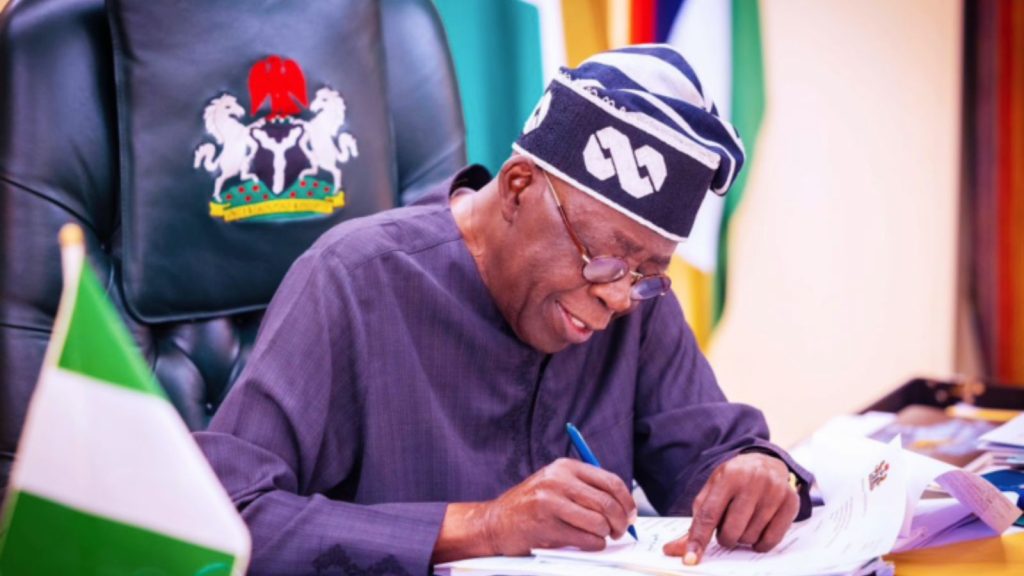
Benjamin Franklin was famously convinced that borrowing and sorrow go hand in hand. But if the United States’ founding father were alive in Nigeria today, Bola Tinubu would probably tell him he has it all wrong.
Tinubu and borrowing—a romance better than Twilight. At the national level, he has built a government that runs completely on credit. In three short years, Tinubu has borrowed an estimated ₦65.9 trillion. That is a massive mountain of debt that future generations will somehow have to pay back.
But the president does not just want the government to borrow. He wants regular Nigerians to get perfectly comfortable with living on credit, too. Nowhere is this vibe more obvious than with the Nigerian Education Loan Fund (NELFUND).
Is NELFUND a genuine lifeline keeping poor students in school, or is it a ticking time bomb designed to trap a new generation of Nigerian youth in debt?
What is NELFUND?
Tinubu signed the Student Loan Act, which created NELFUND just 14 days after taking office. The plan sounds simple: The government gives zero-interest loans to students in tertiary institutions to cover their fees. Students who apply for upkeep allowance may also get a monthly stipend. The fund claims that it has given out ₦242.4 billion to over 1.3 million students as of April 2026.
The government says this initiative will remove financial barriers and give poor Nigerian youth equal access to higher education. It’s ironic because it’s this same administration that made higher education unaffordable in the first place.
He that taketh away
First, Nigerians have become significantly poorer under Tinubu. The country went from a 56% poverty rate in 2023 to a crushing 63% in 2025. That is almost 20 million freshly minted poor people thanks to Tinubunomics. Naturally, a poorer population will struggle to pay for school.
But while the president was making Nigerians poorer, he also pulled the safety net from under them.
Less than a month after Tinubu signed the Student Loan Act, several public universities announced massive fee hikes. For example, the University of Lagos increased its fees by five to ten times, depending on the course. Fees jumped from ₦19,000 to over ₦100,000 for non-STEM courses and over ₦190,000 for medicine.
Under the hood, the government had quietly cut its funding to these institutions. This left them to fend for themselves by charging students higher fees. They took away subsidised education and replaced it with an invitation to borrow.
In September 2024, the government announced that it was funneling 30% of the Tertiary Education Trust Fund (TETFund) into the student loan scheme. TETFund is mainly funded by a special tax collected from corporate entities operating in Nigeria to fund education.
This means the government took money that it was always supposed to spend on public education infrastructure and turned it into a personal loan for students. The NELFUND scheme is essentially the Nigerian government robbing its youth and giving them back their own money as a loan.
Look out, it’s a trap!
If you ignore the fact that the government defunded education to force you into it, a zero-interest loan might look great on paper. But the gloss quickly wears off once you read the fine print on the official NELFUND website.
The Terms and Conditions state: “The Loan amount shall become fully and immediately due and payable 2 years post NYSC.”
Here is the kicker. As long as you owe NELFUND, you are legally barred from taking any other loans. Nigeria has a job-scarce economy that forces many young graduates into entrepreneurship. Imagine not being able to take a business loan for your startup because you are still tied down by NELFUND.
Owo mi da!
In Tinubu’s Nigeria, studying medicine at a federal university like UNILAG will cost you over ₦1 million in mandatory fees. If you add the ₦20,000 monthly upkeep allowance from NELFUND, you will graduate with over ₦2.2 million in debt.
How would that work in a country with a ₦70,000 monthly minimum wage?
You would have to save every single kobo of that minimum wage for almost three years just to pay the government back. Until you do, you cannot access a business loan or a mortgage.
The Naira Life Conference is returning on August 22, 2026, in Lagos! Come learn from finance experts and industry leaders, and partake in unfiltered conversations about building wealth and diversifying your income stream in a country like Nigeria. Real stories, expert advice you can actually use, and a community ready to build wealth together. Secure your spot here.
A very bad example
We do not need to guess how this story ends. We can just look at the United States, where the president claims to have gotten his accounting degree.
The US government aggressively cut its funding for tertiary education after the 2008 financial crisis. That move led to an explosion of student loans over the next decade. Today, about 43 million Americans owe a combined $1.7 trillion in student debt.
It is a massive disaster. The National Consumer Law Centre, a US non-profit, reports that paying back these loans is keeping low-income individuals trapped in poverty, with some even facing homelessness.
The US is now looking for a way out of the crisis it created for its citizens. The Biden administration even floated the idea of forgiving the loans entirely.
The point is that we already know exactly where mass student debt leads. So, why is Tinubu so determined to recreate that same American nightmare here in Nigeria?
The birth of a debt-trapped generation
This is where the major tragedy of the Tinubu presidency becomes clear. The administration is taking its own worst habit, which is an absolute addiction to debt, and forcing it on individual citizens.
For decades, higher education was the one reliable equaliser for poor Nigerian families. It was the only clear path to moving up the financial ladder. A university degree was the single asset you could acquire without starting your adult life in the negative.
By shifting the financial burden of public universities onto the backs of teenagers and young adults, Tinubu is ensuring that the next generation of Nigerian professionals will enter the economy already financially handicapped.
The government has successfully turned tertiary education into a massive financial risk that poor Nigerians simply cannot afford to take.
In just three years in office, Tinubu’s legacy in education is defunding institutions and a debt trap disguised as assistance.
We want to hear about your personal experiences that reflect how politics or public systems affect daily life in Nigeria. Share your story with us here—we’d love to hear from you!
Click here to see what other people are saying about this article on Instagram