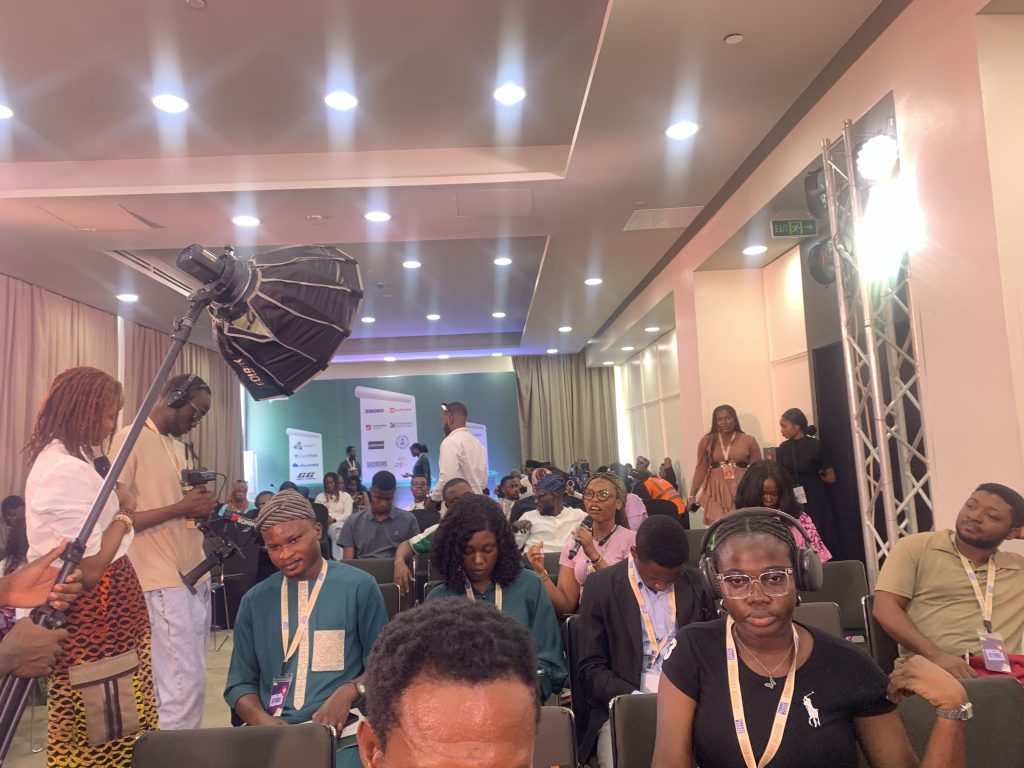
On Saturday, February 28, over 200 young Nigerians gathered at Four Points by Sheraton Lagos for the Zikoko Citizen Townhall, themed “Who Shapes the Nigerian Life?”
The day was filled with diverse panel sessions that tackled some of Nigeria’s most pressing challenges through four panel discussions, namely:
- Innovation Under Pressure: How Politics Shapes What Can Be Built in Nigeria
- Rebuilding Trust: The Media, Democracy, and the Nigerian Citizen
- The Nigerian Life: Then, Now, and What Actually Changed?
- Women, Youth, and the Cost of Exclusion
- From Awareness to Pressure: How Accountability Actually Works in Nigeria
When broadcast journalist Nabilah Usman of Radio Now finally opened the floor for the plenary session, the room was already brimming with unsaid thoughts. The atmosphere was electric as participants were eager to add their two cents to the ongoing conversation.
The session was guided by two urgent questions: Has the Townhall changed how you view Nigeria’s issues? and What actionable steps can be taken to solve these problems?
Jenifatu Yakubu, a lawyer, opened the conversation, calling for a cultural shift that recognises anger as a legitimate response to exclusion. “Women have a right to be angry and to be heard,” she insisted.
From a strategic perspective, Fisayo, a media consultant, suggested that both government and citizens should consider mechanisms such as referendums to close the participation gap and create more direct channels for public input.
Sakaya Waris Ajibola, a teacher, noted that Nigerians should reframe voting as an act of patriotism. “You are not voting because of a candidate. You are voting because you love your country,” he said.
Samuel, a banker and comedian, shared a sobering personal story about his short lived attempt at politics. He was armed with a conviction to play a role in leadership, but this dream ended abruptly when he learnt the form for government councillorship candidacy was over ₦30 million. He noted how others like him have had their political ambitions stifled by financial instability. “Why is politics in Nigeria so expensive?” he asked.
Speaking about how Nigerians engage with politics, Mayowa Akinleye, programmes lead at Learn Politics, highlighted coordination as the missing link. He also urged young Nigerians to take accountability more seriously, as the opposition parties, whom they expect to challenge the government, do not do so. “The opposition can’t do it for you,” he said. “You are the opposition.”
For many participants, the Townhall was a nudge to move beyond passive observation to active participation in Nigerian politics. One of them was Linda Abraham, an admin in Healthcare, who had been feeling deeply cynical about the upcoming elections. “I now feel inspired to vote and I am going to influence my circle to vote as well. I trust that everything good will come out of it.”
By the end of the session, one thing was clear: people left feeling very motivated to participate more in Nigeria’s democratic institutions.