After months of back and forth, on January 21, 2026, the National Agency for Food and Drug Administration and Control (NAFDAC) announced it would start enforcing a ban on alcohol sold in sachets and small bottles. Meanwhile, members of the Distillers and Blenders Association of Nigeria (DIBAN) were outside NAFDAC’s Lagos office protesting against it.
So why is the government trying to ban sachet alcohol? Is it really unsafe? And if it is, why all the back and forth?
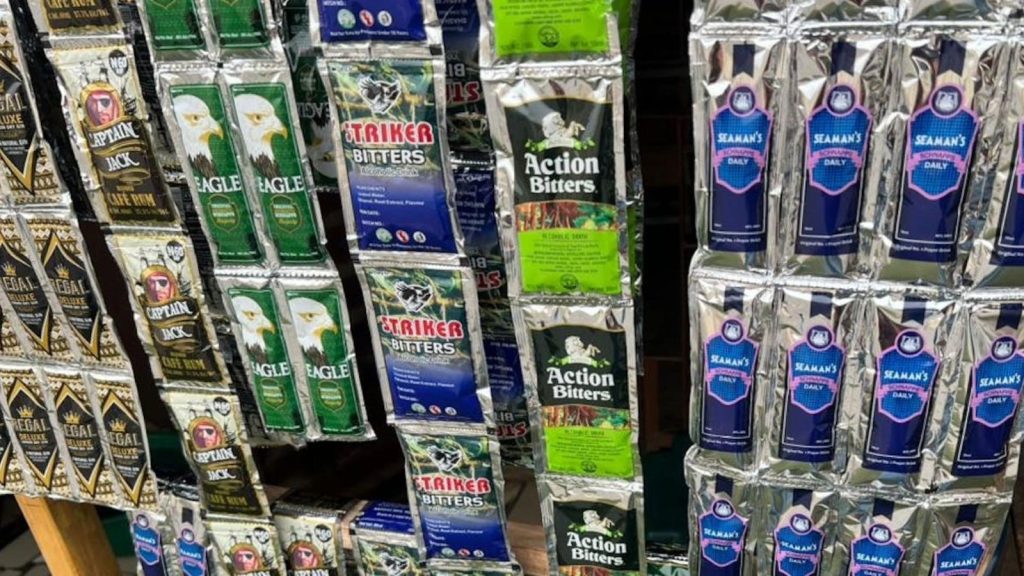
Big problems, small packages
The ban is aimed at portable alcohol packs, specifically sachets and 200 millilitre (ml) PET bottles.
These small packs have blown up in Nigeria thanks to the “sachetisation” of the economy. Inflation has eaten deep into people’s pockets, so consumer brands have had to make affordable sachet versions of everything. Alcohol was no exception.
Back in 2010, Nigeria signed the United Nations “Resolution WHA63.13” which pushes countries to reduce harmful alcohol use. It specifically mentions protecting young people and those affected by harmful drinking.
The government says this resolution is the reason it’s targeting sachet alcohol. Supporters argue that sachets make it easier for kids to buy, hide, and drink alcohol. They also say drivers, especially public transporters like “danfo” drivers, can easily sneak a drink while on the road. So banning it would help Nigeria align with the UN resolution and improve public safety.
The ban has been coming for a while. In 2018, NAFDAC and FCCPC made industry stakeholders, the Association of Food Beverage & Tobacco Employers (AFBTE) and Distillers and Blenders Association of Nigeria (DIBAN) sign an agreement to gradually phase out sachet and PET alcohol drinks by January 31, 2024.
But manufacturers didn’t slow down production. When the deadline came, they begged for more time. The ban was shifted to January 2026. But now they’re begging again.
To ban or not to ban
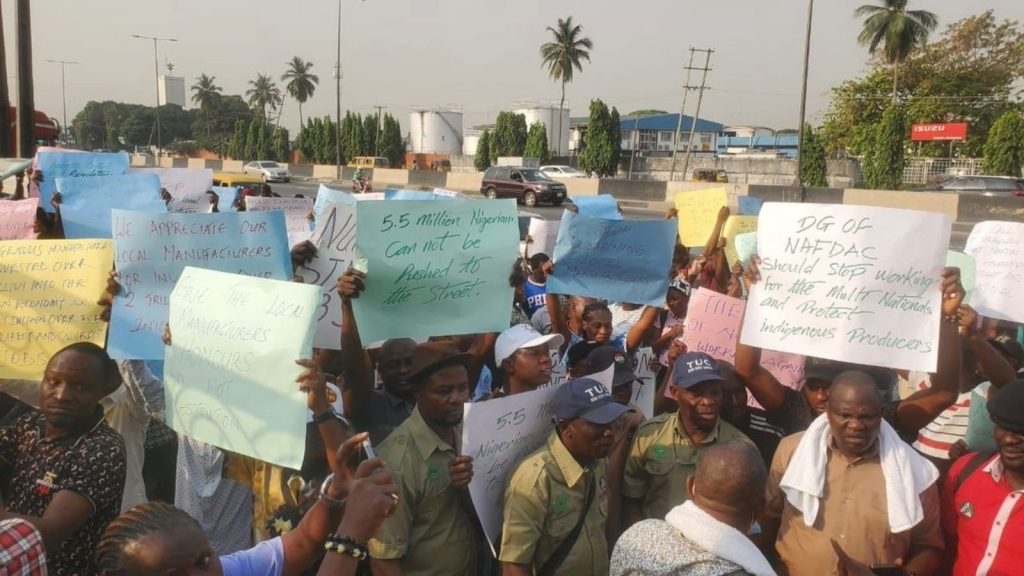
Manufacturers and workers are fighting hard against the ban.
The Nigeria Labour Congress (NLC) and Trade Union Congress (TUC) hate it so much that they even called for the suspension of NAFDAC’s Director General, Moji Adeyeye. They claim the ban will destroy local manufacturers and accuse her of siding with multinational companies to kill local brands.
The Manufacturers Association of Nigeria (MAN) warns that the ban could wipe out ₦1.9 trillion in investments, lead to 500,000 direct job losses, and affect around five million indirect workers in marketing, logistics, and contracts.
But the government thinks it’s worth it. Adeyeye said, “We cannot continue to sacrifice the well-being of Nigerians for short-term economic gain. The health of a nation is its true wealth.”
Health professionals are backing the government. The Nigerian Association of Resident Doctors (NARD) and the National Association of Nigeria Nurses and Midwives (NANNM) support the ban.
In February 2024, NARD president Dele Abdullahi said the accessibility of sachet alcohol makes addiction easier. He admitted job losses are scary, but insisted health risks are worse.
Several other groups with public health interests have also spoken in support of the ban, including the Coalition for Healthy Food Advocacy (CHFA), the Network for Health Equity and Development (NHED), and the Corporate Accountability and Public Participation Africa (CAPPA).
So here we are: millions of jobs and trillions of naira on one side, public health and safety on the other. To ban or not to ban?
The government can’t make up its mind
In November 2025, Senator Asuquo Ekpenyong of Cross River South raised a motion in the Senate to give NAFDAC an ultimatum: start enforcing the ban from January 2026.
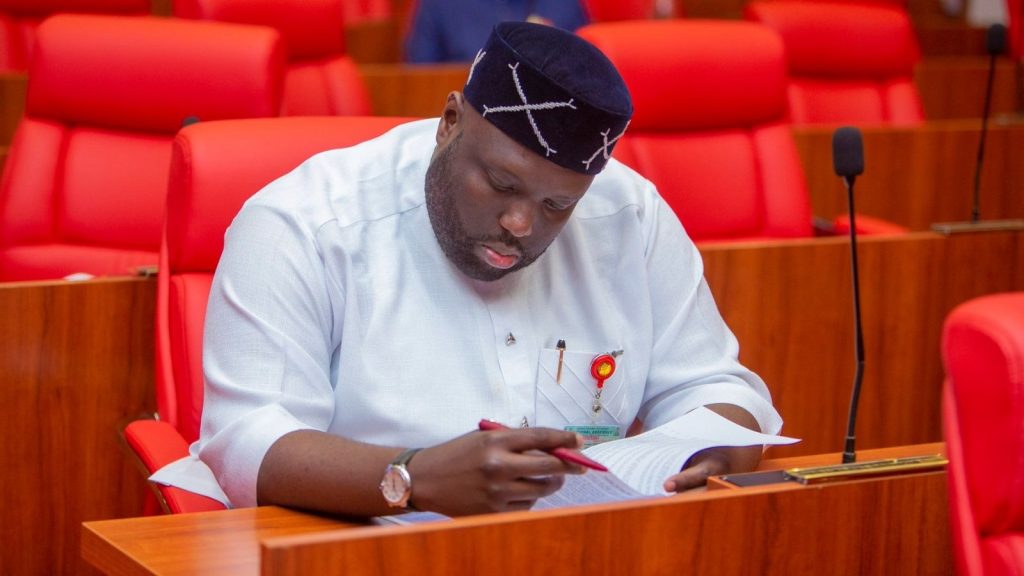
He said some manufacturers were lobbying for another extension, and argued that shifting the ban again would weaken regulatory authority and put public health at risk.
The motion passed, with Senate President Godswill Akpabio calling it “a matter of urgency.” He stressed that NAFDAC had to enforce the ban to “protect Nigerians, especially our young people, from the dangers of unregulated alcohol consumption.”
NAFDAC’s Director General, MojisolaAdeyeye, assured everyone that the agency was ready to roll out enforcement.
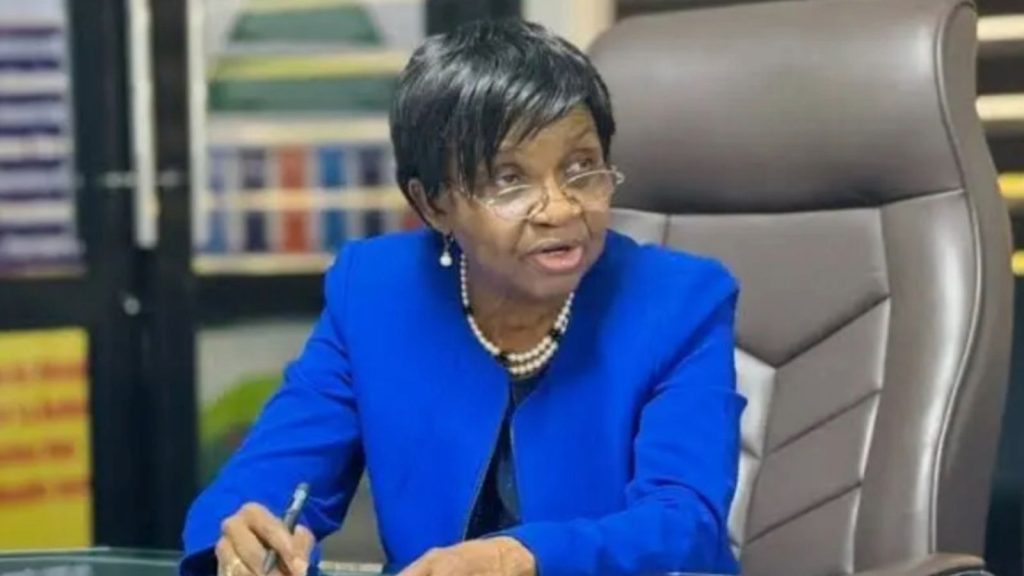
But then the Office of the Secretary to the Government of the Federation (OSGF) stepped in to save the sachet alcohol industry. The OSGF said it had received official correspondence from the House of Representatives Committee on Food and Drugs Administration and Control on November 13, 2025, asking for a review of the planned enforcement.
The OSGF didn’t stop there. It clipped NAFDAC’s wings, declaring that any attempt at enforcement without clearance from its office was “of no effect and should be disregarded by the public.”
On January 21, NAFDAC came back to say they had received another instruction from the Senate and were going ahead with the ban.
So we’ve seen different arms of the government pulling in opposite directions on whether the ban should be implemented.
But in all this back and forth, the real question is: Does banning sachet alcohol actually solve the problem?
Legally-backed polite suggestions
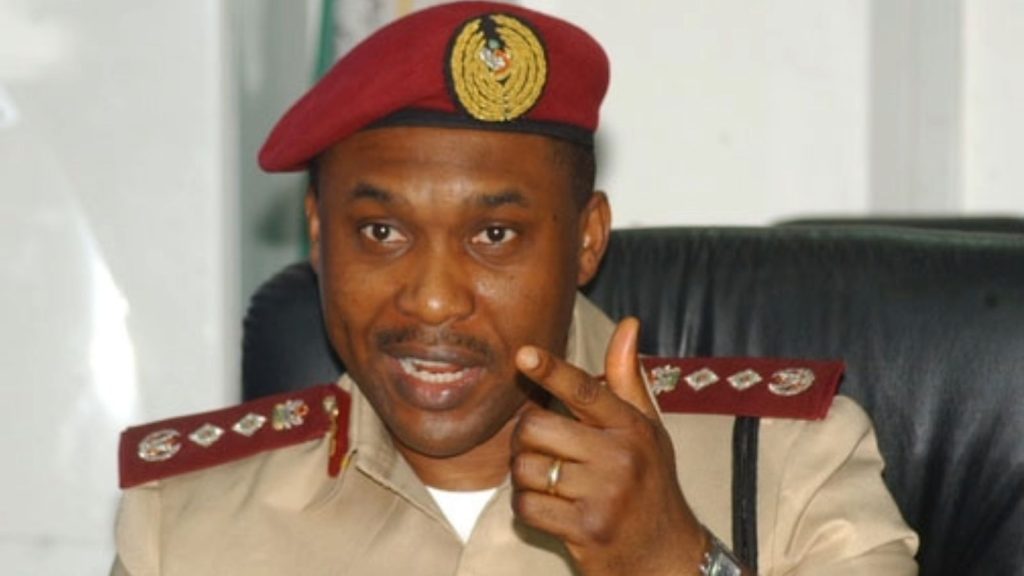
Driving under the influence (DUI) of alcohol in Nigeria is already criminalised under the Federal Road Safety Commission Act of 2007. Section 22 of the act sets the legal limit at 0.05% Blood Alcohol Concentration (BAC), which is globally the generally accepted point where drivers start to get impaired. The punishment is a maximum of two years in prison with the option of a fine.
So the laws exist. The real problem is enforcement. Without proper enforcement, laws are basically polite suggestions. And the people meant to enforce Nigeria’s DUI laws are ridiculously under-equipped.
You can’t tell a driver’s BAC just by looking at them. You need a device called a breathalyser.
Now, Lagos is the most densely populated state in Nigeria, with traffic to match. Yet in 2017, the FRSC Lagos Command had only five breathalysers to check drunk driving across the entire state. Five. For Lagos.
FRSC Lagos State Sector Commander, Hyginus Omeje, said the devices were being strategically deployed to major highways like Lagos-Ibadan, Lekki-Epe and Badagry expressways during the “ember” months.
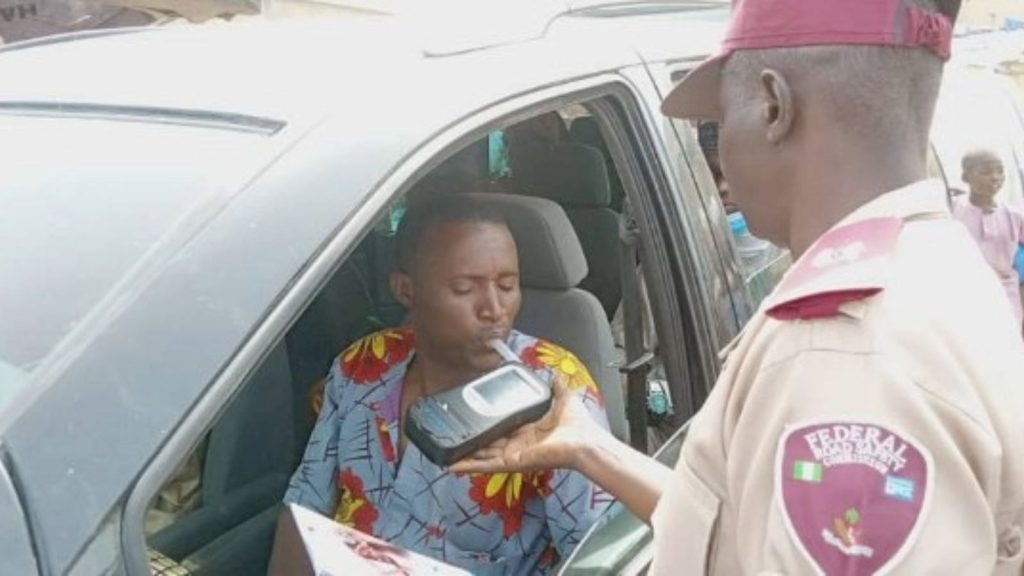
But policing drunk driving shouldn’t be seasonal. Drivers don’t only drink during the holidays. And it’s not just highways that matter. Inner city roads are just as important, especially where drivers and pedestrians are squeezed together.
Omeje even begged stakeholders in the transport and logistics industry to donate more breathalysers to the FRSC. Some have listened. In January 2025, a logistics company called Pomegranate Nigeria Limited donated breathalysers to the FRSC Ogun State Command.
The Beer Sectoral Group (BSG) of the Manufacturers Association of Nigeria (MAN) also donates breathalysers to the FRSC as part of their joint “Don’t Drink & Drive campaign” which started in 2017.
But private companies shouldn’t have to donate equipment to law enforcement. That’s the government’s job. Where exactly are our taxes going if the FRSC can’t even get the basic tools they need to catch drunk drivers?
So it doesn’t matter what you ban or criminalise; if you’re not enforcing the law, you won’t see any results. Nigeria has a traffic law enforcement problem. That is what needs fixing. Until we give the FRSC the tools they need to actually catch drunk drivers, it doesn’t matter what size bottle the alcohol comes in.
Ban first, ask questions later
The Nigerian government loves a good ban. They act fast, but rarely stop to think about the side effects or if the ban will actually do what they want. Remember August 2025, when Tinubu banned shea nut exportation?
The idea was to turn Nigeria from a country that exports raw materials into one that refines finished products. Sounds nice on paper. But in reality, it only made life harder for the poor women who farm and shell the nuts for a living.
Let’s be honest, Nigerian drivers have a drinking problem. Policy advocacy group Gatefield reported in 2023 that 50% of road accidents are caused by alcohol abuse. But here’s the thing: there is no direct link between sachet alcohol specifically and drunk driving. No data exists to prove it. We already know drunk driving has been a problem in Nigeria long before alcohol brands started selling sachets.
In fact, a 1982 study published in The Central African Journal of Medicine tested drivers involved in accidents in Nsukka. It found that a whopping 88% had alcohol in their blood.
So what will this ban really do? It will stop mainstream brands, but it ignores the fact that people will just turn back to black market options like ogogoro, which used to be very popular among motorists.
That means the ban is unlikely to change anything. Instead, it will push low-income drinkers towards unsafe black market brews. And we already have examples to prove it.
They’re drinking their death
In 2019, Uganda banned alcohol in sachets and bottles smaller than 200ml. By May 2025, the Alcohol Industry Association of Uganda reported that black market alternatives had only grown stronger. They now make up 71% of the Ugandan alcohol industry.
Kenya has the same story. They banned sachet-packed alcohol through the Alcoholic Drinks Control Act of 2010. By 2024, black market consumption was reported to be 144% higher than legal consumption.
Here’s the scary part. Most of the people drinking black market alcohol in Kenya knew of the risks attached to it. As much as 61% of them said they knew the health risks: blindness, organ failure, even death. But it is what they can afford.
These drinks are made by amateurs in terrible conditions and are not checked by regulators like NAFDAC. So by banning sachet alcohol, the Nigerian government is removing safer options from low-income drinkers and leaving them at the mercy of black market brewers.
There is no evidence that sachet alcohol has made road accidents worse in Nigeria. We already had a drunk driving problem long before sachets came into the picture. So this ban will likely fix nothing.
What it will do instead is create a new problem: a health crisis for vulnerable Nigerians. If they cannot afford bigger bottles, how will they afford the hospital bills when black market alcohol damages their health?
This ban will not save lives. But it is very likely going to cost more than a few.
What the government should be doing is stepping up their enforcement game. The FRSC needs proper tools: dashboard cameras, body cameras, and, most importantly, breathalysers. We need far more of them, at least one at every FRSC checkpoint for random breath tests. If drivers know they can be stopped and tested at any time, they’ll think twice before drinking and driving.
The government needs to actually plan and come up with strategies that work, not rush into another poorly thought out ban.
Young voices, big ideas, and the future of Nigeria all in one room. The Citizen Townhall is a flagship event by Zikoko where changemakers, experts, and everyday Nigerians will gather in Lagos to ask the hard questions: Who really decides our lives? What happens when we stay silent? And how powerful is our vote?
Don’t just read about politics when you can be part of it. Stay tuned for how to register.
We want to hear about your personal experiences that reflect how politics or public systems affect daily life in Nigeria. Share your story with us here—we’d love to hear from you!
Click here to see what other people are saying about this article on Instagram