Nigeria often feels lawless. When we do act like we have laws, they are selectively enforced depending on who you are and where you stand in society.
So what happens when the average person no longer believes justice will come from the government or legal institutions? They turn to individuals. Loud, charismatic, sometimes chaotic and flawed individuals. It’s Nigeria’s anyhowness that gives people like VeryDarkMan and Ordinary President an audience.
Here’s how.
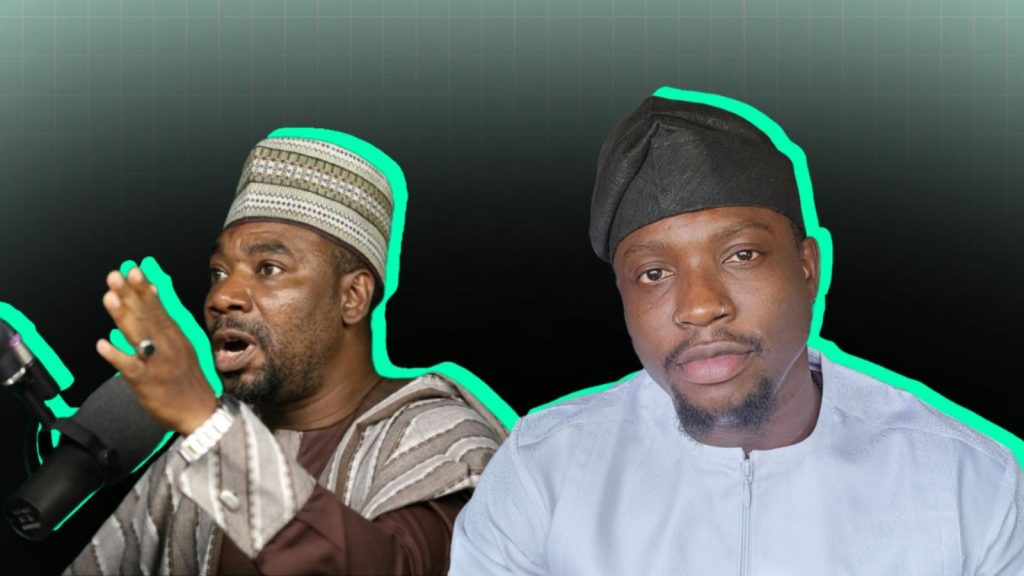
In the land of anyhowness
The word “anyhowness” is a Nigerian slang that very accurately captures life in Nigeria.
The Urban Dictionary defines Anyhowness as the pervasive behavioural attitude that perceives nothing as either right or wrong, proper or improper, rational or irrational, ethical or unethical, legal or illegal, but rather sees any behaviour as acceptable subject solely and entirely to the immediate and selfish desires of an individual or a homogenous group.
In Nigeria, there is no steady moral ground to stand on. It’s all flexible, constantly shifting. Anything and everything is allowable if it’s the means to a desirable end. What was wrong yesterday can be right today, and vice versa. Anyhowness.
Still, selfishness and hypocrisy are human traits. Nigerians don’t have a monopoly on them. We’re not different from people anywhere else in the world. Yet we see far more functional societies all around us. How do they do it?
Strong institutions. They’re the pillars that hold everything up. That’s how the morality of your society doesn’t collapse on itself every two market days.
Nigeria’s institutions, though, are weak. Frail. Flimsy. They fall at the slightest push.
Where do we even start?
Is it EFCC arresting Bobrisky for spraying money but letting Government Ekpemupolo (known as Tompolo) walk free, even though both committed the same offence?
Or INEC officials and security operatives watching blatant vote buying during recent elections?
Or the case of Ochanya Ogbanje, where Felicia Ogbuja was jailed for negligence, but her husband and son, Andrew and Victor Ogbuja, accused of sexually assaulting the child, are still free men?
We could go on.
When institutions fail to provide moral consistency, people look for it in individuals. That’s how figures like VeryDarkMan rise to prominence.
VeryDarkMan
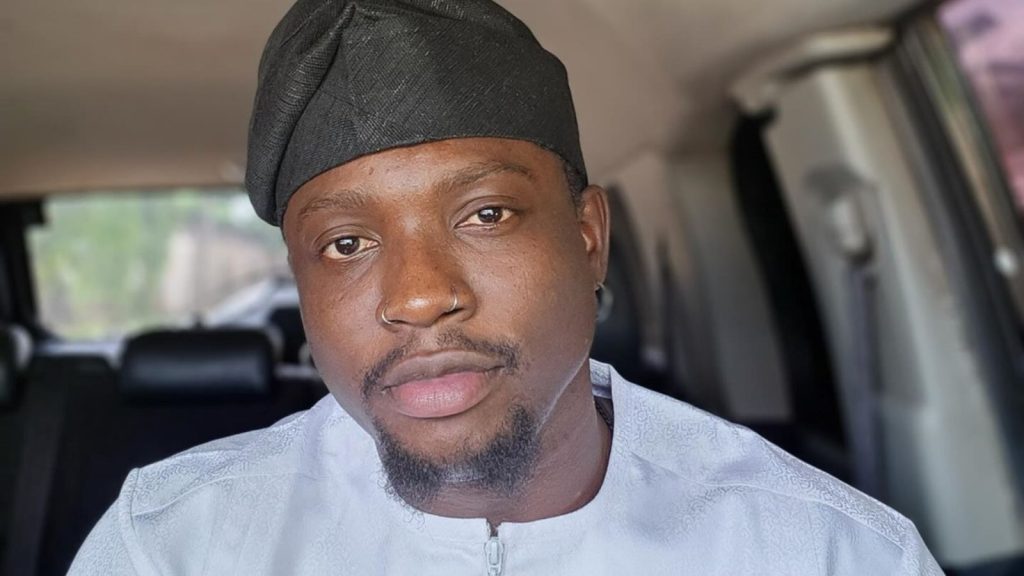
Martins Vincent Otse, popularly known as VeryDarkMan (VDM), properly entered the national spotlight in 2023 when he called out the skincare brand Jenny’s Glow and its founder, Igbinoba Osasenaga Jennifer.
VDM accused the brand of not being registered with the National Agency for Food and Drug Administration and Control (NAFDAC). It sparked conversations about regulatory processes in Nigeria’s beauty industry, which had largely been ignored, and it showed VDM’s willingness to go against big names without mincing words.
Since then, he’s kept the same bullish energy. That approach has sparked feuds with celebrities and landed him in police custody multiple times.
Activist Social Media Police
Most media platforms describe Otse as an activist. But he doesn’t like the label.
He made this clear in a YouTube video on November 17, 2025, while responding to criticism that accused him of hypocrisy. Yes, that word again.
The Cambridge Dictionary defines an Activist as someone who believes strongly in political or social change and takes part in activities to try to make change happen.
The criticism came from a tweet pointing out that VDM, who rose to fame by calling out brands selling unregistered products, was now allegedly involved in selling fake iPhone 17s. The poster argued that being an activist meant VDM should be held to higher standards.
VDM replied, “I’m not an activist… I don’t even have any definition of what I am. Na una dey call me activist. Me I be social media police. And I try to impact.”
Whether he realises it or not, that statement shows a desire to avoid labels that come with accountability. So he prefers to create his own.
Who polices the social media police?
On August 5, 2025, Wasiu Ayinde, a popular Fuji musician, clashed with airline staff at Nnamdi Azikiwe International Airport. Just five days later, on August 10, another incident happened between Comfort Emmanson and Ibom Air staff.
On August 17, VDM posted a video on Instagram advising passengers to obey flight rules and respect attendants.
Fast forward just three months to November 17, 2025, and VDM himself was in a physical fight with comedian and social media personality Freedom Okpetoritse Atsepoyi, better known as Mr Jollof. Punches. Headbutts. Even biting. Disgraceful stuff.
The hypocrisy of telling others how to behave on flights, only to act out in the exact same setting.
VDM later released an apology video on YouTube. It opened with him comically bandaged up, trying to use humour to soften the situation.
What it really showed was that his accountability is always on his own terms. Which, as a private citizen, is his right. But it also highlights the problem with expecting private citizens to act as moral police in our social spaces.
VDM is not the only flawed man trying to fill the vacuum left by weak institutions.
Ordinary president
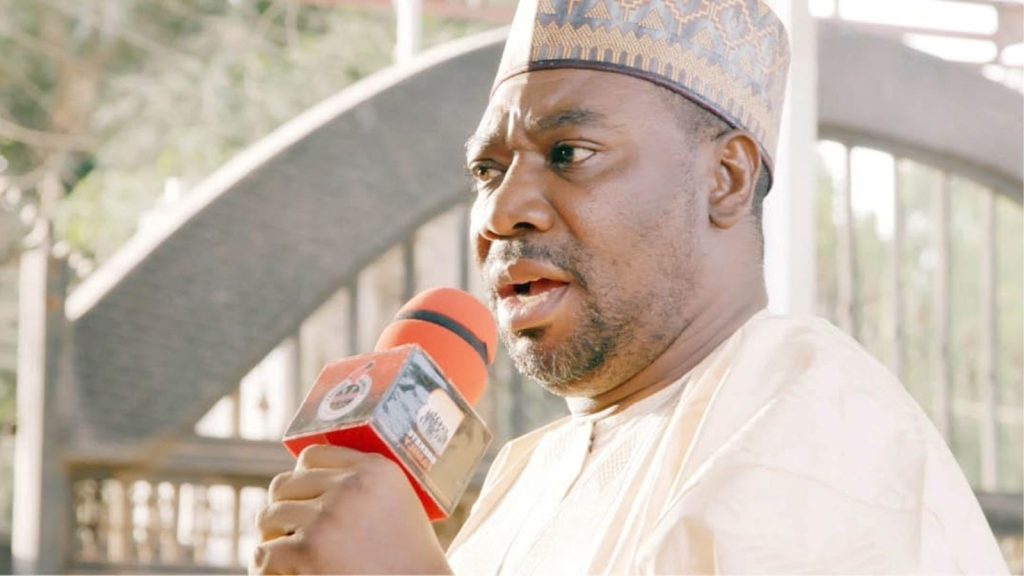
Ahmed Isah, better known as Ordinary President, is a radio personality. He hosts Brekete Family on Human Rights Radio in Abuja.
The show is where “ordinary Nigerians” come to seek justice and help. Six days a week, hundreds of people line up outside the studio hoping their case will be heard. Each day, Isah picks the few that catch his attention.
On air, victims share whatever human rights abuse they’ve suffered. Isah then delivers his brand of justice by naming and shaming the “guilty” party. If it’s a government official or agency, he’s known to call them live on air and demand they fix the situation.
Cases range from broken marriages and community disputes to government overreach, tenancy disagreements, wrongful dismissals, pension issues, and even brutalisation by security operatives.
Now, if you’re thinking these sound like cases that belong in court, you’re absolutely right. That’s exactly where they should be. But litigation in Nigeria is a nightmare for most people, especially the poor (who are most Nigerians).
Our courts are slow, clogged with endless backlogs, and the thought of being adjourned forever makes many give up. People want their case heard now, with judgement delivered immediately.
There’s also the problem of illiteracy. The language of the courts is inaccessible to many Nigerians. Meanwhile, Ordinary President runs his show entirely in Pidgin.
Presidential slaps
In May 2021, BBC Africa released a documentary about Ordinary President. In it, he handled a case where a woman accused her niece of witchcraft, tied her up, and poured boiling water on her scalp. The child was left badly scarred.
While interrogating the woman, Ordinary President physically assaulted her. Two vicious strikes across her face in view of his audience and journalists, while surrounded by cameras.
Public backlash followed, and he apologised: “Please, na human being I be. I am bound to make mistakes. Na the zeal inside of me and the passion wey dey push me.”
But in the heat of the controversy, another video from October 2020 resurfaced, showing him slapping a man during the show.
Human pegs in institution-shaped holes
Here’s the thing: we actually agree with Ordinary President: he is human. VDM is human, too. They’re both bound to make mistakes, to act in ways that contradict the morals they preach.
That’s exactly why they don’t deserve the pedestals we put them on.
Humans cannot replace institutions. Even when they present themselves as alternatives, it’s our responsibility not to buy into it. We need to ignore the hype. Ignore them.
Putting people on pedestals is asking too much. It never works. They always fail because they are human.
We can only hold them accountable to the level they’re willing to offer. VDM’s apology video was on his own terms. He didn’t have to do it. Same with Ordinary President’s apology.
We can’t rely on controversial, fallible individuals to be the moral compass of our nation. Individuals will always represent their own interests, even if those interests seem aligned with the masses for a while.
What we truly need are strong institutions we can hold accountable. Institutions grow stronger when citizens demand accountability. And so far, Nigerians have done a poor job of that.
Institutions are what can truly represent our collective interests with a consistency that humans simply cannot. But for that to happen, we must build strong institutions by becoming active citizens.
Before you go, help us understand how you and other young people feel about the 2027 general elections by taking this 10-minute survey.
Click here to see what other people are saying about this article on Instagram