We all know at least one person who’s always in need of urgent 2k. Unfortunately, Nigeria is that “person” to every country that has a few dollar bills to spare. With the country’s debt servicing rising from ₦8 trillion in 2024 to ₦16 trillion in 2025 under the Tinubu-led administration, the country can now easily pass as your average chronic debtor.
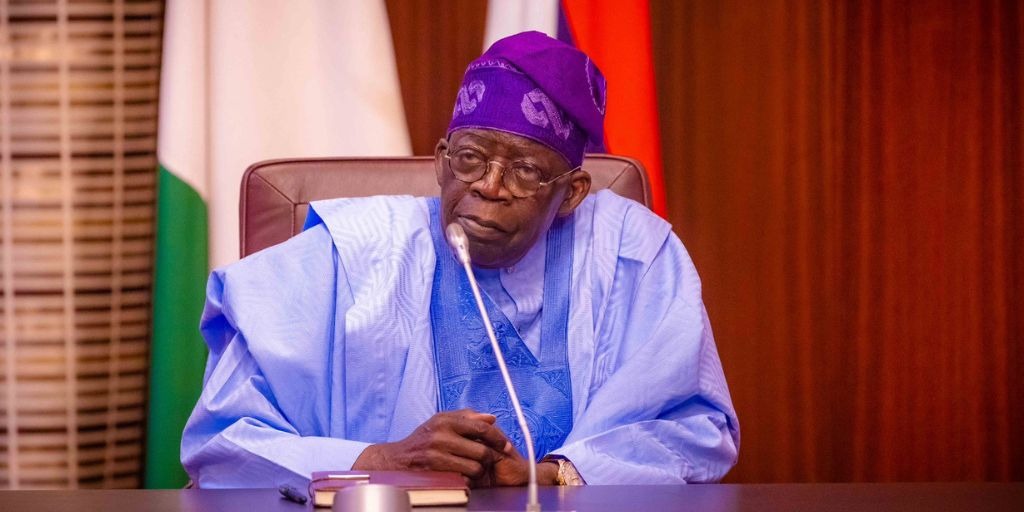
It’s becoming increasingly difficult to deny that the country may be facing a debt crisis, but the worst is yet to come, as experts have predicted that the country’s overall debt could reach ₦187.79 trillion by the end of 2025.
Here are some of the most interesting loans the Tinubu administration has taken this year and the goals they were supposed to achieve:
$500 million World Bank loan to boost economic resilience
In March 2025, President Tinubu, who is now one of the World Bank’s regular customers, bagged a $500 million loan from the global lender. The money was supposed to ease Nigeria’s growing economic struggles through the Community Action for Resilience and Economic Stimulus Program.
What this money was supposed to do for Nigerians: President Tinubu’s economic reforms have functioned as the weapon fashioned against Nigerians for two years now, and according to the presidency, this loan was supposed to fix that by strengthening the local communities hit hardest by inflation, food shortages, and instability. The plan was to do this by handing out targeted grants and livelihood support to low-income families and small businesses. It’s hard to find any relevant information that confirms how that’s going since the present administration has a history of being slow to disburse funds that were borrowed to sponsor projects.
$1.08 billion World Bank loan for education
Nigeria started in April 2025 with a $1.08 billion loan from the World Bank. The loan was originally supposed to be a response fund to the COVID-19 pandemic, but since the approval is coming in an economically challenging year like 2025, it is being redirected to fund Nigeria’s other development priorities.
What this money was supposed to do for Nigerians: This loan was supposed to improve education, household resilience, and nutrition, particularly for underserved communities. According to the breakdown by the World Bank, $500 million was supposed to be allocated to an economic stimulus program, another $500 million directed toward enhancing education quality, while the remaining funds were supposed to be used to improve nutritional outcomes across the country. It has also been hard to track the progress of this program, and over 3 million children are still suffering from malnutrition in the country.
$747 million loan for the coastal highway
In July 2025, Nigeria decided to give the World Bank some breathing space by patronising other lenders. This time, it was Deutsche Bank and a crew of other financiers like the First Abu Dhabi Bank, African Export-Import Bank, and Zenith Bank, who stepped in to offer Nigeria a $747 million syndicated loan.
According to the Ministry of Finance, this is the largest infrastructure-specific loan of its kind in Nigeria’s history.
What this money was supposed to do for Nigerians: This loan will fund the first phase of the country’s ambitious 700-kilometre coastal highway, a multibillion-dollar megaproject expected to stretch from Lagos to Calabar over the next eight years. But, it’s worth noting that this initial financing only covers 47.47 km, which is roughly 6.7% of the total route. Even though this project hasn’t hit the halfway mark, it already has its fair share of drama. Oyo State Governor, Seyi Makinde, recently questioned the transparency of the project because the Minister of Works, David Umahi, has refused to disclose the project’s actual cost.
$750 million loan for digital infrastructure and health access
On Tuesday, September 30, the World Bank put on its big lender hat again and announced another $750 million loan to Nigeria. The fund was designed to sponsor two development projects to boost the country’s digital infrastructure and healthcare preparedness, especially in underserved and vulnerable communities.
What this money was supposed to do for Nigerians: According to the Bank, $500 million was set aside for a project called the Building Resilient Digital Infrastructure for Growth in Nigeria (BRIDGE) project. This project, led by Nigeria’s Ministry of Communications, Innovation and Digital Economy, is expected to expand broadband access in rural and remote areas. The other $250 million was allocated to Phase II of the Health Security Programme in Western and Central Africa, with Nigeria as a key participant. The project is designed to help Nigeria strengthen its ability to respond to health emergencies. It’s too early to predict how this loan will be utilised since it was approved a few weeks ago.
$238 million loan for National Grid
In August 2025, President Tinubu took his borrowing business to Japan, where he secured a a $238 million loan from the Japan International Cooperation Agency to strengthen the country’s national power grid.
What this money was supposed to do for Nigerians: According to the president, the loan “will finance the expansion of the national grid. The project includes the construction of 102.95km of new 330kV double circuit lines, 104.59km of 132kV double circuit lines, four 330/132/33kV substations, two 132/33kV substations, and multiple line bay extensions to improve efficiency and reduce system losses.”
$300 million loan for Internally Displaced Persons (IDP)
If you’re thinking “another loan”? Yes, another loan. In August 2025, the government secured another $300 million loan from the World Bank; this time to support Internally Displaced Persons (IDPs) and the communities hosting them in Northern Nigeria.
According to a statement released by the World Bank, the loan’s goal was to sponsor the Solutions for the Internally Displaced and Host Communities Project (SOLID), targeting areas most affected by conflict and displacement.
What this money was supposed to do for Nigerians: The project has ambitious goals of benefiting up to 7.4 million people, including 1.3 million IDPs, by improving access to basic services and creating economic opportunities.
$1 billion loan to finance agriculture
In September 2025, the government, through the Bank of Agriculture (BOA), secured another huge loan from a different big lender, the African Export-Import Bank (Afreximbank). The released fund was $1 billion, and according to BOA’s Head of Corporate Communications, Maikenti Akila, it will go toward setting up a National Fund for Smallholder Farmers.
What this money was supposed to do for Nigerians: This fund’s goal is to provide loans for seeds, fertilisers, agrochemicals, and mechanised services to help increase crop yields. Some of it will also go into building out infrastructure for storage, aggregation, and logistics. The status of this loan’s progress is also unknown at the time of publication.
Every country has its loans, but experts fear that the Nigerian government is going overboard with them. Our loan servicing bill for 2025 is much higher than the government’s budget for education, defence, security, infrastructure, and health.
While you cannot fix Nigeria’s debt problem, there are a few things you can do to demand transparency from the government:
- Find out which ministry, the agency, or the contractor is responsible for implementing each loan-funded project. Use public records, watchdog groups, or civil society platforms like BudgIT or Tracka. Then ask the necessary questions through social media.
- Call your senator or state assembly representatives for updates on the loans affecting your constituency.
- Support media platforms that investigate spending by sharing their work, subscribing or donating if you can. If the government knows people are watching, it changes the game.