Written by Tezor Dedam
In case you missed it, the Lagos-Calabar Coastal Highway is going through some major changes. Nigeria’s Minister of Works, Dave Umahi, said that under the directive of President Bola Tinubu, the coastal highway will be rerouted through the existing East-West road from Ondo State into Edo State. Umahi explained that the diversion was intended to prevent any new alignment along the corridor, and that this was informed by flooding along the East-West road around the Ughelli axis in Delta State.
Umahi also went as far as saying that the effects of climate change were not anticipated when construction started, and that plans are being made to raise several parts of the road, a change in plans that will possibly incur even more money for the already extravagant project.
From what we understand, it appears the coastal highway is now being reduced to an upgrade of an existing inland road. But for reasons we still cannot pin down. Is it because of unforeseen floods, corridor alignment, difficult terrain, funding constraints, or all of the above?
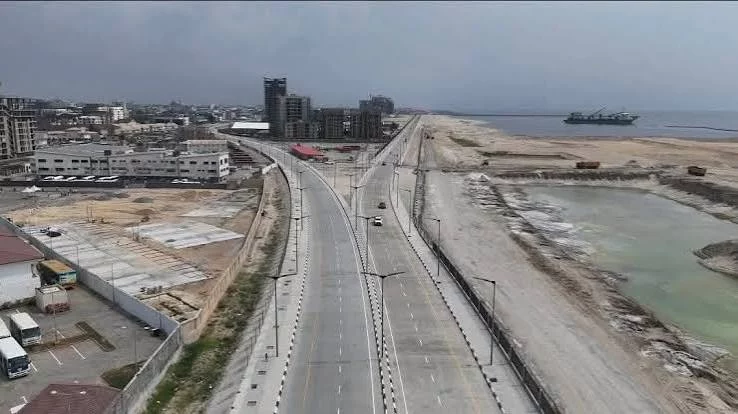
Umahi has given all these reasons in the course of this project. But regardless of the reason, it is clear to see how poorly planned and managed the entire thing is. Especially because there were signs.
The first sign was that the route of the highway was not even established by the time work began. Yes, in January 2025, Mongabay reported on findings from an Environmental and Social Impact Assessment (ESIA). The assessment showed that apart from the initial stretch of road out of Lagos and the final terminal at Calabar, the precise route of the highway had not even been determined. But work had started, and demolitions were already taking place.
Reports from Business Day also show that completed parts of the road sit on unstable terrain like marshlands and swampy ground, with reports of citizens calling out drainage gaps along the road. Even Umahi himself acknowledged this deep soil problem.
Even this claim of unforeseen climate events causing the change in plans is unfounded. Because over 70 civil society groups warned that routing the highway through the Stubbs Creek Forest Reserve would destroy a natural barrier against rising floodwaters, not to mention the natural forestry and wildlife that would be destroyed. Additionally, environmental experts warned that protective measures in place would not be enough for a coastline that was increasingly becoming vulnerable to climate change.
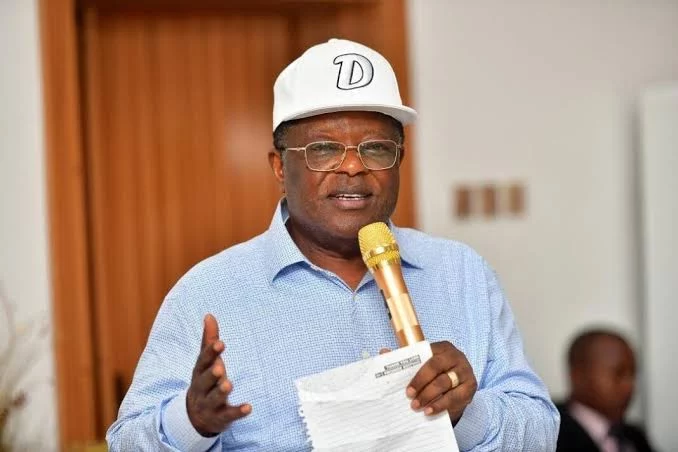
The list of signs is actually quite long: several reroutes to avoid interference with submarine cables, questions around overly swampy regions like Bayelsa, etc. In one case, in a well-circulated clip, Umahi can be seen shutting down an Arise News reporter over her accent and pronunciation when she raised concerns over the same Environmental Impact Assessment that predicted climate issues. The same climate issues that Minister Umahi now claims he did not see coming.
Now, it looks like the proverbial chicken has come home to roost.
After ₦3 trillion worth of contracts and a total budget of ₦15 trillion, there will be no coastal road. 750 structures had been cleared by December 2024, Landmark Beach in Lagos had been scrapped, and thousands of homes were demolished, with many protesting non-payment.
In addition to the immeasurable loss that individuals, businesses, homeowners, and wildlife have suffered so far, what does this further mean for Nigerians?
More costs to raise the roads along the routes, loan repayments for the loan-funded parts, and more flood exposure risks in the years to come. We also have to look at the opportunity costs. More money being pumped into this project means that there is less money available for basic healthcare, depleted roads, and economic interventions – the things that Nigerians are in great need of.
But beyond the plight of the common man, given how much this coastal road anchored the legacy of President Tinubu’s tenure, what could this mean for him months before the elections? Just how much faith do Nigerians have in this government after this turn of events?
The coastal highway is now turning inward, the bill is still unpublished, and questions are still unanswered. A project of such magnitude and ambition should have run on public trust. But they dropped the ball so hard, and now, as usual, it is the public that will pay for it.