The Nigerian experience is physical, emotional, and sometimes international. No one knows it better than our features on #TheAbroadLife, a series where we detail and explore Nigerian experiences while living abroad.
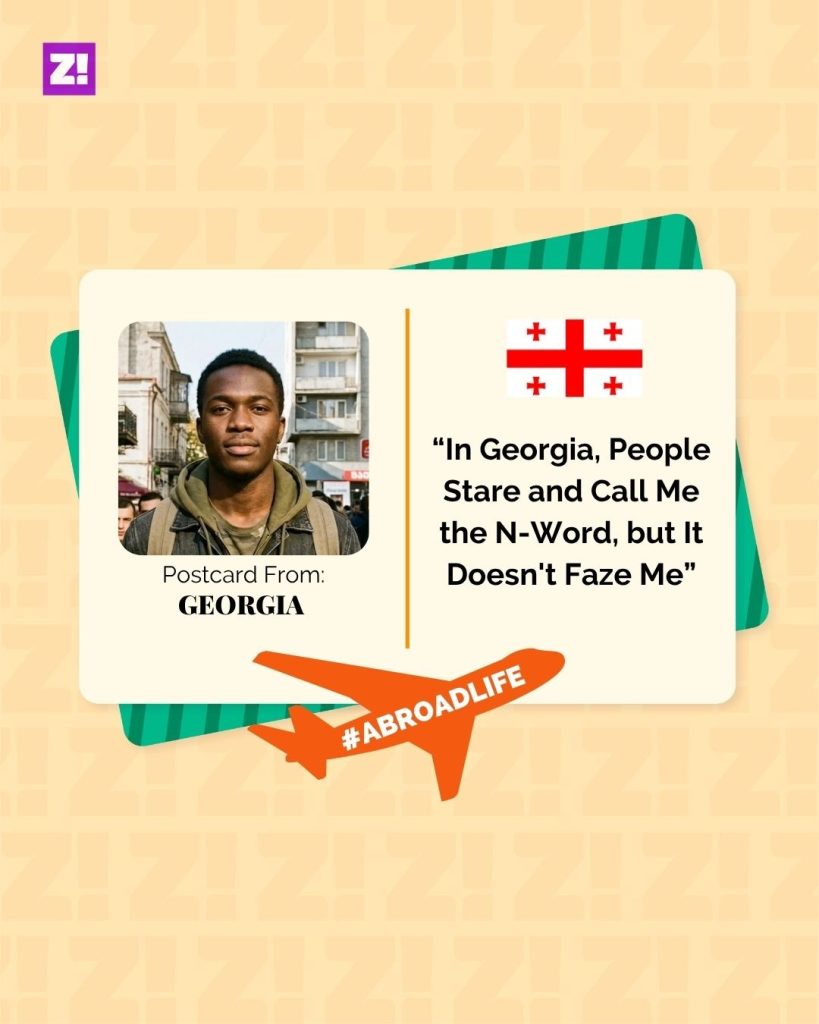
Samson* (20) left Nigeria when his family migrated to the UK. In this story, he talks about the initial loneliness of life in the UK, why he decided to move to Georgia for his studies, and the reality of experiencing overt racism in a country where some people are still shocked to see Black people.
Where do you live currently, and when did you leave Nigeria?
I currently live in Georgia. I left Nigeria with my family in 2023, and we moved to the United Kingdom (UK).
What inspired you to leave Nigeria?
We were looking for better opportunities, basically. My mom got a job there, and we all decided to move. My mom got there first, about five months before the rest of us joined her.
What was that experience like for you?
Obviously, I was excited, but I also felt sad because I would be leaving my friends behind. I get very attached to people. But I got over it eventually. I’ve met new people here. And I still talk to my friends in Nigeria a lot too.
When we arrived, we stayed at an uncle’s place for about four months. He made sure we did not lack anything. So it was a very relaxed start to life in the UK. But not being able to do anything or go out with friends got to me quite a bit, to be honest.
It has been a good experience; it just came with a bit of loneliness. But I wouldn’t change anything about it.
What are you up to now?
I’m studying medicine in Georgia. I moved here in 2025.
Studying medicine in the UK is quite expensive as an international student. My parents cannot keep up with that kind of expense. So I looked for cheaper alternatives around Europe, like Romania. I eventually settled on Georgia.
How are you finding life in Georgia?
It’s fine, I guess. It is a less developed country than the UK. When I first got here, it felt a bit like mini Lagos because of the hustling and bubbling. There are still signs of the old Soviet era. You see new, good-looking buildings and older, terrible-looking ones side by side.
The primary language here is Georgian. English is not really spoken among the older people; they speak Russian and Georgian. Some younger people speak English alongside Georgian.
To be honest, it feels like the government here does not care about the Georgian people. You see people begging on the streets in traffic. People really struggle here. Even lecturers and medical doctors struggle so badly in this country.
Coming from the UK, when I convert Pounds to the Georgian Lari, I can live quite comfortably. But the Georgians themselves do not necessarily live a comfortable life; things are very expensive for them.
For me, though, the biggest issue is racism. Some Georgians are not used to Black people, so they can act very strangely around us.
And you didn’t experience anything like that in the UK?
Not exactly. I feel racism in the UK is more subtle, more hidden. For example, I had a boss at work in the UK who I think might be racist. But I cannot prove it. He smiles and acts all nice, but I noticed a pattern of strictly assigning certain tasks to the Black members of staff. That’s what racism in the UK felt like. You feel like it’s there, but you can’t exactly prove it.
And in Georgia?
In Georgia, little kids call me the N-word all the time. You see adults who will be the ones to touch you or brush against you, and then they get offended and keep cursing at you in their language. You see people recording you; some might do it out of curiosity, but some actually record you to post you on the internet. It happens all the time.
How does that make you feel, and how do you react to it?
I grew up in Nigeria, where everybody was the same colour. Even when we saw white people, we didn’t really care. So, I don’t really care about it. I know it affects some people, but personally, I couldn’t care less, to be honest.
Does it ever make you feel unsafe?
No, it does not make me feel unsafe. I go out anytime I want. I do anything I want. I really don’t care. If you come to me, we can have a scrap; that is not a problem. But I am not scared of anybody like that.
Please be safe. You mentioned you made new friends. Are these in the UK or Georgia?
Both.
Are they Nigerians, British, or Georgians? How did you meet them?
In the UK, I made friends at work. Most of them are British, some are Albanian, some are Indian, and some are Ghanaian. I don’t really have Nigerian friends in the UK unless you count people at church. But those are acquaintances, not really friends. In Georgia, I made friends at university. Some are Nigerians, some are from the UK, some are Indian, and some are Canadian. It is quite diverse.
Have you been back to Nigeria since you left?
No. The opportunity hasn’t come up yet. I plan to, but not now. Maybe in the next two years.
If you look to the future, do you see yourself returning to Nigeria to settle at some point, or is your life abroad now?
I think I see my life as being abroad. Obviously, it’s not completely up to me right now, but I do see myself continuing to live abroad.
Let’s go back to the UK. Were there any culture shocks you experienced when you first arrived there?
The main culture shock for me was the fact that people don’t go to each other’s houses that much. You can’t send someone to your neighbour’s house to go and chill. Everybody just stays in their own space. Also, the way they behave toward their elders is different; they do not behave the way we do toward ours in Nigeria. Their idea of respect is different. Those are the two main shocks I had.
What is your favourite and least favourite thing about the UK?
I’ll say my favourite thing is how accessible everything is. Anything you want is accessible, whether online or in stores. My least favourite thing is that I feel like the UK wants to put you in debt. Their taxes are very heavy. It feels like they want you to be broke.
What about Georgia? What were the culture shocks there?
This wasn’t a shock compared to Nigeria, but coming from the UK, I was shocked by the homophobia in Georgia. In Nigeria, people are homophobic, and it is the same in Georgia. Most people are very homophobic, and they are aggressive about it. In the UK, people are very chill about it; I have lesbian and gay friends there. In Georgia, it is very different.
What is your favourite and least favourite thing about Georgia?
My favourite thing is that I have more friends compared to the UK because of university. Also, when I convert Pounds to Lari, I’m able to live comfortably. My least favourite thing is the constant staring. I get that some of them do it because they don’t see a lot of Black people and they’re curious. So I try not to pay much mind to it, but it gets to a point.
What are your plans for the future?
Finish medical school and definitely go back to the UK. I’ll try to build my portfolio and find a good-paying job. If I can’t find a job as a doctor immediately, I’ll find anything related to it and continue building myself.
On a scale of one to ten, how happy were you in the UK, and how happy are you in Georgia?
For the UK, I’ll say an eight. Everything feels accessible. I have family and friends close by, so it is just very comfortable for me.
I’ll say a seven for Georgia. I think Georgia is a hidden gem. Most people shy away from it, but it is very nice if you actually open up to it—the places, the history, and even some of the people. Not everyone is racist. I’ve met some really good people here.
Do you want to share your Abroad Life story? Please reach out to me here. For new episodes of Abroad Life, check in every Friday at 12 PM (WAT).
Click here to see what other people are saying about this article on Instagram