Someone you know has left or is planning to leave. 1,000 Ways To Japa will speak to real people and explore the infinite number of reasons and paths they use to get to Japa
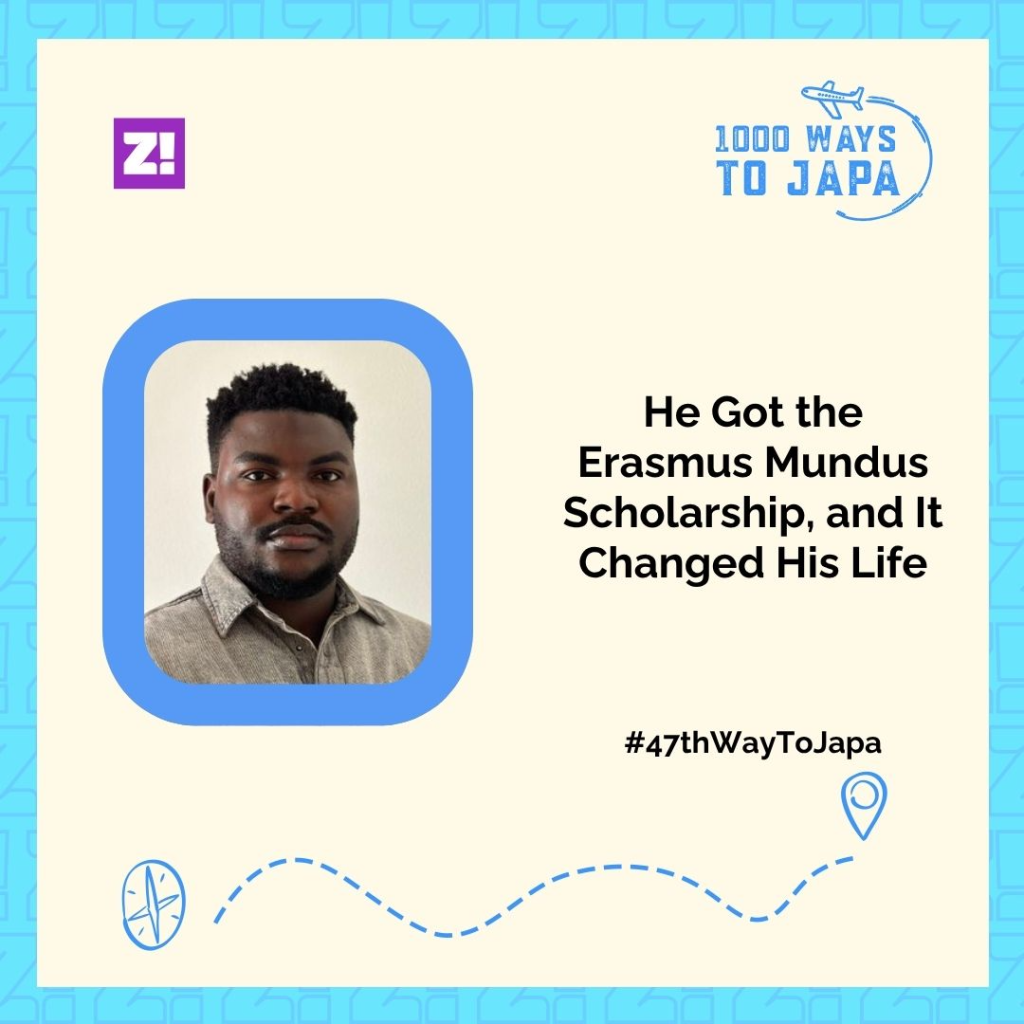
Ridwan’s life changed the year he secured the Erasmus Mundus scholarship. In this story, he shares the step-by-step process of the application stage and what it’s like to study in four countries.
Where do you live, and when did you move out of Nigeria?
I live in Dresden, Germany. I relocated from Nigeria in October 2023.
Amazing! How exactly did you leave Nigeria?
I got an Erasmus Mundus scholarship. I’d been applying for it for about two or three years and finally secured it in May 2023. I left Nigeria on 4th October 2023, to start my program in Munich, Germany, though I ended up studying at four universities.
Four universities?
Yes. All Erasmus programs are typically run by a consortium of at least three universities. For my program, we started at the Technical University of Munich (the host university), where we spent about six months, and then went to the Technical University of Vienna, the Technical University of Dresden, and the University of Twente in the Netherlands.
For the final thesis semester, we had the freedom to choose where to do our research. Some of my colleagues returned to Munich and Vienna, some went to the Netherlands or Italy, and a few even went to the US. Erasmus allows you to do your thesis at a university or a company. For instance, if you interned with Tesla and liked a project there, you could request to write your thesis with them. You’d have both an industry and an academic supervisor.
In my case, I initially planned to do my thesis in the Netherlands, but I decided to stay in Germany. My residence permit was expiring, and the cost of living in the Netherlands was too high compared to Dresden. So, I found a new thesis topic here in Dresden, stayed back, and completed my program.
That sounds like a lot of travelling around. How did you handle the visa process, especially as a Nigerian student?
Honestly, the day I got the email confirming I’d been selected for the scholarship was one of the happiest days of my life. But immediately after that excitement came the reality that I needed money to prepare for visas and accommodation.
They told us immediately to start searching for housing for our program because finding accommodation in Munich is very difficult. I had to take a loan to cover my expenses. When I went for my visa appointment, the embassy saw that I was an Erasmus scholar, so they waived the visa interview fee and refunded my application fee. The main expenses I had were accommodation and flights.
Some other Erasmus scholars wrote to their programs for financial help, but most programs don’t release any money until you arrive at the university. In my case, I had some savings, but I was hoping the exchange rate would drop. Unfortunately, President Tinubu was elected around that time and removed fuel subsidies, which also affected the dollar rate. It wasn’t the easiest experience.
Sounds tough. Why did you decide to choose Germany as your final destination?
I chose Germany mainly because my host university is in Germany.
Also, if you study here for at least two years, you qualify for a graduate visa, which allows you to stay back for 18 months to search for a job.
That makes sense. Let’s talk about the Erasmus scholarship itself. For someone hearing about Erasmus for the first time, how would you describe it?
Erasmus is a fully funded master’s scholarship sponsored by the European Union. It covers several master’s programs across Europe. One thing to note is that these programs don’t always have the typical names you’d expect. For instance, someone with a finance background might not find a program called “Master’s in Finance.” The programs are designed to address specific global or regional challenges, so they have unique names.
For example, I applied to the Copernicus Digital Earth program. It’s a master’s in geospatial technology, but it’s named after the European Union’s Copernicus satellite program. There’s also another chemistry-related Erasmus program called EMOTION.
So, how can people find the right Erasmus program for them?
The easiest way to start is to go to Google and search for your interest in this format – e.g “Master’s in Chemistry Erasmus Mundus Scholarship.” Google will show you Erasmus programs that fit that field.
The official way is through the Erasmus Mundus Catalogue, which lists all the available programs, which are about 214. Not all programs are funded yearly, so it’s good to keep checking.
Once you’re on the catalogue, you can use keywords like “Finance” or “Engineering” to filter the programs. Or, if you’re serious about it, go through the entire list like I did because some programs have unusual names, and you might miss out if you only search by keywords.
When you find one that interests you, check the curriculum on the program website. That’s what helped me. The program I got into was my backup, but when I reviewed the curriculum, it turned out to be 80% similar to the one I initially wanted.
Is the Erasmus Mundus Catalogue an actual website?
Yes, exactly. Just Google “Erasmus Mundus Catalogue” and click the first link. That’s where all the programs are listed.
How can Nigerians make their applications stand out?
The first thing I’ll say is start early. Don’t wait until two weeks before the deadline. A strong application takes months to prepare. I’d also recommend creating a spreadsheet to track programs, deadlines, and requirements since each program is different. Do your research. Don’t just apply because it sounds prestigious. Make sure it aligns with your career goals. All the details you need are always on the program’s official website.
You can also email program coordinators if you have questions; they usually reply. And definitely check LinkedIn to find current or past Erasmus scholars from the program you’re interested in. Reach out to them for guidance or even feedback on your motivation letter.
For the motivation letter, be authentic. Don’t rely on AI. I know it’s tempting, but during my program’s selection process last year, almost half of the applications were disqualified in the first round because reviewers detected AI-written content.
You can use AI to help with structure, but the story must be yours. The admission committee can tell when it’s not genuine. In my program, the motivation letter counted for about 50% of the total score.
Tell your story in your own voice. Connect your past experiences to your future goals. Tailor each letter to the specific program; don’t copy and paste. And follow instructions to the letter: if they say 1000 words, don’t write 1500; if they say PDF only, don’t send a Word doc.
Also, if the program lists some documents as “optional,” like recommendation letters or a portfolio, try to include them if possible. One of the students I mentored last year created a quick online portfolio, and that helped his application stand out.
Do you have any tips for writing an academic CV?
For Erasmus, use the Europass CV format. Many programs specifically ask for it. It’s easy to build online, and you can even find tutorials on YouTube. An academic CV is different from a professional one. For academic CVs, start with your education before your work experience. Only include work experience that’s relevant to the program. For instance, I was a backend engineer before applying for cartography, but that wasn’t relevant, so I left it out.
Add volunteering, leadership roles, relevant online courses (under “Continuing Education”), and technical skills connected to the program. Skip sections like hobbies.
Some programs might ask for your date of birth, nationality, or passport details, so include them if requested. Ideally, your academic CV should not be more than two pages. Reviewers have hundreds of applications to read.
Thank you. What’s a good GPA for this scholarship?
Erasmus is merit-based, but it’s also holistic. They assess your entire profile, including your grades, experience, motivation, and recommendation letters.
I had friends with GPAs around 3.8 who were selected. So your CGPA matters, but it’s not everything.
You don’t need research publications, either. I had none when I applied. Just focus on crafting a strong, authentic motivation letter and a good CV. Review your materials multiple times before submission. I started working on mine months in advance and kept editing it until I was confident it was perfect. Your GPA only becomes a problem if it’s below the program’s minimum requirement. And when writing, emphasise your achievements. For example, mention if you were in the top 1% or 10% of your class. It makes a strong impression.
That sounds smart. What was it like studying in multiple countries at once?
It was incredible. Each city had its charm. Munich was expensive but technologically advanced; Dresden was affordable and community-oriented; Vienna was beautiful and rich in culture; and Twente was small and quiet.
The mobility part was tricky, though. You have to pack up and find new accommodation every six months, adjust to new systems, and adapt to new cultures. Just when you start making friends, it’s time to move again.
But it was worth it. I made friends from over twenty countries, experienced different teaching and research styles, and travelled a lot. One person in my cohort visited 40 countries before the end of the program, and I’ve managed to visit 20 countries, too. I also learned German; it wasn’t required, but it helped with daily life.
That sounds amazing. How would you say this scholarship has changed your life?
It’s changed my life completely. Moving to Germany was my first time ever leaving Nigeria. The experience exposed me to new cultures, systems, and a global network of people. It taught me adaptability, cultural awareness, and resilience. God bless Nigeria, but Erasmus opened doors I never imagined possible.
On a scale of one to ten, how happy are you in Germany?
Seven. I miss Nigeria. The whole point of this experience is to make the most of this opportunity and help other Nigerians reach the top, too.
Want to share your japa story? Please reach out to me here.