It’s Children’s Day in Nigeria today, so you’ll likely hear performative speeches from public officials on the value and importance of children to the country. But they’ll not tell you that Nigeria is working overtime to snuff the life out of them.
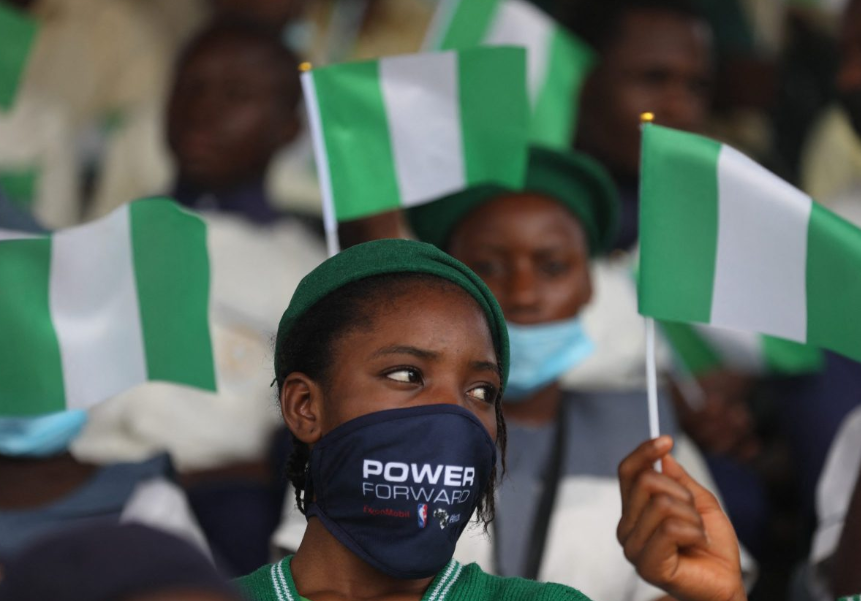
Not to be one of those guys, but there’s not much to celebrate. Nigeria has, by multiple standards, become one of the worst places to be a child. If you need proof of this statement, we’ll give you a few:
The schools are emptied out
The schools are emptying out, and we don’t mean a handful of schools. Across Nigeria, you can find more children at home and on the streets than in class. The most recent Situation Analysis of Children and Adolescents in Nigeria (SitAn), done by the federal government and the United Nations Children’s Fund (UNICEF) in November 2024, revealed that 10.2 million children of primary school age in Nigeria are out of school. For context, this means many children aged six to 12 are deprived of basic education.
It gets worse — many of those who manage to make it through primary school cannot continue. According to the 2024 SitAn, 8.1 million children of secondary school age are not in school. These two figures, put together, amount to 18.3 million, making Nigeria the country with the highest rate of out-of-school children globally.
These numbers, as high as they are, are mostly concentrated in the Northern part of the country, where insecurity continues to destroy classrooms and the communities. Other factors causing the surge in out-of-school children include multidimensional poverty, worsened by economic reforms, which the government insists are effective, but for some reason, have refused to reflect in the lives of everyday Nigerians.
Children can’t get enough to eat
Nigerian children didn’t ask for it, but they are certainly number one on the list of God’s strongest soldiers.
In addition to being deprived of basic education, they are not guaranteed the most basic need of every child—food. The most recent data from UNICEF shows that about 11 million children under the age of five in Nigeria experience severe child food poverty. This means that one in every three children under the age of five in Nigeria doesn’t have enough to eat.
The situation is so bad that the country is among the top 20 worldwide that make up 65 per cent of 181 million children suffering severe child food poverty. The culprits of this tragedy are the same ones causing a surge in out-of-school rates: insecurity and poverty.
It’s raining and it’s pouring for Nigerian children, but if the government is seeing it at all, it certainly acts like it doesn’t.
Child marriage is still a thing
While countries like Sierra Leone have broken free from child marriage by enacting a strong law banning it, Nigeria continues to put its female children at risk by allowing vague and porous laws that encourage the practice.
In Nigeria, many girls are still victims of early forced marriage, especially in Northern Nigeria, where 48 per cent of girls are married off by their families as young as 15, while 78 per cent are married off at 18.
While these figures might make it seem like there is no law against this practice, the Child Rights Act (2003) prohibits this. Still, like a lot of laws in the country, this one is merely treated as a suggestion because child marriage is still openly practised, even by government officials.
Nigeria’s Child Rights Act seeks to protect children by outlawing the marriage of individuals under the age of 18, and this should ordinarily gain general support. However, only 24 out of the country’s 36 states have domesticated the law, and even then, they are not fully enforcing it. Much worse, some states (in Northern Nigeria) that have domesticated the law have watered it down so much that it has lost its power to protect children.
There have been a ton of downs for Nigerian children than there have been ups, and we wish we could say it’ll get better, but it doesn’t look like it, at least, not at the rate at which the country is moving. Currently going through what has been described as its “worst economic crisis in a generation,” the setting where Nigerian children must grow up is anything but conducive. This is also worsened by insecurity which gulped ₦6.11 trillion, of the 2025 budget, leaving a miserly ₦5.7 trillion for education, a far cry from the 20% recommended by the United Nations International Children’s Education Fund (UNICEF). It’s good to wish, but we doubt the country’s leadership will change the story of Nigeria’s children unless it is held accountable. This duty is highly up to everyday Nigerians, especially considering that the opposition, which should naturally do that, is being absorbed into the ruling party.