The Nigerian experience is physical, emotional, and sometimes international. No one knows it better than our features on #TheAbroadLife, a series where we detail and explore Nigerian experiences while living abroad.
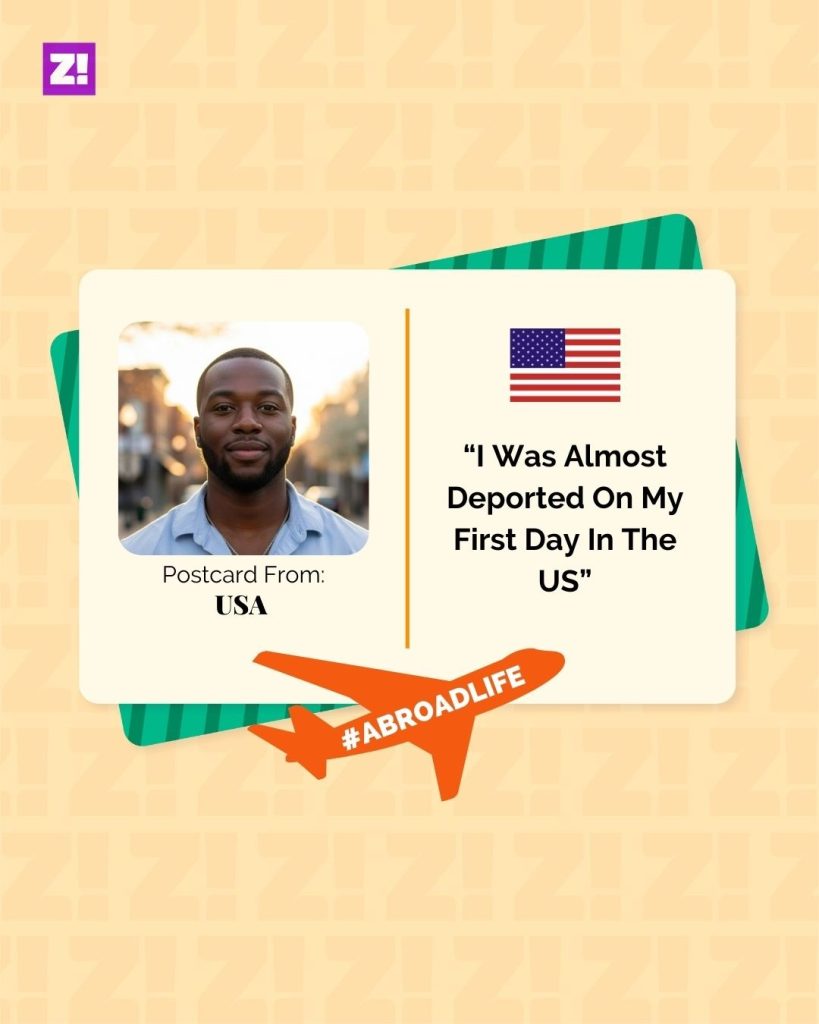
Makinde* (24) was only 16 when he left Nigeria to study in the US. In this story, he talks about moving there as a teenager, why he is looking to move to Europe after his master’s degree, and the terrifying immigration issue that almost got him deported on day one.
Where do you live currently, and when did you leave Nigeria?
I am currently in the United States. I left Nigeria in 2018.
What inspired you to leave?
I got a scholarship to study in the US. I planned to study abroad even before I finished secondary school, so I was already writing scholarship exams.
Why was it important to you to leave Nigeria?
One reason was just to experience life outside Nigeria. I had not been anywhere else except for a brief trip to Benin Republic. Secondly, I felt it would prepare me best for the future and set me up for success.
Was the US the only country you considered?
I considered others, but the US was the best choice at the time. I didn’t want to have to learn a new language, so I focused on English-speaking countries. It was easier to get scholarships for schools in the US then, and the visa process seemed more straightforward.
Canada also had a good visa process, but their schools generally did not give out scholarships unless you attended high school there first. So I chose the US.
How old were you at the time?
I was 16.
What was it like arriving in a new country that young?
To be honest, it was exciting because I was focused on the mission that brought me here. It was a bit scary too because I had no family in the US. But I was fortunate to have a family friend who moved with me; we studied at the same school, and he had family here, which made the experience a little easier.
Overall, it was a straightforward experience. Well, except for the day we arrived, which was a bit crazy.
What happened?
When you get a student visa, you are usually allowed to enter the country a maximum of 30 days before your programme starts. But we arrived earlier than that.
My friend and I had signed up for a summer programme for incoming freshmen with a big tech company. It was starting a couple of months before the school session began. We got the offer very late, so we couldn’t process the visa changes in time.
In hindsight, the decision we made was a bit risky. We got to immigration, and the officers noted we were 30 days earlier than our student visas allowed. Things got really tense.
There was this immigration officer—a white woman—who seemed hell-bent on getting us deported. They took us into a room, and we were there for about six hours. They didn’t let us use our phones or communicate with anyone. When it was our turn to explain the situation, she kept dismissing us.
Luckily, our supervisor from the programme came down and got them to give us a 30-day waiver. It’s basically a document that allowed us entry for that period without a visa. But it was a scary experience; my worst experience in the US. I had just landed, and someone was already trying to send me back.
Glad you weren’t sent back home. What have you been up to in these eight years?
After my undergraduate studies, I worked for a couple of years, then I started a master’s degree, which I’m working on now.
What is the plan after your master’s?
I am probably going to leave the US if possible and move to another country.
What countries are you considering?
I am mostly looking at countries in Europe, such as Switzerland, Norway, Germany, and the UK. I am also considering Canada.
Have you travelled to other countries since you moved to the US?
Only Mexico for a couple of days. It was because of the visa thing. After the 30-day waiver, we had to leave the US and re-enter to reactivate our student visas. So we just went to Mexico for two days and then came back.
Did you get up to anything fun in Mexico?
Not really. We just hung around the airport area. I tried the food, but I didn’t like it at the time because I was still fresh from Nigeria and hadn’t adjusted to the new tastes.
Have you been back to Nigeria since then?
Yes. That was in the summer of 2019, a year after I moved. It was fun to see everyone again. I hadn’t seen my family in a year, and they were worried because I was only 16 when I left for a place where I didn’t know anyone. It was very sentimental.
Why haven’t you visited since 2019?
I haven’t really had the chance, and there have been immigration issues as well.
Do you have plans to return to Nigeria on a permanent basis?
Not really. Maybe in the very far future, perhaps when I am about to retire. A lot of things would need to be in place for me to live there permanently, such as better infrastructure, safety mechanisms, and healthcare. I don’t see Nigeria as a place where I would want to start a family.
How does your family feel about you being away for so long?
They miss me, of course, but they understand the political and immigration implications. They know I am not here playing around. We talk on the phone, but they have accepted the situation for what it is.
And how do you feel about it?
I don’t feel any particular way. It is mostly out of my control. Right now, it is a big risk to leave because of the current political climate. I miss my family, but I have been used to being by myself for a long time. Even in Nigeria, I was in boarding school, so I’m used to being away from them.
What is your support system like in the US?
I have a girlfriend here; we have been dating for about four years. I also have a family friend who came to the US with me; we are still very close and see each other often. I also made a few friends in school.
Do you feel settled or integrated in the US? Can you call this place home?
Yes and no. I have been here a long time, nearly eight years. I have moved around a lot. I have lived in Mississippi, Texas, Florida, Washington, and Missouri. I am fully integrated into the system; I understand how everything works. I know the spoken and unspoken rules. I know where I am welcome and where I’m not. But I don’t think I can really call it home since I plan to leave eventually.
What has been your favourite city to live in so far?
Seattle, Washington. I lived there for about three years. There was a lot to do; I lived close to friends, so it was easy to hang out and plan outings. Seattle is a very outdoorsy city; I enjoyed going rock climbing. At work, I had co-workers with whom I played football every Friday.
Sounds like a lot of fun. What about your least favourite city?
Mississippi, where I did my undergraduate degree. It is very isolated. For example, the nearest grocery store was a 45-minute drive without traffic. The nearest airport was nearly three hours away. Even getting fast food required a 30 to 45-minute drive. It felt very lonely.
What culture shocks did you experience?
One is the tipping culture for food. I am accustomed to it now, but it was a big change for me when I first arrived. The second is the level of systemic racism. It isn’t necessarily in your face, but it is built into the system.
Can you give an example of that?
In job applications, they ask for your race. Sometimes, you might lose an opportunity simply because you selected that you are Black. They can even tell from your name. If it doesn’t sound white, you don’t get picked.
There are examples in healthcare, too. Doctors might treat you differently or not give you all the information you need because you are Black. Or they’ll prescribe the experimental drugs to you like you’re a guinea pig. It just feels so ingrained in the system.
On a personal level, have you had any racist experiences?
Mainly with job applications or while playing online games. I still have my Nigerian accent, and when I talk to people during online games, some people are disrespectful or rude about it.
What is your least favourite thing about the US?
The lack of gun regulations. I have seen people openly carrying guns, and I have friends who basically own an arsenal. I have been fortunate not to be near any mass shootings, but it feels risky that mentally unstable people have easy access to weapons.
I wouldn’t feel comfortable raising a family here because of school shootings. I’ll always have that fear when my child goes to school.
What is your favourite thing about the US?
The wealth of opportunities. There are so many resources for you to grow and build a career. It is a very capitalist society, but there are a lot of opportunities to succeed if you’re ready to work.
One more thing I like about the US is the diversity of food. You can find Mexican, Asian, Mediterranean, and Nigerian food easily because so many cultures have settled here.
On a scale of one to ten, how happy are you in the US?
I would say a seven out of ten. There are great resources and opportunities. There is a better sense of security than in Nigeria, despite the gun issues. The healthcare is good, though expensive. For example, when I tore my ACL a couple of years ago, I was able to easily get surgery and physical therapy to return to full health.
The infrastructure is great, and you have what you need to build your life. But the concerns I mentioned earlier make me want to leave eventually.
Do you want to share your Abroad Life story? Please reach out to me here. For new episodes of Abroad Life, check in every Friday at 12 PM (WAT).
Before you go, help us understand how you and other young people feel about the 2027 general elections by taking this 10-minute survey.
Click here to see what other people are saying about this article on Instagram