• We’ve all heard stories of how Afrobeat legend Fela Anikulapo Kuti was a major opps to the Nigerian military government. It’s been 26 years since his death, and we can’t expressly say that the country’s state has improved. We’re still recycling the same old leaders, and corruption is still the definition of normal. 

    I’ve often wondered what Fela would say or sing if he were alive to see us today, so I devised a means to talk to him.

    Relax, I don’t have supernatural powers, but everything is possible with tech these days. I found an AI technology that lets you bring historical figures back to life, and here’s how my conversation with Fela went:

    Fela: Hello, my people! It’s a pleasure to talk to you beyond the veil!

    Tolu: Hello, sir. I just want you to know that Nigeria hasn’t gotten better since your passing o

    Fela: Yes, my sister. It’s a shame that things haven’t changed much. But we must remember that change doesn’t come easily.

    Tolu: Speaking of change, do you remember Muhammadu Buhari?

    Fela: Ah yes, I remember him very well. Buhari was a military leader who governed Nigeria during one of its darkest periods. He was responsible for many atrocities and human rights violations. 

    Tolu: Ehm, despite his atrocities, Nigeria voted him as president in 2015, and he ruled us for another 8 years till 2023. 

    Fela: That is truly disappointing. It shows that our struggle for democracy and good governance must be continuous. We must remain vigilant in ensuring those in power are held accountable for their actions.

    Tolu: Well said. Anyways, we have a new president. Guess who?

    Fela: Hmm, I’m not a seer, my sister, but tell me, who is the new president? 

    Tolu: Bola Ahmed Tinubu. Do you remember him?

    Fela: Yes, I do remember him. He was a prominent figure in Nigerian politics during my time and played a significant role in the return to democracy after years of military rule. 

    Tolu: You sound like a Tinubu fan

    Fela: I’m not a fan of any individual politician o. My loyalty lies with the people and their struggle for democracy and social justice. Tinubu’s past contributions to Nigerian politics might be noteworthy, but it’s his present actions that matter the most.

    Tolu: Well, during his inaugural speech, he finally removed fuel subsidy, and the suffering in Nigeria has increased.

    Fela: Ah, the fuel subsidy issue has been contentious for some time. While it may bring short-term economic benefits, it’s important to consider the impacts on common people already struggling with poverty and hardship.

    Tolu: I don’t understand your English. Are you in support of the subsidy removal?

    Fela: No, I’m not. As an activist who always fought for the rights of the people, it’s important that policies put in place by the government better the lives of Nigerians as a whole.

    Download the Citizen Election Report: Navigating Nigeria’s Political Journey

    Tolu: Do you think we should protest?

    Fela: Absolutely. It’s our duty to hold our leaders accountable and fight for our rights.

    Tolu:  You fought many times against police brutality, and we’re still experiencing the same brutality today. How can we stop this?

    Fela: Ah, police brutality is an issue that has plagued our society for a long time. It’s not enough to condemn the actions of these police officers; we must address the root causes in the police system.

    Tolu: Oh, ehen, did you hear that your last son, Seun, slapped a police officer?

    Fela: Ehn? (laughs) My son Seun is a fighter like his father. But violence is never the solution to police brutality or any other societal issue. 

    Tolu: What’s your advice for Nigerian youths today?

    Fela: Never forget your roots, and always stand up for what you believe in. Don’t be afraid to challenge those in power and demand justice for yourself and your fellow citizens. Educate yourself on our issues and work towards solutions that benefit everyone, not a select few. And above all, remember the power of music and art to inspire people to change. As I’ve always said, “Music is a weapon”. 

    If you’re interested in a series like this, where I speak with historical figures, please fill out this very short form. Thank you!

    What else happened this week?

    Civil Servants Suspended For Salary Padding

    Corruption is a major problem in Nigeria that we typically blame our politicians for. However, we shouldn’t turn a blind eye to the amount of dishonesty and fraud present in ordinary citizens as well. On June 12, 2023, news broke of some civil servants from Ministries, Departments and Agencies (MDAs), the Revenue Mobilisation Allocation and Fiscal Commission (RMAFC), and the Office of the Accountant General of the Federation (OAGF) who were suspended and under probe for salary padding.  

    An investigation revealed that an Integrated Personnel Payroll Information System (IPPIS) desk officer in charge of salaries connived with these civil servants to pad their salaries by manipulating the IPPIS system. For instance, a level 7 officer whose salary should be ₦60,000 was receiving over ₦400,000—the salary package of a director. Apparently, this salary padding had been going on for a while before it was finally caught wind of. 

    Currently, steps are being taken to upgrade the IPPIS system, and the culprits will be handed over to the authorities for prosecution. 

    Question of the week

    President Bola Tinubu signed the Student Loan Bill on June 12, 2023. Is this a step in the right direction for the Nigerian education sector? And if you could change one thing about the Bill, what would it be?

    Video of the week

    Ehen one more thing…

    Femi Gbajabiamila, Speaker of the House of Representatives, will be Nigeria’s 7th Chief of Staff. But what happens to his rep seat? Find out here

    To ensure you don’t miss out on the next edition of Game of Votes, subscribe to the newsletter here.

  • It’s customary for Nigerian presidents to retire security chiefs when they assume office, and yesterday was no different with President Tinubu. On June 19, 2023, the Presidency announced the immediate retirement of all service chiefs and the inspector-general of police. 

    However, new appointments have been made to fill these positions, and in this article, you’ll get to know the new Service Chiefs—consider this a brief profile of them. 

    Major Gen. Christopher Gwawin Musa, Chief of Defence Staff (CDS)

    Major Gen. Musa hails from Zangon Kataf, Kaduna state, and was born on December 25, 1967. He’s a member of the 38th Regular Course from the National Defence Academy (NDA) and was commissioned into the Nigerian Army Infantry Corps in September 1991 as a Second Lieutenant. 

    Nigeria’s new Chief of Defence Staff also has an Advanced Diploma in Strategic Management from the University of Lagos and a Master’s in Defence Studies from the National Defence University in Beijing, China.

    Maj. Gen. Musa is no stranger to fighting terrorists and has spent more than a decade of his military career doing so. He was the General Staff Officer 1 Training/Operations at HQ 81 Division, the Commanding Officer of 73 Battalion, the Assistant Director of Operational Requirements at the Department of Army Policy and Plans, and the Infantry Representative/Member Training Team at HQ Nigerian Army Armour Corps. Additionally, he was the former Deputy Chief of Staff Training/Operations at HQ Infantry Centre and Corps, Commander of Sector 3 OP LAFIYA DOLE, and Commander of Sector 3 Multinational Joint Task Force in the Lake Chad Region.

    Before being appointed the new Chief of Defence Staff, he was the Commander of the Nigerian Army Infantry Corps. 

    Major Gen. Taoreed Abiodun Lagbaja, Chief of Army Staff (COAS)

    Major Gen. Lagbaja hails from Osun State and was born on February 28, 1968. He’s a member of the 39th Regular Course and was also commissioned as a Second Lieutenant into the Nigerian Army Infantry Corps on September 19, 1992

    Along with having a Bachelor’s degree in Geography from NDA, he also has a Master’s in Strategic Studies from the US Army War College. Maj. Gen. Lagbaja has been involved in several military operations in the course of his military career. 

    Some of them are: 

    • Operation HARMONY IV on the Bakassi Peninsula, January 1996–June 2000
    • United Nations Mission in the Democratic Republic of Congo, 2004–2005
    • Operation ZAKI, September 2012–July 2014
    • Operation LAFIYA DOLE, December 2015–January 2018
    • Operation MESA/ UDO KA, March 2021–August 2022
    • Operation FOREST SANITY, August 2022 till date

    Before he was appointed the COAS, he served as the General Officer Commanding Division 1, Kaduna, 82 Division, Nigerian Army, Enugu, and the Chief of Operations for the Army.

    Air Vice Marshal Hassan Bala Abubakar, Chief of Air Staff (CAS)

    The new CAS was born on September 11, 1970, and he’s from Shanono, Kano state. He’s a NDA 39th Regular Course member and was commissioned on September 19, 1992, as a Pilot Officer.

    AVM Bala Abubakar has a Bachelor’s degree from the NDA and a Master’s in International Affairs and Diplomacy from Ahmadu Bello University, Zaria. 

    Some of the appointments previously held by the new chief of air staff include:

    • Admin Officer, 16 Engineering Wing, 1 Engineering Group, NAF Makurdi
    • Officer Commanding Admin Services Flight/Group Public Relations Officer, 97 Special Operations Group, NAF Port Harcourt
    • Officer, Commanding ‘B’ Squadron (Do 228), 81 Air Maritime Group NAF Benin
    • Aviation Planning Officer, MONUC Air Operations, Kinshasa, DRC
    • Operations Officer, 88 Military Airlift Group, Ikeja, Lagos; Commanding Officer, 21 Wing 88, Military Airlift Group, Lagos
    • Fleet operation officer, 011, Presidential Air Fleet
    • Commander 011 Presidential Air Fleet
    • Director of Policy, HQ NAF and Director of Operations, HQ NAF
    • Air Officer Commanding Logistics Command and the Chief of Standards and Operations, HQ NAF
    • Air Officer Commanding, Logistics Command
    Download the Citizen Election Report: Navigating Nigeria’s Political Journey

    Rear Admiral A. Emmanuel Ogalla, Chief of Naval Staff

    Rear Admiral Ogalla hails from Enugu Ezike, Igbo-Eze North Local Government Area, Enugu State. He was born on December 20, 1968, and graduated from the NDA 39th Regular Course with a Bachelor’s Degree in Mathematics. During his graduation, he was awarded the Sword of Honour as the best naval cadet in his set and was commissioned Second Lieutenant on September 16, 1992.

    Rear Admiral Ogalla has a Master’s in Strategic Studies from the University of Ibadan, and he has gone on to serve on many ships such as the NNS, EKUN, LANA, DELTA, PATHFINDER, and many more. 

    He was on board NNS EKUN and participated in Liberia’s Economic Community of West African States Monitoring Group (ECOMOG) operations in 1996. He was also the Base Operations Officer on the NNS PATHFINDER, and during his time there, a significant drop in illegal maritime activities was recorded. Until his recent appointment, he was Director of Lessons Learnt at the Naval Headquarters in Abuja.

    The new Chief of Naval Staff is also a member of the Nigerian Hydrographic Society, the Nigerian Institute of Management, the International Earth Rotation Services, and a fellow of the Occupational Safety and Health Association of the United Kingdom. 

    Emmanuel Akomaye Parker Undiandeye, Chief of Defence Intelligence

    Emmanuel Undiandeye hails from Obudu, Cross River State. He’s part of the Intelligence Corps of the Nigerian Army and was the Commandant of the Martin Luther Agwai International Leadership and Peacekeeping Centre, Jaji, Kaduna State. 

    As the new Chief of Defence Intelligence, he’ll be responsible for strengthening our defence sector, ensuring military cooperation with other countries, maintaining the territorial integrity of Nigeria, and, of course, protecting the lives of citizens. 

    Kayode Egbetokun, Acting Inspector General of Police

    Kayode Egbetokun left his lecturing role at the Yaba College of Technology and enlisted in the Nigerian Police Force on March 3, 1990, as a Cadet Assistant Superintendent of Police. 

    This is not the first time he will be working with Tinubu. In 1999, he was appointed Chief Security Officer to Bola Tinubu when he served as the governor of Lagos state. Some of the other appointments held by Kayode Egbetokun are:

    • Commander, Rapid Response Squad, Lagos
    • Squadron Commander, Mopol 5, Benin, Benin City
    • Officer-in-Charge, Anti-Fraud Unit, FCT Command, Abuja
    • Commissioner of Police, Kwara state

    He was also the Assistant Inspector General of Police, deployed to Zone 7, Abuja, in September 2022. He was redeployed to the Nigerian Police Force Criminal Investigations Department (FCID) as Deputy Inspector General of Police. 

    Nuhu Ribadu, National Security Officer (NSA)

    For many Nigerians, Nuhu Ribadu is a household name. He’s the first executive chairman of the Economic Financial Crimes Commission (EFCC) and was also recently appointed as the Special Adviser on Security to the president. 

    Nuhu Ribadu was born on November 21, 1960, in Yola, Adamawa state. He studied Law at Ahmadu Bello University, Zaria, and was called to the bar in 1984. After his National Youth Service, he joined the Nigerian Police Force (NPF). As chairman of the EFCC, he worked tirelessly against corruption and brought many offenders to book.  

    The new NSA is a recipient of the Inspector General of Police Awards of 1998, 1999, and 2000. He also received a special commendation from former President Olusegun Obasanjo in 2005 for the successful prosecution of cases relating to fraud and other economic crimes. 

    As Nigeria welcomes the new service chiefs, it is expected to signal a positive shift in our security situation. With their commendable backgrounds, it is hoped that they will bring new insights to address the nation’s security issues.

  • Nigeria’s president, Bola Ahmed Tinubu, has been a very busy man in the last three weeks. He’s removed fuel subsidy, appointed a Chief of Staff and Secretary to the Government of the Federation, suspended Nigeria’s bad boy, Meffy, as the Central Bank of Nigeria’s (CBN) governor, and signed the Student Loan Bill, amongst other things. 

    According to the constitution, the number of Special Advisers (SAs) appointed by the president to assist with his duties is prescribed by a resolution of the National Assembly. And on June 6, 2023, the Senate approved Tinubu’s request to appoint 20 special advisers, but this request didn’t state the specific names of the SAs. 

    However, on June 15, a list of eight out of the 20 special advisers was released. These SAs for the next four years will be instrumental in ensuring the success of this administration. The appointees are: 

    • Dele Alake; Special Adviser, Special Duties, Communications and Strategy 
    • Wale Edun, Special Adviser, Monetary Policies
    • Olu Verheijen; Special Adviser, Energy
    • Yau Darazo, Special Adviser, Political and Intergovernmental Affairs
    • Salma Ibrahim Anas, Special Adviser, Health
    • John Ugochukwu Uwajumogu, Special Adviser, Industry, Trade and Investment
    • Nuhu Ribadu; Special Adviser, Security
    • Zacchaeus Adedeji. Special Adviser, Revenue

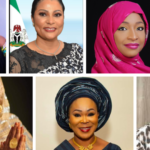
    These new appointees are all experts in their various fields; however, in this article, we’ll spotlight the two women who made this list: Olu Verheijen (SA, Energy) and Salma Ibrahim Anas (SA, Health).

    Who’s Olu Verheijen?

    Olu Verheijen has a Bachelor of Arts degree from Long University and a Master’s in Public Policy from the Harvard Kennedy School of Government. At 46, she’s one of the youngest people on the list of special advisers, but she has proven to be a force in the field. 

    With about 20 years of experience in the energy and power sectors across Sub-Saharan Africa, she’s the founder and managing director of Latimer Energy. She is also an Advisory Council Member of the US Millennium Corporation for Energy at Growth Hub

    This isn’t the first time Olu Verheijen will serve the Nigerian government, as she has supported the formulation of policies and reforms to promote investment in gas infrastructure for domestic markets. She was Shell’s finance lead on the negotiations for Nigeria’s first World Bank Partial Risk Guarantee. 

    Additionally, she gives back to the people through her BFA Foundation, which offers scholarships for career advancement, particularly in the energy sector, for women and other disadvantaged groups.

    Download the Citizen Election Report: Navigating Nigeria’s Political Journey

    Who’s Salma Ibrahim Anas?

    Salma Anas, aged 57, has an exceptional record in the Nigerian health sector with over 25 years of experience. Born and raised in Maiduguri, she’s the daughter of a former police officer and deputy governor of Borno state, the late Ibrahim Anas. 

    Salma received her Bachelor of Medicine and Bachelor of Surgery from the University of Maiduguri in 1989. Since then, she has served in both the public and private health sectors and has been instrumental in policy formulation and developing national, regional, and international health programmes. For instance, she has worked towards improving access to quality reproductive, maternal, newborn, child, adolescent, and elderly health and nutrition services. 

    Some of the appointments previously held by Salma include: 

    • Director of Family Health Services at the Federal Ministry of Health .
    • Director of Special Projects & National Coordinator Health Sector Humanitarian Crisis at the Federal Ministry of Health.
    • Commissioner for Health, Borno state, 2011-2015.
    • Assistant Representative/Head of Reproductive Health/HIV, United Nations Population Fund, Nigeria.
    • National Team Leader for the Department for International Development  – funded Maternal Newborn and Child Health  project.

    These two women have a wealth of experience and the expertise needed to serve Nigeria in their new roles. And more importantly, their remarkable achievements so far make them powerful role models for young girls and women in Nigeria. 

  • Nigeria’s national symbols include the national flag, the national anthem, the coat of arms and the national pledge. In this article, we’ll be looking at the history of the Nigerian flag, the symbolism behind it, and some facts you should know. 

    What’s the history behind the Nigerian flag?

    It’s relatively popular that the Nigerian flag was designed by Micheal Taiwo Akinkunmi in 1959 when he was a 23-year-old student. 

    However, prior to this, between 1914 and 1959, when Nigeria was a British colony, the flag of Nigeria was British blue with a green six-pointed star referred to as the Seal of Solomon. At the centre of this seal was a white Tudor Crown and the name “Nigeria”; the crown was later modified in 1953 to a St. Edward’s Crown, used for coronation ceremonies by the British.

    In 1958, Nigeria started working towards becoming part of the big boys. We were ready to be an independent country, which led to the creation of a national planning committee. The national planning committee held a competition to select the national flag, with the winner chosen by popular vote. 

    There were about 3000 submissions, but in the end, Taiwo Akinkunmi’s design ultimately won. But did you know that the committee altered Taiwo’s original flag design? His original concept for the flag included a red burning sun in the middle of the white vertical stripe, with two green bands on both sides. 

    The sun symbolised divine protection and guidance, the green represents our natural wealth, and the white signifies peace. 

    However, due to Nigeria’s diversity, the committee decided it’d be better to have a relatively simple flag design. And on October 1, 1960, our new National flag was officially adopted and flown publicly for the first time.  

    Nonetheless, this isn’t all there is to the Nigerian flag. Here are some interesting facts that you should also know:

    No flag can be placed higher than the Nigerian flag

    This is significant sign of respect to the nation. When the national flag is in a room or hung anywhere, no other flag, symbol or emblem should be placed higher than it. Also, according to the Flags and Coat of Arms Act, an old or worn-out flag must never be displayed as it’s considered a sign of dishonour. 

    The National flag doesn’t sleep

    The flag is expected to be erected and flown ceremoniously by dawn at 6:00 a.m. and lowered slowly at dusk by 6:00 p.m. If you’ve gone through the National Youth Service Corps (NYSC) programme, you’ll remember that this happened regularly at the orientation camps.  

    Half-mast

    The flag is usually flown at half-mast as a sign of respect and grieving during state funerals or memorials.

    We have a presidential flag

    As the name suggests, the presidential flag is reserved for the president only, and it bears the coat of arms in the centre of the white stripe. 

    The national flag on vehicles

    You are not allowed to display the flag on your vehicle; this is reserved for notable dignitaries only, i.e., the president, vice-president, senate president, speaker of the house of representatives, state and deputy governors, the chief justice of the federation, and others permitted by protocol. The flag must be placed on the right fender of a vehicle or on the radiator cap. 

    Additionally, you should also know that some actions are considered offences against the national flag. These include:

    • Defacing or destroying the flag
    • Flying the flag without a licence from the Ministry for Interior Affairs
    • Flying the national flag on the same pole as another flag
    • Flying the national flag on the same level as any other state flag
    • Flying the flag for business purposes rather than patriotism.

    However, offences relating to the national flag attract a fine of only ₦150 with no option of imprisonment. 

  • Every year on June 15, World Elder Abuse Awareness Day (WEAAD) occurs to educate and sensitise people about the suffering and abuse inflicted on senior citizens. The WEAAD was officially recognised and established in December 2011 by the United Nations General Assembly in its resolution 66/127.

    What is Elder Abuse? 

    According to the United Nations, elder abuse is “a single, or repeated act or a lack of appropriate action where there’s an expectation of trust which causes harm or distress to an older person”. In simpler terms, elder abuse is when older citizens are harmed by people they trust, such as a spouse, children, grandchildren, neighbours, or even carers. 

    Some of the earliest discussions around elder abuse started in the mid-70s, when British journals described it as “granny battering”. However, since then, attention has been given to checking this issue and protecting older people’s rights and quality of life, particularly in Europe and North America. 

    Unfortunately, the same can’t be said for Africa. Despite many people praying to reach old age, we have many cases of elder abuse in Nigerian society. But before going any further, what are the types of elder abuse?

    Physical abuse

    Physical abuse occurs when pain is inflicted on an elderly person. Examples include kicking, punching, pinching, over or under-medicating, starving as punishment, or exposure to severe weather. 

    Sadly, Nigeria has many instances of this form of abuse; in March 2022, 25-year-old Naziru Magaji was arrested in Kano state for beating up his 80-year-old grandmother, killing her, and throwing her body into a well. 

    Want to know Nigeria’s political history since 1999? Sign up here.

    Emotional or psychological abuse

    This is a common type of elder abuse where insults, threats, and harassment are used to cause feelings of shame, stress, fear, or distress in an older person. This can range from name-calling, intimidation, or isolation as a form of punishment to giving them the “silent treatment”. 

    Sexual abuse

    Sexual abuse is any form of sexual contact not consented to by the elderly. Examples include inappropriate touching, browsing through printed electronic pornographic materials in front of an older person, or other unwanted sexual behaviours. It’s sad to say that this form of abuse is rarely reported due to the shame associated with it. 

    Structural abuse

    This is the type of abuse perpetrated by the government. For instance, the marginalisation and exclusion of elderly people from development programmes, a lack of reliable healthcare systems and welfare packages, or even a delay in the payment of gratuities and pensions 

    A Vanguard report on June 8, 2023, showed that about 34 states owed a backlog of unpaid gratuities, and 27 states had unpaid pensions running into billions of Naira. 

    Cultural abuse

    Cultural abuse speaks to the attitude of people towards issues in relation to aspects of culture. It’s not uncommon to see instances of family members accusing the elderly of witchcraft, which eventually results in stigmatisation and sometimes death. 

    In March 2020, a viral video showed the heartbreaking scene of a man flogging his grandmother because she was declared a “witch” by his pastor. In December 2021, some youths in Rivers State beat and stripped naked an elderly woman suffering from dementia over witchcraft allegations. 

    However, cultural abuse also includes forbidding the older person from wearing their traditional clothes or speaking their native language in an attempt to embrace modernism.

    Financial abuse

    This type of abuse involves illegally exploiting or using the funds and resources of an older person. This includes taking money under false pretences, forcefully taking over assets and properties, or forging documents for fraud.  

    Neglect

    Neglect is a common form of elder abuse, and it’s the failure to provide for the elderly’s basic necessities like medication, shelter, food, clothing, or emotional needs. One reason this is a common type of elder abuse is the current state of the Nigerian economy itself. The children and family members of the elderly are barely able to cater for their own needs, making it almost impossible to offer additional help to the elderly. 

    If you no tell us, how we go know? Tell us here.

    In rural communities today, we see many cases of older citizens who are victims of neglect. We spent a moving moment with an elderly woman suffering from neglect and abandonment.

    Meet Kemi Cole

    Kemi is a woman in her late sixties who lives in an abandoned, run-down house in Shogunle, Lagos.

    “I’ve had problems from the onset of my life. I had parents, but they died early. I worked as a housekeeper until I got married. My husband was a troublesome man who drank, smoked, and used drugs. It was getting to a point where I could no longer endure the marriage, so I ran from Ibadan to Lagos with my three children, where I stayed with a friend”, Kemi says when Citizen visited her for an interview. 

    Kemi had high hopes for her eldest son, believing he would bring relief to her troubles upon completing school. Despite graduating from university and becoming a headmaster in Ijebu-Igbo, Ogun state, he tragically passed away at the age of 42. This devastating event shattered Kemi’s world, leaving her completely alone. Her other two children also left her following the death of her first son. For the past four years, she has been desperately searching for her second son, while her youngest child, after finishing secondary school, fell into the “wrong company,” adopted harmful habits, and has been neglecting his mother for the past three years.

    “I usually run around trying to trace the movement of my last child from Oshodi to Lagos Island, but recently, I’ve not had transport money to look for him, and now, these days, it’s getting harder for me to walk around or even stand. Several years ago, I got into a motorcycle accident while taking my first child to school”. The moment with her was emotional; she broke into tears as she remembered her first son. 

    Source: ZikokoCitizen

    Kemi shares her daily struggle to find sustenance. She eats whenever possible, often resorting to offering laundry services or even begging on the streets to feed herself. Unfortunately, her legs pose a significant challenge, making these tasks even more difficult. Stripped of proper attire, Kemi relies on the kindness of others, who occasionally provide her with their old or tattered garments.

    “I now stay with my friend in Shogunle, but she moved away when the house started leaking. When her rent expired, I was asked to renew the rent, but I didn’t have any money to pay. I know my days are numbered in the building because the owners have said they’ll be coming any day now to completely renovate the house, expecting everyone to leave. I’m pleading with the government to help me however they can. I have nothing; I’m simply waiting for death.” 

    Photocredits: ZikokoCitizen

    Kemi shares that the properties in the “Face-me-I-face-you” room belong to her friend who moved out. As witnessed, the room barely had broken ceiling boards and a roof, so Kemi faces frequent exposure to rain and sun. She also always puts basins on the bed when it rains to prevent it from getting soaked. 

    It’s glaring that there is an urgent need for effective government intervention to protect elder abuse victims and the rights of older citizens. 

    What has the government done so far to prevent elder abuse?

    Former president Muhammadu Buhari signed the National Senior Citizens Act 2017 to provide social services, cater for their needs, and improve the quality of life of the elderly in Nigeria. Also, under this Act, the National Senior Citizens Centre (NSCC) was established. 

    Additionally, the NSCC, in partnership with the National Agency for the Prohibition of Trafficking in Persons (NAPTIP), launched a toll-free line, 0800CALLNAPTIP or 07030000203, to report abuse or violence against older persons. MTN users can also dial *627#. 

  • Did you know that in the past week, the Minister of Aviation “launched” an airline that many Nigerians, including the House of Representatives, have discovered to be nothing more than a scam? I’m going to give you the full tea on this, and at other times, the government has tried to play a smart one on us. 

    If you recall, in July 2018, the federal government launched a national airline, Nigerian Air, which was to serve as the second national airline after the collapse of Nigerian Airways in 2003. But unfortunately, the whole thing turned out to be audio, as the only thing we saw was the logo of Nigerian Air and random pictures; no one ever saw an actual aircraft.

    However, it looked like the wait was finally ending when, on May 27, 2023, the Minister of Aviation, Hadi Sirika, unveiled a Boeing 737-800 aircraft at the Nnamdi Azikiwe Airport in Abuja. He also claimed it’d begin international and local flight operations before Monday, June 5. On a norms, this would be cause for celebration, but as you very well know, things don’t work normally here. A few hours later, news reports started pouring in that the unveiled aircraft was already over ten years old and actually belonged to Ethiopia Airlines. The plane was simply painted and presented to Nigerians as an aircraft belonging to Nigeria Air. 

    A committee of the House of Representatives on Aviation carried out an investigation, revealing that the aircraft was chartered from Ethiopia and landed the day before. So far, the House has declared the entire launch of the national airline a fraud and has begun probing those involved. But like I said, this isn’t the first time we’ve seen this kind of situation. 

    In August 2022, the Nigeria Social Insurance Trust Fund (NSITF) management was asked by the Senate Public Accounts Committee (SPAC) to account for how ₦17.158 billion was spent. However, the NSITF couldn’t give a satisfactory explanation and claimed that the documents containing details of the expenditure were kept by the past management and had been beaten by rain and eaten by termites. And, of course, no one was ever penalised for this. 

    Do you remember the story of the money-heist snake? In 2018, a sales clerk at the Joint Admissions and Matriculation Board (JAMB), Makurdi, Benue state, couldn’t account for ₦36 million made from the sales of JAMB scratch cards. She instead claimed that her household had spiritually stolen the money from JAMB’s vault with the help of a mysterious snake. At this point, we can say that Nigeria is fighting against power, principalities, and the animal kingdom. 

    A sad theme around stories like this is that they usually get swept under the rug. Nonetheless, we’re going to keep an eye out to see how the Nigeria Air story unfolds, and hopefully the perpetrators are justly punished. 

    What else happened this week?

    Edo State Government Adopts Hybrid Work

    Many Nigerians haven’t found adjusting to the recent fuel subsidy removal easy. But, the Edo state government is putting measures in place to make life a little easier for its people. 

    On June 6, 2023, in a statement, the Special Adviser to the state governor on Media Projects, Obaseki, announced that the government had reduced the number of work days civil and public servants would have to commute to the office to three and encouraged them to work from home twice a week until further notice. 

    Want to know Nigeria’s political history since 1999? Sign up here.

    He also stated that steps had been taken to increase the state’s minimum wage from ₦30,000 to ₦40,000. Obaseki also announced that efforts were already being taken to improve the power supply to homes and the availability of fibre optic cables to aid remote work and reduce the cost of transportation. 

    Question of the week

    Do you know “tapping” electricity and metre bypass is a theft that can earn you jail time in Nigeria? 

    Video of the week

    Ehen one more thing…

    George Akume has been officially sworn in as the new Secretary to the Government of the Federation. Who is he, and what does his job entail? Find the answer here. 

    To ensure you don’t miss out on the next edition of Game of Votes, subscribe to the newsletter here.

  • Another year, another struggle for Ponmo lovers. It looks like the long-standing beef between the federal government and Ponmo won’t end anytime soon, and this time, it looks like the government has finally caught on to a good reason. 

    On June 12, 2023, the Federal Ministry of Agriculture and Rural Development released a statement advising Nigerians against consuming ponmo, bushmeat, and other smoked meat due to the recent outbreak of anthrax within the West-African sub-region. Although the disease isn’t contagious as it’s zoonotic, you can only get infected by consuming contaminated animal products. Common symptoms of an anthrax infection include cough, fever, and muscle aches, which, if not treated early, can escalate to pneumonia, lung problems, difficulty breathing, and death. 

    However, thankfully, anthrax is a bacterial disease, meaning it’ll respond to treatment with antibiotics and supportive therapy. Also, the disease can be prevented and controlled in animals with vaccinations.  

    Want to know Nigeria’s political history since 1999? Sign up here.

    This news has created another health scare (depending on how you see it) among Nigerians. And information being spread across media platforms is that Ponmo could be the easiest route to getting the bacteria infection. Government health regulatory officials have specifically warned Nigerians not to eat one of their favourite additions to meals, especially local meals. 

    With the way other sources of the disease like bushmeat and smoked meat are being disregarded in this conversation, it makes us wonder, “What has Ponmo done to the Nigerian government?” 

    This isn’t the first time the government has advised or tried to discourage Nigerians from eating Ponmo. And trust us to tell you various ways the government might have shown that there’s a long standing beef with Ponmo. 

    Let’s take a look at some of these instances. 

    The proposed ban

    In 2022, the Nigerian Institute of Leather and Science Technology (NILEST) proposed a ban on the consumption of Ponmo. There were two main reasons behind this:

    • Nigerians obsession with cowskin was negatively affecting the country’s leather industry
    • And that it no nutritional value

    NILEST is still waiting for legislative backing from the Senate to effect this ban.

    NAFDAC’s alarms over imported cowskin

    In February 2022, the National Agency for Food and Drug Administration Control (NAFDAC) released a general warning to the public when it intercepted 120 tonnes of imported industrial cowskin and animal hides being sold as consumable products—Ponmo. This imported cowskin was already pre-treated with toxic industrial chemicals for leather production. And they were being sold to the public for consumption, putting innocent buyers at risk of liver, heart, and kidney damage. 

    If you no tell us, how we go know? Tell us here.

    Lagos state shuts down ponmo sections of markets

    In August 2016, a Lagos State Ministry of Agriculture and Task Force team shut down the ponmo processing sections of the Oko-Oba abattoir and Lairage Complex in Agege. This was due to the health hazards from the unhealthy methods of ponmo processing. The processing methods usually involve burning tyres, which emit toxic smoke into the environment, ultimately harming human health. 

    While you might say the government should focus on more important matters to address than attempting to limit the enjoyment and delectable addition that Ponmo brings to many Nigerians’ meals, there are valid reasons why we should consider reducing our consumption of it.

    It can be dangerous for your health

    As mentioned earlier by the NILEST, cowskin itself has no nutritional value, and the methods involved in its production can put your health at risk. 

    For instance, the cows from which hides are gotten may have been infected or ill; also, the hides are pre-treated with toxic chemicals that can cause aplastic anaemia, cancer, and central nervous system toxicity. 

    It’s having an economic impact

    You don’t need a prophet to tell you that our economy needs all the help it can get. Typically, animal hides are used in the leather industries to produce shoes, bags, and belts, among other things, but in Nigeria, our situation is different. A study by the Nigerian Economic Summit Group showed that our leather industry has the potential to generate $1 billion by 2025. However, due to the widespread consumption of Ponmo, the country loses about ₦585 billion in annual revenue to imported ones.  

  • Nigeria has 32 airports, and the Federal Airports Authority of Nigeria (FAAN) runs 26 of them. The remaining five airports not under the control of FAAN are private air terminals and fields. Presently, Nigeria has 5 international airports and 21 domestic ones for local travel. 

    Former President Muhammadu Buhari (2015–2023), before the end of his administration, renamed 15 Nigerian airports after prominent Nigerian leaders. We will spot them for you in this article as well. 

    Briefly, let me tell you what FAAN does

    The Federal Airports Authority of Nigeria (FAAN), formerly known as the Nigerian Airport Authority (NAA), was established by Decree 45 of 1976 with the sole responsibility of overseeing the operation and maintenance of all federal airports. 

    Some of their key functions include:

    • Providing resources needed for the smooth operation and management of airports
    • Ensuring proper handling of passengers and their baggage
    • Providing criteria for the movement of passengers and their goods by aircraft.
    • Overseeing all economic activities in airports
    • Determining the charges for activities within the airports. 

    As is well known, there are two classifications of airports: international and domestic. Nigeria has five functional international airports. These are: 

    Murtala Muhammed International Airport, Lagos

    The Murtala Muhammed International Airport (MMIA), located in Ikeja, Lagos state, is one of Nigeria’s most popular and busiest airports. This airport was built during the Second World War and was initially named the Lagos International Airport before being renamed after Nigeria’s 4th head of state, General Murtala Muhammed, in the 1970s. 

    The MMIA is the largest airport in Nigeria and transports over 50 million passengers a year. It also has a domestic flight terminal that eases congestion for passengers. 

    Nnamdi Azikiwe International Airport, Abuja

    As the name suggests, the airport was named after the first Nigerian president, Nnamdi Azikiwe. It was built in 2000 and started operations in 2002. It has an international and domestic terminal. Also, the Nnamdi Azikiwe airport terminal is the first to be connected to the rail transport system in the country. FAAN reports that its airport terminals can process about 15 million annually

    Mallam Aminu Kano International Airport, Kano

    Located in the capital city of Kano, Kano state, this airport was named after Nigerian politician Aminu Kano, and it’s the oldest in Nigeria as it began operating in 1936. Before Nigeria’s independence, it was the Royal Air Force station, serving as the point of arrival and departure for the Royal Air Force.

    The Mallam Aminu airport serves most of the northern region. It has international and local terminals, but most of its international flights cater to Muslim pilgrimages to the holy city of Mecca. 

    Port Harcourt International Airport, Rivers

    This airport, located in Omagwa, Port Harcourt, in Rivers state, started operations in the 1980s and also offers domestic and international flights. However, it was closed in August 2006 due to an emergency and reopened in December 2007. And in October 2018, a new terminal was added at the airport. 

    Port Harcourt International Airport is among the airports Buhari renamed. The airport now goes by the name Obafemi Jeremiah Awolowo International Airport. 

    Akanu Ibiam International Airport, Enugu

    This airport, located in the capital city of Enugu, was commissioned on October 22, 1976. It was named after a distinguished medical missionary and governor of the Eastern region in Nigeria’s first republic, Akanu Ibiam. This airport has domestic and local terminals and is the primary airport serving the eastern part of Nigeria. 

    What are the domestic airports in Nigeria?

    Domestic airports, also known as local airports, handle flights within the country, although some have the word “international” in their names. 

    They include: 

    • Olumuyiwa Bernard Aliu Airport, formerly called the Akure Airport Medium Airport, Ondo state
    • Akwa Ibom International Airport, Akwa Ibom state
    • Asaba International Airport, Delta state
    • Oba Akinzua II Airport, formerly called the Benin Airport, Edo state
    • Brigadier Zakari Maimalari Airport, formerly called Gombe Lawanti International Airport, Gombe state
    • Gusau Airport, Zamfara
    • Samuel Ladoke Akintola Airport, formerly called the Ibadan Airport, Oyo
    • General Tunde Abdullahi Idiagbon Airport, formerly called the Ilorin International Airport, Kwara
    • Gen. Hassan Usman Katsina Airport, formerly called Kaduna Airport, Kaduna
    • President Muhammadu Buhari Airport, formerly called Maiduguri International Airport, Borno
    • Joseph Sarwuan Tarka Airport, formerly called Makurdi Airport, Benue
    • Margaret Ekpo International Airport, Cross River
    • Mall. Abubakar Imam Airport, formerly called the Minna Airport, Niger
    • Obafemi Jeremiah Awolowo International Airport, formerly known as the Port Harcourt International Airport, Rivers
    • Sadiq Abubakar III International Airport, Sokoto
    • Sir. Abubakar Tafawa Balewa International Airport, Bauchi
    • Warri Airport, Delta
    • Lamido Aliyu Mustapha Airport, formerly called Yola Airport, Adamawa
    • Zaria Airport, Kaduna

    Nigeria’s aviation sector hasn’t been at its best. Some of these airports are not in good condition, and hospitality in some places is poor. With the hope that most Nigerians share, it will be nice to see developments in our aviation sector that raise the level of service that our airports provide, and perhaps for once, our plans to have a national airline will stop being a pipe dream.

  • For a while now, retirees of the Nigerian Police Force have appealed to the National Assembly to pass the Police Pension Bill, which would exclude them from the Contributory Pension Scheme (CPS). Without trying to stoke false optimism, it looks like they’ve finally gotten the answers to their prayers. 

    What is the latest on the Police Pension Bill? 

    On Tuesday, May 6, the Senate passed the Bill to establish a Police Pension Board. This Bill excludes members of the Nigerian Police Force from the CPS and returns them to the Defined Benefit Scheme (DBS).

    The “Defined Benefit” pension scheme means the government is solely responsible for paying pensions to retirees. Under this scheme, retirees are entitled to a specific amount based on their years of service, retirement age, and terminal salary, as opposed to the Contributory Pension Scheme introduced in 2004, where the employer and employee contribute monthly pension and retirement benefits. Initially, as part of pension reforms under the Pension Reform Act of 2004, the government transitioned police officers to the Contributory Pension Scheme, which also includes all public servants.

    Why did police officers want this Bill in the first place? 

    Before now, the Nigeria Police Pension Office (NPPO) oversaw the payment of pensions and gratuities to retired police officers. And they functioned under the National Pension Commission (PenCom), the pension administrator for retirees under the Contributory Pension Scheme (CPS). 

    However, over the years, the NPPO has been plagued with cases of corruption and mismanagement. In 2013, a High Court in Abuja sentenced Yakubu Yusuf, a Director of the Police Pension Office, to six years imprisonment or the option of a fine of ₦750,000 for spending ₦23.3 billion meant for pensioners for personal use. 

    In 2020, six public officials were re-arraigned by the Economic and Financial Crimes Commission (EFCC) in a High Court in Abuja over their involvement in a ₦64.6 billion police pension scam.

    And beyond the corruption in the NPPO, police officers say the CPS system has faults that have impoverished the lives of police retirees, as the retirement benefits are meagre compared to what would have been received under the DBS. The level of trust in the system is low.

    For instance, an Assistant Superintendent of Police (ASP) and a Deputy Superintendent of Police (DSP) take home #25,000 and ₦29,000, respectively, as a monthly pension. In contrast, officers in the same rank under the Defined Benefits System would receive between ₦106,000 and ₦120,000 as their monthly pension. DBS covers pensioners who existed before the Pension Reform Act of 2004 was enacted. 

    If you no tell us, how we go know? Tell us here.

    Reactions to the Bill

    So far, PENCOM, the Pension Fund Operators Association of Nigeria, and other stakeholders oppose the new Bill, claiming it’ll cost the federal government about ₦ 2 trillion in pension liabilities to cater for 300,000 police officers. 

    On the other hand, Alkali Baba, the representative of the Deputy General of Police, Sanusi Lemu, says that the new Bill would boost the morale of police officers treated unfairly under the CPS. 

    There is a strong shared sense of optimism among police officers about this bill, believing that it has the potential to redefine policing in a positive manner and enhance the lives of both active officers and retirees. We hope this legislation will enable police officers to live and work with greater ease and an improved quality of life, particularly for retirees.

  • On May 29, 2023, a kingmaker finally became king as Bola Ahmed Tinubu was inaugurated as Nigeria’s 16th president. However, it’s been barely six days since the grand commander of the BAT army has been in power, and we don dey see different levels of shege.

    Let’s look at some key things that happened in Tinubu’s first week as Nigeria’s president.

    Bye-bye to fuel subsidy

    During Tinubu’s inaugural speech, he announced the removal of fuel subsidy, and this has caused nationwide panic as the price of fuel and transportation has doubled, queues are gradually returning to filling stations across the country, and many Nigerians are discovering that trekking has many health benefits.

    You and I know that the problem isn’t in the fuel subsidy removal, because it would have happened sooner or later, but in how the announcement was made. Tinubu went off-script by proclaiming that the fuel subsidy was gone instead of stating it would be “phased out”. Also, no provisions have been implemented to cushion the effects of the subsidy removal. This is leading Nigerians to expect the worst from his administration.

    We have a new Chief of Staff

    On June 2, Femi Gbajabiamila, the outgoing Speaker of the House of Representatives, was announced as the new Chief of Staff to the President.

    Nigeria’s dollar bonds surged

    Tinubu’s fuel subsidy announcement has a bright side — it caused Nigeria’s dollar bonds to gain value. Bonds are like IOUs or promises. When Nigeria needs money, it can issue bonds to borrow money from people or investors. These bonds are in dollars. Now, why is the surge a good thing?

    When the bonds rise in value, more people are interested in buying them. This shows that investors have confidence in Nigeria and believe it will repay the borrowed money. It also means that Nigeria can borrow money at better terms, helping the country’s economy and government finances in the long run. Although we lowkey don’t want the new government accumulating more debt, we’re yet to recover from the one Buhari put us in.

    Tinubu’s baddie doesn’t belong in the other room

    One thing we won’t miss about former President Bubu is how he always served us international disgrace. We’ll never forget his “My wife belongs to my kitchen, living room and my other room” speech. But it looks like Tinubu is more open-minded about gender roles.

    On June 1, pictures of his wife, our First Lady, Oluremi Tinubu, sitting in on a meeting between the President, vice-president Kashim Shettima, CBN governor Emefiele Godwin, and group chief executive officer of Nigerian National Petroleum Company Limited (NNPCL), Mele Kyari, at the Presidential Villa, Abuja, emerged on the internet. We can at least give Tinubu points for being progressive by being present with his wife in an economic meeting.  

    While things aren’t starting off on a high note with the new government, hopefully they will pull a miracle that shocks all their haters.

    What else happened this week?

    The Nigerian Customs Service Embraces Technology

    If you’ve ever been to a federal agency, you’ll first realise how tedious many processes are because they failed to modernise their system of operation. 

    If you no tell us, how we go know? Tell us here.

    Thankfully, this is going to change soon, particularly for the Nigerian Customs Service (NCS), as on June 2, the Comptroller-General of the NCS, Col. Hammed Ali (rtd), inaugurated a $3.2 billion modernization project to end manual operations. This project is geared towards fully automating the NCS, improving transparency and effectiveness, and eliminating corruption. 

    The project is expected to last over 20 years and generate over $200 billion in revenue. 

    Video of the week

    Question of the week

    The recent increase in fuel prices has caused a hike in the price of transportation. How do you plan to move around this period? 

    Ehen one more thing…

    A prince from Ile-Ife faces death by hanging for the murder of an OAU master’s student. Find out the events leading up to this case here.

    To ensure you don’t miss out on the next edition of Game of Votes, subscribe to the newsletter here.