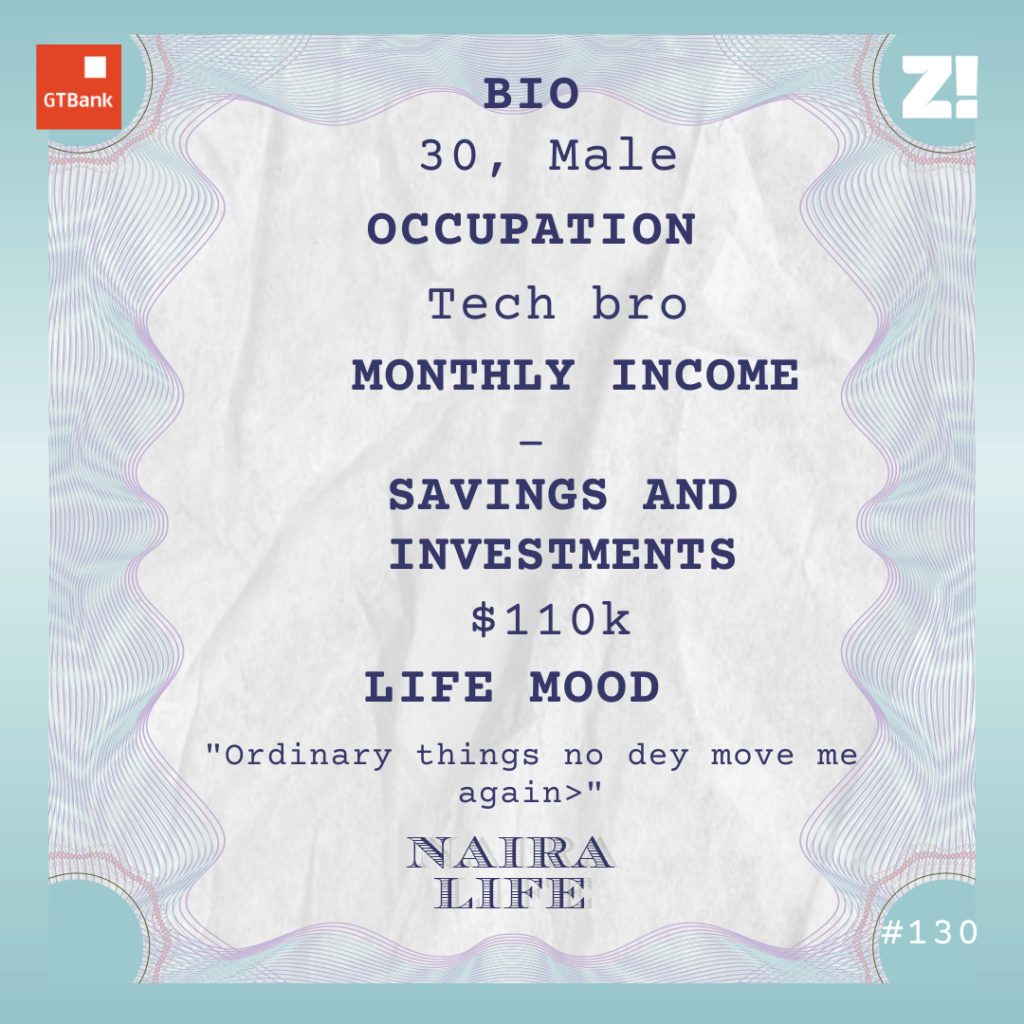
• Every week, Zikoko seeks to understand how people move the Naira in and out of their lives. Some stories will be struggle-ish, others will be bougie. All the time, it’ll be revealing.

    This week’s Naira Life is brought to you by QuickCredit. With QuickCredit, you not only get the funds you need instantly, but you also get to pay back at the lowest interest rate in Nigeria.


    What’s your earliest memory of money?

    I’m not sure I remember. I never thought about money while growing up because there wasn’t any need to. I was an ajebo who lived a very sheltered life. My parents were lawyers who were doing quite well, and we didn’t lack anything. 

    It wasn’t until I went to secondary school in 2000 that I began to understand what money and wealth meant. 

    How?

    I went to a federal government secondary school and lived in the hostel. It was a melting pot of social classes. The quantity and the brand of the provisions everyone brought to school determined where they belonged. I never felt inadequate, so secondary school made me realised how privileged I was. 

    I graduated from secondary school and got into university to study law in 2007. At first, my dad sent me ₦10k every month, which was more than okay — you could make a pot of soup with ₦200 in 2007. After the first year, he got tired of the monthly deposits. So he changed the way he sent me money. He started sending me ₦100k in the first semester to cover my tuition fees, accommodation fees and monthly allowance. During the second semester, he sent ₦60k. Now, it was up to me to manage the money and make sure it lasted the three months I stayed in school for every semester. But even if it didn’t last,  I could call him to ask for more money. 

    I won’t lie, my dad spoiled me. But my mum? Left to her, ₦5k was enough.

    Haha. Do you remember the first thing you did that fetched you money?

    Yes. I was in 300 level when I felt the need to hustle because I had friends who were working to make money. I got an ushering job for a wedding, and the pay was ₦2k. I was so excited.  In my head, it was free money. Guess what happened at the event?

    What?

    I fainted. 

    My God!

    I had low blood sugar. The lady who hired me was frantic and said things like, “If you knew you couldn’t do the job, why did you come here? Do you want to spoil my business?”

    Luckily, a doctor was at the wedding and attended to me. After resting for a couple of minutes and drinking a bottle of soda, I was ready to continue. I did the job and got my ₦2k at the end of the event. 

    You earned your ₦2k.

    You get. After that, I said to myself, “I did not come to this life to suffer,” I returned to my ajebo life and didn’t make another attempt to work for money until after university. 

    Tell me about that.

    I was mobilised for NYSC in November 2013 and left the north central where I grew up for the south-south. My dad paid my house rent, which was ₦120k. After that, he gave me a stern warning. I don’t remember his exact words, but it was along the lines of:  “I’m not going to give you one kobo, and I expect you to save ₦10k monthly.” 

    I had to survive on the ₦19800 the federal government paid and ₦10k I got from the law firm I worked at. I cut down on a lot of things or went for cheaper alternatives in my service year. Not like it was hard, but I wasn’t used to it.

    I managed to have ₦40k in my account at the end of my service year. I felt on top of the world. But I was also like, “Freedom is overrated. I’m going back to my father’s house.”

    What did you do after NYSC?

    I chilled at home for a bit because I didn’t want to work at my dad’s law practice. While I was at home, I started helping people incorporate their companies with the Corporate Affairs Commission, and I got a lot of these clients through my dad. I was getting about ₦15k and ₦50k from these businesses depending on the size of the company I helped register.

    A year later,  I got a job at a family friend’s law firm. The salary was ₦40k, but I was allowed to continue my CAC runs. My earnings on most months were between ₦60k and ₦80k.  Six months after, one of my aunts reached out to me and told me that one of her former bosses, who had just started a new job at a high-ranking government office, was looking for a lawyer to be his executive assistant. I interviewed for the job, and I got it.

    The office didn’t have a budget at the time and asked if I could work for free for a few months, but they would pay me a monthly allowance of ₦60k. I would have accepted the offer even if they didn’t offer to pay me anything because of the kind of people that worked there. Nothing much happened until December when I took a break to get married. 

    That came out of nowhere.

    Haha. We were family friends and had known each other for years. Our parents sent the ball rolling, and we started dating officially in March 2015. A few months later, we got married and moved into one of his dad’s houses. 

    Ah, I see. 

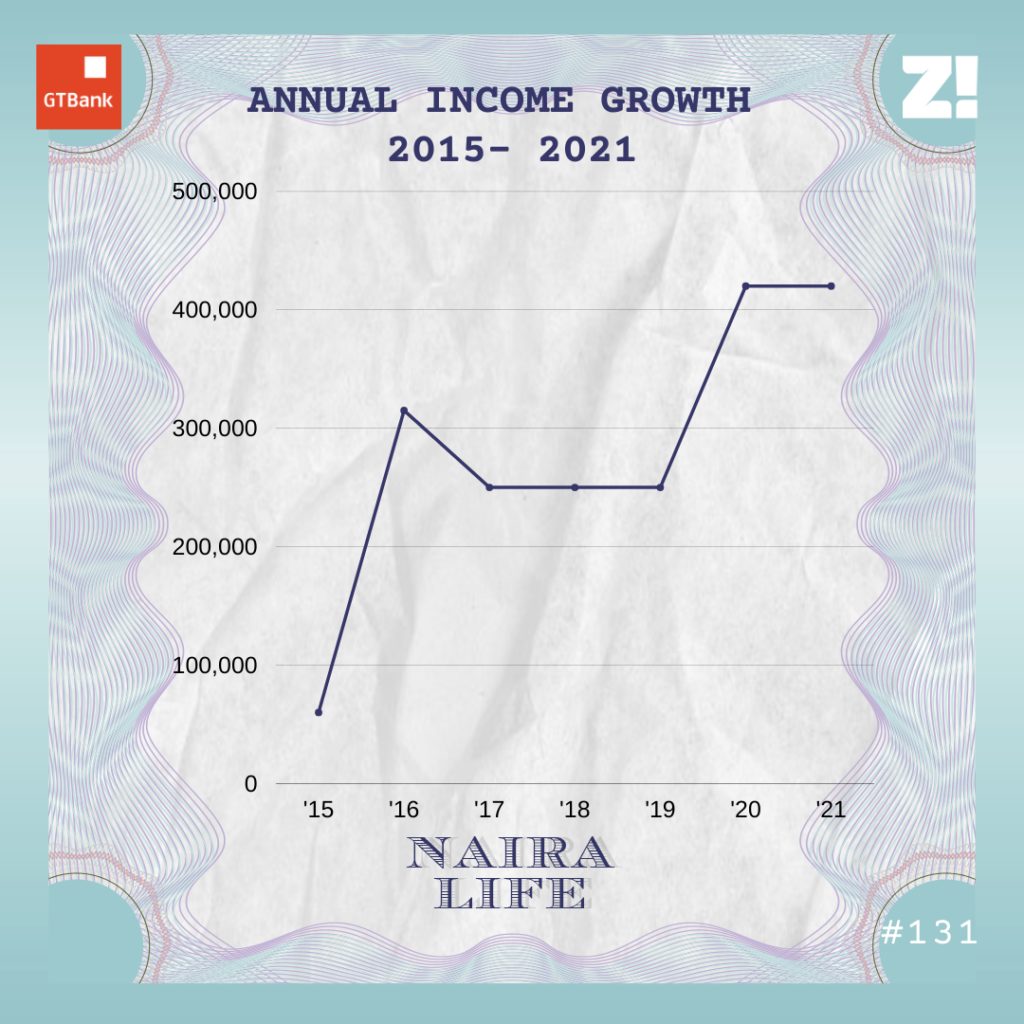
    By the time I returned to work in January 2016, my workplace finally had a budget and could pay me an actual salary. 

    How much was it?

    ₦315k. 

    That’s a significant improvement from ₦60k.

    It was. The good thing was that aside from the occasional shopping I did on ASOS, I  had no major expenses, so I was saving most of my salary. In less than four months, I had more than ₦1m in the account.

    However, I started to get restless. 

    Why?

    The structure of the office where I worked meant that there was no job security. A change in government could mean I’d lose my job. I started looking for opportunities to change my workplace. One came in August 2016 when a senior colleague was appointed as the managing director of a government agency. He wanted me to come with him, and I agreed. My starting salary at the government agency was ₦382k gross. My net salary was ₦250k.

    This was less than your earnings at your previous job. 

    Yes, I took a pay cut on paper. However, there was no health insurance or pension scheme at my previous job. Also, the agency where I now worked pay me a cut of my annual salary at the beginning of the year, and It was ₦900k at the time. I really liked that.

    Fair enough. 

    I had job security locked down, so I thought it was time to focus on something I had always wanted. 

    What was that?

    Investments. My dad always said that he regretted not investing more when he was younger and hoped his kids would do better. By the end of 2016, I started to give investments a go. 

    What was the first thing you invested in?

    Two hectares of farmland in the outskirts of the city. The whole thing cost ₦3.2m, but I paid an advance payment of ₦1.7m. Subsequently, I paid ₦100k every month until I finished paying for it. I missed a couple of months, so it wasn’t until earlier this year that I completed the payment. 

    After buying the farmland, my sights turned to crypto. I heard about bitcoin for the first time in 2016 and thought I should get into it. One bitcoin was trading at $800 – $1000 at the time, and I bought one bitcoin. This cost me about ₦450k. A couple of months later, there was a bull run. When the price of bitcoin hit $3k, I sold half of it and held on to the rest. 

    At the height of the bull run, one bitcoin was trading for more than $20k. Then the bull run ended sometime in 2017, but I decided not to sell. The price of bitcoin started dropping but I still held on to it, hoping it would go back up. I panicked when it dropped to $10k, sold the remaining half, and got $5k from it. 

    What did you do with the money?

    I put it in a mutual fund account. The total amount I had in the mutual funds was $10k. I had put in my 13th-month salary the previous year, the ₦900k lump sum payment I got at the beginning of the year and some of my savings into it. 

    Things were rough for a couple of months after that. 

    What happened?

    I had a few health challenges. My health insurance package couldn’t cover the service I needed, so I upgraded my plan. My salary took a hit and was reduced to ₦210k. 

    I got pregnant in October 2017 and gave birth to my son in June 2018. Thankfully, we spent almost nothing on that because of my health insurance. My husband and I had also been saving ₦50k every month from the moment we found out that I was pregnant, so that took care of all the kid’s supplies and stuff. 

    I was on maternity leave for four months and returned to work towards the end of 2018. There was only one thing on my mind when I returned. 

    What was that?

    Getting promoted. I was due for promotion after three years, and I was looking forward to it. That didn’t happen in 2019, but something else did. I realised that my marriage wasn’t going to work. 

    Uh-oh. 

    I started thinking about my options — to move into a new apartment or not. I couldn’t afford rent on my salary, so I decided to stay at the house. My ex-husband and I had an agreement that we were only cohabitating, and it worked. I contemplated taking a federal housing loan, but my dad advised me to buy land and start building my own house. 

    We found a plot of land for ₦6m. I liquidated some money from my mutual fund account, my dad loaned me ₦3m, and I paid for the land. 

    Here’s the thing: I bought the land because I was banking on my promotion. I planned all my finances around it. I was finally promoted in October 2020 after months of lobbying and politicking. My gross salary increased to ₦600k but my net was ₦420k. Now, I thought I could start building on the land I bought, but then the Lekki shooting happened. Like that, I couldn’t see myself raising my son in Nigeria anymore. I shelved the plan to build the house and started investing in relocating to Canada.

    Two other interesting things happened in 2020: a colleague who knew I liked to invest money gave me an idea to build a student hostel in a neighbourhood close to a university. I got a plot of land for ₦500k, which was pretty cheap. By the end of 2020, I had spent an additional ₦1.7m on early foundation work for the building.

    Also, I got a remote job with a law firm in the US. 

    Yay. How did that happen?

    It became clear that I needed an extra job when they wouldn’t promote me at work. I told my friends that I needed help finding a new job. A friend who went to law school in New York recommended me to the law firm he was working for. Luckily, they were expanding at the time. I did the interview and was offered employment in September 2020. $15/hour. I did 66 hours in my first month. 

    Mad. What about the hostel you were building?

    My mum came to me in January 2021 and told me that I wouldn’t finish building it on time at the pace I was working with. She offered to come in and take over the project. I agreed to it and both of us started injecting money into it. We finished building it in May 2021, and it ended up being a 16-room building. When I calculated how much money we spent on it, I realised that my mum had spent ₦7m and I had spent more than  ₦4m. The budget was less than that, but inflation affected everything.

    How did you raise the money you needed?

    From different savings and investments sources. Remember I said my workplace pays me a lump sum at the beginning of each year? The money increased to ₦1.8m after my promotion. It went straight into my savings when I got it, and I didn’t use it until the project. 

    When I got my remote job in September 2020 and started earning in October, I was saving the money into my domiciliary account for my proof of funds. After I submitted my relocation application in March 2021, I took $3k out of the account and channelled it into the building project. Also, I added my remote job salaries for April and May.

    I got some more money from another investment, although it was very risky. In 2020, I took a ₦750k loan from the bank. The dollar was trading at about ₦380, and I converted the money into dollars and invested it in a forex scheme. For six months, they paid me $300 — 15% of the $2k I put in it, and I saved each payout. I was supposed to get my capital back at the end of the 6-month cycle, but it didn’t happen. At the end of the cycle, I had $1800. Luckily, a dollar was trading at ₦400+ already, so I didn’t really make a loss.  What I made from this also went into finishing the hostel. 

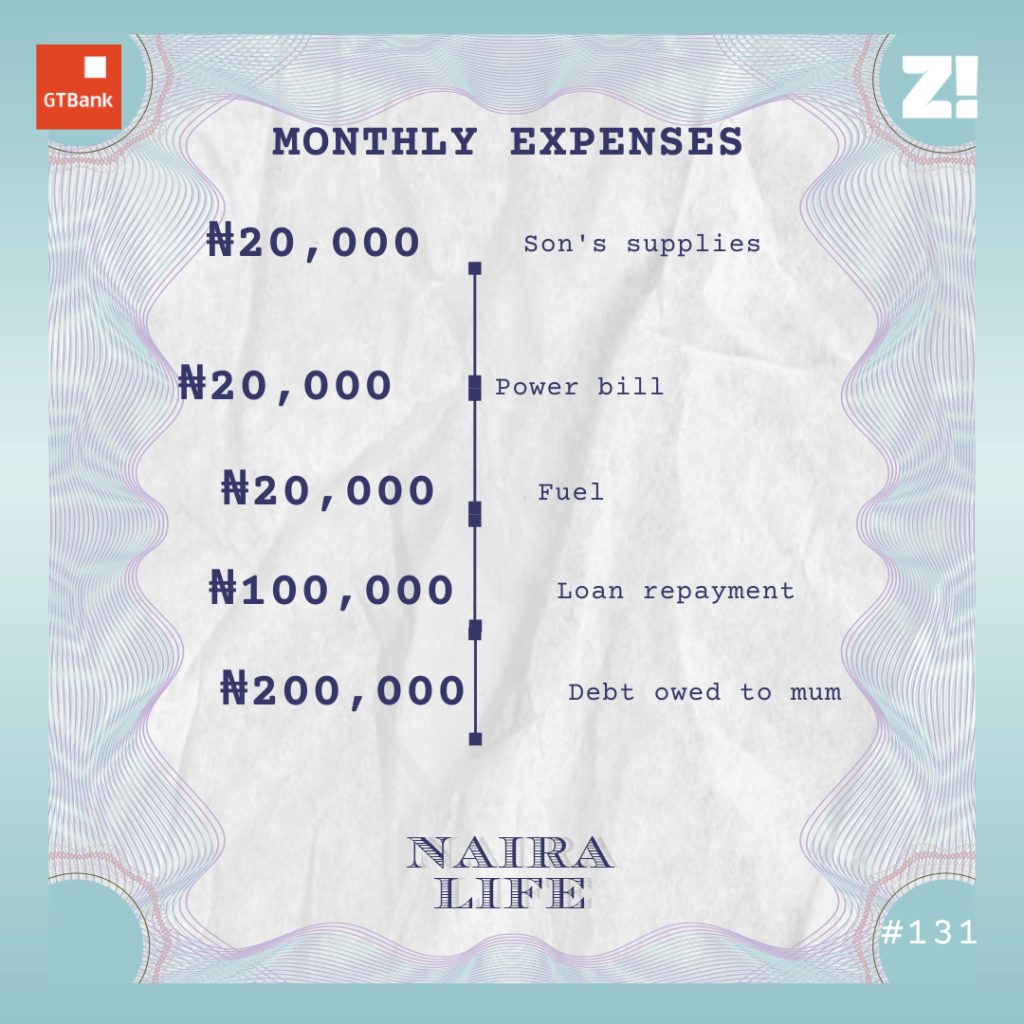
    We finished the project in May, and I had to figure out how to pay my mum back the money she spent. We rented each room out for ₦150k, and we agreed that the money we make from rent will go to my mum for two years. Also, I’d be paying her ₦200k for 11 months.d I’ve started doing that already.

    Interesting. What has happened between then and now?

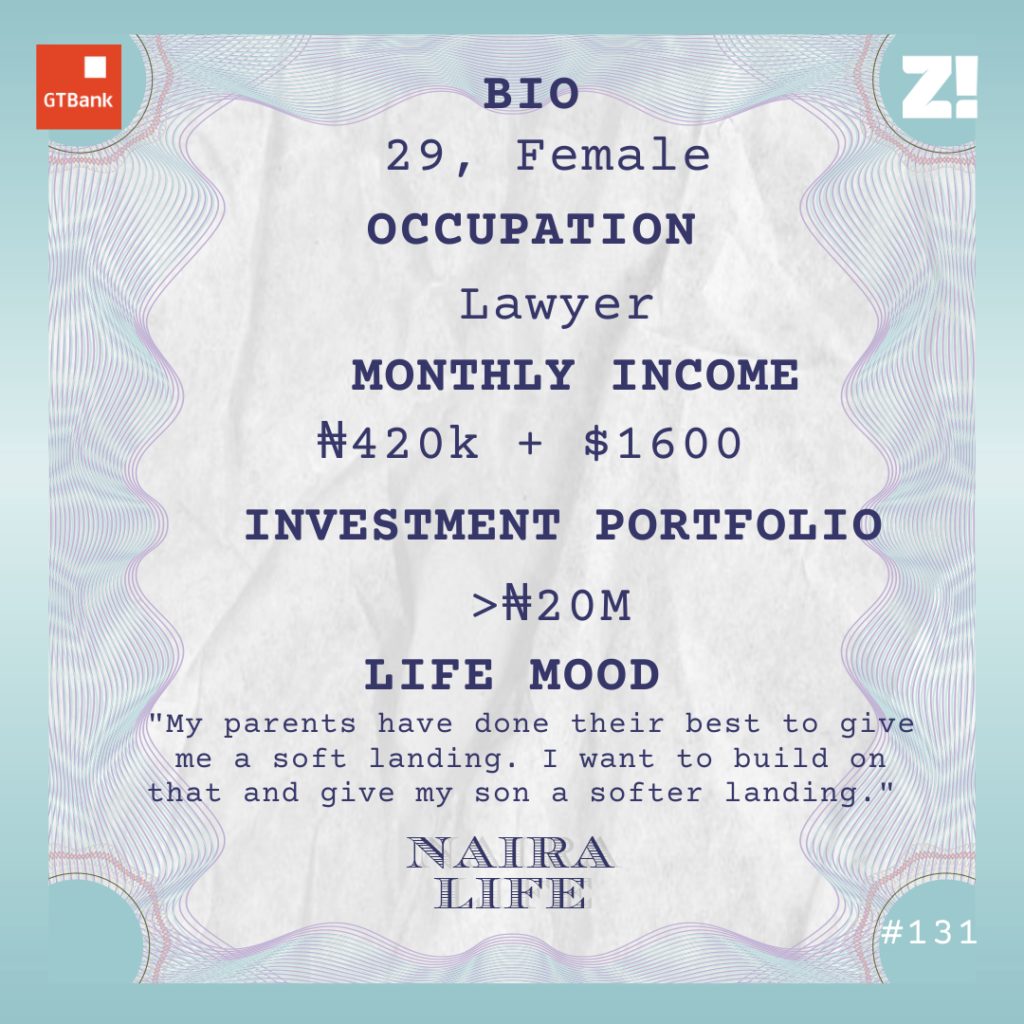
    The law firm I’m working for in the US increased my wages from $16 to $20 per hour. On average, I work 80 hours per month, so I earn about $1600 extra every month. However, I don’t touch the money — it goes straight into my proof of funds account. My dad loaned me ₦5m for that too. I have $11k in it right now, so I guess that’s covered. 

    I moved out of my ex-husband’s house in May. We had a fight, and I decided that I couldn’t live with him anymore. I called my parents and told them that I was coming back home, and that was it. 

    Speaking of, what does your monthly running cost currently look like?

     I returned to investing in crypto earlier this year and took a ₦1m QuickCredit loan from GTB. I invested all of it in crypto and have been paying the bank ₦100k every month. I know the market is still as volatile as ever. During the height of the recent bull run, I had about $6k in my wallet, now it’s $4500. I don’t care what happens to it in the short term. I’ve been here before, so I’m going to hold my position. 

    Hoping it works out.  So what are all your real estate investments worth now?

    I haven’t valued the properties recently, so I only know about how much I put into them.

    Two hectares farmland: ₦3.2m

    One plot of land: ₦6.5m

    16-room student hostel: ₦15m

    How have all of your experiences with investment shaped your perspective about money?

    It’s extremely important to have money, but it should be seen as a tool to shape your life and your legacy. Money should always have a goal. My parents have done and are still doing their best to give me a soft landing. I want to build on that and give my son a softer landing. 

    My goal is to build something for my son and ensure that he has things that will always bring him money. That’s the way I think about what I earn and what I invest in. I also think I punch above my weight a lot, but it’s going to be worth it in the end. 

    I get that. Is there something you want but can’t afford?

    A house. I don’t have a problem living with my parents, but sometimes, I want to have my own space. I don’t want to rent a house in Nigeria before I leave for Canada. I have land I can start a building project on, but I can’t afford to start that right now. I’m doing too much already. 

    On a scale of 1-10, how would you rate your financial happiness?

    6. I wish I didn’t have to put so much time into working and making money. Also, most of my investments haven’t brought me money yet. But I understand that they are long-term investments, so I’m not in a rush. When the returns start coming in, I can expect to move to an 8. 


    Great! You got to the end of this article. Know what’s even better? You can get QuickCredit faster than the time it took you to read this article. With Quickcredit, GTBank customers can get N2million in less than 2 minutes and pay back over 12 months at an interest rate of 1.5%. No forms. No collateral. No hidden charges. Get Your Quick Credit on GTWorld

  • We know salary week is your favourite time of the month. But will that money get you through the month until the next paycheck comes in? Let’s see.

    1. You get paid on the 25th of the month

    Why is this a problem? You will lose your guard. You too, stop and think about it: money you worked for just enters a time you need it the most. So you go all out on all the things you need to do. One week later, you’re (almost) back to where you started. I know you think that you can spread what remains to last the rest of the month. But let’s be honest, how will you do it?  Did it happen last month? Or the month before that? Let’s not deceive ourselves, please. 

    2. People call you “boss”

    Apply For 2019 NNPC Graduate Trainee And Experience Hire - Jobs/Vacancies  (1436) - Nigeria

    When people say you shouldn’t believe the hype, this is what they mean. You sef, why do you let people call you that? Don’t you know that wherever “boss” is, debit alerts follow? Don’t let me lie to you, if you don’t fix up and start fighting anyone that calls you “boss”, your salary won’t last until the end of the month. Don’t ask me how I know that. 

    3. You are the first child 

    There’s nothing I can tell you here, but sorry. But I can give you some advice sha — block your siblings everywhere.

    4. You’re the middle child

    Your own problem is that you want to prove to everyone that you are responsible too. We’ll see where that gets you. Let me know where you’re at in the second week of the month.

    5. You are the last child 

    You’re the baby of the house now. Spend your money. If it finishes, ask your older siblings for help.

    6. You are in a relationship

    You want love, you want love, but can you afford love? Between those date nights and your transportation expenses to your partner’s house and everything else, salary will finish in no time. 

    7. You are not in a relationship

    You’ll  think that because you worry mostly about yourself, you won’t have to spend a lot of money. But life shows you that you don’t know anything. 

    Nobody tells you this, but being single is expensive too. See, because you have no one that can hold you accountable, you find reasons to justify everything you spend money on. Even when you know that you’re more than what you can handle. My advice? Check your account balance sometimes. A better idea? Catapult yourself into a relationship. Your salary will thank you for it. 

    8. You make POS withdrawals 

    I can’t even explain the science behind this one, but those POS withdrawals will ruin you. Cut your coat according to your size and stick to ATMs. Those ones will also finish but at least you won’t be spending ₦5k in a day.

  • “Sapa” has been the most used word on social media lately and describe the state of being broke. Money struggles is definitely something a lot of young Nigerians can relate with, so yes, the jokes have been flying around. You’ll like these ones we found.

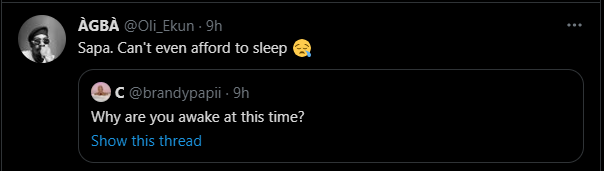
    1. It appears sleeping is now expensive

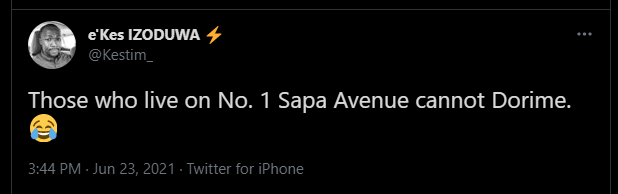
    2. This should be on a shirt or something

    3. Run, boss. Run!

    4. Let’s know what we are doing, please.

    5. God please!

    6. For obvious reasons, it’s going to be a low-budget show

    7. A generous queen!

    8. Sigh.

    9. Scrimmmm

    10. If you know, you know

  • Every week, Zikoko seeks to understand how people move the Naira in and out of their lives. Some stories will be struggle-ish, others will be bougie. All the time, it’ll be revealing.


    The 30-year-old in this #NairaLife got his big break in 2016 when he started working in tech. When was the last time he worked though? 2020. Does this bother him? No. A lot of it has to do with a $70k equity payout he got at his last place of work.

    What’s your oldest memory of money?

    It was when I tried stealing money for the first time and got caught. My parents had a policy of not giving us money; whatever we wanted, they got for us. But I needed some money to be like the cool kids. The cool kids in my primary school bought fancy stuff from the school’s stationery shop to impress the girls. I liked that and wanted it for myself too.  So I decided to go into my mum’s room to take ₦200 from her purse. My mum walked in while I was doing that. I tried to play it down, but it didn’t fly. She reported me to my dad, and I got a beating. I don’t remember the year anymore,e but it was between 2000 and 2002.

    The most embarrassing part of the whole experience was hearing my parents talk about it when my siblings were around. It made me want to have my own money so I wouldn’t have to ask anyone for it. 

    What were the steps you took after that?

    I didn’t do anything for money until a couple of years later. I earned money for the first time in 2006 when I was in JSS 3. My school was registering the students for an internal mock exam, and we could use the computers in the computer lab to complete the process. 

    I used to bring my laptop to school, so I started to help people register for the exam in return for a small fee. I was selling convenience. If you didn’t want to go to the computer lab, pay me and I’d do it for you. I don’t remember how much I charged, but it was very little. 

    When it was time to write the UTME exam in 2009, I replicated the same formula for people who wanted to register for the exam. Rather than going to registration centres, people came to me to help register them, and each person paid between ₦1k and ₦2k.

     Mad. I’m curious, when did you start using computers?

    In primary school. There’s a backstory to it too. My dad started out working in the armed forces. But he got frustrated with the bureaucracy and corruption, so he retired and joined the private sector. When he was in the army, the family struggled. We lived in a one-bedroom apartment, went to public schools and my dad could only manage to own a motorcycle. He left the army for  a company that produced consumer goods, and we became financially stable. We moved into a bigger house, switched to private schools, and my dad bought his first car.

    It was around this time my dad started a computer business centre, and he set the place up with six desktop computers. Unfortunately, the person he left in charge of the place wasn’t being straightforward, so my dad closed down the business and brought the computers home. He set one up in the home library, and doing stuff and looking up things on the computer became my favourite pastime. By the time he got me my first laptop, I had become good at using a computer.

    Lit. Back to 2009.

    I wrote JAMB that year and got into a university in the country to study economics. By the end of my first year, I had gotten bored of school. I was constantly ahead of the class. A lecturer would come in and start talking about something I had studied two weeks earlier. It was killing me. 

    I told my parents that I didn’t want to study in the country anymore. Surprisingly, they didn’t object to it. My dad called me a few days later and asked me to go and meet an agent he found. We started applying to schools outside the country and a private college in Europe came through. I was offered provisional admission to study Electronics Engineering. I moved in 2012.

    Do you remember how much it cost to move?

    I have no idea what it took to get me out of the country because I wasn’t involved with my dad’s financial dealings with the agent. However, my tuition was €14k per session. Accommodation was €12k every year, and my parents put me on a monthly allowance of €1200. 

    How did it go in Europe?

    My first month was rough. My parents gave me €4k when I was leaving, and I lost everything.

    Ah! How?

    It happened between the time I was trying to open an account in the bank and getting my documentation done in school. I couldn’t dare tell my dad. I told my mum though, and she sent me €500, which I used to sort out a few things I needed immediately. 

    Then I went to look for a job.

    I found a part time job at the administrative block on campus to help with paperwork documentation for international students. I worked for 11 or 12 hours a week and was paid €8.50 per hour. That job got me through my first month. 

    Until the next allowance came in, right?

    Right. I quit immediately my next allowance came in. I didn’t do anything for money until the summer of my second year because I wanted to focus on my studies. In the summer of 2014, I started working in an upscale restaurant. It cost between €65-€70 to eat there while it cost between €20 and €45 to eat at most of the other restaurants.

    Because of this, the pay was a little high-end too. I was earning €14 per hour and working an average of 40 hours a week. I didn’t make less than €2k a month and my parents were still sending me a monthly upkeep allowance.

    €3200 a month. Must be nice.

    I was literally balling, man. I had two days off in a week, and I’d use the time to fly to cities in neighbouring countries, spend a day or two there and return to school. The only project I did with my earnings at the time was buying a car for €4k and sending it home to my parents as a surprise gift.

    In my final year, I realised that I had no interest in staying in Europe once college was done. The idea was to return home and start a business, so I needed to return with a good amount of money to get myself off the ground. However, I didn’t have much in savings. 

    What did you do?

    When my parents sent me money for tuition, I went to my college director and told him that I was having financial challenges and would not be able to pay my tuition fees in full. I proposed offering my services to the college in return for a reduced tuition fee. He agreed, and the college assigned me to work on a research project on solar electricity in North Africa. It worked for me: it ended up being my final year project, and I paid half of my tuition and saved the rest. 

     What were your finances looking like after your final year?

    I returned to Nigeria with €11k in 2016. It was a few million naira, which was pretty cool. 

    I agree. You were back in Nigeria now, what came next?

    Job hunting. I wanted to get a job without having my parents call anyone. I left home and moved to a new city. I paid for an apartment and started to job hunt. While I didn’t have a lot of expectations, the salary offers I got were laughable. 

    Haha. 

    The first offer came from a media company where I interviewed for a marketing role. When they said they were going to pay me ₦120k, I was like “What?” I got four other job interviews and the highest offer was ₦250k. I didn’t get a single interview in the three months that followed. 

    Frustration started to kick in. I was alone in a new city and without a job. It didn’t help that I was always on instagram and seeing how my mates from college were moving to major cities around the world and seemingly doing good for themselves. It was a tough period. I wouldn’t say I was depressed, but I wasn’t happy. 

    I eventually got a job at an IT consulting firm in August 2016. I was hired to work in their IT support department, manage internal databases and provide network support.

    Yay.

    The salary was ₦50k. 

    Omo.

    After deductions, I was going home with ₦43k. I worked there for nine months before I realised that I couldn’t do it anymore. I resigned from the job in May 2017.

    What did you do next?

    I moved out of the city and returned to where my parents lived. Remember I said I had always wanted to do business? I thought it was time to get on that. I took ₦2m out of my savings and rented 15 hectares of land to plant rice somewhere in Nasarawa State, close to River Benue. I rented another plot of land and planted 10,000 heaps of cassava. In my mind, I was going to be the biggest farmer the country had ever seen. Unfortunately, I didn’t have enough money to afford insurance for my rice farm. 

    And that became a problem?

    River Benue flooded and washed away more than half of my rice farm. When it happened, I just left my dad in charge of the farm. We ended up harvesting less than 2 metric tonnes of rice from the farm when the initial projection was 150 metric tonnes. 

    That sounds rough. I’m sorry. 

    Thank you. Luckily, I got a break shortly after the farm flooded. I randomly checked my mail one day and saw an email that had been in my spam folder for two weeks. It was from a tech company in Nigeria, and they had reached out to me because one of their engineering directors saw a presentation I had sent in when I returned to Nigeria and was applying to jobs. I reached out to them, and the role was still open. After a series of interviews, I got a job as an engineer on the team. The salary was ₦350k, and I started work in August 2017.

    Must have been a relief. 

    Yes, it was. Also, I easily did the best work of my life at the company. I got promoted after four months and my salary increased to ₦600k.

    However, I resigned towards the end of 2018. 

    Why?

    I had a clash with my manager, and it became clear that it was time to leave. The good thing was that working at the company helped open my eyes to possibilities I didn’t know existed. When I started job hunting again, I was looking for opportunities in international tech companies. A friend from college referred me to an American tech company, and I spoke to their director of engineering who passed me off to their HR team. I did the interviews and got an offer to work on their development team as a developer/engineer in December 2018. My new salary was $75k/year.

    Nice. 

    I started working at the company in January 2019. I got a raise few months into the job, and my salary increased to $100k per year.

    My income had changed and so did the quality of my life. I realised that I wasn’t overly worried about price tags anymore. This was the period I started to invest in real estate. 

    Tell me about this.

    My parents are originally from the north central, and I started to buy properties in my hometown, mostly old houses and lands. I currently have six landed properties worth about ₦10m. These are long-term investments. I don’t expect to make anything off them in the next 5-10 years. But they will eventually pay off. 

    Ah, I see. Back to the job?

    I was there until the second quarter of 2020 when I decided to take a break from working. I haven’t worked since that time and have been living on returns on stock investments. Let me explain. 

    Please. 

    I had vested equity at the company I last worked at, and I exercised it. This means that I bought the equity at a discounted price available to employees. The company also went through a 409a valuation, and the value of the stocks increased. The total value of my equity on paper was $1.4m. I sold 8% of my equity to the company, and I got a lump sum payment. 

    How much?

    $70k after administrative fees and other deductions. 

    Man.

    I knew I could afford to quit my job before I did. I made more money from stock trading in 2020. Most of it came from buying Tesla stocks.

    How?

    I took stock trading up as a hobby during the lockdown because I wasn’t working and couldn’t travel. Tesla stock price crashed in April right after countries started to go on lockdown. It crashed again in June and went down to about $300 per unit. I bought as much as I could and bought more in September. In total, I put around $10k into this. 

    The stock rose to $800 shortly after. I sold everything and made about $6k in profit from that one sale.

    I’ve been making money from other stock investments since that time. But this one was quite memorable. I was purely lucky by the way. It didn’t happen because I had great stock picking skills.

    Whew. What has happened between then and now?

    Not much. I’ve been living. At the beginning of this year, I got bored and thought it was time to return to work. I spoke to a few companies, but I didn’t think any of them was the right one for me. I finally got an offer worth considering last month. It’s with a tech startup in San Francisco, and they are offering me $190k per year plus stock options. I’m dragging my feet because it’s their initial offer, and I feel like I could earn more.

    How much do you think you should be earning?

    Anything above $200k/year. Not to sound entitled, but I should be earning that much because of the kind of companies I’ve worked for. I think I can get it if I really push for it. 

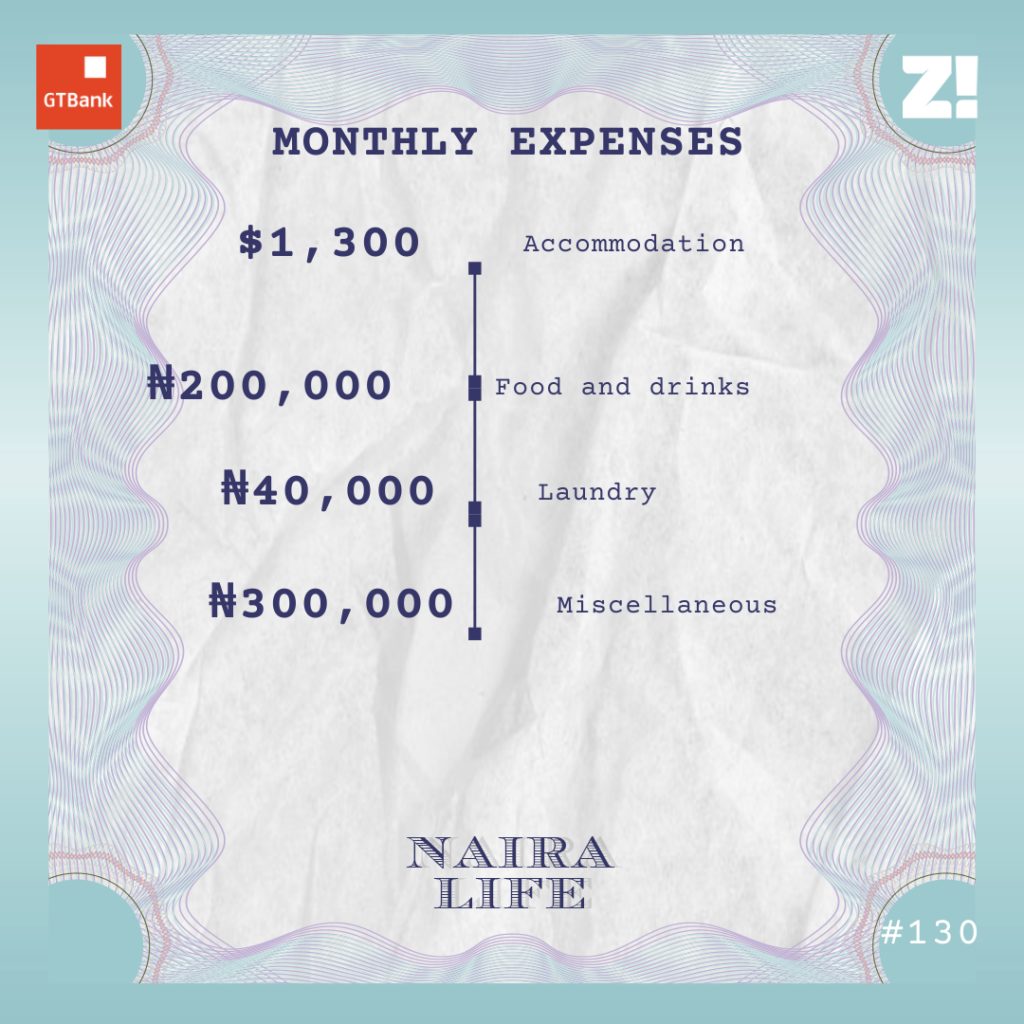
    Fingers crossed on that. Let’s talk about your monthly expenses and what it currently looks like.

    I don’t really use a budget. My monthly expenses depend on how I’m feeling in a month. This is what I can think of right now. 

    I live in an AirBnB because I could move cities anytime. My miscellaneous expenses include tips and money gifts, airtime recharge and internet.

    How do you approach saving these days?

    For starters, I don’t save my money in naira. I have less than ₦800k in my Nigerian bank account at the moment. I save my money in bank accounts in Europe and the US. From my last count, I have about $110k in cash savings and stock investments on different platforms.  

    I have to ask, is there anything you want right now but can’t afford?

    Haha, there is. I still want to do something in agriculture. The plan now is to build a crude palm oil processing plant. It costs less to produce a barrel of crude palm oil than it costs to produce a barrel of crude oil, but the profit margin is great. I’ll need between $200k and $250k to purchase and install a plant that does 10 metric tonnes per hour. That’s not even an industrial plant, but it will get me going. In addition, I’m currently talking to agriculture consultants to figure out how much an oil palm plantation will cost. I don’t have the money for either of them yet.  

    I hope you get it, man. What was the last thing you spent money on that improved the quality of your life?

    It’s a recurring expense, and it’s probably funny. I don’t like the thought of laundry, so I buy shirts and wear them until they get dirty. Then I give them out and buy a new set. However, I don’t do this to my Kaftans — they go to the drycleaners. 

    Mad. What was the last thing you bought that required planning?

    Nothing, actually. At least not in a while. If I need to spend money on something, I’ll probably think about it for a while, then make a decision. 

    God when? How have your experiences shaped your perspective about money?

    I’ve always looked at money as something you must have to make your life easier. I saw how much the quality of my family’s life changed as my parents’ financial situation got better. It reaffirmed my belief that making money was absolutely necessary. 

    While I think it’s beautiful to have money, I don’t allow it to influence my orientation on anything. Ordinary things no dey move me again. I see how people respond to me differently when they find out how much I have, and it makes me very uncomfortable. It doesn’t have to be that way. Money is only money. Nothing more.  

    How would you rate your financial happiness on a scale of 1-10 then?

    9. There were a couple of rough months along the way, but I’m in a very good place now. I don’t need all the money in the world to be happy. I’m doing just fine with what I have. I’m incredibly satisfied with the quality of my life, man. 


    Great! You got to the end of this article. Know what’s even better? You can get QuickCredit faster than the time it took you to read this article. With Quickcredit, GTBank customers can get N2million in less than 2 minutes and pay back over 12 months at an interest rate of 1.5%. No forms. No collateral. No hidden charges. Get Your Quick Credit on GTWorld

  • On Saturday, July 24, 2021, the Lagos State Independent Electoral Commission (LASIEC) will conduct an election to elect the next chairman and councillors in the 20 local government areas and the 37 local council development areas in the state. 

    Lagos elections

    Why should you care about this?

    Provisions in the 1999 constitution and the Electoral Act of 2010 say that citizens of Nigeria have the right to register as voters and vote for the candidates of their choice during election cycles. 

    Saturday’s election is happening because grassroots representation is important, which makes it more interesting. Nigeria operates a three-tier government system, and the local government is the closest to everyday Nigerians. The winners in Saturday’s polls will oversee the affairs of their respective local government and ensure its development during the time they are in office. That is, they will be in charge of everything you care about.

    What do you need to know about this election?

    For starters, the Lagos State government has announced a movement restriction that will last for seven hours on the day of the election. In a statement by Lagos State Commissioner for Information and Strategy, Mr Gbenga Omotoso, the restriction will start at 8 a.m and end at 3 p.m.

    Part of the statement reads:

    “The restriction is to enable the Lagos State Independent Electoral Commission, LASIEC, to conduct hitch-free elections into positions of chairmen and councillors in all the 57 local government and local council development areas.”

    What does this mean for you?

    If you live in Lagos, you should consider staying at home between 8 a.m. and 3 p.m. Why is this important? It will allow ease of movement for people who want to go out to vote. Also, it will be easier for election officials to move the materials to the polling units where they are needed and allow for effective monitoring and security. 

    The sets of people this movement restriction doesn’t affect are election officials, press and medical personnel and other essential workers.

    I have a permanent voters card, what should I do?

    If you’re a registered voter with a permanent voters card, you should go out to vote. The Chairman of LASIEC, Justice Ayotunde Philips has expressed the commission’s readiness to conduct credible, free and fair elections. 

    Lagos elections
    Image source: Google

    Mrs Ayotunde says, “LASIEC, the body charged with the statutory responsibility of electoral management and administration, is committed to conducting a free, fair, credible and inclusive election.”

    Okay, cool. I have my PVC and I’m going out to vote. How does this work?

    The process is largely straightforward and can work in four or five simple steps. Let’s break it down :

    1. Find your polling unit: If you’re not sure where your polling unit is, this locator microsite from INEC might help you.
    1. Verify and authenticate your PVC: As part of the accreditation process, an election official, usually the Assistant Polling Officer (APO)  at the polling unit will ask for your permanent voters card and run it through a card reader configured for this purpose. The entire process will take between 10 and 20 seconds. Then you will be asked to do a biometrics verification to confirm that you’re the cardholder. Once you have been verified, you will be asked to proceed to the next stage. 
    1. Collect your ballot paper from the polling officer: The Polling Officer at your unit will give you the ballot paper and direct you to the voting booth.
    1. Vote for the candidate of your choice and cast your ballot 
    Lagos elections
    Image source: Google

    You can read more about the process here.

    That’s it. However, you should consider staying behind at the polling unit until voting has concluded. Take part in ballot counting and wait until the results of the polling unit are announced.

    I don’t have my voters card but I want to vote. Is there anything I can do?

    Sadly, you won’t be able to vote if you don’t have a permanent voters card. The good thing is that you can start the process of getting one today. If you’re not sure how to do it, this article is a good place to start. 


    Read more articles like this here.

  • It started with this tweet.

    Someone didn’t think this was necessary.

    Why am I howling?

    But the rest of you were like:

    Oga, getat!

    Here we go.

    P.S: This is not dating advice 🙂

    1. Sounds fair, no?

    2. What is yours is ours

    3. I hear you. I hear you.

    4. And they say the complete package doesn’t exist

    5. Apparently, the best way to this person’s heart is through their stomach

    6. …And my heart will go on and on

    7. Nigerian men have left the chat

    8. You’re not Thanos, please.

    9. …

    10. And perhaps, the most important sign of all


    [donation]

  • Every week, Zikoko seeks to understand how people move the Naira in and out of their lives. Some stories will be struggle-ish, others will be bougie. All the time, it’ll be revealing.


    Between 2016 and 2020, the biggest flex for the 25-year-old in this #NairaLife was rising to the top of the ladder at the factory where he worked, and he did it. But he quit the job in 2021. While this has affected his finances, it’s all part of a grand plan.

    Do you remember your earliest memory of money?

    Yes. In 2001 or 2002, I found a Biafran bank note in my dad’s diary. I was fascinated because it was different from the naira notes I was familiar with. I asked my parents, and they told me about the history of the currency. They also showed me some coins we used pre-independence. It was quite an experience. 

    I bet. What was it like growing up though?

    My parents were on the shorter end of the financial ladder. They were farmers although my dad did some trading on the side. Money was not easy to come by. As I grew, I began to understand what it meant to have money and what you could miss out on when you didn’t. I realised early that my parents couldn’t do everything for me even if they wanted to. I had to hustle on my own and make money. I’ve been on that journey since that time. 

    When did the hustle start for you?

    The moment I got into secondary school in 2008. I grew up in the south south, and most of the people I knew on the streets worked on people’s farms to get money. Farming wasn’t my thing, so I went for a job at a sawmill. I did everything there was to do there — from clearing sawdust from the mills, taking stock of the inventory and sorting out the wood when they arrived. I worked from 3 p.m. to 7 p.m. on weekdays because of school and earned between ₦500 and ₦700. But I worked full time on weekends and a very good day at work fetched me ₦1500.

    How long did you work at the sawmill for?

    From 2008 to 2015 when I left secondary school. After I graduated from secondary school, I got another job to manage a cold room and the salary was ₦15k. I won’t lie, it was big money for me. For context, one of my friends got a job as a teacher a little earlier than I did and his salary was ₦5k.

    However, I knew that I didn’t want to manage a cold room forever. I wanted to go to university. In 2015, I bought a JAMB form and applied to study law at a university in the south south. I scored 297 in the UTME examination and 71 in post-UTME. I thought that was going to be enough. The first admission list was released, and I didn’t find my name on it. The second and third lists were followed, my name wasn’t on those either. The last list was a supplementary list and people said I needed to pay or have connections at the university to make that list. I didn’t have the money or the connection, so I let it go. 

    My second plan was to move to Lagos to find work. I was talking with a friend, and he told me that his older brother was working in Lagos and earning ₦50k per month, which seemed like a lot of money. So I left home for Lagos.

    After a few months in Lagos, I checked the portal again and found out that I had been offered French Education. I didn’t accept it. I should have been in the merit list. 

    I’m sorry about that. When did you move to Lagos?

    February 2016. I knew nobody in Lagos and arrived on a Friday with ₦7k in my pocket. For the first week, I was on the streets looking for a factory to work in. I slept in bus parks at night and freshened up in public bathrooms in the mornings. After three days of looking for work, I did something funny. 

    What?

    My money had run down to ₦3k. I was beginning to get scared and thinking about going back home. So I spent the remaining money on food. Now, I couldn’t go home even if I wanted to. 

    Wild. 

    One of my sisters called me the following day and when she found out that I had gone to Lagos without an accommodation arrangement, she was mad at me. But she contacted someone. The person introduced me to one of his friends and told him about what brought me to Lagos. Luckily, the person agreed that I could stay with him. I lived with him for two years, and he helped me find my first job. 

    Lit. Tell me about the job.

    He fixed me with some people who drilled boreholes. They paid me ₦2k for each day I worked with them, but the problem was that the jobs weren’t regular. After working with them for a month, I was anxious about getting a proper job and told the guy who took me in about it. He introduced me to someone in a sachet water factory where I was offered a job as a stacker. This was March 2016.

    What does a stacker do?

    A stacker moves the bags of water from the production room to the loading point and also loads the bags into the trucks for distribution. Every new person who joins the factory starts as a stacker. The job paid  ₦800 per day and I got paid once every two weeks. The working hours weren’t fixed, though. Once we started working at 7 a.m, we could be there until 8 or 9 p.m or later depending on sales that day. 

    Omo. 

    Three weeks after I started working at the factory, I came to work earlier than usual one morning and saw some guy I hadn’t met working one of the machines and packing the sachet water into bags at the same time. It wasn’t my job, but I felt the need to help him. I joined him and started packing the water into the bags while he operated the machine. I struggled with it for a while but I got the hang of it. When we finished, he asked me, “Do you want to be a packer?”

    Wait, who was he?

    It turned out that he was the section head and managed my production unit. A packer is a step above a stacker, and what the packer does is to fit the sachets of water into the bag. 20 sachets of water go into one bag. They earn ₦2 for every bag they pack and the slowest person packs at least 1000 bags daily. That’s more money than I was earning as a stacker. 

    I guess you said yes to the job.

    I did. I told him I’d like to and he asked me to start the following day. However, I wasn’t going to be paid for the first three days. 

    Why was that?

    I had to undergo training and show that I knew how to do the work. It turned out that I was good at it. Within four days, I was doing 2000 bags of water per day. I made ₦17400 in my first week as a packer. 

    I had just joined the factory and moved up a ladder. Most people spend a year or more working as a stacker.  Can you imagine how that felt? I called my mum and told her to go and open a bank account so I could send money to her. 

    Aww. 

    The work continued. I made more money during the dry season when there was more demand for water. I could make up to ₦25k in two weeks or ₦60k in a month. But during the rainy season, my earnings dropped to an average of ₦11k- ₦12k every two weeks and ₦24k in a month. 

    That’s interesting. How long did you do this for?

    I was a packer for one year and six months. I was still living with the guy who took me in. My original plan was to save aggressively for three months and find my own apartment. But I realised how expensive living in Lagos was. But when he started preparing to get married in 2018, I knew it was time to leave. 

    What did you do?

    I joined a contribution scheme with nine other people at work. Each person dropped ₦10k every two weeks and one person took it all. I was the first person to get paid, and I used the money to rent my first apartment which cost ₦42k.  The next four months was me paying everyone back their money. 

    Phew. How was work going during this time?

    After I rented the apartment, I thought it was time to move a step up in the factory and become an operator. The operators work the machines and fix minor issues. I approached a senior operator in my department and told him my plans. We agreed that he would pay me ₦5k for however long I stayed with him, but I had to stop working as a packer in the factory and work with him all the time. I spent one year with him and he didn’t pay me ₦5k every month like he promised.

    Tough. How did you survive that?

    At the end of each day at the factory, I helped the truck drivers load bags of water into their trucks and followed them around for distribution. This brought in between ₦200 and ₦500 per day, and that was what I lived on.

    I finished my training in June 2019. The next step was getting a machine to operate, but I would find out that there was a lot of politics involved. When I didn’t get a machine immediately, I returned to being a packer. But I was calm about it. I knew I had upgraded my skills, and it was only a matter of time before I would be offered a machine to operate. 

    The confidence. But did it happen?

    In August, the production manager called me and said there was an available machine I could operate. An operator earns more than double what a packer does. My monthly earnings rose to ₦100k – ₦120k. Six months later, something big happened.

    Tell me.

    The section head of my unit resigned and someone else replaced him. But one day,  he made a terrible mistake that could have put us all in danger, so he was asked to resign. Guess who they asked to become the new section head? Me. This was June 2020.

    Whoop Whoop!

    Within four years, I went from being a stacker, to a packer, to an operator, then to the section head.  I still had to operate machines in my new role but I was now operating two machines instead of one. Also, all ten machines in my unit were under my management. I’d climbed to the top of the ladder.

    Well done. How did this affect your income?

    It increased to an average of ₦220k a month. But nothing much changed in the way I spent money. I was never used to luxurious things, and I didn’t intend to start then. The only thing that changed was the amount of money I sent home. I started sending about ₦70k – ₦80k home every month after the promotion.

    What about your plans to return to school?

    I enrolled in a long-distance programme at a university in 2020. I was promoted three months after I started classes, and it changed everything. I would leave my house by 4 a.m and return by 11 p.m. from Monday to Sunday. There wasn’t any time to study. After trying and failing to make both things work, I made the rational decision and suspended my studentship. 

    Oof. 

    A year later, I quit my job. 

    Ah!

    See, I was spending a lot of money on medical expenses. It was as high as ₦20k in some weeks. My body kept breaking down because of how stressful the job was, and I started to realise that it wasn’t worth it. I decided to leave in April.

    What was your finances looking like at the time?

    I had bought a half-plot of land for ₦450k in February, so I could point to something I got from my years at the factory. It affected my savings, though. I had ₦300k saved up when I left.

    I see. What came after you quit.

    For the first two weeks after I quit, I was going around Lagos trying to figure out what next I could do. Then I went to this rich neighbourhood on the Island and the first thing I noticed was how bad their water system was. I was like, “There is an opportunity here if I could provide a solution to this problem.” An idea of what I could do next came immediately: plumbing and water system management. 

    I had experience with water treatment because of my years working in a water production company but to really stand a chance of  selling my services, I needed additional skills and a certificate to show for it. I went back home and started researching technical institutes I could go to to learn plumbing. I found one in a state in the southwest. I enrolled for a year diploma course in May and tuition was ₦250k. I used the rest of my savings to pay for this.  That’s where I’m studying right now.

    Man! You aren’t earning at the moment?

    I’m still working here and there. I travel to Lagos every weekend to work at factories where I know people, and this brings about ₦10k every weekend. It’s a lot less than what I was earning three months ago, but I don’t spend a lot of money in school. I live in a hostel and cook my meals. The only problem is that I can’t send money home anymore. But they will be alright. It’s just for a year. 

    What does your running costs currently look like?

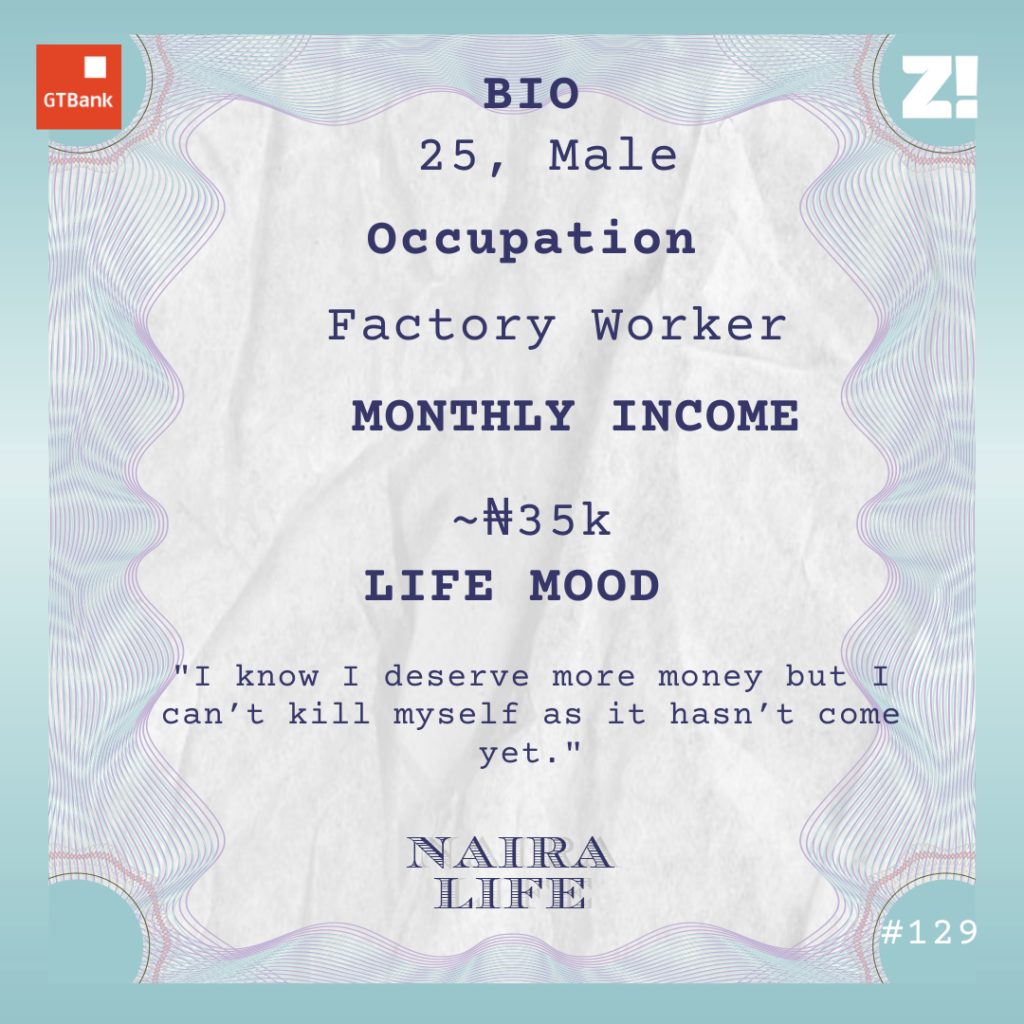
    At the moment, I earn an average of ₦35k every month.

    I’m not saving at the moment because there is no money left to keep. But I have an emergency fund of  ₦10k for when I fall sick. If I use it, I return the money. 

    What part of your finances do you think you could be better at?

    I’m always tempted to do more than I can handle. Small money enters like this, and a thousand ideas follow. That’s when I’ll be thinking of buying a refinery and competing with Dangote. Then I end up doing nothing. It’s a habit I’m trying to outgrow. 

    Haha. What are your next steps after you get your diploma?

    First things first, I’d work with a plumbing firm for six months. I don’t even mind if they pay me or not, but I need the experience. After that, I can now start thinking about setting up my own business. I’ll probably need to sell the land to get the money I need for that. 

    How much do you imagine will set you up?

    ₦3m should get me started on the kind of business I have in mind. But I’ll probably have to start with less than that. 

    Rooting for you. Where do you see all of this in five years?

    By that time, I expect to be making at least ₦5m in a year. There’s the opportunity to do so in Lagos but if it doesn’t work, I’ll move to my plan B.

    I’m listening.

     I have people in Dubai, and while it’s not very easy to get in anymore, it’s still one of the most accessible places to migrate to, and they always need skilled workers. The last time I inquired about the cost, they said ₦800k will get me there. If I ever need to move, that’s something to consider.

    Back to the present, have you spent money on anything that made you feel good recently?

    Yes, my phone. I bought it in December 2020 for ₦80k. After the land and my school fees, this is the most money I have spent on anything. But the experience so far has been amazing. The money is worth it. 

    Nice. What about something you want but can’t afford?

    I don’t think there’s anything I want right now. I’m only praying that everything clicks when the time comes to start my plumbing business. Aside from this, I’m good.

    I’m curious about how your experiences have shaped your perspective about money.

    I’ve moved from seeing money as a piece of paper with a fascinating history to an important part of human existence. I know what money can buy and the things it can change. In my line of work, I’ve had to put up with a lot of people who talk down on me because I don’t have as much money as they do. So yes, I see money as an instrument. Also, I know money is not coming in at the moment, but I’m not scared. I’ve built a reputation I can bank on over the years, and if I get into a tight spot now, I know the people I can call to help me. That’s very important too.

    Word. How would you rate your financial happiness on a scale of 1 – 10?

    5. I know I deserve more money, but I can’t kill myself as it hasn’t come yet. I don’t feel too bad about it because I’m trying my best. I can’t wait to have my diploma and start working on  my plans. Even if it doesn’t pick up immediately, I’d be confident that something good is about to happen to me. Just starting that business will take me to a 9.


    Great! You got to the end of this article. Know what’s even better? You can get QuickCredit faster than the time it took you to read this article. With Quickcredit, GTBank customers can get N2million in less than 2 minutes and pay back over 12 months at an interest rate of 1.5%. No forms. No collateral. No hidden charges. Get Your Quick Credit on GTWorld

  • See, you can’t lose focus when you’re job hunting. I swear I’m not pulling stuff out of my ass (I may be, but that’s not the point) , but every word you find in a job ad has an underlying meaning. Not that you asked me but as a labour of love, I’ve broken some of them down for you.

    1. “Competitive Salary”

    “Hm, we know you’re chasing the bag and we try our best to pay our employees, but the Naira is shit. Whatever we offer you, take it like that.”

    Depending on who your potential employer is, it could also mean:

    “Most people in Nigeria are underpaid. You’re not special. Come and work, my friend.”

    9 Nigerians Talk About Being Overworked And Underpaid

    2. “Flexible hours”

    “LMAO. We don’t mean flexible for you. You don’t have a life anymore. Say your goodbyes and let’s get this party started. “

    3. “Highly competitive environment”

    Music Video Work GIF by Rihanna

    You don enter am. If you’re not burned out, are you really working?

    4. “We are a family”

    “We are a company and a business, really. We’re selling you this bobo dream, so you will do your best work for us.”

    5. “X years experience”

    “What we’re asking for is unreasonable for this job level, but everyone else is doing it. If you like, don’t apply.”

    6. “20 days paid leave”

    “Yes, we know you should go on leave. But who will do your work while you’re away? You don’t want the business to suffer, do you?”

    [donation]

  • Every week, Zikoko seeks to understand how people move the Naira in and out of their lives. Some stories will be struggle-ish, others will be bougie. All the time, it’ll be revealing.

    This week’s Naira Life is brought to you by QuickCredit. With QuickCredit, you not only get the funds you need instantly, but you also get to pay back at the lowest interest rate in Nigeria.

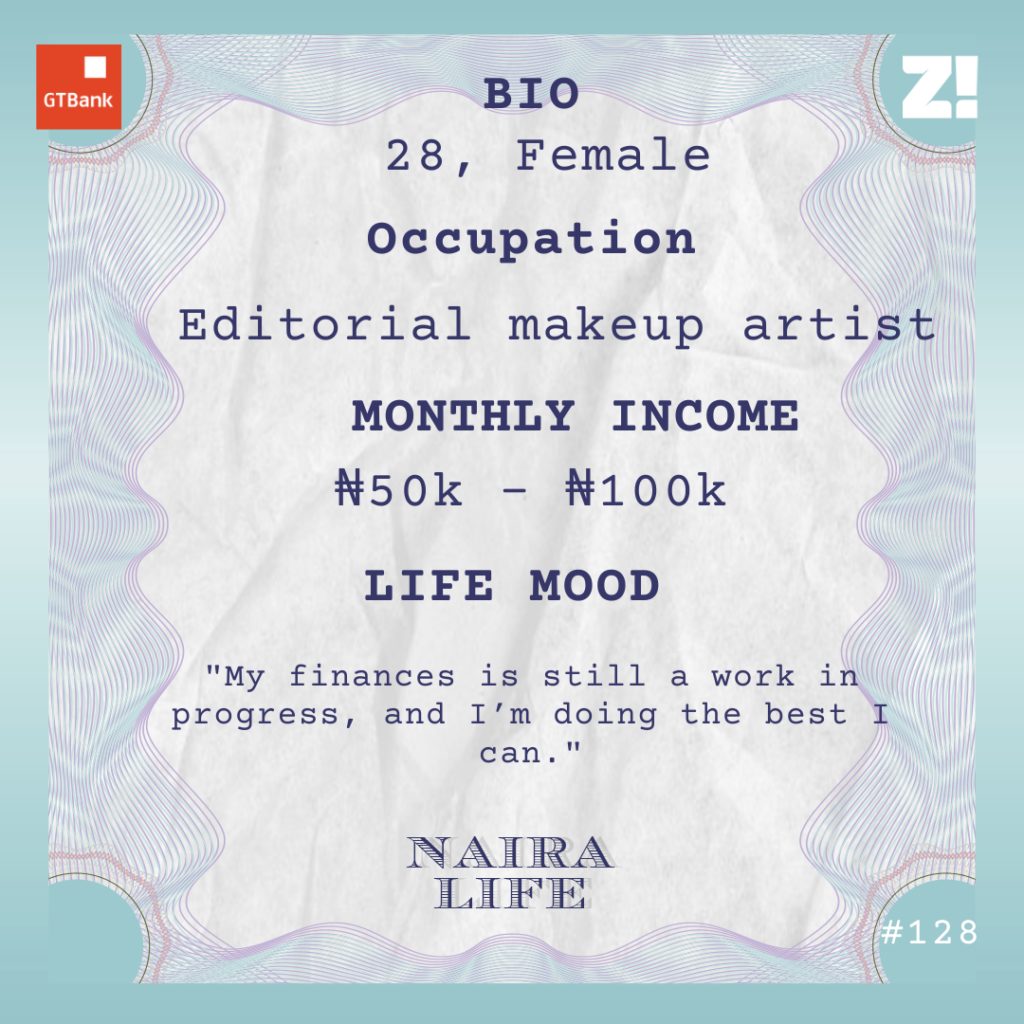
    The 28-year-old makeup artist in this #NairaLife  has had multiple experiences with low-paying jobs. In 2020, she went in on a plan B and moved to a new city. She hasn’t figured everything out yet, but she’s also not where she was two years ago.

    What’s your oldest memory of money?

    The memory that comes to mind right now happened in 2007 when I was in secondary school. I found some ₦2k I had saved and forgotten about in a Danish butter cookies container. Unfortunately, the central bank had issued new designs of the naira, so the money I had was useless.

    I feel a sharp pain, and it’s not even my money.

    Do you get? It wasn’t much of a big deal though. Things were good at home at the time, so it was something I could let go without much fuss. 

    Baller. 

    You’d think so. Things were really good for the most part when I was growing up. It wasn’t until 2008 or 2009 that things started to take a different turn. 

    How?

    Let’s just say that my dad had really big dreams and tasted money earlier on, but he wasn’t on top of his finances. He started out as a lawyer and went on to become a local government chairman in the south south. I think the idea of going back to being a lawyer and hustling for measly amounts of money didn’t appeal to him after his tenure ended. He thought he was going to get another big break and he hung onto that hope and forgot about everything else. This decision affected the family’s finances. Subsequently, most of the responsibilities fell solely to my mum, but there was only so much my mum could do with what she earned from teaching.

    I got into university in 2008, and by my second year, things had gotten so bad that it was a struggle to get my parents to come through for anything I needed. The money always came late, and when it did, it was never enough to do anything. Being broke was my default setting.

    Tough. So you had to figure things out yourself.

    Pretty much. A part of figuring things out was realising that I may have to live off my friends in school. A couple of friends understood that I didn’t have much, and they did the best they could for me. The other part was living with the shame that came with it.

    What was that like?

    Not fun. I didn’t even want to ask my friends for help. I tried as much as possible to stretch whatever resources I had, but it simply wasn’t enough. Having friends who came through was good for a while, but it also affected our friendship dynamics. A couple of people switched up on me before we left school because I had become a bit of a burden, which was understandable. 

    My last year in school was the toughest ever. First, it was an extra year. I tried to get tuition and rent from my dad. When he eventually sent some money, it was not enough to sort out both. I tried to talk my landlady into giving me a deal, but she didn’t agree to it. I eventually squatted with a friend who was kind enough to take me in, but the arrangement deteriorated into something else before the year was over. I finished uni in 2014. 

    Nice. Well done.

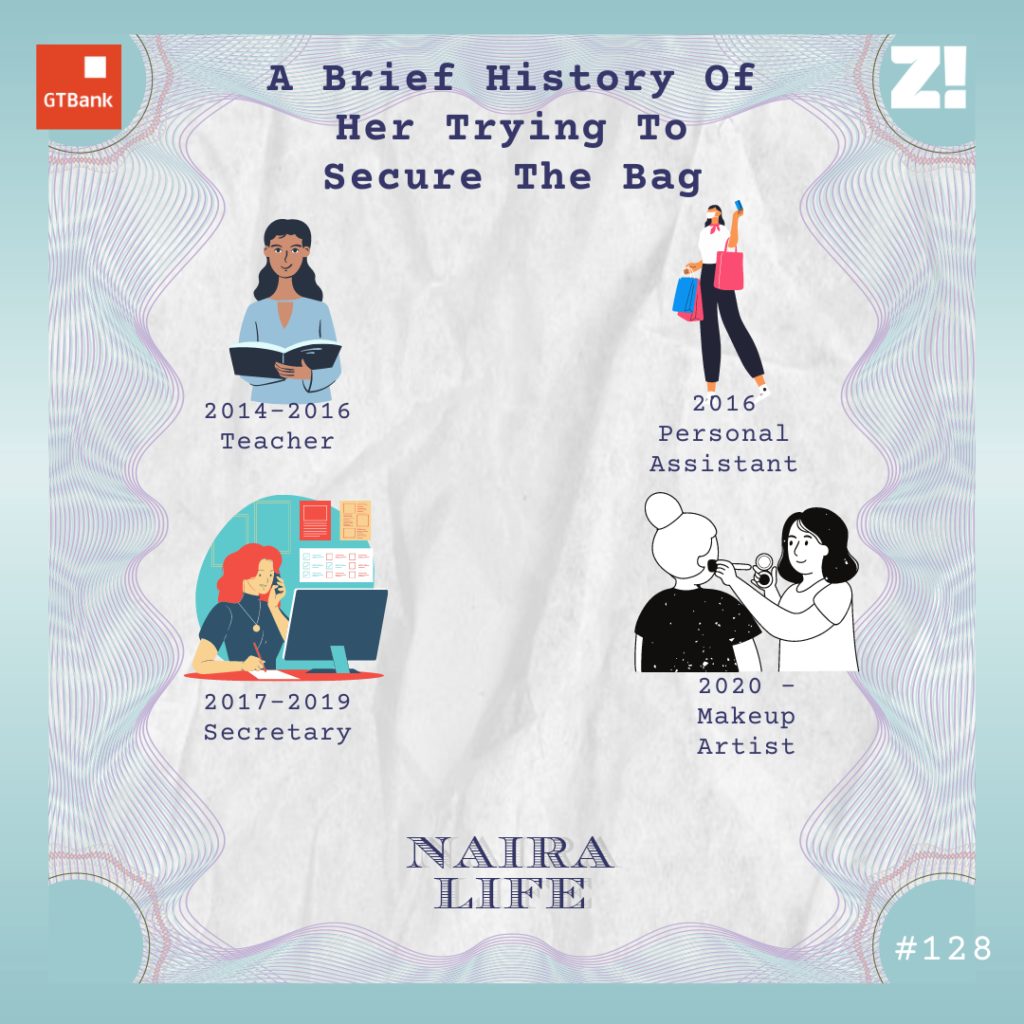
    The next thing was NYSC. I served in the south south and taught in a catholic secondary school. There was the ₦19,800 federal government allawee. The school where I worked paid ₦5k per month. There was also an extra ₦3k that came once every two months as compensation for the additional lesson hours I worked. The year wasn’t bad. The school provided free accommodation. Most of my monthly earnings went to feeding and travelling to a neighbouring state where my boyfriend at the time was serving. 

    I had no money saved up at the end of my service year in July 2015, though. I was pretty much winging it. 

    No more allawee. What did you do next?

    Nothing for the first six months. I moved back home and  got really antsy about finding work. My dad’s income was still non-existent, and he was taking my mum’s salary from her. When it didn’t seem like I was going to get a job, I asked my mum for help and she got me an interview at a school. I couldn’t  mask my desperation during the interview, and the man who interviewed me took advantage of it. I don’t remember what he said word-for-word, but it was something along the lines of “Pay this small girl ₦15k.”

    What?

    I took the job. It was better than nothing. I resumed work In January 2016.

    I respect that.

    The workload was crazy. I was teaching all six classes in the school — two subjects for each class. With every month that passed, I hoped that they would see how hard I worked and give me a raise. But nothing came. I sent in my resignation the moment the school went on third term break. This was July 2016.

    Three months after I quit, a beauty queen, who was a friend to one of my sisters, was looking for a personal assistant.I applied for the job and got it. The salary was ₦20k per month but I didn’t get paid once, and I spent four months working for her. She covered some of the logistics, but at the end of each month, she complained that she hadn’t made money from “beauty-queening”.

    Omo.

    My desperation was at an all-time high, and I made some ill-informed decisions and fell victim to one or two job scams. I knew something wasn’t right with the vacancies, but I went along because I was just looking for a means of survival.

    After four months of working with the beauty queen, I quit. Let me even talk about the event that triggered this decision. 

    I’m listening. 

    I needed money badly that month and asked for my salary. Again, she said she had no money.  But she asked if I was interested in a “Thanks for coming” gig.

    Thanks for what?

    Thanks for coming. This is how it works: Party organisers invite girls to a party to light things up. At the end of the party, they pay each girl between ₦20k and ₦30k. Some got more than that too. It depends on the deal you get. 

    Oh, I see. 

    I didn’t even have clothes to wear because I was broke. The beauty queen gave me one of her dresses and did my hair and makeup. We got to the location where we would get cleared to go to the venue of the party. When it was my turn, the person who was assigned to clear me said I didn’t fit the bill of whom they were looking for and should return home. 

    It broke me. I had bills to pay and I clocked that I wouldn’t even have gone there if I was getting paid for my job. I texted her the next day and told her I was done.

    Whew. 

    MMM was the rave around this time and I put about ₦20k in it from the money I didn’t have. I made some money from it and it sustained me for a while before it crashed in 2017. 

    Fast forward to  September 2017, an old friend whom I had just reconnected with reached out to me to ask if I was interested in a front desk secretary position that had opened in his brother’s office. I applied for the job and got it. They offered me ₦35k, promising to bump the salary to ₦50k after my appointment was confirmed. But I wasn’t sure if I wanted to accept it. 

    Was there a reason?

    The job was in the heart of town and my parents were living on the outskirts.  I had gotten another job at a school close to home. The basic salary was ₦20k but I could be earning up to ₦50k every month from after-school lessons. 

    A few days after the interview, my friend reached out again and asked me to take the job. The offer had been reviewed to ₦50k. So I took it. 

    Did you get a raise after?

    No. But they gave me free accommodation after a couple of months with them. While I was at the job, I made more friends in the city and met one or two glucose guardians here and there, and this helped my finances a bit. My monthly earnings grew from ₦50k to ₦100k. In very good months, I got up to ₦150k. I had a bigger purchasing power. However, I couldn’t plan around the money so much because it wasn’t stable. The only money I could count on was my ₦50k salary.

    I worked here till February 2019. I thought I was giving more value than they were willing to pay for. It was only when I told them that I was leaving they started talking about a raise. But my mind was already made up.

    I tried looking for another job but nothing came up from the search. I was like, “It’s time to try something new.”

    What was that?

    I’d been looking at the possibility of moving to Lagos and trying my hand at being a makeup artist. I needed training and money for that, so it didn’t seem like it was going to happen until a friend offered to sponsor my training. 

    In March 2020, I moved to Lagos and enrolled at the school. 

    How much did this cost?

    The tuition was ₦200k and I spent an extra ₦100k on buying the products I needed. My friend paid for this and also sent me a monthly  stipend of ₦50k from March 2020 to December 2020.

    I finished at the school in May  2020. Then came the question of what to do next again. I didn’t want to do the traditional beauty makeup where I’d have a studio and make people up for events. I wanted to do editorial and production makeup. The problem was, I didn’t have a portfolio. I did the next thing I could do. 

    What was that?

    I started reaching out to editorial makeup artists on Instagram and offering to assist them on their projects. I slid into a lot of DMs. No reply. No call back. Thankfully, I was still receiving ₦50k from my friend so that got me through that period. 

    Someone eventually replied in June 2020.

    Whoop Whoop!

    I worked with her until September although she didn’t pay me. While I was still assisting her, another person reached out to me. She paid me ₦10k the first time we worked together.It wasn’t a lot but it was the first time I was making money off this thing, so I was convinced that it could actually work.

    A big signal.

    It was. My first big break came in May 2021 when a friend helped me get my first solo job on a movie set and I was paid ₦80k. Omo, I was so proud of myself, and very much relieved. I hadn’t made any money from January till March. 

    I’m mostly assisting people on their projects these days, and I get  between ₦10k and ₦20k for each day I spend on a set with them. 

    How much do you make in a month now?

    It’s tricky to put a handle on that. But anything between ₦50k and ₦100k seems accurate.

    What’s been your best performing month so far?

    June. I made about ₦100k from all the jobs I got. I’m not good at keeping track of all the money that comes in, so it may have been more than that. Also, I’ve earned more money in each of the past three months than I did at my 9-5 while doing lesser work. For context, working for four or five days in a month will fetch me more than ₦50k.

     But the jobs don’t come in every time, do they?

    No, they don’t. But this is peak season, so I’m enjoying it. I’ve made ₦65k so far this month. This is a big deal for me.

    Let’s segue into your running costs every month.

    I plan my expenses around ₦50k every month.

    How much do you imagine will be enough money for you right now?

    ₦200-₦300k per month. I have a couple things I want to do right now but can’t afford. On top of the list is getting an apartment. I live with my sister and her boyfriend, and they’ve been super nice. I feel like it’s time to leave but I can’t and it’s killing me.

    Also, I have black tax to worry about. My dad and I used to quarrel a lot about that because he thought I wasn’t doing enough. There was a time he said to me, “I put it to you that you’re stingy.” After that fight, I started sending between ₦2k and ₦5k home every month. But I’ve not been able to do that since I moved to Lagos.

    I’m curious, how have your experiences shaped your perspective about money?

    I’m still in a place where I obsess about money, although the intensity has reduced over time.I’m beginning to realise that it’s not a do or die affair. I suspect it’s because I’m currently making more money than ever. I have a laid back approach to finances now and am focusing on how to expand my streams of income. 

    Sounds like there’s a plan B. 

    Yes. I have friends who have digital skills and friends who work in tech. They’ve recommended courses I could take, and I spend my days off on these courses. I’m currently crazy about community management, and I think it will be the next thing I try my hands at. 

    Nice. So How much do you have in your bank account now?

    I have ₦40k saved up. It’s something, and I’m proud of it. I don’t save a specific amount every month because of the structure of my finances. When I get paid for a job and can afford to save something from it, I do it. 

    What part of your finances do you think you could be better at?

     I could do better at keeping track of what I currently earn and possibly saving more. I should be able to have a better grip on saving in a few months though. However, it’s almost impossible to be more prudent than I already am. 

    Tell me about the last thing you spent money on that made you feel good.

    After I got paid for my first solo job in May, I spent ₦50k on a new set of makeup products, and man, the joy I felt! Recently, I spent ₦20k on a dress, a pair of shoes and a bag for a wedding I was invited to. I hadn’t bought anything for myself in a minute so that also felt really good. 

    On a scale of 1-10, how would you rate your financial happiness?

    4.5. People say that financial happiness is a state of mind, and I agree. I’ve been stressing over money all my life and I just want more out of this whole thing. I’m tired but I’m also happy about the progress I’ve made in the past couple months. Am I 100% content? No. But there are no regrets. My financial situation is still a work in progress, and I’m doing the best I can. That will do for now. 


    Great! You got to the end of this article. Know what’s even better? You can get QuickCredit faster than the time it took you to read this article. With Quickcredit, GTBank customers can get N2million in less than 2 minutes and pay back over 12 months at an interest rate of 1.5%. No forms. No collateral. No hidden charges. Get Your Quick Credit on GTWorld

  • Every week, Zikoko seeks to understand how people move the Naira in and out of their lives. Some stories will be struggle-ish, others will be bougie. All the time, it’ll be revealing.

    This week’s Naira Life is brought to you by QuickCredit. With QuickCredit, you not only get the funds you need instantly, but you also get to pay back at the lowest interest rate in Nigeria.


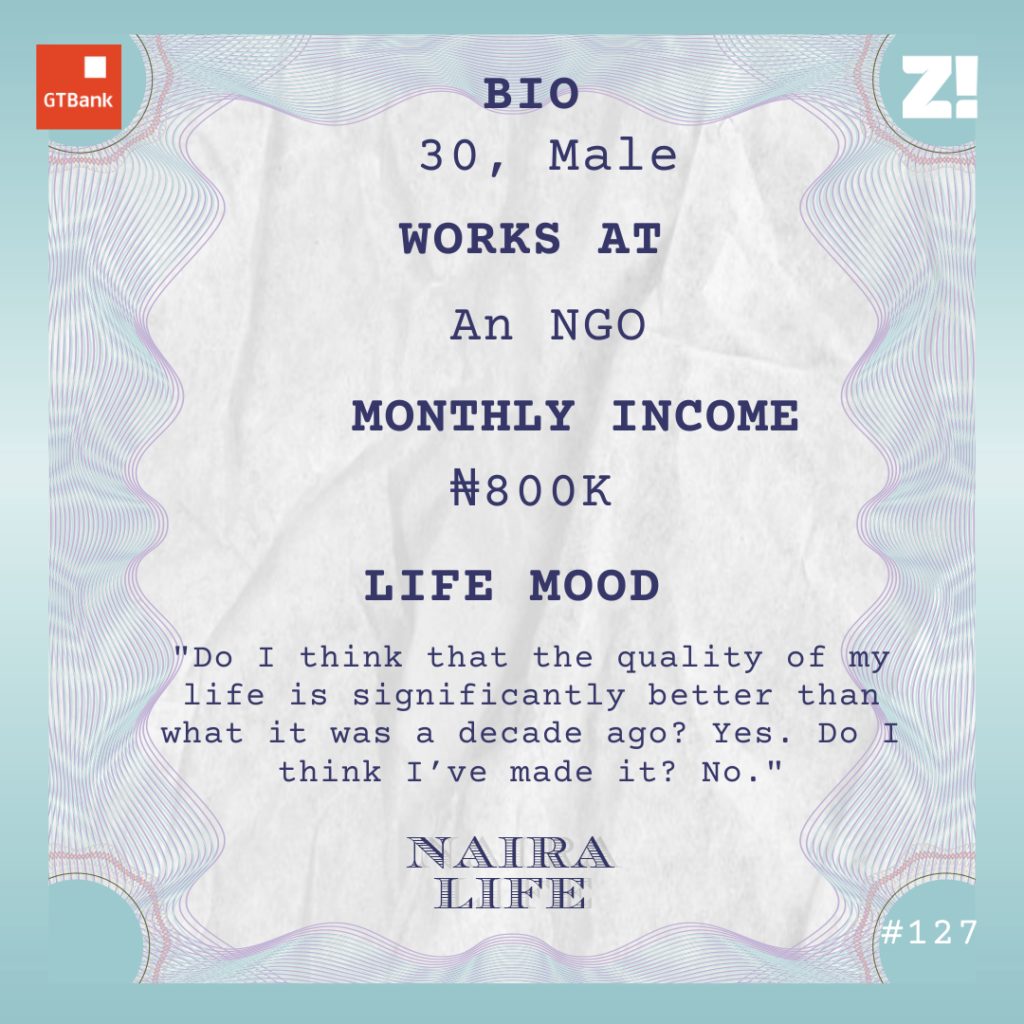
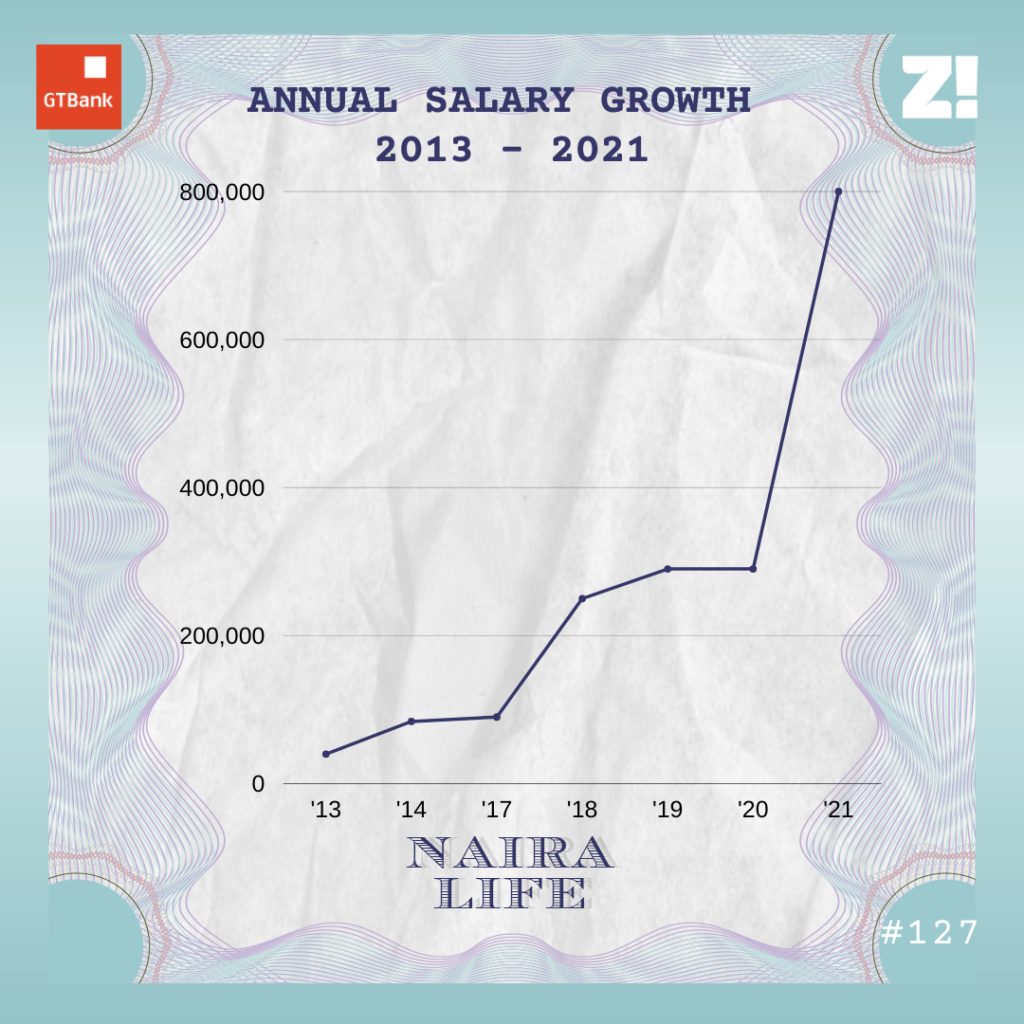
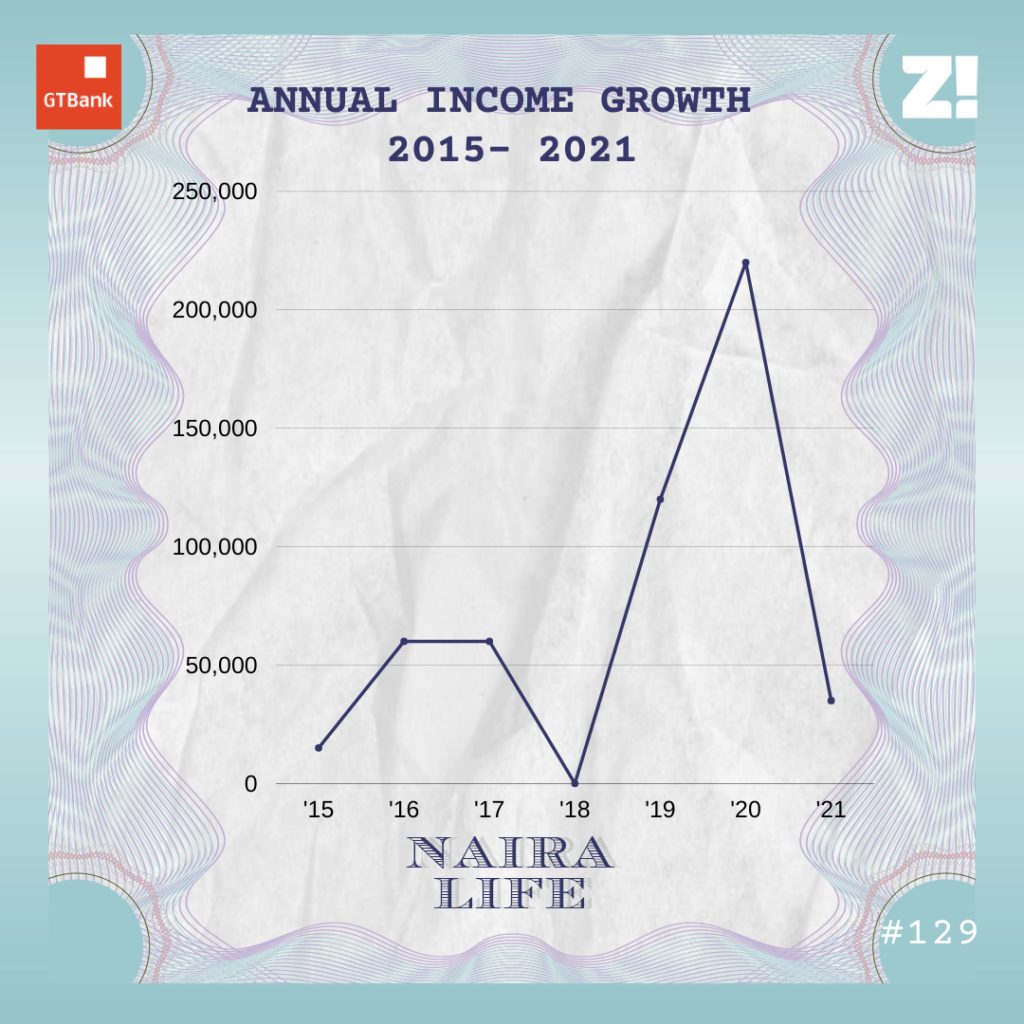
    The 30-year-old in this story was born into a low-income family. The constant struggle was a lack of money. When he got his first 9 to 5 in 2014, his salary was ₦40k. In 2021, his monthly earnings stand at ₦800k. This is his #NairaLife.
    Let’s go down the memory lane for a bit. What’s your oldest memory of money?

    I’d say knowing money from a distance. My parents struggled to raise four kids and most of the problems were money-related.  My dad was a businessman and my mum was a petty trader, who sold anything she thought she could sell. The default mood around the house was always ‘Where will the next meal come from?”

    The first time I held money that felt like my own was in 1992. I was in nursery school and my parents gave me an allowance of 50 kobo. I don’t remember what that could buy at the time,but it wasn’t a lot of money.

    When you think about your childhood, what comes to your mind?

    Two things: being sent out of school and not hanging out with some of my mates because I didn’t have clothes to wear. I grew up in a large compound full of neighbours, so both were a struggle. Whenever I was sent home from school, because I hadn’t paid my school fees for the term, I would sneak into the house through a bush path at the back of our building because I was embarrassed to walk through the main road. I was mostly indoors when kids my age were out playing because there was no point going out to join them when I didn’t have clothes to wear. 

    I like to think that our neighbours were praying to God to bless my family first before blessing theirs. That’s how bad things were.

    And you know what? Things got better for a while in 2002 – 2003. My dad started working with some oil and construction company and that came with a steady stream of income. 

    But something happened?

    Yeah. I can’t say a lot about it because I was still young and it isn’t my story to tell. But I know my dad made some terrible financial decisions and some of his business plans went south. Along the line, some key business relationships broke down, so the oil and construction money stopped coming in. This phase hit deeply because we had gone from having nothing to eat to having a fridge stocked with food, then back to nothing. The promise of a new life was snatched from us before we could get used to it. 

    What did this do to you?

    I wanted some level of control or anything that looked like it, and this drove me to looking for ways to earn money.

    Do you remember the first thing you did that fetched you money?

    Yes. I was good with computers, so I started working out of my dad’s office and helping people type letters and do basic graphic design. This  was in 2003 when I was in JSS 3. I was making between ₦50 and ₦500 from this. Also, I used to go to a cyber cafe in my street to work for a stipend. 

    Phones were also beginning to be mainstream but the older folks didn’t know how to work it. I had become popular as the computer guy, and I leveraged it, helping people perform simple tasks on their phones even though I didn’t have one.

    I stuck with all of this until I went to uni in 2008.

    What was uni like? 

    My parents worried about paying tuition and that was it. I had to fend for myself for the most part. Some money came from my older siblings sometimes, but it was few and far between. I grew up loving fashion and had always wanted to do something with it. In uni, I met a tailor and we decided to work together. I was  a striker — people who belong in this category don’t own shops.  My job was to get the job and the materials the tailor needed. I was getting deals and bringing them to the guy and making between ₦500 and ₦1000 on a deal. This accumulated into lump sums when the business caught on.

    What was the biggest money you made from a single job?

    ₦30k. I met this guy when I was in my second year of uni.  He asked me for the price of a shirt and I told him ₦18k because I knew he could afford it. He brought it down to ₦15k and paid for two shirts. I went home with ₦30k when all I needed to make a shirt was ₦5k. 

    Omo. 

    My earnings saw me through uni. I don’t remember how many deals I got or how much I typically made in a month, but I was never hungry. I graduated from uni in 2012.

    What came after?

    I almost got a big break. One day, a hotelier I had made some clothes asked to see me.When I got to his office, he introduced me to a man who came from a state in the south south. Apparently, the man was rich and managed a large music band. He wanted me to handle the project of making new uniforms for his band members. 

    He put me on a plane — my first time in one —  to meet the members of the band and take their measurement. I met the guys — about 100 of them and the initial deal was that I would make three shirts and trousers for each one of them. The total job was ₦2m. I got an advance fee of ₦800k on that trip.

    Whoop!

    I returned home with so much excitement. The only problem was that my go-to tailor had travelled and I thought I couldn’t wait for him. I decided to go for another guy I’d used for a small job a few months earlier, and I briefed him. He agreed to it and got a few more people to work on the project. But I put him in charge of the project and deposited the ₦800k advance I got. It was supposed to be spread among all of the guys who signed up on the project.

    It was time for NYSC and I travelled to camp and was following up on the project. 

    When I got back and went to check on the status, I found out that this guy hadn’t done anything. He used all the money I gave him to fund his wedding and rent an apartment. 

    Wait, what?

    For real. It was a bad situation. You know what this guy said to me? “You can’t do anything to me. The worst you can do is arrest me and I’ll get out eventually.”

    Ah!

    I was under pressure because my deadline had passed and I had nothing. The man who gave me the job had also started threatening me. During one of our conversations, he called out my NYSC state code and said he could make service year and life hell for me. 

    He wasn’t someone I could afford to totally piss off.

    What did you do? 

    I used about ₦500k in my savings to try to salvage the situation. I contracted the job to another tailor and managed to deliver the first batch of clothes. But the man didn’t pay me the ₦1.2m balance because I was way past the deadline. Also, It wasn’t supposed to be a one-off job but after everything that happened, the man cut me off. He was like he had so many expectations and I let him down.

    Damn. I’m sorry. 

    Thank you. I think my access to the man and the kind of  jobs he would have brought to me would have changed the trajectory of my life. I was back at zero and the bulk of my savings had been wiped out. There was nothing I could do about it. After the deal crashed, I stayed away from fashion designing but I returned to it sometime during my service year because it was my primary source of income. 

    I finished NYSC in 2013 and started job hunting. After several interviews, I got a job offer. It was a personal assistant role to a managing partner of an oil and gas consulting company. The pay was ₦40k per month. Guess how long I spent on the job? Two months. 

    Why did you leave?

    I had problems with my boss. At the peak of it, I was always looking forward to the end of the day, so I could leave the office. There was no point in staying there. 

    What happened after you left?

    I didn’t get another job until 2014, but my side hustle kept me together. My next job was at a consulting firm and I was hired as a client relationship officer. My net salary was ₦47k when I started the job. After four months, I was promoted and my salary rose to ₦84k. However, I had taken a loan  of ₦500k from work for some family needs and was repaying ₦41k per month. This put my monthly earnings to ₦43k until I finished paying off the loan. 

    How did this affect your finances?

    I’m not sure it did. First, I was sharing an apartment with my sister and  was making money on the side from fashion designing. Also, I consulted for some small marketing firms. I was running my day to day costs with my salary and saving whatever I made from the side gigs. I should add that I got another promotion and a salary increase. My salary was ₦90k when I left the company in 2017. By that time, I had about ₦1.5m in savings. 

    Why did you leave this job?

    There was nothing to aspire to there anymore and I didn’t think I was going to get another raise. The ginger to leave really came when I got a marketing job at a sixth form college — a school that offers foundation and pre-university courses to Nigerians looking to study abroad.  The salary was ₦250k. That was about 3x my salary at the time and I had to move to a new city for the job.

    That’s a significant raise, but you had to move to a new city. What was that like?

    Haha. It felt like I was being thrown into the wild but I took it in good faith. The money erased every doubt I had. 

    Haha.

    I was at the job from 2017 and got a few raises there. My salary was  ₦290k in 2020. Later in the year, a friend told me about a vacant position as the head of a department at  an international NGO. I applied for the job, went through a couple of interview stages before I got an offer and it was a very good one for me. 

    I’m listening!

    It’s a remote job. The offer was $1650 a month. That’s about ₦800k. I dropped my resignation letter at my previous job and resumed at my current job in February 2021. 

    You are currently earning almost 3x your old salary, what has this jump shaped spending habits?

    I’m still living on my old salary. My spending is still at a minimum and it doesn’t really reflect how much I earn. It helps that I don’t really go out except when I have plans with my girlfriend and other close friends. In addition, I don’t pay a lot in black tax, and that’s because my siblings and I pool our resources together. However, my savings habits have definitely changed. I was saving ₦100k on my old salary. Now, I’m saving ₦500k every month. 

    Lit. Lit. This feels like a good place to break down your monthly running expenses.

    I pay ₦500k for my rent per year. I used to save a portion of my salary every month to make rent but I’ve not been doing that this year. 

    You’ve come a long way, how have your experiences shaped you?

    My view of money is that it’s a reward for a service rendered. And financial success is what happens when opportunity meets proper preparation. People like me don’t get life on a platter of gold. We have to grab and make the most of every little opportunity we get. 

    Back to your savings, what does it look like at the moment?

    I have about ₦5m from money I’ve saved over the years from salaries and whatever extra money I get. Saving money comes naturally to me, but I’ll admit that it got easier to save more as I earned more. Also, a savings app has been keeping me grounded. 

    Are investments your thing?

    I invest in small businesses. Some of my friends have a couple of these, and I have a stake in their businesses. My investments there  should be worth between ₦2m and ₦3m, and I’m sure they are going to grow. I’m not into or interested in crypto because I don’t know how it works yet. 

    In the near future, I’m looking at putting some money into setting up a food truck and hopefully grow it into a restaurant. I’m excited about that. 

    You’ve come a long way, but how much do you think you should be earning right now?

    Hmm. I don’t think I’m grossly underpaid, but I imagine I’ll always want more. Anything from ₦1.2m to ₦1.5 is a good number for where I’m at right now.

    Have you ever thought about what you need to unlock your next level of income?

    The thing about working at an international NGO is that it opens to a lot of opportunities and contacts. If I can leverage this properly, I should be able to triple or quadruple my income in the next two to three years. 

    And in five years?

    That’s more about my investments. I want to have a couple of food trucks and a restaurant by that time. I really love the whole culinary thing, so I’m geared towards it. This plan to own a food business is probably one of the reasons I went for my MBA.

    I’m curious about this interest in the culinary business.

    Haha. Let me paint a picture: I see a new recipe and I get excited. I’ve always loved to cook. I did go to a culinary school for a while and when I have the time, I teach cooking classes. Also, I watch food channels a lot. So yeah, it wouldn’t be the worst idea to go all in and make some money off it. 

    Back to the present, what’s something you bought recently that improved the quality of your life?

    A Macbook. I got a good deal on it and it cost ₦400k. The synergy between my iPhone and the Macbook has been making my life a whole lot better. It’s out of this world. 

    Anything you spent money on recently that required proper planning?

    I’m still thinking about it. I want to move to another apartment. Rent and furnishing will cost me about ₦2m. This definitely requires a lot of thinking and planning because it’s going to take a lot of money out of my savings. 

    Let’s talk about financial happiness, where is it on a scale of 1-10?

    I’d say 6. Do I think that the quality of my life is significantly better than what it was a decade ago? Yes. Do I think I’ve made it? No. I want to build my wealth around my investments and get to a point where the dividends are enough to fund my lifestyle. This will take me to an 8. It’s almost impossible to hit a 9 or a 10 in my opinion, and that’s fine. But I want to look back in a couple of years, see the work I’ve put in and where I’m at and be happy about it. 


    Great! You got to the end of this article. Know what’s even better? You can get QuickCredit faster than the time it took you to read this article. With Quickcredit, GTBank customers can get N2million in less than 2 minutes and pay back over 12 months at an interest rate of 1.5%. No forms. No collateral. No hidden charges. Get Your Quick Credit on GTWorld