Here’s how politics generally works. A seat is up for grabs. Different candidates contest that seat. This process involves campaigning, lobbying, media appearances, endorsements, promises, and, of course, money. A political campaign, be it for newbies or career politicians, involves telling people about your past achievements and why it’d make a fine precursor for the goodies you have for them should they elect you to office. Naturally, not everyone will buy your story—you’re in a contest, after all.
Here’s how politics works if you’re Godswill Akpabio. You’re a lawyer and former two-term governor of one of Nigeria’s oil-rich states, Akwa Ibom. Despite raising controversy by decamping from the party that brought you into politics, you’ve done well for yourself and are now a serving senator. But you’re not content with just that. You want to be Senate President, and now you find yourself in a stiff contest as other politicians are eyeing that juicy position. So what do you do?
You get endorsements from former colleagues
While Akpabio hasn’t officially declared for the seat yet, the Cable reported earlier in May that Akpabio received endorsements for Senate President from 72 ex-senators. The outgoing governor of Kano State, Abdullahi Ganduje, also said it was a settled matter. His words:
“The senate president of the Federal Republic of Nigeria will come from the south-south, and it is no other person than the former governor of Akwa Ibom. The uncommon governor is the uncommon minister who will be the uncommon president of the Senate. So we have resolved that.
I am giving you assurance. We are waiting for the D-Day that he will be the senate president of Nigeria.”
If you’re Akpabio, that should be job done then, right? Not quite. Akpabio, more than anyone, knows how slippery Nigerian politics is. He was in the Senate when Bukola Saraki engineered an audacious coup that saw him emerge, against all expectations, as the eighth Senate President. Besides, he won’t be swayed by the assurance of Ganduje, who boasted about winning Kano State for Bola Ahmed Tinubu only to fall flat on his face.
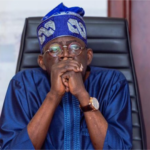
[Before]
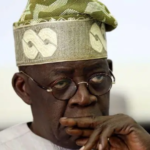
[After]
Lobby from outside your party
Akpabio has reached out across party lines to get support for his Senate Presidency ambition. On May 18, Vanguard reported that Akpabio held meetings with the leadership of the Labour Party (LP) and the New Nigeria Peoples Party (NNPP). The LP has eight senators, while the NNPP has two. The PDP, which he decamped from, has the second-highest number of senators, with 36.
Overall, the Nigerian Senate has 109 senators. Out of that number, the APC has 59 senators. To win, you need to earn the highest number of votes. However, because Akpabio faces competition from within his party, he can’t rely on just his party’s votes. This explains his intense lobbying.
Ask Nigerians to forgive and forget your recent past
Akpabio’s most recent gig was his appointment as Minister for Niger Delta Affairs between 2019 and 2022, when he resigned in his failed bid to run for president. Akpabio, however, doesn’t have fond memories of his time as minister. He wants Nigerians not to judge him based on his performance there. His words:
“I do know that I have not changed in any way. God has given me the opportunity to be an uncommon transformer wherever I go. I will not like to be judged by ministerial appointment for Niger Delta, which everybody knows is a problematic place. But I would like to be judged by my record as a lawyer of 36 years, commissioner of six years and a governor of eight years.”
Who will tell Akpabio that that’s not how politics works? And why do Nigerian politicians think they can wave a wand and expect us to forget their misdeeds? It’s giving Buhari, who wants Nigerians to remember him fondly while turning a blind eye to his failures in governance, security, and the economy.
In July 2020, Akpabio appeared before the House of Representatives Committee on Niger Delta in a forensic audit hearing of ₦81.5bn spent by his ministry. He was accused of misappropriating the funds. Akpabio, in his defence, said most of the people who benefitted from contracts from his ministry were National Assembly members. As soon as that revelation was made, a committee member interjected and told Akpabio on live TV to “off your mic.”
This is Nigeria anyway, so there’s no prize for guessing how that has played out. Ultimately, it’s in the public interest to know about the person who might become the number three man in Nigeria. And against the recommendation of Nigerian politicians, we won’t “off our mic” just like that on Akpabio’s past.
For Navigating Nigeria this week, Citizen spoke to Itunuoluwa Awolu, a lawyer and the fundraising director at the Headfort Foundation, an NGO focused on providing free and easy access to justice to indigent and wrongly incarcerated inmates, victims of police brutality, and minor offenders. She shared her thoughts on the Nigerian correctional system and how it can be reformed.
Editorial Note: Navigating Nigeria is a platform for Nigerians to passionately discuss the Nigerian experience with little interference from individual opinions. While our editorial standards emphasise the truth and endeavour to fact-check claims and allegations, we are not responsible for allegations made about other people based on half-truths.
Icebreaker. Have you ever heard of Citizen and the work we do?
Yeah, of course I have. And I’ve gone through some of your stories and interviews. You guys like interviewing people about relatable occurrences or things affecting their communities. And that’s one thing I love about Zikoko Citizen, bringing the media to the people.
I think that’s crazy. It’s crazy in the sense that if you look at the work that we do at Headfort Foundation and the inmates for whom we’ve secured their freedom, the stories that are shared as regards their experience in prison make it unbelievable to think that amount of money is put into the correctional system.
How do we have that kind of budget and see people with different health issues when they come out of correctional facilities? You hear them complain about starvation. The food they receive is so poor that you wouldn’t even give it to animals.
The Minister of Interior must explain precisely how that money is spent. To think that that amount of money is put into feeding almost sounds too good to be true, but I’m not going to categorically say that it’s a lie because I’m not in the system. But from the reviews and reports we’ve gotten from inmates who have interacted with our foundation, it’s unbelievable.
Interesting. Do you want to tell us more about what Headfort does and how it started?
Yes, Headfort Foundation started in March 2019. We provide easy access to justice through different means, such as providing free legal services to poor people who can’t afford to engage the services of a lawyer.
We also integrate the rehabilitation process for inmates after securing their freedom. Also, we sensitise the Nigerian public about their rights. We raise awareness about the effects of police brutality, how to engage with police officers, police-community relations, and the consequences of crime. We adopt different practical approaches.
Since we started in 2019, we’ve secured the freedom of 445 persons for free. We also have a mobile app called Lawyers NowNow that connects citizens with lawyers. So if you’re in Lagos, for example, and require a pro bono lawyer, you can use the app to contact us. If you have a case at the police station or are due in court and need legal advice, you can contact us.
How does Heardfort Foundation help people who are unjustly arrested or facing incarceration? Please share the process. I’d like to know how you advocate for their rights and provide them with legal representation.
Every month, we go for prison visitations to take on cases of people who meet our set criteria because it’s not everyone we can take on—legal services must be paid for. But we try to optimise for people languishing in custody because they are poor, illiterate, or unjustly arrested. We ensure that we take up their cases and secure their freedom, which is our way of providing justice for them. Then we also have mobile offices in some courts in Lagos and Ogun states.
Can you handle the hotness of Zikoko’s Hertitude? Click here to buy your ticket and find out.
Unfortunately, yes. And it’s not just peculiar to Nigeria. It shouldn’t be so, but when you look at Nigeria, some other African countries, and even across the world, the issue of over-congestion is a big deal. This is why we have different enactments regarding fundamental human rights. Fundamental human rights should be respected, such as the right to dignity. Inhumane and degrading treatments shouldn’t occur in correctional centres because they’re congested.
When you look at the percentage of inmates in correctional facilities creating this congestion, you’ll see that many of them are awaiting trial, or pretrial detainees, as they’re referred to in other climes.
Now bringing it back to Nigeria. This has been the reality for decades, and although the government has tried, the issue persists. A correctional facility was built to take 4,000 inmates but is housing 9,000. And if you check the category of these inmates, not all are convicts. Many of them are pretrial detainees. This means their trials haven’t even commenced in court; they’re just there languishing in custody, and no one’s sure they’d be found guilty.
From our work at Hertford Foundation, we’ve seen cases where people spent eight years, 11 years in prison. I think 11 years has been our highest number. Eleven years in custody without trial.
Wawu
Someone goes to the police station to report a case, or the police pick up people, and then, due to the high level of corruption, you see that people are taken to court over frivolous charges, and there’s no evidence to back it up. There’s no way to prove that this person has committed the crime for which they’re being charged. Then they remain in custody because there’s no way they’ll start the trial without evidence against them.
You find out that the justice system is a prolonged one in Nigeria. The judges are trying, but they’re also limited. You go to some courts and see judges with 40, 50 cases to adjudicate daily. When the judge gives an adjournment, it can last months.
So in a year, someone in custody may only appear three or four times before a judge. Before you know it, a person would’ve spent five or ten years awaiting trial.
My goodness
When the trial eventually commences, closing the case can take another five or 10 years. And this affects the entire justice system because the courts and wardens are overwhelmed while inmates suffer.
Imagine someone is charged with an offence punishable by one month of imprisonment, and then this person has spent three or four years. How’s that justice?
You’ve raised issues worth pondering. What would you recommend?
Importantly, correctional centres are made for rehabilitation and reformation purposes. As such, in Nigeria, we’ve been trying to lean towards that model to ensure that people aren’t kept just for the sake of custody. They should be reformed and reintegrated into the society. We’re still lagging here.
I recommend that now that we have the correctional service under the concurrent list, states can, hopefully, have the financial capacity to build and run their correctional service centres. This way, we’d solve this overcrowding problem, eliminating all these challenges of health issues among inmates. It would also address fears of hardened criminals influencing one-time offenders or innocent ones.
I also recommend the use of restorative justice and non-custodial sentences. Not every offender needs to go to a correctional centre. The system can then adequately cater to those who need rehabilitation and reformation.
Let’s talk about the issue of jailbreaks. We’ve had a spike in those recently, with escaped inmates unaccounted for. What are your thoughts?
With technological advancement happening in the financial system and other sectors, you’d find out that we’re still lagging in technology regarding the justice system and even our security agencies. This, in turn, affects the correctional service centres—there’s no data.
When you want to calculate the estimated number of part-time inmates in custody, the general public doesn’t have that data. Unless the Minister of Interior or their spokespersons say, we have 75k people and must work with whatever they say. So when you have a jailbreak, like in Edo State or Lagos State during the COVID-19 pandemic, where some facilities got burned, and data in files not backed up are lost, these questions come up. Many inmates in custody have their files missing.
Whew
These are the challenges. For example, the burned facilities have been renovated in Lagos, but can they regenerate the lost data? So when there’s a jailbreak and inmates escape, the lack of adequate data means it’ll be difficult to recover them. Those apprehended probably had issues finding a place to go or no money to transport themselves out of the state. It’s also easy for the authorities to pick up people wandering about. They’ll return them and say they were part of the escaped inmates. This happens because there’s no data to guarantee that these people picked up were the same as those who escaped.
We must inculcate technology into our data collection and stop making it secretive. This applies to law enforcement agents at correctional service centres who can be secretive. There’s secrecy around the available data they have, which even extends to when you go for prison visitation.
As much as we want to protect data, we should also be able to ascertain that whenever we need data for the inmates or for whatever legal purpose, we’ll access it.
The Nigerian Prison Service has changed its name to the Nigerian Correctional Service, suggesting a reformatory model. Yet Nigeria still practises capital punishment. Over 3,000 Nigerian inmates are on death row. What are your thoughts on this?
Beyond changing the name from the Nigerian Prison Service to the Nigerian Correctional Service, the Nigerian Correctional Service Act was also passed into law [in 2019].
One of the recommendations was to make a provision for inmates on death row to have their sentencing commuted to life imprisonment. This is for situations where a person has spent over 10 years in custody.
So if, after 10 years of sentencing someone to death, that person remains in custody, appeals have been made to either the Court of Appeal or the Supreme Court, and this person is awaiting execution, the Chief Judge of that state has the duty of commuting the death sentence to life imprisonment. That’s what that Act has done.
Hmmmm…
I understand that since we now have a correctional centre, people on death row should be forgiven and the death penalty removed. However, I think the death penalty remains necessary to instill fear in other people who are yet to be caught and to make them understand that the punishment for this grave crime is death.
I think that’s why the death penalty still exists. Most times, you rarely even see governors assent to the death penalty being carried out. So you see many people awaiting the execution of their sentences, but the governors are not ready to implement them. The essence of it is to deter. Although it’s also true that we’re still holding on to archaic and pre-colonial beliefs that instituted the death penalty, we still don’t believe that for grievous offences, the death penalty should be removed because it’s going to pass the message that the worst that can happen is remaining in custody for many years.
I think that if, after 10 years, the death penalty can be commuted to life imprisonment, why not just remove the death penalty? And let’s have life imprisonment as the maximum sentence. But I also understand the perspective of people who are victims of grievous crimes. When you see someone who’s killed, say, 30 or 40 people, it’s hard to argue to the victims’ families that such people are entitled to remain in custody, breathing and enjoying the right to life.
Robust response there. Tell us about female inmates. Do they suffer similar indignities as male inmates in Nigerian correctional facilities?
I’ll say no, they don’t. I mean, they don’t face the level of pain or degrading, inhumane treatment their male counterparts face. First of all, female prisons are rarely congested. In Nigeria, we have over 75,000 inmates in custody, and over 73,000 are male. And then we have like 1,600 or so who are female. So it means the female correctional facilities are not congested; they’ve been managed well. Because they’re a limited number, the staff can take care of them. Even if significant rehabilitation or reformation is not being done, they’re at least able to enjoy some rights better than their male counterparts.
They face fewer health challenges and get relatively better medical care than male inmates.
How does the Headfort Foundation raise funds, and how can we help?
Fundraising is still a significant challenge for us, especially considering the scale of our work at the foundation. We provide free legal services for many people with our limited resources. This means there’s also a limit to the number of people we can help.
Every quarter, we organise fundraising online, whereby we have donation links that we share on all of our social media platforms. We seek support from people to donate to us so we can continue to do our work. The operation is vital.
We also look for organisations and individuals to partner with us and help sponsor our projects. Headfort Foundation holds sensitisation programs, mentorship and rehabilitation programs, and vocational training as a means for our beneficiaries to gain employment. We connect them with employers and even provide scholarships for them. And for those with business ideas, we give them financial support to start up or continue from where they stopped before incarceration. We also provide accommodation facilities for some of them who have accommodation challenges.
As I mentioned, we go on prison visitations to support inmates and provide essential items like toiletries, food, and books. But none of these can happen without support from partners and everyday Nigerians like you. A little donation can go a long way.
[You can learn more about what the Headfort Foundation does here. If you’d like to support the Headfort Foundation financially, use the Flutterwave donation link here.]
On May 8, 2023, a Twitter user with the handle @GoziconC claimed that the lawyers defending Nnamdi Kanu, the leader of the secessionist group the Indigenous People of Biafra (IPOB) now in custody, are the same as those of Labour Party presidential candidate, Peter Obi, at the ongoing presidential tribunal proceedings.
The user followed up his claim with a photo of Obi in conversation with some lawyers in court. As of the time of writing, the tweet has been viewed over 412k times.
A self-acclaimed leader of the IPOB, Simon Ekpa, also tweeted on May 9, 2023, that Mike Ozekhome (SAN), who is Nnamdi Kanu’s counsel and appears in the photo above, is part of Obi’s legal team.
11th May is the court of MNK, Ozekhome is part of @PeterObi legal team, and Obi’s election tribunal is on the same date 11th May. I Hope Ejiofor will not be left alone to mess the case up again. I have ask this question internally and i am waiting for update.
On Wait First, we divide claims into three categories. A valid claim is a fresh banana. A false claim is burnt dodo. And a misleading claim is cold zobo.
Fact-checkers at the Centre for Democracy and Development (CDD-West Africa) examined this claim. Here’s what they found:
In January 2022, following his apprehension by the Nigerian government, Nnamdi Kanu appointed Mike Ozekhome as his lead counsel in his case against the FG. Ifeanyi Ejiofor, one of Kanu’s lawyers, also confirmed this.
Is Mike Ozekhome representing Peter Obi at the Election Tribunal?
“The election petition prepared by Obi’s legal team includes a list of the legal practitioners representing the petitioner. Mike Ozekhome’s name does not appear on the list.
“We, however, found Ozekhome to be among the legal team of Atiku Abubakar, the presidential candidate of the Peoples Democratic Party (PDP), which was inaugurated in March 2023. The team included his name in the petition that was submitted.
“Further investigation revealed that Ozekhome and Atiku have had a clientele relationship since 2017. He is also currently representing the latter in the alleged money laundering case filed by Festus Keyamo.
The claim that lawyers representing Peter Obi at the presidential election tribunal also represent Nnamdi Kanu is burnt dodo. It’s false.
Can you handle the hotness of Zikoko’s Hertitude? Click here to buy your ticket and find out.
When you’ve figured out how to get recruited into the Nigerian Army, knowing the ranks is also important. The Nigerian Army is one of three components of the Nigerian Armed Forces responsible for safeguarding Nigeria’s land. The other two are the Nigerian Navy, which protects Nigeria’s waters, and the Nigerian Airforce, which maintains control over our airspace. They collectively ensure Nigeria’s territorial integrity and shield the nation from external and internal threats.
Let’s dig into how the army is ranked. In this article, we’ve compiled all you need to know about the ranks in the Nigerian Army.
History of Army ranks
The Nigerian Army has a fascinating history that can be traced back to 1863, when Lt. Glover, a British Naval officer, established “Glover’s Hausas.” This small group of runaway slaves played a crucial role in protecting British trade routes by embarking on expeditions into the hinterland. Over time, this led to the formation of the West African Frontier Force, which eventually gave birth to the Nigerian Army as we know it today.
The badges of rank in the Nigerian Army draw inspiration from their British counterparts, with one notable difference. Instead of the British crown, officers with the rank of Major and above proudly wear the Nigerian eagle from the Coat of Arms on their insignia. It’s a symbolic representation of the country’s identity and heritage.
While titles may be considered ranks in certain armies, they often signify specific appointments in the Nigerian Army. These appointments can range from ceremonial and honorary roles to positions of authority and responsibility within the organisation.
A lieutenant colonel is a mid-level rank in the Nigerian army. Officers in this rank bear an eagle and a star in their insignia.
Highest monthly salary: ₦324,586
Lowest monthly salary: ₦282,573
Colonel
[Colonel / Wikipedia]
A colonel in the Nigerian Army carries an eagle and two stars aligned vertically. This is the highest-ranking senior commissioned officer and is typically in charge of army regiments.
Highest monthly salary: ₦352,631
Lowest monthly salary: ₦310,554
Brigadier General
[Brigadier General / Wikipedia]
A brigadier general is a flag officer and, as the name suggests, is in charge of brigades. This rank carries an eagle and three stars below arranged like a triangle.
Highest monthly salary: ₦677,895
Lowest monthly salary: ₦616,388
Major General
[Major General / Wikipedia]
The insignia of a major general carries an eagle with a baton and sword below it. A major general can command a division of 6,000 to 25,000 troops when appointed to a field command.
Highest monthly salary: ₦1,376,343
Lowest monthly salary: ₦1,003,245
Lieutenant General
[Lieutenant General / Wikipedia]
A lieutenant general is the third highest rank in the Nigerian Army. An officer of this rank can command as many as three army divisions with tens of thousands of troops. The insignia of a lieutenant general is an eagle, a star and a sword and baton, all vertically aligned.
Highest monthly salary: ₦1,486,451
Lowest monthly salary: ₦1,113,602
General
[General / Wikipedia]
A general is the second highest rank in the Nigerian Army. The insignia of a general is an eagle, two stars and a baton and sword arranged vertically.
Highest monthly salary: ₦1,724,83
Lowest monthly salary: ₦1,113,602
Field Marshall
[Field Marshall / Wikipedia]
The field marshall is the highest rank in the Nigerian Army. No one has attained this ranking yet. It’s a five-star rank typically given to a general after attaining an extraordinary military feat. The insignia is an eagle atop a crossed sword and a baton surrounded by a wreath of two branches.
Non-commissioned officers
The ranking of non-commissioned officers is as follows, from greatest to least:
Army Warrant Officer (Also called a Sergeant Major of the Army, Chief Warrant Officer or Force RSM)
Highest monthly salary: ₦171,793
Lowest monthly salary: ₦159,059
Master Warrant Officer (Former WO Class 1 – Also called a Regimental Sergeant Major)
Image source: CurrentSchoolNews
Highest monthly salary: ₦165,697
Lowest monthly salary: ₦148,583
Warrant Officer (Former WO Class 2 – Also called a Company Sergeant Major)
Image source: CurrentSchoolNews
Highest monthly salary: ₦101,974
Lowest monthly salary: ₦85,193
Staff Sergeant
Image source: CurrentSchoolNews
Highest monthly salary: ₦87,119
Lowest monthly salary: ₦69,647
Sergeant
Image source: CurrentSchoolNews
Highest monthly salary: ₦56,443
Lowest monthly salary: ₦69,261
Corporal
Image source: CurrentSchoolNews
Highest monthly salary: ₦58,638
Lowest monthly salary: ₦51,980
Lance Corporal
Image source: CurrentSchoolNews
Highest monthly salary: ₦55,832
Lowest monthly salary: ₦50,326
Private(No insignia)
Highest monthly salary: ₦53,892
Lowest monthly salary: ₦49,412
Recruit(No insignia)
Highest monthly salary: ₦10,237
Lowest monthly salary: ₦10,237
This brings us to the end of our list. Hopefully, you’re now better informed about ranks in the Nigerian Army.
The name on everyone’s lips over the last four days is Hilda Baci. The 27-year-old self-taught chef from Akwa-Ibom has now eclipsed the Guinness World Record (GWR) of 87 hours for the longest cooking marathon by an individual. Although the GWR says it still needs to review the evidence, they wished her luck in her quest on Instagram. Hilda’s not stopping, regardless. Her eyes are set on the 96-hour mark.
Nigerians worldwide have shown Hilda immense support in their numbers, pushing her to the finish line in a physically and mentally exhausting feat. In his usual “Mr Predictable” manner, the Lagos state governor also showed up, even as some people suggest it’s PR.
Peter Obi and Bola Ahmed Tinubu also gave their shoutouts. Instead of them famzing, we came up with some suggestions for world records they can also break and set. Here are a few below:
Most liked tweet by a politician
On August 12, 2017, a white supremacist carried out a terrorist attack in Charlottesville, USA. This led to one death and 35 injuries. In response to this tragedy, former American President, Barack Obama, took to Twitter to quote the words of former South African President Nelson Mandela from his autobiography, “Long Walk to Freedom”. The tweet has received 3.9 million likes.
The first requirement for becoming president in Nigeria is to have bullion vans filled with money.
[Bullion vans in Bourdillion / ICIR]
But just how much would you need in your war chest to set the record for the most expensive election ever? The 2020 American presidential election holds the record for being the most expensive in history. Open Secrets said the election cost a staggering $14.4 billion, more than double the 2016 election. That’s about 40% of Nigeria’s gross external reserves. Nigerian politicians reading this should better not get funny ideas. Moving on.
Longest legislative speech
Patrick Obahiagbon has already made a name for himself in the Nigerian National Assembly for his crinkum-crankum speeches that can turn you insane. Yet, he’s still a learner.
According to the Guinness World Records, the record for the longest legislative speech belongs to Chief Mangosuthu Buthelezi, a Zulu leader from South Africa. He addressed the KwaZulu legislative assembly between March 12 and 29, 1993. He spoke on 11 of the 18 days, averaging nearly 2½ hours on each of the 11 days.
However, Stewart Stevenson, a Scottish politician, may hold the record for the longest parliamentary speech at one stretch. In 2004, Stevenson delivered a speech lasting 23 hours and 51 minutes during International Suicide Prevention Week. He started at 5:21 PM on Wednesday, September 7, 2004, and completed it at 5:12 PM on Thursday, September 8, 2004. Even Obahiagbon would be impressed.
Countries with the most female heads of government
Nigeria has a notorious imbalance when it comes to female participation in politics. Only one woman out of 18 candidates contested the last presidential election. The numbers keep dropping alarmingly. The national average is 6.7%, which is very low compared to the 23.4% African average and the 22.5% global average.
Meanwhile, a few other progressive countries are leading women’s political participation. According to the GWR, excluding acting prime ministers, the countries with the most female heads of government are Finland, Moldova, New Zealand, Poland, and the UK, all with three. Nigeria is still yet to get one. God when?
Poorest president ever
No Nigerian politician ever wants to be on this table, but there’s a case to be made for having a frugal president for a country whose resources have been run to the ground by wicked leaders. Take a cue from Jose Mujica, the former president of Uruguay, whom the BBC has described as the “world’s poorest president.”
His story is fascinating. As president, he refused to live in the luxurious government residence and chose to live in his wife’s farmhouse. Only two police officers and a three-legged dog were watching over his house. He also donated 90% of his $12,000 monthly salary to charity—a very “unNigerian” thing to do.
[Jose Mujica / Getty Images]
No one realistically expects President-elect Bola Ahmed Tinubu to toe this path, but the least we can expect is that he declares his assets. Since he recently said he’d like to emulate former president Umaru Musa Yar’Adua, a public declaration of his assets would be a great place to start.
The National Youth Service Corps (NYSC), created in May 1973, is celebrating its 50th anniversary. To commemorate this, Citizen spoke to former and serving corps members. They shared their thoughts on whether the scheme should stay on or be scrapped.
Opinions were mainly divided among three camps. The “let it stay” guys argued that the NYSC remained relevant in fostering unity and job creation for Nigerians. The “let’s get it scrapped” folks said they didn’t benefit from the scheme and that it doesn’t serve the purpose it was created for. A third group, the “chill first” guys, said the NYSC should be revamped and given a fresh look.
In any case, Twitter gave us many smashing photos of young Nigerians who reminisced about their time in service. To feast your eyes, type “NYSC50” or “NYSCat50” in the search box. That said, I’d later stumble on an interesting tweet. I also had a conversation with a friend, both of which inspired today’s Navigating Nigeria topic. First, the tweet:
I spoke with a friend last night, and it occurred to me that she didn’t join in the WhatsApp frenzy of folks sharing photos of themselves dressed in Khaki. That was interesting to me because, knowing her, she’d be the first to jump on trendy stuff. So I asked why, and she told me like she was pleading her innocence, that she didn’t do it.
“Why, what’s the story there”? I asked. “Nothing”, she said. My journalistic instinct wanted to keep pressing her on the matter. Given her staccato responses, however, my head told me I was beginning to irritate her and would enter her block list if I continued. But she did manage to add, “I’ve always said I wouldn’t serve Nigeria.”
Now that we have some context let’s delve right in. What if I’m not interested in serving Nigeria? So what?
What the law says about NYSC
The National Youth Service Corps Act of 1993 specifies the Corps’ objectives and the service conditions for corps members under the Corps. Here’s what it says about the calling up of corps members:
This passage says that every Nigerian citizen must serve in the NYSC for one year unless exempted. The requirements for mandatory service include graduating from a university in Nigeria, graduating from a university outside Nigeria, obtaining a Higher National Diploma or other professional qualification as prescribed, or obtaining a National Certificate of Education. The service must be completed within one year from the date specified in the call-up instrument.
So what are the conditions for being exempted?
The section above says that starting August 1, 1985, certain people won’t be required to serve in the NYSC even if they meet the requirements stated in subsection (l) of the Act. These people include those over 30 years old, those who have served in the Nigerian Armed Forces or Nigeria Police Force for more than nine months, those who are staff members of certain security agencies, and those who have received national honours.
But I don’t want to serve; is it by force?
There are different arguments to consider here. The most important is the argument for patriotism and why serving is a civic responsibility as specified by law. It’s like paying taxes. You don’t have to like it, but you’re expected to do it. Give to Caesar what belongs to Caesar.
Another is that there are penalties for not taking part in NYSC. Just because they’re not strictly enforced doesn’t mean they don’t exist.
Failure to report for service or refusal to make oneself available for service carries a fine of ₦2,000, imprisonment for 12 months, or both. Two thousand naira might be chicken change, but how does a one-year jail term sound? Think about it.
Before you retort that it’s not that serious and no one will arrest you, consider that if we want our leaders to uphold laws, we too must be willing to abide by those same laws, or else we’re only paying lip service.
Lastly, the law says that employers must demand either an NYSC certificate or a certificate of exemption from anyone who has obtained a first degree.
And as is common knowledge these days, aspiring to public office without an NYSC certificate—or worse, a forged one—can land you in soup. Someone like former finance minister Kemi Adeosun would tell you it’s a bad idea to do such a thing.
With these few points of mine, I hope I’ve made a case for why you should participate in the NYSC scheme. All that’s left is to forward this article to my friend while I wait with bated breath.
On May 8, 2023, a Twitter user with the handle @Gen_Buhar claimed that Peter Obi’s drug petition against Bola Ahmed Tinubu had been dismissed. This tweet has been viewed over 74,000 times at the time of writing.
On Wait First, we divide claims into three categories. A valid claim is a fresh banana. A false claim is a burnt dodo. And a misleading claim is a cold zobo.
The Independent National Electoral Commission (INEC) declared Bola Ahmed Tinubu (BAT) of the All Progressive Congress (APC) winner of the presidential election held on February 25, 2023. INEC declared BAT the winner with 8,794,726 votes. However, several political parties, including the Peoples Democratic Party (PDP), Labour Party (LP), Action Alliance (AA), Allied Peoples Movement (APM), and Action Peoples Party (APP), filed petitions challenging the election results.
The pre-hearing of the presidential tribunal, which started on May 8, 2023, will address these petitions. Peter Obi filed a joint petition with his party raising five “prayers” against the declared winner, BAT, his running mate, the APC, and INEC.
One of the petitions Obi and his party filed focuses on BAT’s eligibility in the concluded presidential election. Obi alleges that BAT was linked to drug trafficking by a US court. This then led to his forfeiture of $460,000 to the American government. He argues that, as a result, BAT is not qualified to contest the Nigerian presidency.
This fact check aims to see if the claim that a court has dismissed the drug petition is valid.
Verification
We looked into this claim with support from our partners, FactCheck Elections. Here’s what they found:
“FactCheckElections findings revealed that the presidential elections tribunal commenced its pre-hearing on May 8, 2023, and made a sitting on the petition filed by Peter Obi and the Labour Party challenging the outcome of the February 25 presidential election.
Channels reported that the Justice Tsamani-led panel announced it would commence its pre-hearing session with three petitions. They are the petitions by Action Alliance (AA) marked: CA/PEPC/01/2023; Action Peoples Party (APP) marked: CA/PEPC/02/2023 and Peter Obi & Labour Party (LP) marked: CA/PEPC/03/2023.
The Guardian reported the Tribunal on Monday dismissed the petition by the AA challenging the declaration of Tinubu as the winner of the presidential election after the AA withdrew its petition at the Presidential Election Petition Court sitting in Abuja, prompting the dismissal. According to SaharaReporters, AA gave no reason for the withdrawal.
However, Premium Times, in its timed live update at the inaugural sitting, did not report the dismissal of any of Peter Obi’s petitions. The court announced an adjournment of the case till May 10, 2023. This was reported at around 1:00 p.m. on May 8, 2023.
No reputable news or media platform reported the news of the dismissal of any of Peter Obi’s petitions.”
The case has been again adjourned to May 17, 2023, “to enable parties to harmonise their processes.”
Verdict
The claim that Peter Obi’s drug petition against BAT has been dismissed is false and, therefore, burnt dodo. Hearings on the matter will resume on May 17, 2023.
To commemorate its golden jubilee, Citizen reached out to Nigerians serving in or who have passed through the National Youth Service Corps (NYSC) to hear their views on whether the national youth programme should remain or be scrapped.
On May 22, 1973, decree No. 24 established the NYSC. It was created after the Civil War of 1967–1970 as part of a post-war policy formulated to reconcile and integrate young Nigerians across all regions of the country.
On its website, the NYSC says its primary objective is “to inculcate in Nigerian youths the spirit of selfless service to the community and to emphasise the spirit of oneness and brotherhood of all Nigerians, irrespective of cultural or social background.”
[NYSC members / BBC]
Our WhatsApp community has been discussing whether the NYSC programme should be scrapped or stay, with members sharing their thoughts and experiences about its relevance.
We’ve reached out to those in service of their country, Nigeria, and those who have passed through the system, so you don’t miss out on all they had to say:
Cynthia, 25
“I served at a firm in Lagos between 2021 and 2022. My Local Government Inspector (LGI) killed any hope I had left in Nigeria—not even the elections. She was the reason I had to indirectly offer a bribe for the first time in my life.
I believe it should be scrapped. It doesn’t address its initial objectives anymore. It could be remodelled since companies look out for corp members just for cheap labour—I’m only speaking about Lagos here. But this is like Jobberman or other online recruitment platforms. NYSC even has their recruitment platform; they made us sign up, but I don’t remember anything about it now.”
Nsikan, 23
“I currently serve at an IT firm in Ibadan, Oyo state. I think the NYSC should remain because it has helped me see a side of Nigeria I haven’t seen before. Having interacted with Muslims and Christians alike, I realise we’re all alike. We love the same and are caring. The ethnic divide we have is idiotic, stupid and self-inflicted.
During camp, I met a girl. We started talking and liked each other. She was from Kaduna.
I asked why she liked me back and that I was a Christian while she was Muslim. I felt we were supposed to be sworn enemies, but she explained everything to me and cleared up some nonsense myths about her religion. She was so nice and made me see the beauty in religious unity. I would have carried misconceptions about Muslims all my life if I hadn’t met her.”
Taiwo, 30
“I served at a privately owned radio station in Kaduna state between May 2021 and April 2022.
I believe that the NYSC should not be scrapped, it is serving many purposes now, and if it were to be scrapped, the ripple effect would be felt across the board.
NYSC provides the platform to gain a unique work experience for graduates that many would ordinarily not have. My work experience scaled up while serving at my Place of Primary Assignment (PPA), strengthening my application for a job after service.
At a time when Nigeria needs more cultural integration and unity than ever, scrapping the scheme will be going against one of the scheme’s core objectives. There might not be accurate data to back this up, but the NYSC Skills Acquisition & Entrepreneurship Department (SAED) program has helped launched several SME’s, leading to massive job creation.
Are there loopholes that need to be tied? Yes, because over the years, Nigeria has changed, and maybe it is time to revisit how the scheme is being run.
What NYSC needs right now is a better organisation and redefining and modifying its goals. Prospective Corp Members (PCM) should be able to choose how long they want to serve. They should be posted to relevant industries where their core skills will be used and developed.”
Ridwanullahi, 29
“I camped in Ogun State in 2020 but relocated to Lagos, where I worked at a broadcasting firm.
I feel that the NYSC is still quite much important. Apart from the fact that one gets to travel within the nation, one can easily build connections through it. However, the bad side or negative side I see is the posting of corp members who are not qualified—especially asking them to teach when we didn’t all read education courses.
I, for one, learned a lot during my service year as I was posted to my field, and it has helped me go back for my master’s degree program.
Thanks to NYSC, I’m more or less like a master when discussing issues relating to the field with my classmates, most especially group work.”
Korede, 28
“I served as a geography teacher at Lady Ibiam Girls Secondary School, Independence Layout, Enugu, in 2015.
It shouldn’t be scrapped. Instead, what it needs is an overhaul. Yes, the pressing concern of insecurity is a leading cause for it being scrapped. But how exactly does scrapping the NYSC solve the insecurity issue?
Elsewhere, as Nigerians, let’s move beyond blaming Lugard. The poor man is in his grave. Allow him to rest in peace.
To be fair, the scheme has exposed me to what Nigeria is. The good, the bad and the ugly altogether. Not leaving your immediate environment and believing stereotypes of other groups touches on the negatives of intergroup relations.
To have served in Enugu has changed my perception of Nigeria, particularly from the civil war background. More importantly, we must view the NYSC as a humanitarian and community-building effort. That doesn’t negate pursuing individual dreams or aspirations while in service.”
Lilian, 30
“I served in Ogun state in 2018. I’m 50/50 on whether the NYSC should stay or go. NYSC did nothing for me. So if it’s scrapped, I won’t feel bad, at least for upcoming corp members.
But then, many people saved up their allawee and used it to start a business, basically like a grant with no stipulations. So scrapping it will be bad for people who look forward to this.”
Tolulope, 30
“I was posted to Obubra in Cross River but redeployed back to Lagos for my social media job. This was between 2019 and 2020.
NYSC should be modified to allow people to choose their geopolitical zones, eliminating the insecurity fears people are showing towards the scheme. It shouldn’t be scrapped in any way because the benefits far outweigh the negatives.”
As Nigeria celebrates the golden jubilee of the NYSC, the debate on the programme’s relevance today in the country will continue, with some, especially those who consider it a key programme, continuing to advocate for its reform.
On March 17, 2023, President Muhammadu Buhari signed the Copyright Act of 2022 into law. Reactions to it have been largely positive, with Buhari assenting to a flurry of bills in the twilight of his presidential career. This contrasts sharply with his early days in office, where he seemed to drag his feet, earning the nickname “Baba Go Slow.”
The 68-page Copyright Act was gazetted on March 27. That’s a fancy way of saying the Act was officially made public. We looked into it and highlighted some of the interesting points.
The 2022 Copyright Act is an improvement on an older one
This means the Act wasn’t created from scratch. There already existed a Copyright Act from 2004, which was inadequate to address some of the modern changes that deal with intellectual property rights. So they repealed the old one and enacted a new one after the National Assembly ratified it. Buhari signed it into law.
The Copyright Act covers a wide range of work
The following are eligible for copyright protection:
(a) literary works;
(b) musical works;
(c) artistic works;
(d) audiovisual works;
(e) sound recordings; and
(f ) broadcasts.
But there are some caveats. Literary, musical or artistic work isn’t eligible for copyright unless you put effort into creating it to give it originality. Also, the work being done needs to be fixed in a way that can be seen, copied, or communicated using any technology that currently exists or might be invented in the future.
Not every work is eligible for copyright protection
Not all work is covered by the Copyright Act 2022. These include:
(a) ideas, procedures, processes, formats, systems, methods of operation, concepts, principles, discoveries, or mere data;
(b) official texts of a legislative or administrative nature as well as any official translations, except their compilations; and
(c) official state symbols and insignia, including flags, coat-of-arms, anthems, and banknote designs.
The Copyright Act confers moral rights on authors
Section 14 of the Act covers the moral rights of authors. It explains the rights of someone who creates works like books, songs, or paintings. They have the right to say that they made it and to have their name on it whenever it’s used. An exception is when the work is incidentally or accidentally included in a broadcast when reporting current events.
If someone tries to change their creation to make the creator look bad, they can sue. Also, if someone tries to take credit for something they didn’t make, the actual creator can object and say it’s not true. These rights can’t be given or sold to anyone else while the author is still alive.
However, after the author dies, rights can be given to someone else through a will or laws that decide who gets the rights. The rights last for as long as the copyright lasts. This means no one else can use or copy the work without the copyright holder’s permission.
Copyright duration
For literary, artistic and musical works that aren’t photographs, the copyright lasts for 70 years after the person who created them dies. For work derived from Section 7 of the Act, which deals with online content, the copyright duration is 50 years after the end of the year in which the work was first made available to the public.
If the work has not been made public within that time, it will be 50 years after it was created. The same applies to audiovisual works, photographs and sound recordings.
If someone creates a work under a pseudonym or anonymously, the copyright lasts for 70 years from when the work was first made public or 70 years from when it was created if it wasn’t made public. But if the actual author becomes known, the copyright lasts 70 years after the author’s death, like with other works.
If two or more people worked together to create something, the copyright lasts until the last surviving author dies, and then it’s protected for 50 or 70 years, depending on the type of work.
Copyright exceptions exist for the blind and visually impaired
While copyright laws state that you must seek permission from authors before reproducing work, there are exceptions to this in the case of people who are visually impaired or blind. For this class of people, it’s permissible to reproduce work without permission in a way accessible to them, as long as the distribution is limited to only affected individuals.
The National Copyright Commission (NCC) recently hailed this provision, calling it “blind-friendly and sufficiently balanced in so many other areas to meet the demands of rights owners and the needs of users.”
You can download the full version here if you’d like to learn more about the Copyright Act.
For Navigating Nigeria this week, I spoke to Morenike*, a University of Lagos (UNILAG) student. She’s 26 years old and makes footwear. She shared her experience of being exhausted by the struggles of life in Nigeria. Like so many other young Nigerians, she’s heard the phrase “Education is the key” so often that it’s lost all meaning for her.
Editorial Note: Navigating Nigeria is a platform for Nigerians to passionately discuss the Nigerian experience with little interference to individual opinions. While our editorial standards emphasise the truth and we endeavour to fact-check claims and allegations, we do not bear any responsibility for allegations made about other people founded in half-truths.
“I’ve never liked school. I don’t like reading”, Morenike tells me matter-of-factly. “I finished secondary school in 2013, then wrote JAMB, which I took six times.”
I’m listening to her, partly bewildered, as she recounts her struggles getting into school. She appears to have lost count of how many entrance exams she did as she ponders whether she applied six or eight times.
“I eventually got admitted into the Yaba College of Technology (Yabatech). When I finished there, I went to UNILAG in 2017.” She rationalises this decision by explaining the uncertain prospects of a person with a polytechnic degree.
“I didn’t have a business at the time. Imagine not having a business and relying on my National Diploma (ND) certificate to survive. It can’t work in Nigeria.” Her fears are valid. In December 2022, the federal government stopped polytechnics from awarding degrees and restricted them to only focusing on technical courses.
I asked her why she opted for UNILAG. “It’s because I live in Lagos. I can quickly dash home to get stuff and return to campus.” She tells me she wanted to study mass communication but didn’t have a credit in literature as was required. She’d failed to ace the course on multiple WAEC attempts. Morenike chuckles as she relays this to me. She considered political science because of her love for politics. But friends advised that a career path there would, at best, make her a political analyst.
Her options were limited because, as she admits, “I hate calculations.” This effectively ruled her out of taking a management science course. Her options were narrowed down to the faculty of social sciences, and she settled for social work. “I went for fieldwork occasionally and fell in love with the course. I’d found something I felt I could do.”
But things haven’t been rosy as she laments that she has been through various strike actions since her first year.
“Before I officially got admitted, the Non-Academic Staff Union of Educational and Associated Institutions (NASU) went on strike. We couldn’t do our clearance. The lecturers had to step in to do that. By the second year, we had gone on another strike.
“Then, in 2020, COVID-19 happened. I was in 300 level. We stayed at home from March 2020 till January 2021. There was yet another strike in February 2022. We only resumed in October.” As a result, Morenike feels left behind compared to her peers.
“My cousin, whom I wrote JAMB with, is done with NYSC. My peers who went to private schools have all graduated. Even some that went to state schools. I think about how ASUU can wake up on a whim to embark on an indefinite strike.”
Morenike is upset by her situation and explains that lecturers often vent their frustrations on students.
“Last semester, we wrote a test in the evening. The lecturer, a lady, just kept screaming at us and told us she’d pour her annoyance on us for not receiving salaries for seven months. How’s that our fault or business in any way? We’re also affected as well. We can’t get jobs.”
“Being at the same level for almost three years has traumatised me. I got a job offer that paid ₦250k per month, which was later rescinded because I was a student. I cried for days. Employers don’t want to take risks on people who might disrupt their goals due to ASUU’s unpredictability. Some place age restrictions on job openings. At 26 now, my options are getting limited”.
A momentary pause follows before she continues her narration. Morenike isn’t alone. Many young Nigerians are caught in limbo because, on the one hand, they want to start making money quickly in an economy where the unemployment rate is projected to soar to a historic high of 41 per cent. And yet, they can’t commit to work fully and abandon schooling. A university degree still serves as a fallback for all the deserved flack that the Nigerian educational system gets.
“The zeal to read is no more there”, Morenike says with a hint of sadness. “I entered the university at 20, I’m 26 now. I don’t like attending school anymore, but I must try. When we resumed after the last strike, which was depressing, we faced numerous tests and exams. The lecturers didn’t care about our readiness for them. When ASUU and the FG go to war, we’re the ones who suffer while they go scot-free. How’s it my fault I’m not finished with school at 26?”
There’s an air of resignation as Morenike brings her story to a close. She has a few regrets. She tells me about her secondary school group chat on Whatsapp, where she frequently sees news of her friends either going for their master’s degrees or graduating. “I see them and feel envious, asking God why I’m still here struggling to earn a BSc.”
Would she do things differently if she could afford tuition at a private university?
“I wouldn’t go to a private university even if I had the money because I’m not that smart”. Morenike feels she needs to clarify her statement. “Not that I’m not smart I’m sure if I read, I’d pass. But the truth is, I don’t like reading. Reading depresses me, I’m never happy reading a book. I just want to do my business.
“For me, school is plan Z for if all else fails — which I doubt. I won’t say school is a scam because it’s through school I’ve met people I sell my products to. School has helped my business, and I’ve been able to build a network.”
Regarding her education, the journey ahead remains unclear, and Morenike can’t say when she’ll graduate. Still, she remains grateful for her business which helps her get by. For a country designed to stifle the dreams of young people, she’ll take what little wins she can get.