• Menstruation is a very normal female experience. But in many societies, people are tight-lipped on the topic, causing a huge knowledge gap. Some women never find out about it until their first period is upon them. It is hardly surprising that many young men have little to no awareness of menstruation until they get into the bigger world. In commemoration of Menstrual Health Day 2021, five men share stories on their exposure to menstruation.

    Awwal, 22

    When I was about 10, my aunt who was living with us at the time would go out sometimes then return with a black nylon bag later. She did this very often. Each time, she held the content of the black nylon close. That got me curious. I would disturb her to show me what was inside, but of course, she always ignored me. One day, I got to press the nylon, and it felt soft,  like bread. I got more confused. Why was this bread so colourful? Why was she secretive about the bread? It was later, in senior school, I got to understand menstruation and pads properly.

    Tosin, 21

    The first time I heard the word “menstruation” was in maths class. When the maths tutor introduced us to mensuration (the part of geometry concerned with measurements) and asked us to repeat it after him, some of my friends were saying menstruation instead. And it wasn’t a mispronunciation. I remember girls being uptight about the whole thing. They were not happily chanting menstruation the way boys did. After the class, I looked up the meaning and saw that it meant the flow of blood. I couldn’t imagine why and how someone could bleed when they’re not dying.

    Yusuf, 23

    That day, I caught my sister sneaking food to her room when it was supposed to be the Ramadan fast.  I, thinking I was a detective, ran to report to my father. After I finished narrating everything to him, all he said was “okay”. I was confused and angry. I narrated it again and he told me to leave. I was convinced that my father loved my sister more than me. She wasn’t praying too. He’d have flogged me if I ever did that. It happened the next day again and my father saw her do it this time. Of course, there was no need to point it out anymore. After Ramadan, he sat me down and explained menstruation the best way he could and that women on their periods were not supposed to fast or pray. I didn’t fully understand it then— neither do I now —but I know not to harass a Muslim woman not fasting or praying.

    John, 19

    My first exposure to menstruation was in Primary 4. A girl in my class was stained and it was very obvious. Many of us were scared for her. I can’t forget how much the girl cried that day. It must have been her first because she didn’t know what to do. The school nanny removed her from the class to clean her and she returned wearing the school’s sportswear. After the lunch break, her parents came to collect her and our teacher told us she was taken to the hospital. For the longest time, I viewed menstruation as a severe illness that affected girls.

    Ope, 25

    My mom used to send me to buy pads for herself and my sister. I would go get it without asking what it was. Sometimes I wondered what it was that they never gave me a share of but it wasn’t a priority. I didn’t even know it was considered shameful by boys my age to be seen with a pad until one day in school when a friend told all the boys in my class that he saw me buying a pad. They mocked the hell out of me. The whole time, I had no idea why pads were a shameful object or what menstruation was. After that incident, I stopped buying pads for them at home. When they eventually taught menstruation in my school, they sent the boys out of the class but told the girls to remain. It was my first girlfriend that later explained everything to me.

    Read this too: 5 Nigerian Men Talk About The Best Part Of Being Married

    [donation]

  • It is not uncommon to witness Nigerian graduates talk about emigrating. A good number of young Nigerians you’ll encounter are either already making tangible plans towards leaving, or giving it some (read: a lot of) consideration. However, it can be quite disheartening hearing the same from undergraduates whose short-lived exposure to the dysfunctional system has formed their resolve on the subject. It threatens that this brain drain we’ve been discussing for ages is only going see an upsurge in coming years. Who go remain for Nigeria?

    During the earliest days of COVID-19, all attention was diverted towards the pandemic, away from the ASUU strike action and the cries of Nigerian undergraduates. For some, leaving the country had been always been in the mix. For others, the ten-month long pause was an awakening to their decision. I interviewed some Nigerian students and here’s what they had to say:

    1. Ejiro- “I left my private university admission for greatest gba gba.”

    Just yesterday, I saw a post that read, “Na mumu dey go Federal University”, and everything about it points to me. I am a mumu. I’m in my 4th year in school, but I have spent nearly six years in FUT Minna.

    After secondary school, I was offered admission into two schools: ABUAD and my current school. I was insistent on attending a public university because of the perception that they have more experienced lecturers, and because “public school graduates are considered higher in the labour market”. Those are lies. My father was a staunch supporter of that idea. He’d always say private schools are too comfortable. My siblings warned me, but I wanted “greatest gba gba.”

    That choice has been dealing me gbas gbos ever since. I haven’t scaled through a class successfully without ASUU interrupting. But this last strike was the last straw for me. Beyond school, jobs are hard to come by. Current situations (Buhari) are not looking bright. There is no end to it. As for me, staying in Nigeria is not an option at all. Why would it?

    2. Chimdiya- “I don’t mind starting all over abroad”

    Prior to 2020, I’ve never really nursed thoughts of leaving the country. And no, that didn’t come from a place of patriotism. I’m not proud of this place, not anymore.

    The lockdown and afterwards have been trying times. I was so lost, confused and angry. My family’s income is tied to daily trading activities, so when the lockdown was announced, I knew we would suffer financial hits. And girl, did it happen!My mother would unravel anytime I asked for money.

    I didn’t even know when I started researching scholarship opportunities abroad with Opera Mini free data. At first, I hoped to discover one that would allow me transfer seamlessly to their equivalent of 300 level. Nothing satisfactory popped up. As it stands now, I don’t mind starting all over somewhere better abroad. I’ll gladly leave UI to take it.

    3. Karen- “It a gift to my children”

    Leaving the country is a gift to my children. They don’t deserve to grow in this environment. See, my mother had all of my siblings in the US except me- I came too early. Again, I happen to be the only one of my siblings to attend a public university in Nigeria.

    Throughout last year, I watched my friends climb up beyond my level and saw some graduate while I remained at home. This past year was depressing. It is a different kind of anguish knowing your predicament could have been averted if you had made informed decisions earlier. My SAT scores were great, but instead, I opted for Unilag.

    Leaving here will release my mental health from shackles. It is now an unskippable talking stage question– right after genotype. I mentally check out when the guy starts hinting about contributing quotas to Nigeria’s growth. I have nothing to give.

    4. Tunji- “Nigeria is a correctional facility”

    Nigeria is a correctional facility –that’s the only way to make sense of this hellhole. I see this place as a punishment for some heinous crimes I committed in a past life. I mean, who shuts down schools for a year?

    School is the only sane place I have, and I didn’t experience it for ten months. I still won’t for the next few months. I can’t be a student in peace, I can’t be gay in peace. Nah! I deserve to live in a place where all of me can flourish.

    5. Luqman- “Nigeria neither cares about my education nor my life”

    I’ve been a disaster since March when the strike began. I lost my father in June. Every time I struggled out of one depressive episode, I fell into another one. All those months kept going, and the government and ASUU were negotiating our future like it is ordinary ponmo.

    The most hopeful I’ve felt in a while was during End SARS. Twitter was bursting with hope and support, and that buoyed my mental health slightly. I even dragged myself out to protest because I fit into every tech bro stereotype; dreadlocks, laptop, iPhone. After the Lekki incident and Buhari’s speech, I realized once again that Nigeria neither cares about my education nor my life.

    6. Omeiza- “Ngige said I can go”

    Chris Ngige said I can go. He said we have a surplus of medical doctors and my eventual departure won’t affect the country. If anything, it will increase foreign remittance. That means I can pay my dues from a saner clime. It is a win-win situation. Provided there are no interruptions, I should be out in three years.

    7. Derin- “I need my degree to japa”

    My degree has been on the line since last year because of school lockdown and the strike. My colleagues have moved onto the next phase but I’m yet to be inducted. It pains me how disconnected relevant stakeholders are from our plight. I’ve toiled six years to get here but somehow other people’s disagreement has me roped in. I’m tired of being optimistic. I need my degree to japa.

    8. Kene- “I’m trying my hand on everything”

    This break showed me pepper. My school finally announced that we will resume soon. Because I don’t know how soon “soon” is, I’m experimenting with new skills. I’m trying my hands at everything. In the end, I might pivot completely to one of these or blend them together.

    Canada must accept me. Whether as an animator, a data analyst or a doctor. I’m adding more skills to my portfolio and in due time, they will work out in my favour in Jesus’ name.

    9. Millicent-“What I don’t pay for in Naira, I pay for in time”

    Omo, it was a tough decision to come to. My friends were shocked to know my stance because I would usually preach to them against travelling out. All I know is nothing can change my mind. I’m not allowing anyone to blackmail me with “Nigeria gave you free education”. It isn’t free, it comes at a very huge cost.

    What I don’t pay for in Naira, I pay for in time–years wasted. I can’t regain time wasted which is worse. Frankly speaking, I don’t see myself returning in future unless situations improve

    10. Praise- “They said schools should be locked up for 3-5 years”

    I decided long ago to leave as soon as a dignifying means comes along. My resolve grew stronger over the break when ASUU or FG (can’t remember which party) was saying schools should be locked for 3-5 years so they can be fully developed. I was so shook.

    I pray to meet that ASUU chairman some day and ask him why he was always smiling in newspaper reports because from where I stood, nothing was funny.

    Names have been changed to maintain anonymity of contributors.

  • Despite the scrapping of testing fees in government health facilities and the large donor funds Nigeria receives annually, one in five young persons have never tested for HIV. This statistics looks insignificant until you do the maths and realise at least 18 million people have no idea of their status. We must recognise that these numbers can only be reduced by promoting awareness on self-testing.


    You probably heard of HIV as an insuppressible disease that kills everyone it touches mercilessly, but it is very much manageable if caught early. And the only way to detect it early is to test regularly.


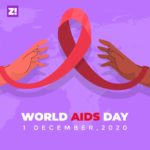
    As today, 1 December 2020, marks yet another World AIDS Day, I have compiled some experiences of young people who have self-tested for HIV (and some reasons why you should get yourself tested soon).


    Kazeem, 21

    I interned at this diagnostic laboratory during SIWES period that year. There, I ran a lot of screening test on pregnant women and people interested in blood donation. One time, while I was testing a pregnant woman, I pricked myself by accident. I wasn’t so bothered until her result showed positive. I panicked. Since I was already in a lab, I just grabbed a self-test kit and asked a fellow intern to help me. The three minutes between sample collection and knowing the result was the longest and darkest moment of my life. Although it showed negative the first time, I continued testing every other week to be sure. Lucky for me, they all came up negative.

    Miracle, 20

    My personal experience with a test kit was in 2018. I was in my second year of nursing school. I usually had access to the kits during clinical rotations, and I also had this friend whose mum was a nurse and brought lots of kits around the hostel. One day, she came around with an unfamiliar one which I decided to test with. I took the sample, added buffer and all of that. I left it for about ten minutes then came back to read my result. What I saw threw me off balance. Two stripes! My bones became weak. I started wondering where I got it from. I thought of the clinic and all the patients I had worked with. I wept! I did not know who to go to. I thought of confiding in my friend but I feared the stigma that might follow if her mouth leaked. So I kept to myself. I was starving and couldn’t concentrate during classes. Later, I went to my friend and explained everything with the used kit. Before that, I made her swear not to reveal it. When she saw the kit, she told me I was negative. Apparently, I had read wrong. Only one of the stripe was filled with blood but because there were two lines on it, I assumed I was positive. I knelt down and was praising God after she left because it would have been terrible for me.


    Prince, 25


    All my life, I have tested a total of two times. The first was very dramatic for me. My friends and I decided together to test one day. It was supposed to be one of those hard guy moments but I failed shamelessly. I wasn’t brave enough to stand over the counter and ask for an HIV test kit so and they bought it. They finished theirs but I was yet to test myself. Truth is, I’m terrified of needles, pins and anything that requires piercing my skin. I remember my friend pinned me down and took the sample. I can’t say for sure how long it look to show but it was less than 15 minutes. During that short time, I kept asking myself “what if?” questions. I was even imagining how I would break the news to my parents because, at that time, I was very dependent on them. Thankfully, it came out negative.

    Faizah, 18

    The first time I self-tested was about a year ago. Before that time, I have tested at least twice that I remember. All these school registration requirements in JSS 1 and in 100 level but those were done by someone. So this one was just out of plain curiosity. I was out with some people during a medical outreach where we were testing people for HIV. At the end of the day, people I came with started taking turns to test themselves but I couldn’t bring myself to do it in presence of my peers. They may not have been staring but I was too self-conscious. As we were packing remnant equipment, I snuck two kits for myself. I locked my door and drew the curtains before I started. The first kit gave an invalid result, blood filled the HIV stripe but not the control stripe. I was scared but not scared. You know how one thing goes south and you just start shaking. Anyway, I tried with the second and that came out negative.


    Ajifa, 22

    That day I went to the doctor’s and made some complaints. I don’t know why, but he told me to go run some tests, HIV inclusive. FMC’s laboratories were always packed with people and they delayed results for too long. That’s if they don’t lose it and ask you to retake the test. But I was too weak to go to the private clinic I usually used so I opted for the hospital’s lab. It was just too crowded that day, and I wasn’t comfortable taking the test there even though the HIV test there is free. So I sat for other tests there then went elsewhere to buy the kit. It was easy for me to use. I got my result in like five minutes or so.


    Ekene, 26

    I used those kits in 2016 first. I purchased them at a drug store. The only hassle was pricking my finger but that doesn’t bother me anymore. There was this self-test tutorial on Youtube that I followed. It is now a routine for me. I have seen firsthand how badly late diagnosis can alter people’s lives. My cousin discovered his positive status quite late and is dead now. He was a chronic drug user. Not like it is hereditary you know. But… I’m more conscious about it. I test every other month.

    Tobi, 20

    I self-tested first when I was 17. My mum is a nurse so supplies like HIV kits were always somewhere in the house, or in the clinic. I have an unreal phobia for needles but that day I had to overcome it to obtain blood. Since I would have no tenable explanation for testing if someone saw me, I did it in private. My mother, being a nurse, taught me about sex from very early because she believed in exposing children to things rather than hiding it from them. She even supplied me condoms. But I started having raw sex with some guy because that was the only way he’d believe I loved him enough. We had done it a couple of times before I discovered he was a free giver of sex. Anyways, I tested that day and of course, it was negative. I was checking almost every day during that period. I even moved a pack from the clinic to my room when the ones at home were visibly reducing. I’m safe now.


    Molayo, 22

    This wasn’t my first time using self kits. It was just my first time with that mouth swap thingy. And yes, it was an experiment. It was relatively simple to use. I just swapped it over my gum and dipped it in a liquid. I have stuck with it now because it is easier and does not require me stabbing myself.

    If this prompts you to self-test, you can watch this video guide or read this short guide on using oral test kits.

    Read Next: 8 Important Things About AIDS You HAVE To Know


    Story by Musa Faridat. Reach her here.