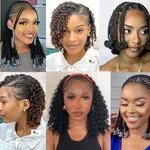
Alt text: Tribal braids styles Nigerian women are wearing
Back is the wrong word for it. Tribal braids never went anywhere. Your mother wore them, your aunt still does, and half the primary school photographs in this country are full of them. What changed is the appetite. Women book these styles on purpose now and pay properly for them, instead of treating them as the quiet option at month end.
What People Mean by Tribal Braids
Tribal braids is the catch-all for indigenous braiding styles, and in Nigeria that covers kolese, shuku, patewo, koroba and the Fulani braid. What they share is that the pattern is the point. The partings are the design.
People ask where do Fulani braids come from and expect one country. The Fulani are twenty-five to forty million people spread across the Sahel, with communities in Guinea, Senegal, Mali, Niger, Cameroon, Chad and Nigeria, so the style belongs to all of them, not one place. The signature is a cornrow running front to back down the centre, face-framing braids at the sides, and beads, cowries or cuffs at the ends. Silver coins and amber were traditionally worked in, often family pieces, and a finished head carried information about background, marital status, age and standing.
Why Tribal Braids Are Back in Demand
Nothing about them disappeared. Kolese has been on Nigerian heads for as long as anyone remembers. What shifted is the money people now put behind it.
The interesting part is how far the form has stretched without breaking. Colour, curly ends, jumbo sections, boho texture, none of it traditional, and yet a Fulani braid with burgundy ends and loose curls still reads instantly as a Fulani braid. The centre parting and the beads do the identifying work. Not many hairstyles survive that much handling.
The Versions Nigerian Women Are Wearing
These are the tribal braids Nigerians are actually wearing right now.
Classic Fulani Braids with Beads
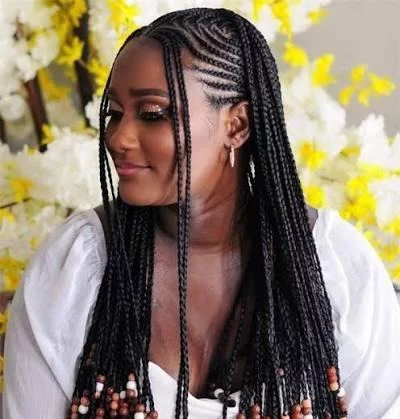
[Image. Alt text: “Classic Fulani braids with beads using Darling Super Star”]
Cornrows with beads is where most people start. A centre cornrow front to back, two or three braids either side of the face, the rest taken back, beads at the ends.
It lives or dies on the partings, since a crooked line has nowhere to hide. Darling Super Star is the sensible hair, because a firm strand holds a cornrow line clean for weeks instead of fuzzing by the second wash.
Stitch Braids and Patterned Partings
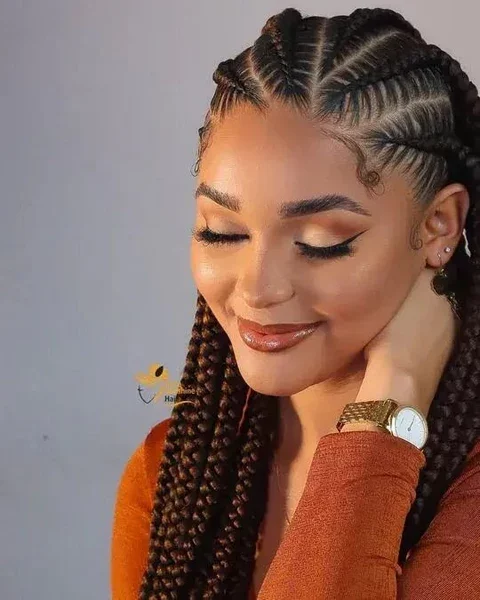
Image credit: Jaliza
Alt text: Stitch braids with patterned partings using Darling Easy Vibes
Stitch braids are cornrows with the partings set around half an inch apart and fed in as they go, which produces the ridged, stitched look and those razor-clean lines. They are the modern face of the whole category, and they will hold for four to seven weeks.
This is where stylists get ambitious, curving the rows, splitting them, running them diagonally. Darling Super Star again for the crispest version, or Darling Easy Vibes if you want it lighter and quicker to install, which counts when a patterned set can run five hours in the chair.
Fulani Braids with Curly Ends
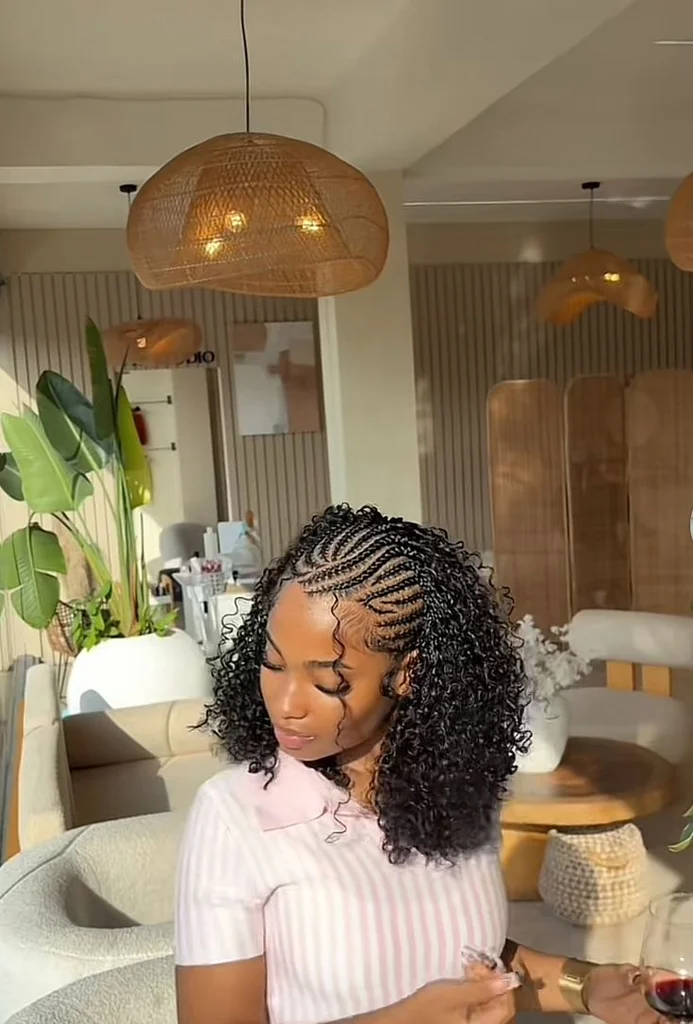
Image Credit: Paulee’s Blog, Pinterest
Alt text: Fulani braids with curly ends using Darling Curly Braids
The most-booked variation of the moment, and the one filling everybody’s feed. The braid stays traditional through the top and sides, then the ends are left curly instead of sealed off, so the head reads structured up top and soft at the bottom. It photographs beautifully, which is most of the reason it took off.
Darling Curly Braids gives you the French and Spanish curl for those ends. Keep the beads on the face-framing braids only, since beads and curls on the same braid get busy quickly, and the curl already needs finger detangling most nights.
Tribal Braids with Loose Boho Pieces
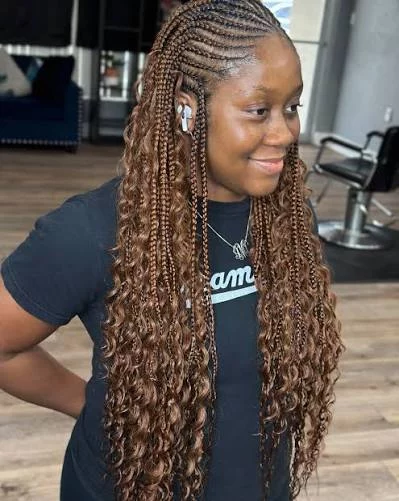
Image Credit: Magicandssss on Facebook
Alt text: Tribal braids with loose boho pieces using Darling Boho Braids
The crossover style, and the one your mother will certainly have an opinion about. The partings and the centre cornrow stay exactly where tradition puts them, and then loose curly pieces are dropped in along the length to soften the whole outline.
Darling Boho Braids carries those wavy pieces, and Darling Curly Braids works if you want the loose sections more defined. It suits anyone who likes the structure of a Fulani braid but finds a full set of tight cornrows too severe against their face. Beads still work here, just fewer of them than usual.
Shuku, Patewo and Koroba
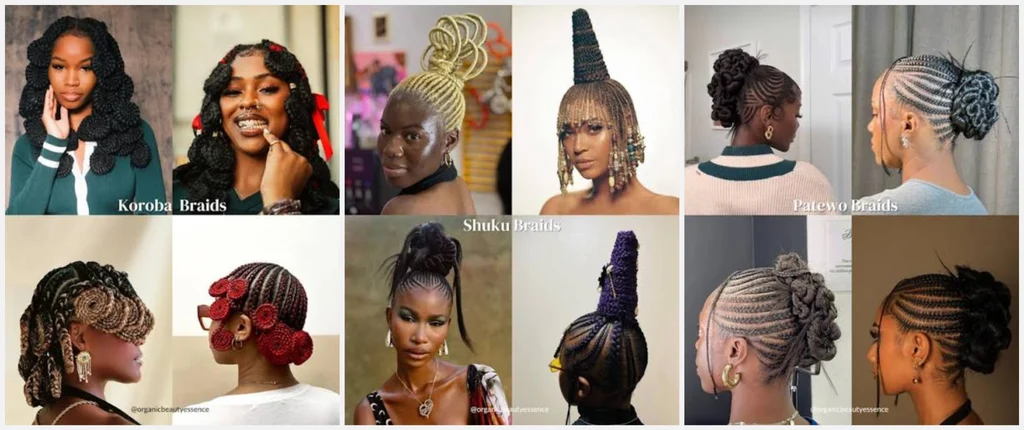
Image Credit: Organic Beauty Essence on Instagram
Alt text: Shuku, patewo and koroba tribal braids styles with Darling Easy Vibes
The Yoruba styles, and the ones most likely to be sitting in your childhood photographs. Shuku gathers everything up into a raised crown. Patewo takes its name from applause, because the rows meet in the middle like two hands clapping. Koroba radiates out from the centre like an upturned basket.
All three are pure pattern, which is why they carry an office and a wedding equally well and cost less than almost anything else here. Darling Easy Vibes keeps them light enough to sleep in from the first night, which the originals certainly were not.
Getting the Details Right
Three things sink these styles, and only one is braiding.
Fuzzy partings come first. When the whole look is pattern, a soft parting is not a small flaw, so check the lines in a hand mirror before you leave.
Then bead weight. A full row on fine hair pulls your hair all day, and it lands on the braids framing your face, where traction damage shows first. Fewer beads, or cuffs, or beads only on the thicker braids. Worth knowing if your hairline is fine.
Six to eight weeks is a good timeline to rock your hair, and beads need re-securing as the style loosens. Look through the full Darling range at The Diva Shop for the right hair to complement your own hair.
FAQs
What are tribal braids?
Tribal braids are indigenous African braiding styles built around patterned partings rather than length. In Nigeria the term covers kolese, shuku, patewo, koroba and Fulani braids. The Fulani version is the most recognised, with a centre cornrow, face-framing braids and beads at the ends.
What is the difference between tribal braids and Fulani braids?
Fulani braids are one kind of tribal braid, not a separate category. Tribal braids is the broad term for indigenous braiding styles across many communities. Fulani braids are the specific style with a cornrow running front to back, braids framing the face, and beads at the ends.
How long do tribal braids last?
Six to eight weeks with proper care. The partings soften before the braids do, so most people take them down when the pattern stops reading cleanly rather than when the hair itself gives out. Beads need re-securing as the style loosens.
Conclusion
Choose the pattern first and the length second, because the pattern is what anybody actually sees. And whichever one you book, pay for the partings. That is where the whole thing lives or dies.