All it took was one viral video for Oreoluwa Osoba, a.k.a. Oga Duke (31), to break into the content creation world and become one of Nigeria’s top content creators. However, it has taken him a lot to stay at the top of the game and learn his worth as a creator.
From the first payout that showed him he would succeed, to every sacrifice he has made for his reputation, and now rolling into one of the biggest career opportunities of his life, here’s how Oreoluwa became one of Nigeria’s most critically acclaimed content creators, and how you can do it too.
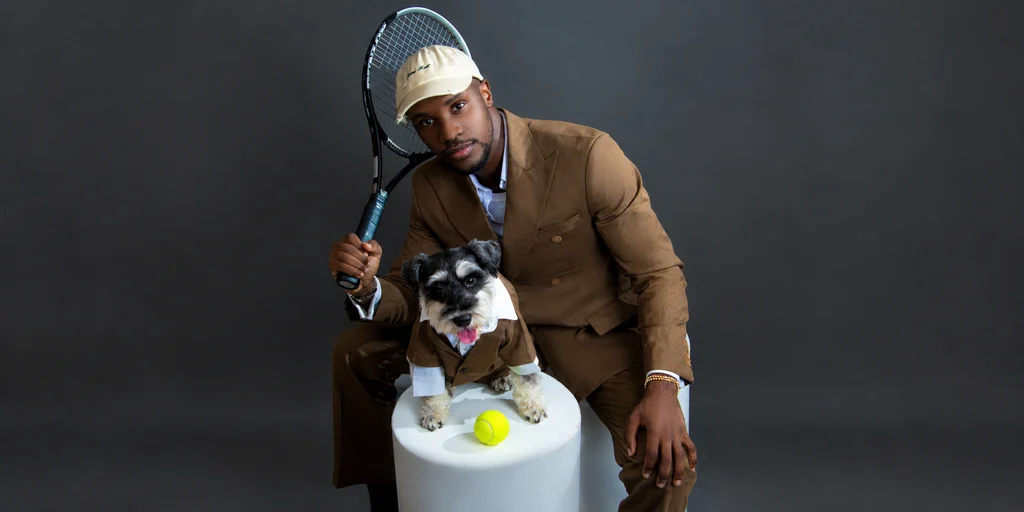
This is Oreoluwa’s story, as told to Azara.
A few months ago, an international company offered me a monthly payment of ₦30 million to create two videos each month. I turned it down.
It’s not the first big offer I’ve ever let go of, and I don’t think it’ll be the last, but when building a good content creation business, a lot of nos have to be thrown around before you get to your perfect yes.
Interestingly, just three years ago, I was eagerly accepting ₦200k jobs. Now, I can afford to turn down millions. How did I get here?
For one, I have always had a desperate desire to be independent.
I got into university in 2011 at 16. It was my first time away from my parents, and the distance taught me just how much I liked being on my own. But if I wanted to live alone, I had to earn the money to support that decision. Fashion brought me my first opportunity. In 2015, right before I graduated from university, I started making leather bags and selling them.
The business took off quickly. I had no showroom, and I learnt how to sew bags as I went on. Yet, within my first few months of making bags, I earned enough to hire an assistant and to get a new MacBook. Before the year was over, I’d made my first million as a 19-year-old.
My fashion business quickly took over my life and became my soul’s work. I loved what I did, and I did it as best as I could. I earned in the millions, bought a car, employed workers, and my business shipped to 15 countries worldwide. I also achieved my dream of living alone and rented a nice apartment in Lekki Phase One. By every standard, I was doing well for myself.
And then COVID snatched that away.
I had a store in Lekki, and its profits covered my staff’s salaries and the shop’s rent. I relied heavily on the money it made. But lockdown meant people stopped going out to buy bags, and shipping became a hellish task. I was forced to scale back my business.
But even when the lockdown eased, my dissatisfaction did not. I realised the fashion social scene wasn’t for me. I hated having to attend so many events and fake so many smiles just to be recognised in the industry. I wanted my work to do the talking, but I often felt that was overshadowed by who knew whom.
It was around this time, in 2023, that I adopted a Miniature Schnauzer dog named Duke.
That year, I lost my uncle, and the grief was overwhelming. I got Duke, hoping a pet would help me manage my mental health challenges, but it didn’t happen as quickly as I thought.
I didn’t know what I was doing as a first-time pet owner, so life with Duke was hard. Things got so bad that, for a few months, I wanted to return him. But slowly I got the hang of things, and Duke became one of the most important parts of my life.
One day, I thought, “What if I show the world what my life with Duke looks like?” So I made a skit where I lamented about the state of Nigeria to him. I never thought anything of it, only that Duke’s reactions were funny and hopefully it would reach a few people.
Little did I know it would reach more than just a few. Overnight, the skit got 250,000 views.
I had barely had time to make sense of what had happened when YouTube asked me to join their Partner Programme. I did, and by the end of the month, I’d made my first $300 (about ₦400,000) as a content creator.
Before then, I hadn’t once considered going into content creation. To tell you the truth, I didn’t even believe it was a real job. It took me making that $300 from a single video to understand this was actually a career. I realised this was more than just a fun hobby. It was the beginning of something special, and for the first time, I could see content creation as a path worth pursuing. Still, I hesitated to go all-in because of Duke.
He’s a dog, but more than that, he’s my child. Introducing him to a world where he would constantly be in front of cameras or forced to interact with fans didn’t sit right with me. It wasn’t until my sister sat me down and explained that I could make this work, both for Duke’s sake and for mine, that I really dove in.
I started with my iPhone 12, used a tripod my sister gifted me to film, and edited with free software like CapCut and Edits: Video Editor. To this day, this strategy has barely changed. In 2024, I switched to using a brand-gifted phone, an iPhone 15, for editing and have a team that makes minor edits to my videos, but for the most part, I’m still making videos the way I started.
You may see these as small things, simple strategies, but look at where they’ve gotten me in three years.
I’ve crossed 1.2 million followers on Instagram, worked with Meta Creators and major international brands, been featured on Fox News, appeared on BBC Radio in the UK, been interviewed by major publications like the LA Times, and even had UK teachers use my videos to discuss self-confidence and mental health in class. Earlier this year, I signed with an international management company that now provides the professional support I lacked at the start of my career.
As someone who never planned on becoming a content creator, especially not alongside a dog I’d only had for a few months, this journey has been nothing short of incredible.
But getting here hasn’t been all smooth sailing, especially when the dynamics of being Nigerian come into play.
Content creation in Nigeria can be predatory, and when I first started my journey, I was easy prey. I accepted every opportunity under the sun, and Nigerian companies would offer me one-off payments of ₦100k–₦200k for a video, using it for as long as they wanted.
At first, I saw nothing wrong with that, but I eventually learnt that no business is allowed to use your video for as long as it wants without charge. Each month, they must pay for usage rights. Learning this showed me the extent to which I was being cheated. After finding this out, my team approached the businesses I’d worked with to ask about usage rights, and they quickly tried to fix things. That meant they knew what usage rights were but chose not to disclose them so they wouldn’t have to pay me.
But while it may have taken me time to learn my own worth in the Nigerian market, I never once questioned Duke’s.
Many Nigerian brands treat him like he doesn’t exist. To them, Duke is a prop to feature in the background of their content. I once nearly worked with a brand that paid me millions to have Duke and me shoot content. However, on the day of the shoot, Duke wasn’t feeling well. I told the brand this, but instead of understanding, they said I should just put him in the car, and he’d be fine. I refused, refunded them, and called off the shoot.
Another lady had wanted Duke to model for her fashion brand. While we were still in talks about the deal, she started lamenting her hatred for dogs. You hate dogs but want to shoot with mine? Absolutely not. I stopped it right there.
My sacrifices extend beyond Duke’s well-being; I have to think about my brand, too. A lot of the time, brands will ask us to partner with them for huge amounts of money, but what they’re selling goes against my morals. Duke and I make family-oriented content. What would it mean to my audience if they woke up one day and saw we’d partnered with a gambling company?
And that’s how we got to that ₦30m deal I turned down. A big international gambling company offered me about ₦30 million for two videos a month. I was tempted, I won’t lie, but my morals have always come first, and they always will. I said no.
So yes, I’ve had to make a lot of sacrifices, but that doesn’t mean monetisation has been difficult for me.
Meta monetisation has been a lifeline for my business. With one video, I can earn millions of naira over multiple months. Some creators earn $1,000 a month for years from one video. Now, imagine that multiplied across every video they create.
Brand sponsorships have also been incredibly helpful. I haven’t bought Duke’s food in a long time because brands send it to him. In fact, even though he’s living lavishly, I’ve been able to cut costs on most things related to Duke, save for his healthcare and grooming.
And that gambling deal I turned down? It actually led me to one of the biggest deals of my life. I was approached by one of my dream companies, and they told me that, out of 600 creators worldwide, I was one of the few they chose to work with because I stay true to my values.
It’s been a wild journey, and I wouldn’t change it for anything. Duke and I have been through so much together, and I know we’re going to have so much more ahead of us. We’ve been working on a lot of things that I’m very excited to share soon, but right now I’m happy to be doing what I love with the animal I love most.
Ore’s Career Advice:
- Start small. I started on my iPhone 12 and look where I am today. Large equipment will never be more important than the story you’re trying to tell.
- Stick to your niche. A variety of mismatched content confuses the algorithm, leaving it unsure where to place you.
- Not everything is about money. I once turned down a job from an international company, and the first thing the owner said was, “But you’re Nigerian. I thought Nigerians would do anything for money.” That’s a terrible reputation to have, and if I’d had that mindset, I may not have scaled to the degree I have.
- Strive for the best. I ensure my work is never shoddy. I’d rather turn out a few good videos a month than several bad ones. Good work speaks for itself.
Ore’s Resources:
- I like editing with CapCut and Edits: Video Editor.
- For how to build a good reputation as a content creator, I’d recommend watching Funke Akindele and Maraji.
- I use a MacBook and iPhone for work, nothing else.