Monday, October 5 was World Teachers’ Day, and some Nigerian teachers got to celebrate it without going to school. Oyo, Kwara, and Ekiti declared the day a work-free day for teachers, giving them time to take part in activities marking the occasion.
But this year’s celebration comes after a turbulent few months for teachers in parts of the country.
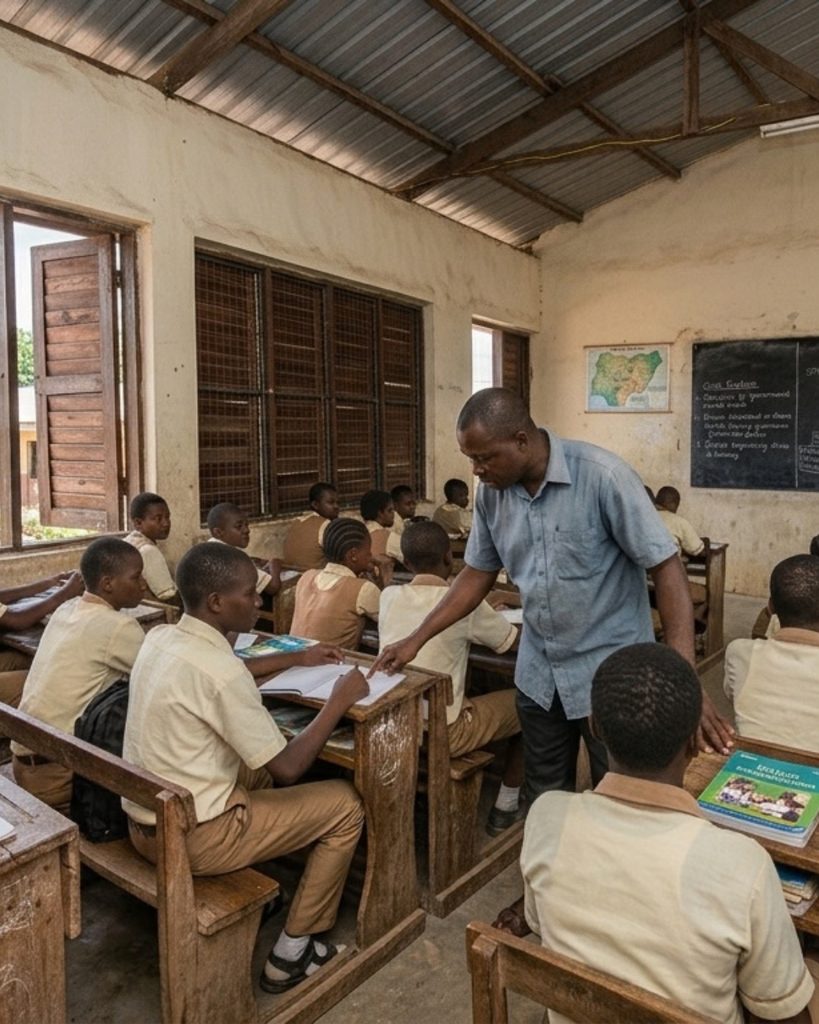
In Oyo State, teachers actually stopped going to work earlier this year. On June 1, the Nigeria Union of Teachers ordered public primary and secondary school teachers to embark on an indefinite strike after 39 pupils and seven teachers were abducted from three schools in Oriire Local Government Area. The union demanded the rescue of those still in captivity and better security around schools. The action was suspended on July 1 after discussions with the state government and assurances on security.
In Abuja, the disagreement has been about something else. On September 8, 2026, the Nigeria Labour Congress’ FCT council gave the FCT Administration a seven-day ultimatum over unresolved issues affecting teachers, including the use of a vacancy requirement for promotion. The union said the policy was causing career stagnation for teachers, and warned that failure to resolve the issues could lead to an indefinite strike.
Meanwhile, numbers also show how large the teaching workforce is. The Teachers Registration Council of Nigeria currently lists about 1.63 million certified teachers on its national register, with women making up 59.2% of the registered workforce.
Despite this, UNESCO estimates that the world will need 44 million additional primary and secondary teachers by 2030, with most of them, about 15 million, needed in sub-Saharan Africa.
So while some teachers were getting a day off today and governments were celebrating their contribution to education, teachers across Nigeria are still dealing with questions about safety, pay, promotion, workload, staffing and working conditions.
We asked teachers in private and public schools in Nigeria what the job really looks like from their side of the classroom and what they would want the government to change.
Here’s what they told us.
Victor*, 29(M), Oyo State
I joined the Oyo State teaching service through the Oyo State Post Primary Schools Teaching Service Commission (TESCOM) in 2022. I was excited when I got the opportunity because I actually wanted to teach, and getting a government job at my age felt like a big deal. But after settling into the job, I realised that being employed and having the support to actually do the work are two different things. There are times I have had to find my own way around basic things in the classroom because what we need is not always available.
The salary is another issue. When your income is not enough to cover your daily expenses, it becomes difficult to remain motivated, especially when you know how much work goes into what you do in the classroom. I don’t expect everything to change overnight, but young teachers need to feel that there is a future in the profession. If the government wants us to stay, there should be proper welfare, training and better conditions for us to work.
Joshua*, 34(M), Rivers State
I currently teach in a secondary school, and what I have to say is that, although the government is trying, they have to be better in terms of population in classrooms, teachers’ welfare, and the facilities.
These are the things that hinder progress in our education system. For teachers’ welfare, if the teacher does not have food at home, how will the teacher be comfortable enough to come to school and teach? These are the things that we really need to pay attention to.
Also, I believe regular training should be held for teachers so that we can get trained on how to do better. Curricula all over the world are changing, and now AI is part of the learning system in the Western world. So, I think we should also adopt that into our educational system.
Malik, 36(M), Oyo State
The government has been doing relatively well with teachers in terms of regular salary payments. In my state, for instance, salaries have been coming regularly, although the amount is still not enough for the work teachers do.
At one point, I compared the current minimum wage with what workers could afford with the previous minimum wage; things have actually become more difficult. The increase in income has not matched the increase in the cost of living. Another issue is the constant changes to the education system. Subjects are being merged and separated, while new schemes of work and syllabuses keep coming. Social Studies and Civic Education, for instance, have now been merged into Social and Civic Education in junior secondary schools, while Basic Science, Basic Technology and other subjects have also been affected by the new curriculum. Teachers are expected to keep adjusting to these changes.
Discipline is another major problem. Teachers have been restricted in how they can discipline students, and this has affected the authority they have in the classroom. When I was teaching in secondary school, discipline was taken seriously, but these days, there are very few options available to teachers when students repeatedly misbehave. I remember the case of the teacher who was killed by students after trying to correct one of them. Situations like that show how vulnerable teachers can become when they are expected to control a classroom but have very little authority to deal with serious indiscipline. There should be clear rules that protect students from abuse while also giving teachers reasonable authority to maintain order.
Teachers are facing a lot, especially when you compare what they earn with the responsibilities they carry. In countries such as Canada, teaching is regarded as a well-paid profession, but here many teachers remain in the profession mainly because they are passionate about it. It is also common to see teachers taking loans to survive until their next salary. The government needs to review policies that affect teachers and improve their pay significantly. Teachers are the ones who train the doctors, lawyers, engineers and other professionals who eventually run the country, so we deserve to be properly compensated for the work we do.
Omolola, 34(F), Lagos State
One of the things that has made primary school teaching difficult for me is the amount of work that happens outside my classroom. I teach during the day, mark assignments afterwards, prepare for the next lessons and still have school activities to deal with. Sometimes, I get home and realise that I have spent most of the day working, but there is still something waiting for me to finish.
What I want is for teachers to have enough support to do their jobs properly. When a teacher is thinking about not being paid well or working with scarce academic materials, it affects the job. We need better welfare and more opportunities to improve ourselves professionally. I want to see teaching as a career I can grow in, instead of something I have to endure until I find another opportunity.
The Big Daily is your weekday shortcut to the biggest news shaping Nigeria. We cut through the noise, connect the dots, and explain why the news actually matters, all in one quick read.
Segun*, 37(M) Ondo State
I’ve spent many years in the classroom, and I’ve seen teachers come into the profession with so much enthusiasm and gradually lose it. You start with the excitement of teaching children, then reality sets in. There are times when salaries are delayed, promotions take too long to reflect financially, and you have to work with things that should have been provided by the school or government.
What worries me most is what this does to younger teachers. If someone enters the profession today and spends the next few years struggling with the same problems, they will eventually start looking elsewhere. Teachers need to know that their experience counts for something. There should be proper promotion, regular training, and better pay as they progress. After Teachers’ Day is over, these are the things we still have to deal with when we return to school.
Ekaette, 34(F) Abuja
There have been many times when I have used my own money to get things for my students. Sometimes it is something as small as materials they need for class activities, and you do it because you don’t want the children to miss out. You don’t necessarily tell anyone that you paid for it yourself. You just do what you can and move on.
I also think teachers need more support when it comes to dealing with students who have medical conditions or children who come to school carrying problems from home. The teacher is often the person who deals with these things every day. We try to help, but there should be proper systems in schools for this. Teachers cannot keep dealing with these issues with their own time, money and energy.
Oluwagbemiga, 32(M), Ogun State
I teach in a public secondary school, and one thing I’ve noticed in the last few years is how some of the students have started losing interest in school. I remember having a group of students who were always talking about making money through internet fraud. They weren’t bad students, but they had become convinced that spending years in school would not give them the kind of life they wanted. They would talk about how some of their peers were already making money and had stopped coming to school.
I understood where some of these children were coming from. They see what is happening around them, and they also see how teachers are treated. When a teacher is poorly paid, struggling with basic expenses, and still expected to come to class every day with enthusiasm, the students will surely notice. You cannot tell a child that education is the best investment in their future when the people teaching them are visibly struggling to make a living.
I don’t think the answer is to blame the students for losing interest. Some of them need something that makes education feel worthwhile again. They need teachers who are motivated, classrooms where they can actually learn and examples of people who have gone through school and built decent lives. If we keep allowing the education system to deteriorate, we should not be surprised when young people start looking for other ways to survive.