Someone you know has left or is planning to leave. 1,000 Ways to Japa speaks to real people and explores the endless reasons and paths they take to japa.
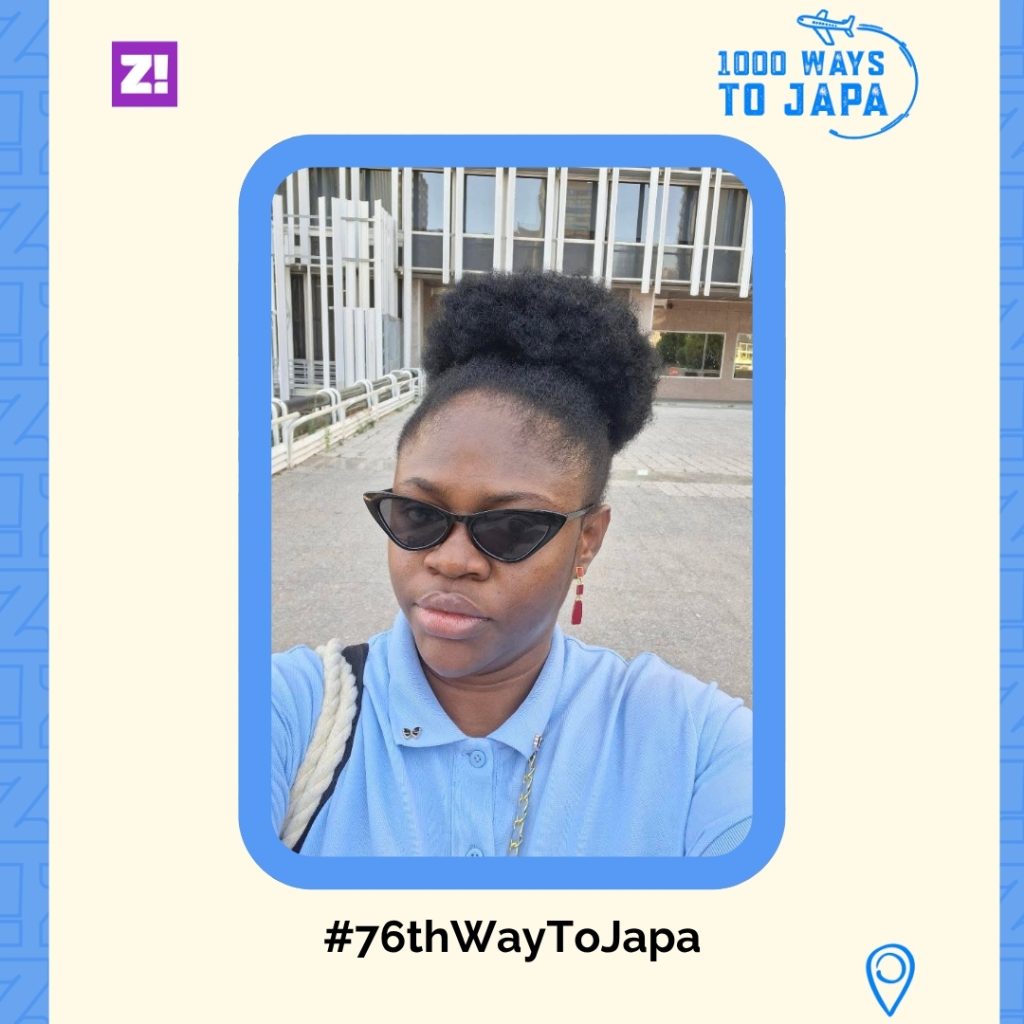
Chinyere left Nigeria in February 2025 with her husband and children after a rough stretch at her husband’s job forced their hand. In this story, she talks about Spain’s Highly Qualified Professional visa and the legalisation process of all your documents and one thing that she wants every applicant to know.
Where do you live now, and when did you leave Nigeria?
I currently live in Madrid, Spain. I left Nigeria in late February, 2025. I moved with my husband and our two children.
Okay, take me back. What did life look like before you left?
Honestly, it wasn’t bad. My husband and I both worked in tech, both remotely. There was some restructuring at his workplace, and he was laid off in early 2024. It pushed him to start applying for international jobs with visa sponsorship.
I was still working remotely, though my company had transitioned to a hybrid model. I wasn’t going into the office as often as I should have because I’d just given birth in the first or second week of May 2024.
How long before he found another job?
It didn’t actually take long. He got another job fairly quickly after that one, but the pay cut and the environment were so bad that he eventually had to quit.
It wasn’t that he couldn’t get a job. It’s that once you’ve worked somewhere like where he did and experienced that culture, transitioning into something far below it is genuinely discouraging. That was the real trigger, not unemployment but disappointment.
So how did Spain come into the picture?
The company that eventually hired him is a global firm, so once he got through the interviews, we actually had options: the United Arab Emirates (UAE), Spain, Portugal, and Poland. We did our research on the political climate, the presence of tech hubs, the overall economy, and the presence of Black or Nigerian communities. Spain wasn’t doing badly at all. We also told ourselves we’d need to properly learn the language and integrate; we were already on Duolingo before we even landed. That’s what tipped it for us.
What happened to your own job in Nigeria when it was time to leave?
My company was genuinely good. But once we transitioned into hybrid, my manager understood I couldn’t come in as often post-maternity leave. When it was time to relocate, though, there was a rule that you had to resign within a month of officially notifying them. So that’s what I did, I told them the truth, that I was moving to Spain with my family, and I resigned within that window.
Let’s get into the visa. What type of visa was it?
So the visa is called the Highly Qualified Professional visa. It’s one of several visa pathways in Spain; there’s also a student visa, a digital nomad visa, a general work permit, and a jobseeker visa.
The Highly Qualified Professional visa is handled by a specific body, which I know as “UGE”; I think it means Unidad de Grandes Empresas y Colectivos Estratégicos (Large Companies and Strategic Groups Unit). It comes with strict criteria: the employer has to prove they couldn’t fill the role locally, meaning they’ve posted the job extensively within Spain or the EU and genuinely couldn’t source the talent.
There’s also a salary threshold; I can’t remember the exact figure, but it has to fall within a specific high range to be deemed as “highly qualified.” Below that, it’s just not this visa.
It also allows direct dependents, so my two children and I came in under it, though technically ours was a separate category: a family reunification visa.
The Big Daily is your weekday shortcut to the biggest news shaping Nigeria. We cut through the noise, connect the dots, and explain why the news actually matters, all in one quick read.
Walk me through the actual process. What did you have to do once your husband got the offer?
There are two major stages: legalisation and the visa application itself. Legalisation comes first and essentially involves the authentication of every document you plan to submit.
Because we went to school in Nigeria and our documents were issued here, and because there’s no central Nigerian database anyone abroad can check to confirm a certificate is real, everything has to be physically verified.
Nigeria isn’t part of the Hague Apostille Convention, an international treaty that makes it easier to use public documents in other countries so we couldn’t shortcut this. Every document, including birth certificates, marriage certificates, academic transcripts, and the children’s birth certificates, had to be processed by Nigeria’s Ministry of Foreign Affairs. Academic documents had to go through the Ministry of Education first, before Foreign Affairs would even look at them.
What documents specifically did you submit, and what did that cost?
Birth certificates, a marriage certificate (they insist on a fresh copy, not your original from years ago; my husband had to go back to the Ikoyi registry for ours), academic transcripts or statements of result, and a police character report.
For academic documents, if your school can’t email the transcript directly to the Spanish consulate, you’ll pay per page for a representative to come to your old school to verify it in person. When we did this in late 2024, a school in the east charged about ₦250,000 for a single document. I heard it’s cheaper for schools in western Nigeria.
The marriage certificate was the slowest to lock in; it took about two months. They actually send someone to interview you, sometimes visit your family, to confirm the marriage is real and not just for show.
The police character report is also another one that gave us a headache. It’s only valid for three months in Nigeria. If there’s any delay in your legalisation appointment, you might end up doing it two or three times. It’s also the one document where nobody can stand in for you; you have to be physically present in Nigeria to get it. That’s actually why some Nigerians already living abroad have to fly home just for this.
Once everything’s authenticated, then what?
Then you translate everything into Spanish, but not with Google Translate or any random online service. It has to be a certified “sworn translator” recognised by the relevant Spanish body. After that, you apply for your NIE, the acronym for the Spanish phrase Número de Identificación de Extranjero, which is basically Spain’s foreign ID number used for taxes and everything else. Our employer actually handled our NIE application, so I can’t speak to doing that independently.
How long did the whole thing take, start to finish?
We officially started the process in late September or early October 2024. Legalisation alone took about two months; we submitted in October, and the lawyer called us in December to confirm we’d cleared. My husband’s visa was ready the first week of January. Mine came out around the first week of February, along with the children’s.
Worth noting: the rules have already changed since we went through it. Back then, we applied together as a family. Now, from what I’m hearing from people I mentor, the main applicant has to establish themselves in Spain, paying taxes and social security, for a period before the rest of the family can apply to join.
How did your husband find the job?
LinkedIn, though more accurately, recruiters found him there once he started interviewing widely. Job posts on LinkedIn will often tell you upfront if a role sponsors a visa and relocation. He did, they covered our flights and our first 30 days of accommodation in Spain.
Okay, you’ve been in Madrid for over a year now. What hit you as culture shock in the first few weeks?
The zebra crossings, honestly. In Lagos, you might see one, and cars still won’t stop. In Madrid, even on smaller streets, cars wait for you to fully cross, no rushing. On major roads, there are buttons pedestrians press to control the traffic lights.
I also expected more English, given that I was in the capital. But most people don’t speak it; the lingua franca is Spanish, so it was on me to adjust to that, not them.
Public displays of affection are much more open than I was used to. And Spain actually has way more spice variety than I expected; different types of pepper, even though Spaniards themselves don’t really eat spicy food.
What do you genuinely love about living there?
Madrid is beautiful and well organised. The bureaucracy has its annoyances, but there’s structure: first come, first served, always.
Healthcare is effectively free once you’re paying into Social Security, and public education is accessible the same way. The climate is manageable too, apart from summer, nowhere near as extreme as in somewhere like Finland or Germany.
And what’s been hard?
Getting locals to open up and talk has been hard, especially when considering that I don’t know the language. People are generally nice, but the accent moves fast, and it’s a real effort to keep up.
The bureaucracy cuts both ways, too. If you just want to ask a quick question, you still have to join the full queue, which makes no sense to me, but I get why they do it. Another struggle has been commuting especially during rush hours. On the trains, for instance, it’s a hustle, it’s always packed.
Have you found a Nigerian or African community there?
Honestly, I don’t have much of one, at least not organised. When we were researching before the move, we found scattered mentions of Nigerians in Spain but no real group. Even now, sharing my own content, most people I connect with found me through my videos rather than an existing network. I recently joined a WhatsApp community called “Melanin Tribe. It’s a gathering of women of African descent in Spain, but I’ve only seen their first meetup announcement so far; I was on duty and couldn’t attend.
A lot of immigrants here just keep to themselves, “don’t put me in trouble” energy. Understandable, but it does mean building community takes real effort.
How about work? Have you been able to find a job since?
Oh yes, I have. I transitioned into cloud computing from the IT work I was doing before. It’s really interesting so far
Nice! How did that happen?
When I resigned and started job hunting, most postings wanted Spanish, so I knew I needed to upskill instead of waiting around. I moved from IT service management to cloud computing and applied for an Amazon Web Services (AWS) mentorship programme.
I’d actually tried to get in since 2022 and been rejected twice. The third time, right after landing in Spain, I got in. From there, I applied for jobs and got one in March of this year. I’m currently a technical specialist in platform engineering, which sits somewhere between DevOps and cloud computing. Still transitioning fully into the DevOps side.
Was the language a barrier to job hunting?
Not for tech, no. Most of these companies are global, and English is still the default working language even inside Spain-based teams. My team communicates in English day-to-day. It’s different for customer-facing roles, though; if you’re supporting Spanish customers directly, you need Spanish. But engineering, DevOps, and technical roles generally run in English.
What’s the cost of living in Spain like?
Minimum wage is just over €1,000. You can survive on it if you budget properly and cut your spending according to your income. Groceries are manageable as long as you’re not constantly buying imported African ingredients; those are pricier, so we go to the African market maybe once a month instead of weekly. Housing and utilities are flexible too; you’re not locked into one provider, so we switched gas and electricity vendors early on when the bills were too high.
Do you miss Nigeria?
Honestly, yes. I miss my people, my siblings, my in-laws, the food, and my friends. But outside of that, I don’t miss much. I think the loneliness people talk about with japa mostly hits people who have moved alone. I have my husband and my children here, so it’s different for me.
Anything that would make you move back?
Not really, no. My husband already switched employers once within his first six or seven months here, and it worked out, but the visa comes with pressure. If you lose your job, you have three months to find another one, or you’re expected to return to your country.
We’re not on permanent residency yet, which requires five consecutive years in Spain with no more than six months total spent outside the country. Full citizenship is a much bigger ask: ten years of residency, and you’d have to renounce Nigerian citizenship entirely, since Spain doesn’t allow dual nationality with Nigeria. Most people just settle for PR instead.
Any regrets or mistakes from the process you’d warn people about?
One real regret, I didn’t legalise my own transcript early on, back when I was considering applying for a master’s before this job came through. I had my certificate legalised, but not the transcript, and you need both for school admissions. I had to get my brother to stand in for me with a notarised affidavit, then courier the documents from Nigeria to Spain by DHL. It cost extra money and time that early legalisation would have avoided.
On a scale of one to ten, how would you rate your life in Spain right now?
A solid 8.5. My dream would be a fully remote role since I love working from home. Right now, my commute alone can take up to three hours round-trip, depending on how busy the trains are. But aside from that, I don’t have any real complaints. My husband works from home and takes care of the children while I’m out, so the balance works.
What’s the one piece of advice you’d give someone considering this route?
Be detail-oriented and open-minded, and actually do your research. Run away from agents, anyone offering to “facilitate” your visa for a fee. We didn’t pay anyone a single naira through this entire process; everything the Spanish consulate needs is in the email they sent you. It’s just long, and most people won’t read it. Be cautious about where you source your documents, too; an invalid one can get you a visa ban, and that’s a much bigger problem than a slow process.
Want to share your japa story? Please reach out to me here.