The Nigerian experience is physical, emotional, and sometimes international. No one knows it better than our features on #TheAbroadLife, a series where we detail and explore Nigerian experiences while living abroad.
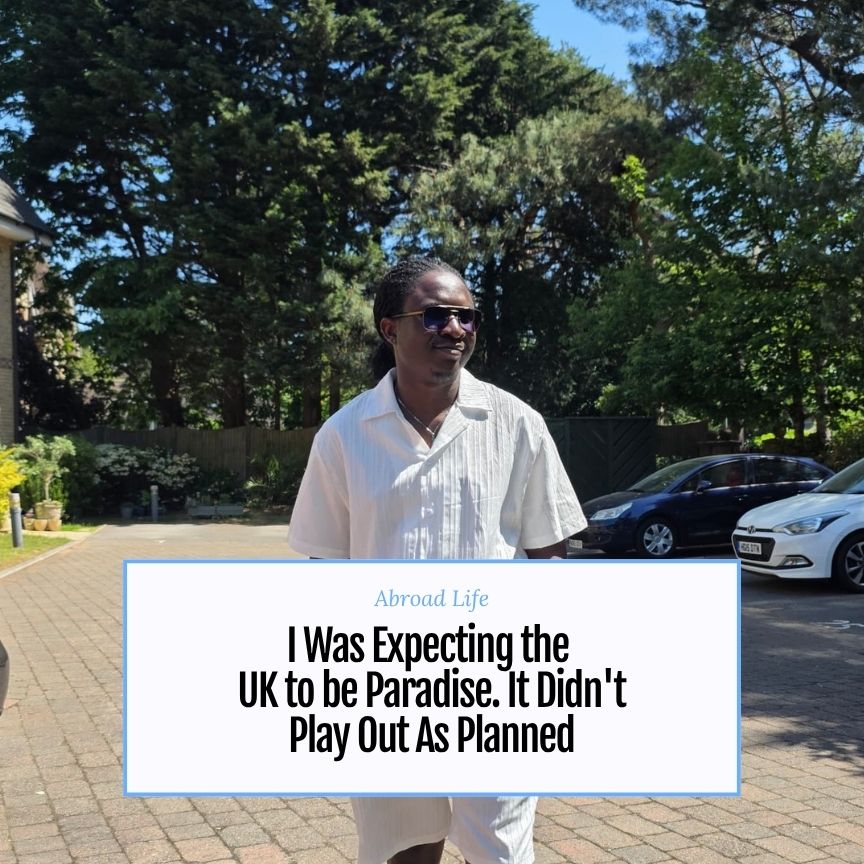
Bunmi (28) moved to the UK in 2023, hoping to gain experience that would take him closer to his plans for a master’s in Special Language Therapy. But the reality of life abroad came with a few surprises, including the struggle to find stable work and the need to navigate life away from family.
Where do you live currently, and when did you leave Nigeria?
I live in the UK. I moved in September 2023.
What were you doing in Nigeria before you moved to the UK?
I was working as an account officer.
What made you decide to leave Nigeria?
I studied Linguistics and African Languages at university, and I wanted to travel abroad for my master’s in Special Language Therapy (which is still my plan). I kept applying for schools, and couldn’t get in because I didn’t have the necessary experience. So I applied to come to the UK as a care worker to obtain the necessary experience before getting into a school.
Was moving abroad always part of your plan?
Moving abroad was never my ultimate plan. Most of my friends were shocked that I travelled because I had always said I didn’t want to. But at a point, all the opportunities just came at once. Someone called my dad and advised that there are some opportunities his son could leverage. So, I just locked in, and we started applying to different schools. I didn’t get into any but got a job instead.
What did you think your life in the UK would look like before you arrived?
I was already calculating how much I’d be making per month, how I’d spend it, where I’d go, and all of that. Unfortunately, it wasn’t like I had thought. I was expecting the UK to be some sort of paradise. It didn’t pan out that way
What was the first thing in the UK that made you realise you’re now abroad?
That’d be public transportation. I took the underground, and everything went according to the scheduled time. Everything was organised.
The Big Daily is your weekday shortcut to the biggest news shaping Nigeria. We cut through the noise, connect the dots, and explain why the news actually matters, all in one quick read.
What was your biggest culture shock?
Referring to people without the cultural respect we used back in Nigeria. Back home, we use “uncle” and “aunty” for anyone way older than us. But here, everyone calls one another by name. I have colleagues in their fifties and sixties, and I’m compelled to call them by their names.
Was there any experience that made you think, “They would never do this in Nigeria.
I live very close to the beach right now. Sometimes I go swimming. Although in London, they’ll probably steal your phone if you drop it anywhere. But in Bournemouth, it’s quite safe. When I started living here, I was always surprised to see how safe your belongings are in public spaces. We don’t always have that in Nigeria. Of course, it’s everywhere, not just at the same level.
What was the hardest part of your first few months in the UK?
It was when I arrived. The company I was supposed to be working with suddenly started having issues with its clients. So, I couldn’t start work when I needed to, and I had bills to pay. I didn’t have the money to really cater for myself, and I was almost stranded because things were really difficult.
Did you have to start your career from scratch, or were you able to continue what you were doing in Nigeria?
I had to learn a few things when I got here. But I wouldn’t say I started from scratch because I had a few experiences in what I’m doing right now. I’ve volunteered, dealt with people in the care system, and actively helped people in the communities. So, not from scratch, but working in the UK gave me a new perspective on life and the care sector.
What’s the biggest difference between working in Nigeria and doing the same thing in the UK?
You’re all on your own. You either work to pay your bills, or you don’t, and you suffer. Plus, you need to keep working. In Nigeria, there’s always family, no matter what happens.
What’s the most expensive or financially painful part of living in the UK that nobody warned you about?
The financially painful part is having a job to pay the bills. When I first came, it was really a struggle to get a good, stable job because they’d tell you that you needed a certain number of months or years of experience before they could offer you certain kinds of jobs. If you can’t afford to pay the bills, you’ll most likely end up living on the streets.
Do you actually have more disposable income or savings now than you did in Nigeria?
Yes. Back home, I was barely surviving on my income. It wasn’t even sufficient to rent my own space. But now, I can afford my own rent, car, and other bills. Couldn’t afford to live the life I’m living now in Nigeria on Nigeria’s income.
Have you experienced racism, discrimination or any situation where you felt like an outsider?
Yes, a number of times.
What happened?
Sometimes people ask me if I got to the UK by boat. But I’ve never felt like an outsider because I don’t go around looking at people with the mentality that they’ll be racist towards me. When my friends and I go out, they’d tell me that some people are staring at us, and I’d tell them I didn’t notice. I’m not bothered about it.
How has moving to the UK affected your relationships with your family and friends back home?
Moving to the UK didn’t affect my relationship with my family and friends. I have a very small friendship circle, and we still keep in touch.
What about your dating or relationship life?
I had a partner before coming here, and we are still together. She’s the love of my life.
What’s one thing about Nigeria you didn’t think you’d miss until you left?
I’d have said the food, but I can still find it here. Maybe the way we treat big people. In Nigeria, if you carry yourself well, people will start hailing you for money. But here, everyone is equal and just going about their business.
What’s something about life in Nigeria that you now appreciate more because you’ve lived abroad?
The hard work. My dad really raised me to be hardworking, and that has helped me here. There’s no place where I’ve worked that doesn’t always want me to come back. So, Nigeria did well in that part.
Have you ever seriously thought, “Maybe I should just go back to Nigeria”?
Yes, sometimes.
When I couldn’t secure the job that brought me to the UK, I couldn’t find another job quickly. I had to move around a lot looking for jobs, and I felt so alone. I thought no matter how bad it is in Nigeria, I always had my family. And sometimes, there’s that feeling of loneliness that comes with leaving your home far away, and you and your family are just left with your struggles.
Will you go back to Nigeria one day?
Yes. I have a plan for the Nigerian community. That’s the ultimate goal. I’m still working and trying to sort out a few things. When I’m done, I’d like to relocate back to my own country, build a life, and implement what I’ve learnt for the benefit of Nigerians.
On a scale of one to ten, how happy are you in the UK?
I’d say a solid eight.
Do you want to share your Abroad Life story? Please reach out to me here. For new episodes of Abroad Life, check in every Friday at 12 PM (WAT).
Click here to see what other people are saying about this article on Instagram