Uchechukwu Agbo grew up determined to change lives with education. Years after earning a first-class degree and training at world-class universities, he found himself begging officials to help underprivileged children in Ebonyi, only to be asked for bribes instead.
Despite this, he built One Youth Global, whose flagship programme, Spark Nation, is an educational and leadership-building initiative empowering African youth through debate competitions and mentorship, expanding it from one state to three African regions with zero government support. This is his story, as told to Orame.
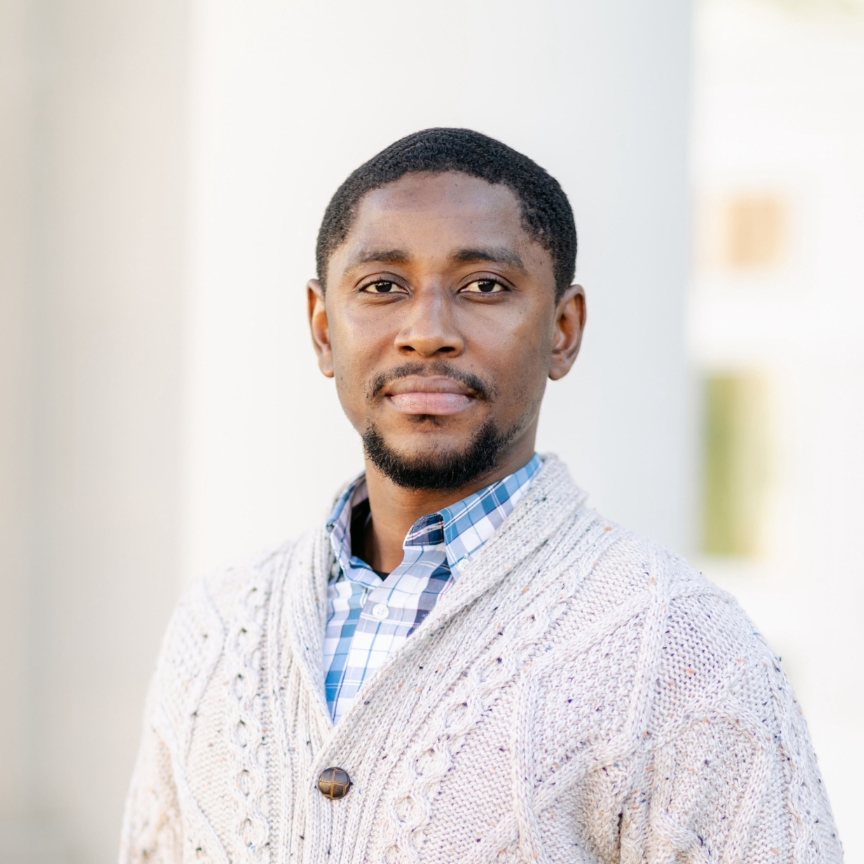
I grew up in Abakaliki, Ebonyi State. My father was wealthy when I was a child, then made a bad investment and lost it all. We went from the elite class to one of the poorest, most dangerous neighbourhoods in the state.
My primary school was so overcrowded that it ran a shift system to get through. This meant they taught one set of pupils in the morning, and another in the afternoon.
My secondary school, Urban Model Secondary School, was home to cultism. My classmates came to school with guns and machetes. It’s a miracle I never joined a gang myself, and I think it was due to geography: I lived in one gang’s territory and schooled in a rival gang’s, so joining either meant I could never go home or go to school. My parents were also strict.
We had no cable TV, just an antenna that caught NTA. On the Sundays we were lucky to get electricity, we’d cluster around the set for Who Wants to Be a Millionaire? I wanted to be a contestant so badly that I started reading everything I could find — McMillan readers, newspapers, magazines — just to prepare.
The show ended before I was old enough to go, but the reading habit stayed with me. It took me from an Abakaliki ghetto to a first-class degree in English, and eventually to fellowship training at Yale, Princeton, and Duke.
The Big Daily is your weekday shortcut to the biggest news shaping Nigeria. We cut through the noise, connect the dots, and explain why the news actually matters, all in one quick read.
Why we started Spark Nation
Spark Nation is an academic competition for secondary school students across Nigeria. Schools register their students, who go through virtual and national preliminary rounds that test them in debate, general knowledge, and critical thinking, before the best schools compete live at our annual bootcamp. It’s free to enter, and every student who makes it through the process walks away feeling academically pushed, whether they win or not.
People online complain about the “Olodo uprising” culture that seems to be taking over our country. Young people are chasing entertainment and fame over learning, but you can’t blame the youth alone; they gravitate toward what’s rewarded. Initiatives like Spark Nation don’t get the support and backing needed to impact the lives of young people.
Back in 2017, when I was running the Creative Writers’ Association at Alex Ekwueme Federal University, Ndufu-Alike (AE-FUNAI), a lecturer suggested we organise a beauty pageant, because sponsors like MTN would fund it. I asked if we could do an intellectual competition instead, like a debate, and he backed out almost immediately.
That’s the pattern I’ve come to notice. The people who should be championing rigorous learning would rather swim with the tide, because swimming against it is stressful.
A TikTok challenge can get sponsorship overnight, but when you pitch something mentally taxing, brands and sponsors disappear.
Right now, not a single multinational operating inside Nigeria funds our work. Every dime for Spark Nation comes from outside the country, mostly Nigerians in the diaspora.
We started Spark Nation because we wanted a competition that would have children undergo rigorous mental training and prepare hard, whether they win or not.
One student who didn’t make our final round this year still scored about 340 on the Joint Admissions Matriculation Board (JAMB) exam because months of prep forced him to study seriously.
In secondary school, my classmates and I would miss competitions because my school couldn’t afford the entry fees. Registration for the Spark Nation competition is now free. Spark Nation is built so that the child of a wealthy family and the child of the poor can compete on the same footing.
The programme has grown fast. We ran it locally in Ebonyi State in 2024, went national in 2025, and, with a partner organisation, recently hosted students from across West and Central Africa at this year’s edition — over 200 schools registered for the virtual and national preliminaries, and the top 40 made it to the physical bootcamp. By the time we got there, we had 235 delegates in the room: 104 students, 45 volunteers, 31 teachers, 15 observers, 14 scholars, 14 management staff, and 6 adjudicators.
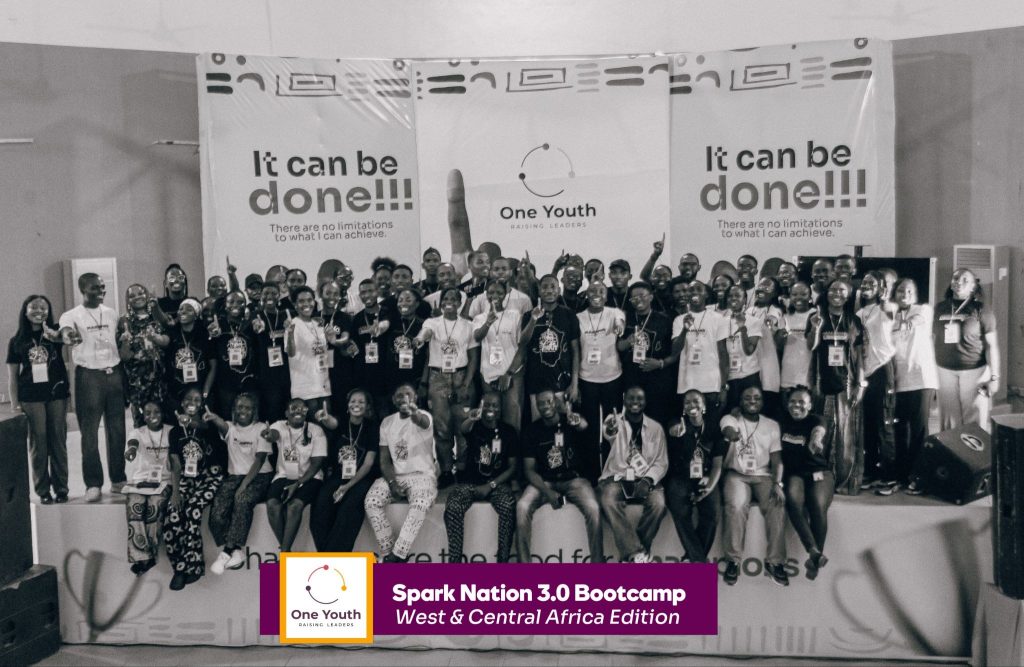
Spark Nation sits under One Youth Global, which now funds full university scholarships for over 37 students across Nigerian tertiary institutions — including monthly stipends, laptops for many, and mentorship from people abroad. It’s the same principle: don’t just reward brilliance once, follow through on it
The part that doesn’t show up in a pitch deck is how much energy it takes to run this without paying anyone.
In 2024, our partner waived a $2,000 registration fee and covered accommodation for ten of our winning students to attend a leadership programme abroad. We only had to raise money locally for visas and flights. I made a proposal to get state government support for that, and a public office holder in Ebonyi asked if I could get our foreign partners to send dollars so the government could “facilitate” things on their end.
A state commissioner asked whether his own child could be added to the list. A civil servant in the Ministry of Education sat on our file, waiting for a bribe before he’d pass it to the governor’s desk.
This is so frustrating because these are underprivileged Ebonyi kids who earned their spot. I’m not asking for myself. Our volunteers are graduates or soon-to-be graduates. We’re the ones trying to help children in these officials’ own communities, and they’re demanding bribes to let us do it.
Since 2024, we’ve asked the Ministry of Education and local government chairmen for one thing: a bus so public school students can reach the free preliminaries and to aid the logistics of our team members and volunteers. So far, not a single local government has provided a bus. So our volunteers ride commercial vehicles into rural communities themselves, to hand principals physical invitation letters.
Our education system trains people for jobs that no longer exist. I know biochemists working as photographers, and most of the time it’s not out of passion but for survival. Starting a business is also not a great option; With lending rates near 30%, a young person who borrows a million naira to start a business owes 1.3 million before they’ve made a single sale.
So if someone has the chance to leave and God hasn’t specifically told them to stay, I tell them to go. What I won’t tell anyone is to stay and suffer for patriotism’s sake. But leaving shouldn’t mean disappearing.
Look at how India’s boom was partly built by diaspora investment flowing back in. None of Africa’s major independence-era leaders trained locally, but they came back with something. If you’re abroad earning well, send a fraction of it home to fund an impactful project. Come back when you can.
There’s an Igbo saying: he whom they have rejected does not reject himself. We can’t keep waiting for a failing government to save us. When you walk into a dark room, you have two choices — sit and argue about how dark it is, or light something.
My challenge to any young Nigerian reading this: pick one small piece of this and commit to it. Don’t worry about scale. If you can’t build a school, buy a school bag. If you can’t afford that, buy exercise books for the kid who came first in your neighbourhood school.
When I was younger, my uncle bought a bottle of Fanta for whoever placed first in class. I wanted that Fanta so badly, I studied harder than I ever had. That one bottle of soda changed my academic trajectory. If you have no money at all, give an hour a week teaching a child to read. Just introduce light.
While I encourage us to introduce light, I also recognise that individual acts of kindness can only go so far. Spark Nation’s experience is proof. The state of education in this country is a governance failure that officials could fix if they wanted to, and until they do, the people abroad will keep paying for what should already be a basic public service.

The Naira Life Conference is returning on August 22, 2026, in Lagos! Come learn from finance experts and industry leaders, and partake in unfiltered conversations about building wealth and diversifying your income stream in a country like Nigeria. Real stories, expert advice you can actually use, and a community ready to build wealth together. Secure your spot here.