In 1968, US composer Nina Simone said, “An artist’s duty, as far as I’m concerned, is to reflect the times,” and this has been invoked many times since for all kinds of moral summons, as a warrant to famous people whenever a crisis exceeds public comfort.
It’s a powerful quote and it holds some truth. But we tend to use it selectively, conveniently and without asking what it costs.
What does it mean to reflect the times in 2026, to put a mirror down and show what stands before it? Nina Simone wrote “Mississippi Goddam” after the murders of Emmett Till and Medgar Evers in Mississippi and the bombing of four young black girls in a church in Birmingham. She became professionally radioactive for it and lost multiple bookings and got blacklisted. We can say she paid dearly for using her voice and her reflection in full.
That’s the standard the quote sets. Here’s where Nigerians need to ask if that’s what we want when we make demands of celebrities today.
Subscribe to Chronically Online, a Saturday special edition of the Zikoko Daily Newsletter
Over the weekend, Nigeria was caught up in a jarring screen-split of cultural celebrations and harrowing tragedy.
On Friday, May 29, 2026, thousands gathered in Ijebu-Ode for the annual Ojude Oba festival, a grand display of Yoruba heritage with horses, traditional fashion and theatrics.
Others flocked to the Group Therapy and Red Light Fashion Room rave.
While some kilometres away, a much darker reality sat. Somewhere in Oyo State, over 40 people, including children below age seven, have been held captive for over two weeks, following a mass school abduction.
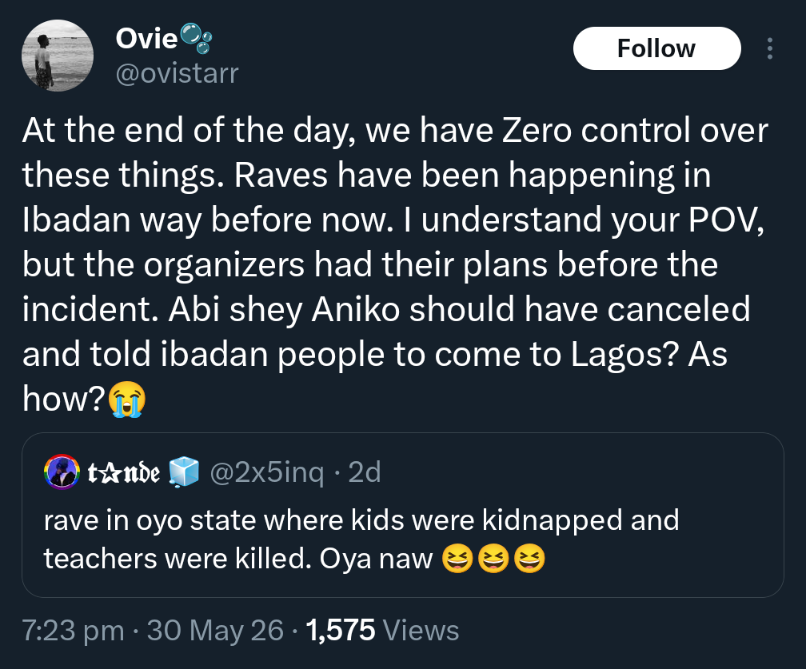
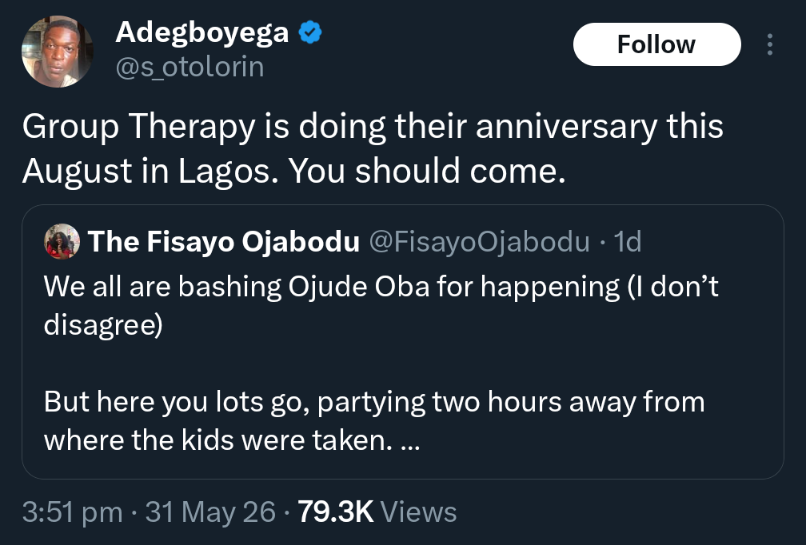
This is how we arrived at the glaring hypocrisy of collective reaction.
We spent the weekend pointing fingers, festival-goers insulting ravers and vice versa.
In the end, we outsourced our conscience to celebrities, aggressively demanding that they speak out.
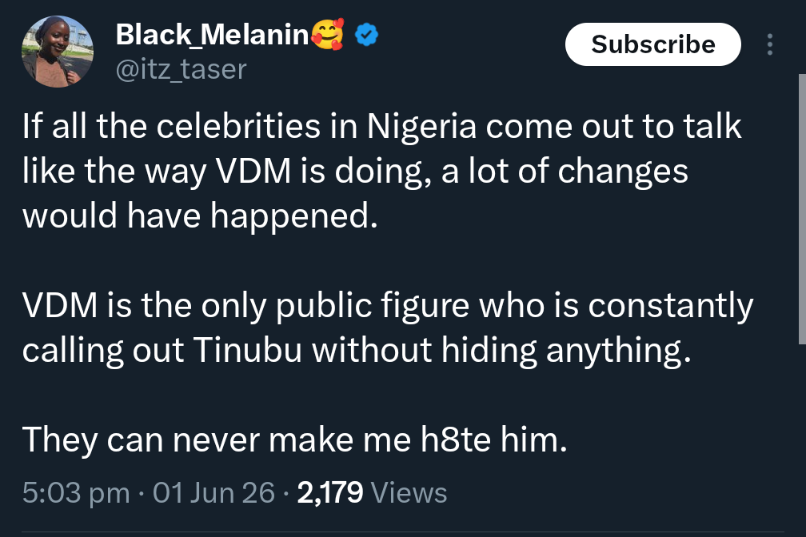
When they didn’t, we raged at their silence and performative activism while refusing to look in the mirror at our complicity… partying in the shadow of national crises.
History tells us there were parties in Lagos during the Civil War. When writers tell the stories of this period in the future, they’ll include that there were parties in the same states as murders and abductions.
What are we demanding when we ask celebrities to speak up? Awareness isn’t the problem anymore. The abductions no longer happen in secret. Perpetrators now document it all in broad daylight and post on the internet like any other “Day in the Life” content. We see the grief of the victims’ families with our eyes in real time.
Every Nigerian with a smartphone knows.
Our celebrities can’t generate clarity or solutions. At best, they give us a 48-hour news cycle, a window for trending grief before the algorithm sends us something else. At worst, the hope that something will be done because a few popular folks used their social media to speak up.
READ THIS: 15 Nigerian Songs About Problems We’re Still Facing Today
We see celebrity faces, styles and personas constructed for the public. But what do we know of their politics? How often do they demonstrate their thinking around power or the state? Have they shown where their moral compass points when there’s no crowd watching? If the answer is no, then the moment we focus on demanding that someone speak without knowing whether they have anything worth saying, we lower the bar for what counts as important at critical moments like this.
We have partitioned ourselves so efficiently that the rave and the tragedy coexist in us without appropriate concern. We cross state lines to party, hiding our movements so our loved ones won’t worry. We’re the same everyday citizens who, if our family member was kidnapped today, would scrape together the ransom. The same people who attend Ojude Oba or weekend raves, or wish we had.
No one’s observing this crisis from a guilt-free zone. We exist in the same numbness we condemn in famous people. This numbness is a natural defence mechanism; the human mind wasn’t built to process mass suffering. Yet, paradoxically, it’s from this state of dissociation that we throw our outrage at celebrities who haven’t “spoken up”.

The Naira Life Conference is returning on August 22, 2026, in Lagos! Come learn from finance experts and industry leaders, and partake in unfiltered conversations about building wealth and diversifying your income stream in a country like Nigeria. Real stories, expert advice you can actually use, and a community ready to build wealth together. Secure your spot here.
Celebrity platforms are built from public attention, affection and currency. The public, therefore, has legitimate interests in what the platforms do. The accumulated reach has the capacity to attract the government’s attention, if nothing else.
However, it’s important that we ask the people we have made famous if they have something real to offer. Do they have the resources, consistent advocacy, access, or anything significant that goes beyond the trending topic?
It’s true that celebrities have a duty to reflect the times, but Nina Simone was speaking to people who had developed something to say, had relationships to issues that went deeper than their follower count and were willing to pay the cost, personal or professional.
Perhaps what needs correction is the idea that calling out celebrities for silence doesn’t exempt us. As we summon that standard for others, we should be willing to meet it ourselves.
Many Nigerians are still in captivity across Nigeria, from Yawota and Esin-Ele in Oriire, Oyo State, to Gwon-Ajang, Plateau State and Mussa in Borno State.
Advocacy requires sacrifice, and demanding that level of sacrifice from a celebrity while offering none ourselves is hypocritical.
ALSO READ: Afrobeats Has a Violence Problem