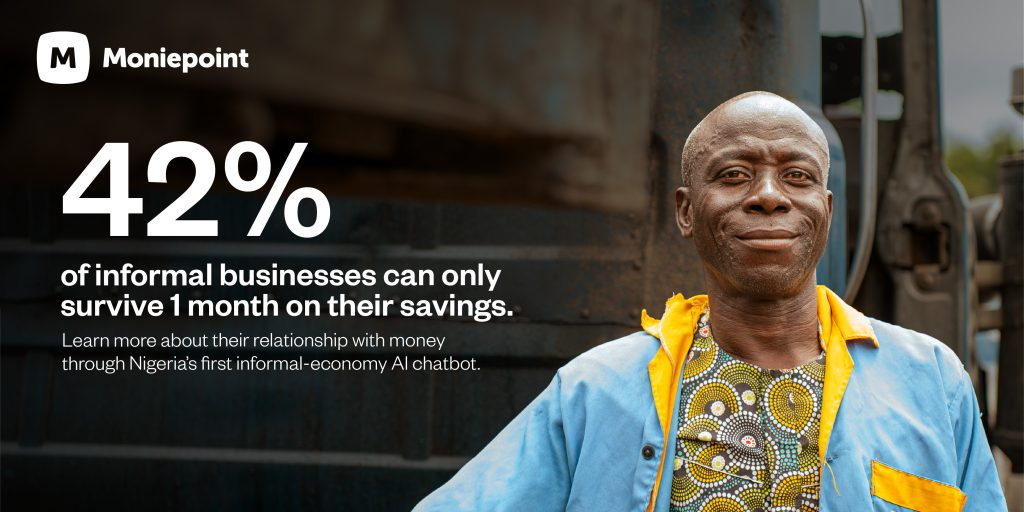
To an outsider, the mechanic village looks like chaos.
It is a sensory overload of revving engines, the sharp tang of engine oil, and the rhythmic clanging of metal. The mechanic village appears to be a disorganised maze of car parts and men in grease-stained blue overalls. But look closer, and you see an ecosystem; a self-regulating government of trade and survival.
At the heart of this ecosystem are men like Oluwanisola and Sikiru.
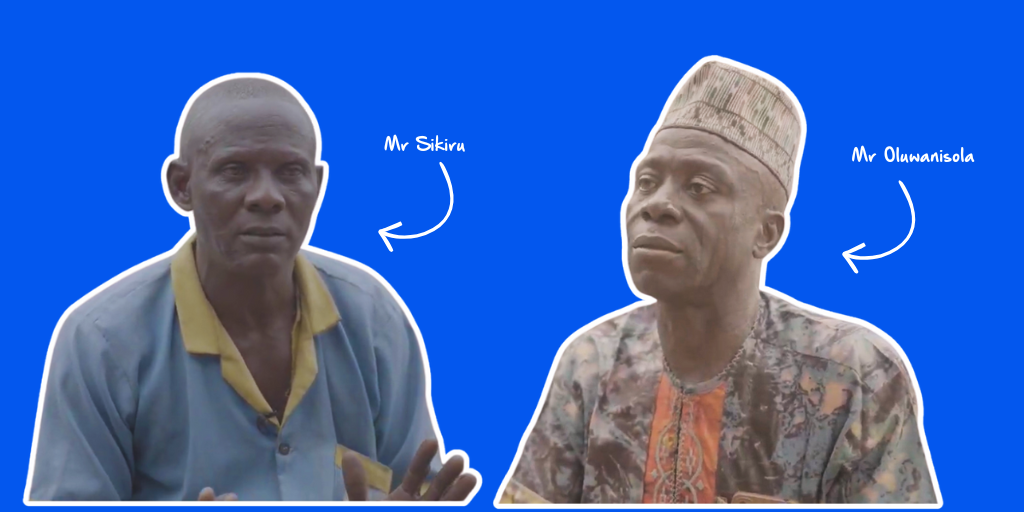
Both men are 55 years old, born in the early 1970s, and followed the same migratory path that millions of Nigerians have tread: leaving the quiet of remote villages and towns for the relentless energy of Lagos.
Oluwanisola arrived from Kwara State in 1988, driven by a boyhood curiosity about what made cars work. Sikiru arrived from Oyo State in 1991, driven by a pragmatic hunger for survival.
“I came to Lagos for business, to make money,” Sikiru says plainly. “I realised that going to school without learning a trade is a waste for a human being. You see people who didn’t learn a trade doing arrogance, but they have nothing.”
These two men may appear to be just fixing cars, but they are also integral components of Nigeria’s massive informal economy, keeping the nation’s fleet mobile while navigating a system often invisible to the corporate world.
The Mechanic Village: A Systematic Government of Its Own
In the mechanic village, respect is earned through service. Entry into this world begins with an apprenticeship: a gruelling period of learning that tests both patience and physical strength.
For Oluwanisola, the journey began with a promise that was broken for his own good. “My oga (master) told me I wouldn’t need to spend the regular five or seven years because I already had two years’ worth of training experience from Ekiti,” he recalls. “But I ended up spending six years. I was so good my oga didn’t want to release me.”
Sikiru’s path was equally rigorous. He trained for seven years under a strict master known for his discipline. Sikiru describes those years as a mix of hard labour and prayer.
The culmination of this service is called “Freedom”, a graduation ceremony where apprentices receive a certificate — a prerequisite to launching their own businesses. To Sikiru, this certificate is more valuable than a university degree. “It means I can work anywhere without a problem,” he says with pride. “If you drop out of school, you have nothing. But with my certificate, I am a professional.”
The village operates on a philosophy of “strength in numbers.” No single mechanic knows it all.
“We rub minds together,” Oluwanisola explains. If a car comes in with a complex electrical fault, a general mechanic calls a rewiring specialist. If the car requires bodywork, a panel beater enters the picture. This collaboration extends to security. The mechanics pool resources to maintain a gate, locking up customers’ vehicles at 10 p.m. to ensure safety in a city known for its unpredictability.
But finance remains a daily struggle. While the digital economy has penetrated the village — both Sikiru and Oluwanisola conduct business transactions in cash and via bank transfers — the cost of doing business is high.
Sikiru estimates that general mechanical labour now costs between ₦30,000 and ₦50,000, while a complete engine change can run anywhere from ₦200,000 to ₦700,000, depending on the vehicle’s make and model. Yet, despite these large numbers, the profit margins are slim after deducting the cost of vehicle parts and levies.
“We pay for everything,” Sikiru notes. “Security levies to pay the guards, PSP for waste, and annual local government council permits.” Bills such as security levies and waste disposal, the latter of which can amount to up to ₦250,000 per month, require the mechanics in the village to contribute to a shared fund. Council permits are an individual responsibility that can range from ₦30,000 to ₦50,000, a considerable burden when daily income fluctuates wildly.
“Sometimes I make ₦5,000 a day, sometimes ₦20,000,” Oluwanisola admits. “We manage ourselves.”
Succession Plans: Positioning for the Future
With the advent of technology, the mechanic village might be facing its biggest existential threat. The days of fixing a Peugeot 504 with a hammer and a good ear are fading.
Oluwanisola realised this during a 2017 stint working for a taxi company in Dubai. “That experience reset my brain,” he says. “In Dubai, a mechanic is like a doctor. You don’t use physical strength to fight the car; you use machines. I realised the work I was doing in Nigeria was outdated.”
He saw firsthand that modern vehicles run on sensors and computers, not just pistons and plugs. “If you use trial and error on these new cars, you will knock the engine,” he warns.
To bridge this gap, the fathers have turned to their children. They are building an alliance in which the father provides mechanical experience, and the child provides digital literacy.
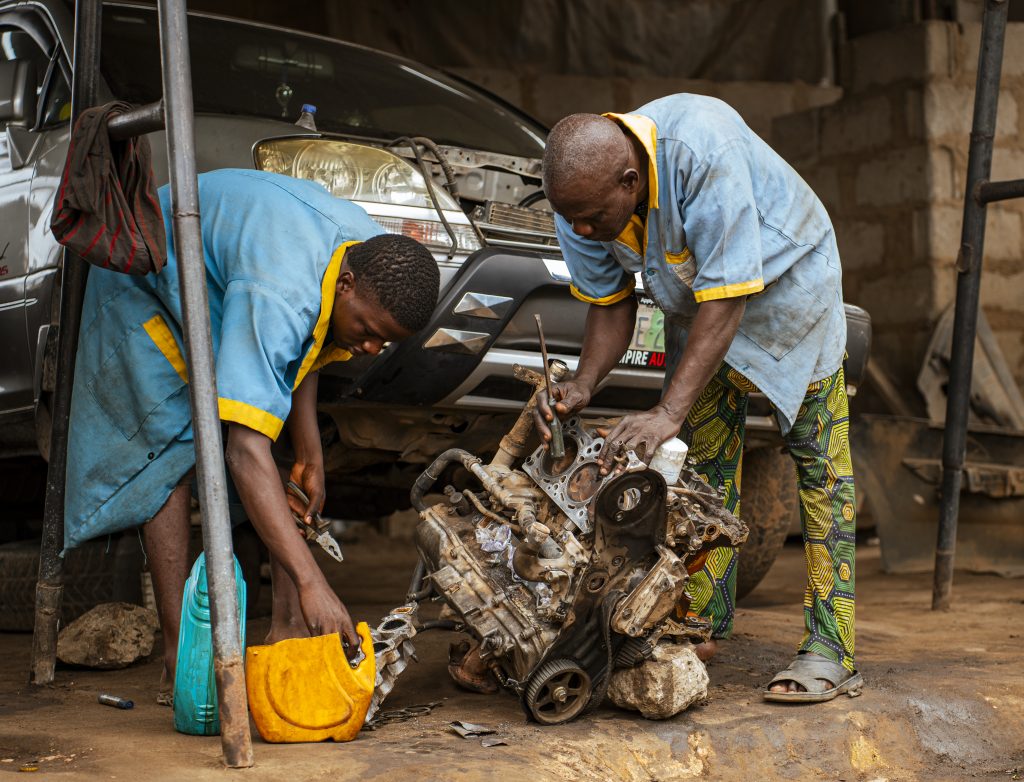
For Sikiru, this partnership started during the COVID-19 pandemic. With schools closed, Sikiru’s son, Taiwo, who was in secondary school, began following him to the workshop.
“Instead of him sitting at home, I encouraged him to learn the mechanic work,” Sikiru says. This push became the move that has now integrated the next generation into the business.
From following his dad to the workshop, Taiwo developed a passion for the trade and has been an apprentice for the past five years. The 20-year-old plans to study mechanical engineering at the university so he can set up a workshop in the future and become an employer of labour.
Oluwanisola took a more direct approach to getting his son, 21-year-old Abeeb, into the business. “I told my son, ‘Go and read Computer Engineering,’” he says. The plan was to ensure Abeeb knew how to work with computers so he’d have the technological know-how to move with the times, especially when it came to working with cars.
The strategy is working. Now, when a modern car with a stubborn computer fault enters the workshop, Abeeb handles the diagnostics. He reads the scanning machine that his father cannot, and Oluwanisola applies the mechanical fix.
“I know how to loosen the bolt, but the computer is the new key,” Oluwanisola says.
As the sun sets over the mechanic village, the noise dies down, but the ambition remains. These men have weathered economic crises, technological shifts, and the grime of the pit. They aren’t going anywhere.
“I cannot leave this mechanic work until I die,” Oluwanisola declares. “It is who I am.”
Oluwanisola and Sikiru are part of the millions of people who make up Nigeria’s informal economy. This is the third of a four-part series highlighting their stories. Moniepoint spoke to thousands of them and combined their stories with internal data from over 5 million business owners in a report, which you can find here.