The Nigerian experience is physical, emotional, and sometimes international. No one knows it better than our features on #TheAbroadLife, a series where we detail and explore Nigerian experiences while living abroad.
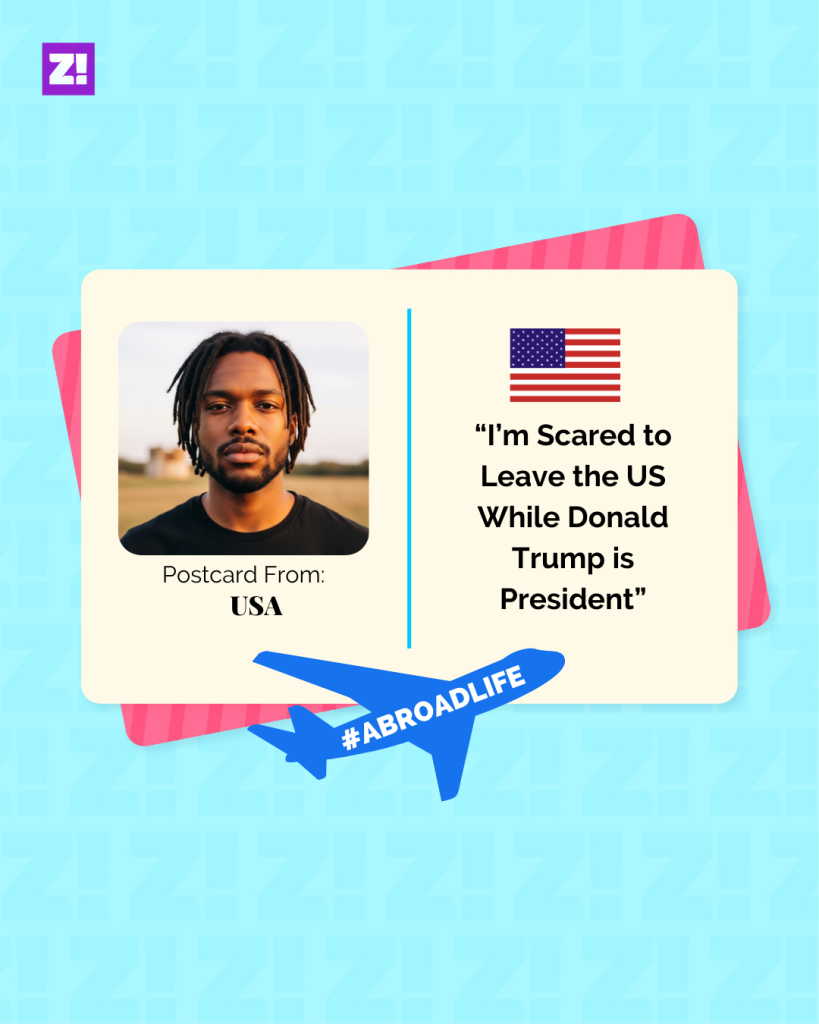
Caleb* (25) moved to the US eight years ago to pursue dreams of making it big in tech. In this story, he shares his experiences, how scary it is to realise you’re the minority in a new country, and why he can’t visit Nigeria until Trump’s presidency ends.
Where do you live currently, and when did you leave Nigeria?
I currently live in Texas in the United States (US). I left Nigeria in 2018.
What inspired you to leave?
I had a particular dream for myself. I always wanted to work in tech, and I saw that the best opportunities for me would be to leave the country for the best education. Luckily, my parents were supportive and were able to provide the funds for me to take the Scholastic Assessment Tests (SAT).
So you chose the US for your bachelor’s degree. Did you consider other countries?
Yes, I did. Sweden was one country I looked at because they have programmes that are very inclusive for immigrants. I looked at the UK too, but they were very strict with scholarships. I focused mostly on schools that would provide funding because I didn’t want the financial burden to be on my parents. I backed myself and my academic record to get a scholarship.
How did the application process go?
When you take the SATs, you apply to four schools. The school I ended up attending was the one I applied to last, just to fill up the list. I had three that I was confident about and needed one more. That last school was the one that actually gave me a full ride. It is crazy how things work; you just never know what God has in store for you.
Was that your first time leaving Nigeria?
No, I had been to the United Kingdom (UK) a couple of years prior for a holiday. It was during the Ebola virus outbreak, so we actually got an extended holiday and stayed longer than intended.
I see. Still, moving to the US must have been quite the change.
It was, but thankfully, I already had family in the US, so finding my feet was not as hard as it is for some. My uncle picked me up from the airport and helped me get the basics like a SIM card and a bank account sorted out. He laid down the rules of what to do and what to avoid. Having him as a guide was super helpful because so many things here are very different from Nigeria.
How did you find the education system in the US compared to Nigeria?
I had actually attended the University of Lagos for a few months before I got my scholarship offer. The main difference is the way they foster learning in the US. They encourage you to try new things. No one wants you to fail. If you struggle, the lecturers are very helpful. If they see you’re really trying, they will work with you to make sure you understand the material.
I also went to a Historically Black College or University (HBCU), so I had a strong community. I met Black people from all over the world and had interesting experiences assimilating and understanding other perspectives. It makes you realise the world is big and we are just a speck.
Have you been back to Nigeria since you left?
I’ve been back twice. I came back in 2019 for a burial and then in January 2024 for my grandfather’s centennial birthday celebration.
What were those experiences like?
I barely remember the first visit. It was so long ago. Also, it was just after a few months of moving, so there wasn’t much difference. But the second visit was really fun. It was the first time I was in Nigeria as a fully grown adult with independence and my own money to splurge.
A lot of things had changed since I was last there. The infrastructure seemed better. I was surprised that the Lagos-Ibadan train works as well as it does; I used it three times, and it was very consistent. I hope Nigeria continues to improve transportation, especially the rails, because it’ll help decongest Lagos, which would make life better for everyone.
Do you intend to visit more frequently now?
Not really. With the current administration in the US, I worry about being caught outside the country by a new policy that might affect my ability to return to my job. I’ve been erring on the side of caution, so visits might not be very frequent until this administration’s tenure is over.
Do you see the US as your long-term home?
Right now, because of the relationships I’ve made and what I’ve built for myself, I do see myself living here long-term. I have a partner here, and I wouldn’t want to leave all of that to start afresh in Nigeria. Unless something drastic happens, I’m looking at staying in the US.
How does it feel being away from family for years?
It can be challenging. Nothing beats talking to someone in person. When I went back to Nigeria, I realised how much context I was missing. People are growing up and getting married, and even though they tell me on the phone, it is different to experience it. I feel a bit of FOMO (fear of missing out), but I am proud that everyone is forging their own path.
What is your support system like in the US?
I was lucky because many of my friends from secondary school also moved to the US to study when I did. We did our SATs together, so that support system came naturally. Since I went to a HBCU, I also met many people of different African origins that I still keep in touch with. A lot of us ended up settling in Texas. There’s a big community of tech professionals here, so it is easy to meet like-minded people with shared interests.
You said you felt studying abroad would give you the best chance to succeed in tech. Do you feel you’ve achieved that goal?
I actually felt like I achieved that goal last year. I graduated, got a job, and started doing well in tech. Last year was actually a time for me to figure out what comes next. When you achieve a major goal you’ve been striving toward, you suddenly have to ask, “What else is there?”
Now, my motivation as a 25-year-old is to become ruthlessly efficient. I want to become a subject matter expert—the person people have to ask for an opinion because I know the field so well. I’m looking at doing certifications and perhaps a master’s degree in the future to keep building on my expertise.
What do you do for fun when you’re not working?
Recently, my girlfriend and I moved in together, so we’ve been doing more things together. We go to the gym together, and she’s making me watch Bridgerton with her. I’m actually starting to enjoy it.
I love rock climbing and playing soccer when the weather allows, if it isn’t too hot. Texas gets very hot. For holidays, I am an avid lover of theme parks. My girlfriend and I take an annual trip to Disney World. I love roller coasters and can stay on them all day.
I also love reading fantasy and sci-fi books. Also, my girlfriend keeps me on my toes with random activities. We recently took a cooking class, which turned out to be super fun.
What were your biggest culture shocks?
Realising you are a minority is something you can’t mentally picture until you see it. I once walked into a store and realised out of the about seventy people there, I was the only person who looked like me. It was an uncomfortable feeling. In Nigeria, everyone looks like you, so you’re never aware you’re black. Then there is the accent; I didn’t think I had one, but here, when I speak, everyone immediately asks where I’m from.
Also, Americans don’t use kettles to boil water; they put it in the microwave. My girlfriend does it, and I will never understand it.
What has been your worst experience in the US?
Losing friends. I lost a couple of my friends in a car crash. The driver was drunk and angry after an argument at a party. It’s shaped how I live now. I will never get behind the wheel when I’m intoxicated. Another friend got shot. Someone got angry at him and just brought out a gun. Luckily, he survived, but it was a harrowing experience.
Sorry for your loss. What has been your best experience?
All the travelling I’ve been able to do to different cities and experience other cultures. America is a melting pot of nationalities and cultures. You can learn so much about people here, and I’ve really enjoyed doing that.
What is your least favourite thing about the US?
Gun violence. Also, the media system is weird; it feels like propaganda where they state opinions instead of news. And the ads—you can’t escape them. Everything is just so commercialised; it gets frustrating.
And what is the US good at?
Technology and innovation. At my job, I get to see cool stuff all the time. They are also surprisingly good at food because of the diversity of nationalities and cultures. Also, because of the size of the country, going to another state feels like going to another country with its own cultures and way of life. So, travelling around the country, there’s always something to do.
On a scale of one to ten, how happy are you in the US?
I would say an eight. The political state of things is a concern, but for the most part, I am happy.
Do you want to share your Abroad Life story? Please reach out to me here. For new episodes of Abroad Life, check in every Friday at 12 PM (WAT).
Politics affects your life everyday and in so many ways. And you should have a say in who gets to decide things that affect you. At the second edition of The Citizen Townhall, we’ll be answering the big question: Who gets to shape our lives and what can we do about it?
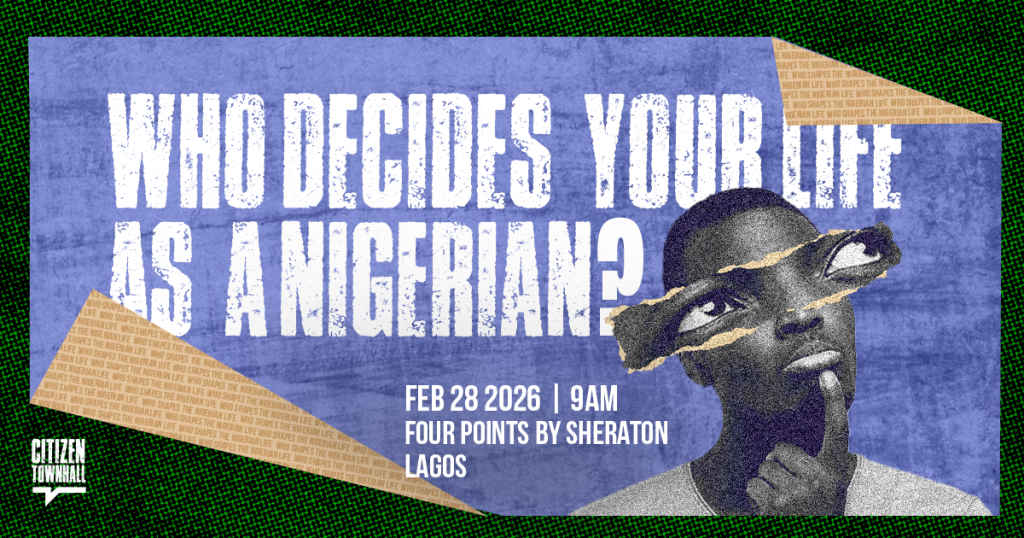
February 28, in Lagos, there won’t be a more important place to be. Come through and join the conversation. Register here.
Click here to see what other people are saying about this article on Instagram