The scary and unfortunate reality of life in Nigeria right now is that kidnapping is big business. It’s become a billion-naira industry, and under Tinubu, the business has boomed a great deal. But it’s Nigerians who are paying the price of the seeming normalisation of kidnapping.
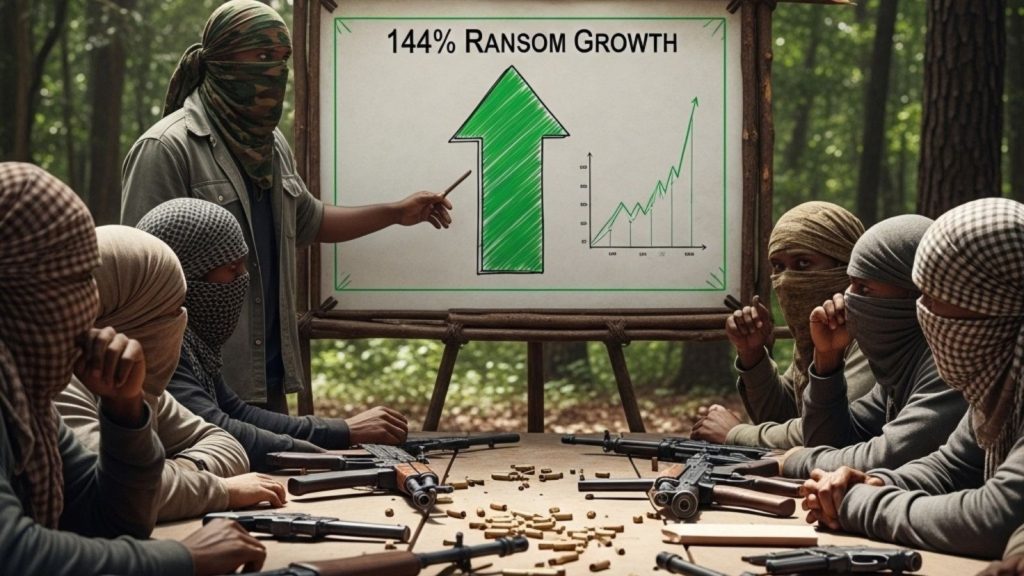
Maximising shareholder value
According to security research consultancy SBM Intelligence, the numbers have been tracking upward in a manner that would make any shareholders jump for joy.
- Between July 2021 and June 2022: 3,420 people abducted; ₦653.7 million paid in ransom.
- Between July 2022 and June 2023: 3,620 people abducted, ₦302 million paid in ransom.
- Tinubu gets sworn in as president in May 2023.
- Between July 2023 and June 2024: 7,568 people abducted (more than twice the previous year); ₦1.048 billion paid in ransom (kidnapping becomes a billion-naira business).
- Between July 2024 and June 2025: 4,722 people abducted; and ₦2.56 billion paid in ransom (that’s a 144% year-on-year growth).
Locking in for the last quarter
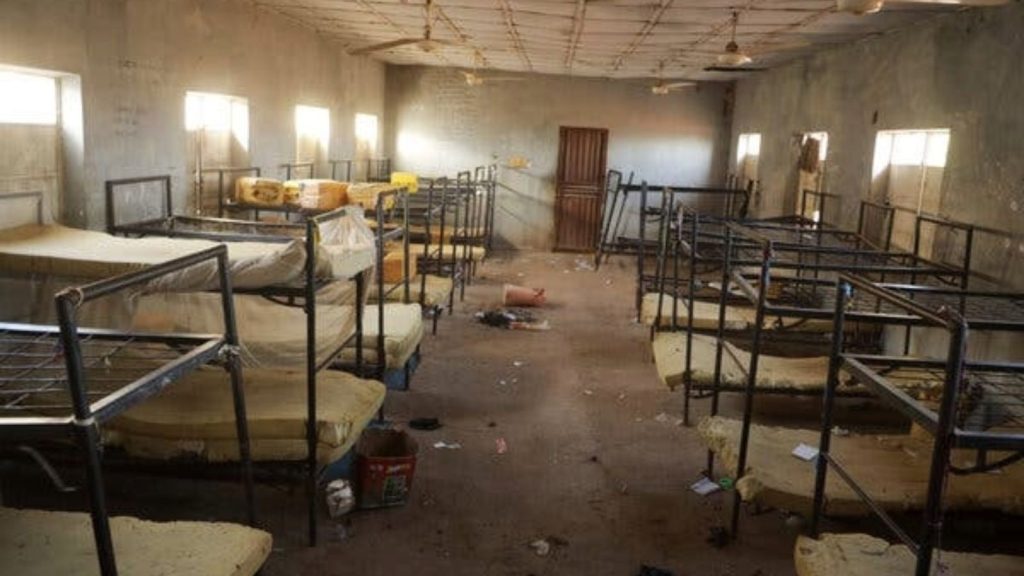
There’s a real human cost to the growth of this violent industry, and we’ve really seen it play out in the last quarter of 2025. In the second half of November, we witnessed a devastating week of violence and kidnapping that we will not forget any time soon:
- On Saturday, November 15, 2025, 64 people were kidnapped at Fegin Baza village in Tsafe Local Government Area of Zamfara State.
- On Monday, November 17, 25 school girls were kidnapped from Comprehensive Girls’ Secondary School in Maga community of Kebbi State.
- On Tuesday, November 18, 38 worshippers were kidnapped at the Christ Apostolic Church parish in Eruku, Kwara state.
- On Friday, November 21, over 300 students and staff of the St Mary’s Catholic School in Papiri, Niger state were kidnapped.

Sadly, the kidnappings have not stopped. In fact, as the year comes to a close, they appear to be ramping up. But in a news cycle that feels like it’s moving at 200 miles per hour, these kidnappings can get lost in the constant noise. So here’s a list (that is by no means comprehensive) of some of the recent incidents you might have missed.
13 Women kidnapped in Mussa, Askira/Uba Local Government Area of Borno
On Saturday, November 22, 2025, 13 young women were kidnapped in Mussa, Askira/Uba Local Government Area of Borno state. The kidnappers let one of them go after she told them she had a newborn that still needed breastfeeding.
The remaining 12 were released a week later on November 29. According to Abubakar Mazhinyi, the president of the local Askira-Uba council, it was the parents of the victims who went into the bush to speak with the kidnappers and secure their release. But Mazhinyi claims that no ransom was paid because the kidnappers realised the army was in pursuit.
₦300 million ransom demand in Isapa, Kwara state
On Tuesday, November 25, 11 villagers were kidnapped from the Isapa community in Kwara state. The kidnappers demanded ₦300 million as ransom.
They gave the community a deadline of December 10 to pay the ransom and refused the ₦5 million offer the community members offered. There have been no further updates and it’s unknown if the victims are even still alive.
The Red Wedding of Sokoto
On the night of Saturday, November 29, armed attackers abducted 13 women and a child in the village of Chacho in Wurno LGA, Sokoto State. A bride and ten of her bridesmaids were among those abducted.
Two days after the abduction, the kidnappers contacted the bride’s family, demanding to speak with the traditional ruler of the community. He refused to speak with them, and the kidnappers have declined to negotiate with anyone else. There have been no further updates since.
Snatching royalty in Ifelodun LGA, Kwara
On November 29, Kamilu Salami, the Ojibara of Bayagan-Ile community in Ifelodun Local Government Area of Kwara State, was kidnapped. The community has accused security agencies of not doing enough to rescue him, which has left the people feeling afraid and uncertain.
Cherubim and Seraphim Church in Kogi
On Sunday, November 30, a newly established Cherubim and Seraphim Church in central Kogi was attacked. About 20 people were taken by the attackers, including the pastor and his wife. The attackers are demanding ₦200 million.
Attack on ECWA Church in Kogi
During the morning Sunday service on December 14, armed men attacked Evangelical Church Winning All (ECWA) in the Ayetoro Kiri area of Kogi state. They took over 30 worshippers away. The kidnappers contacted the community on December 16 to demand a ransom of ₦600 million.
It’s someone’s job to stop this, right?
We have security agencies whose job it is to stop this kidnapping epidemic, and those agencies all answer to one person: the Grand Commander of the Order of the Federal Republic (GCFR). In other words, President Tinubu.
So what has Tinubu and his administration been doing about all of this?
Officially, there is fire on the mountain
As we’ve already made very clear at this point, things are not looking good. It’s been looking bad for a while. But the widespread coverage of the incidents between November 15 and 22 seemed to help our dear president realise what everyone could already see: there is fire on the mountain.
They say whenever you wake up, is your own morning. Tinubu’s morning apparently came on November 26 when he declared a “nationwide security emergency.” He announced a number of steps to address the situation.
- The police are to recruit an additional 20,000 officers.
- Police training facilities are to be upgraded, and they can also use National Youth Service Corps (NYSC) camps as training depots.
- Police officers serving as security for VIPs are to be withdrawn and deployed to security-challenged areas of the country.
- The DSS are to recruit more forest guards and deploy those who have already been trained as such.
- The Federal Government will support state governments that have set up security outfits at the state level.
- The National Assembly is to begin reviewing our laws to allow states that need state police forces to establish them.
- Mosques and churches in vulnerable areas can request police protection during gatherings.
Who’s worth protecting?
The withdrawal of police security from VIPs has probably been the most talked-about item on that list of emergency responses.
Members of the National Assembly have complained about the withdrawal of their police orderlies, especially when they can see the directive is being selectively enforced.
On Tuesday, December 9, Senator Abdul Ningi raised a point of order to complain about the withdrawal of his police orderly. He called out the selective enforcement of the directive, claiming he had seen certain groups retain their own police protections while senators were being stripped of theirs.
Ningi said, “It should be done across the board. Let us see what happens from the office of the President to the Vice President, the Senate President, the Speaker of the House, ministers, governors, business concerns, and even the sons and daughters of political office holders.”
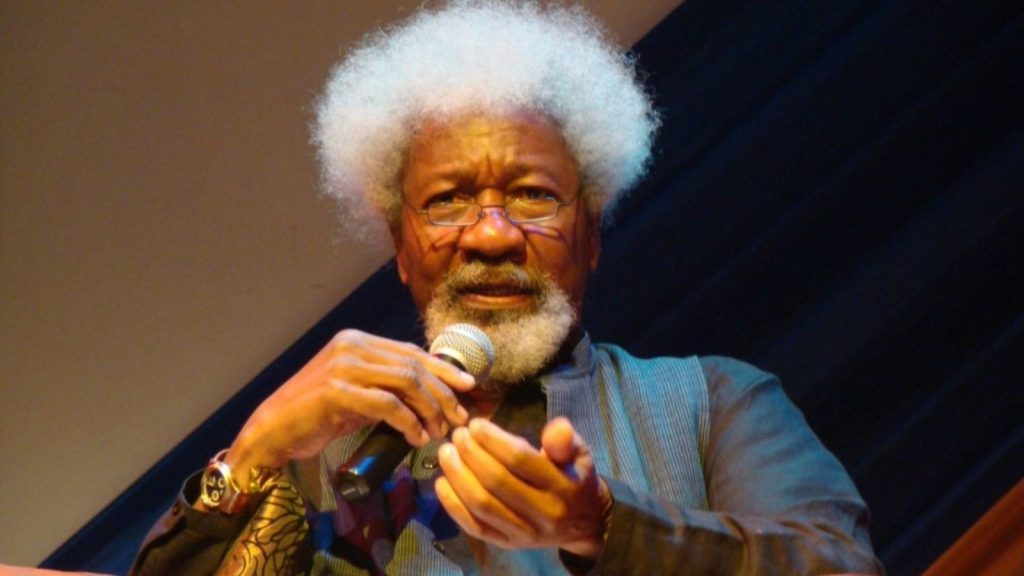
Added to Ningi’s comments, Nobel Laureate, Wole Soyinka, recently criticised Tinubu’s son, Seyi Tinubu, for moving with a security team large enough to “take over a small country.”
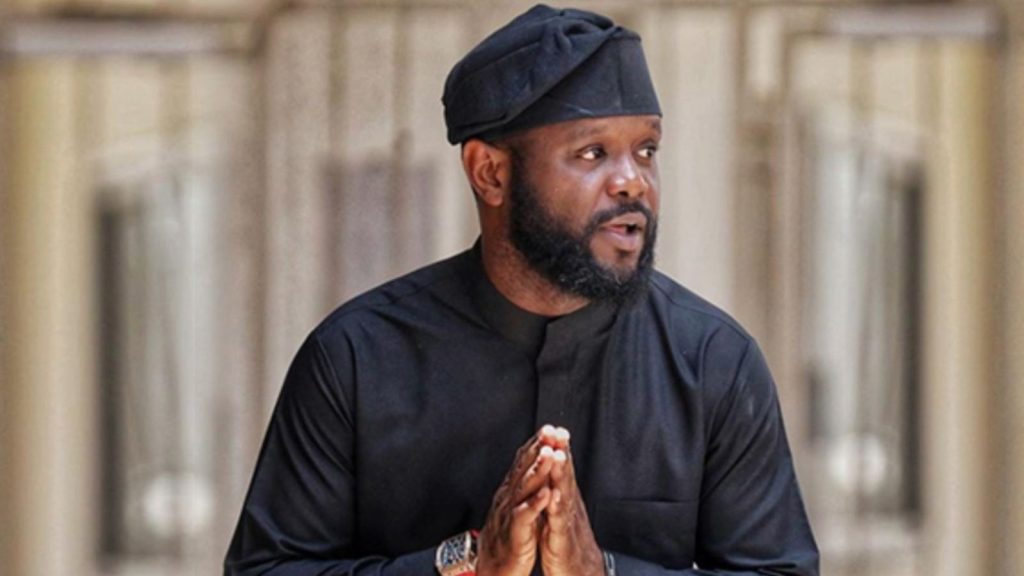
Honestly, we see the good intentions behind the directive. But it makes no sense for elected lawmakers to be stripped of protection while the President’s son goes about with a small army.
The karate instructor as Defence Minister
I’ve never been president before, so maybe I just don’t know what I’m talking about. But I think that when you have to declare a nationwide emergency because kidnappers are carrying hundreds of school children away at a go, it’s a sign someone at the Ministry of Defence is slacking.
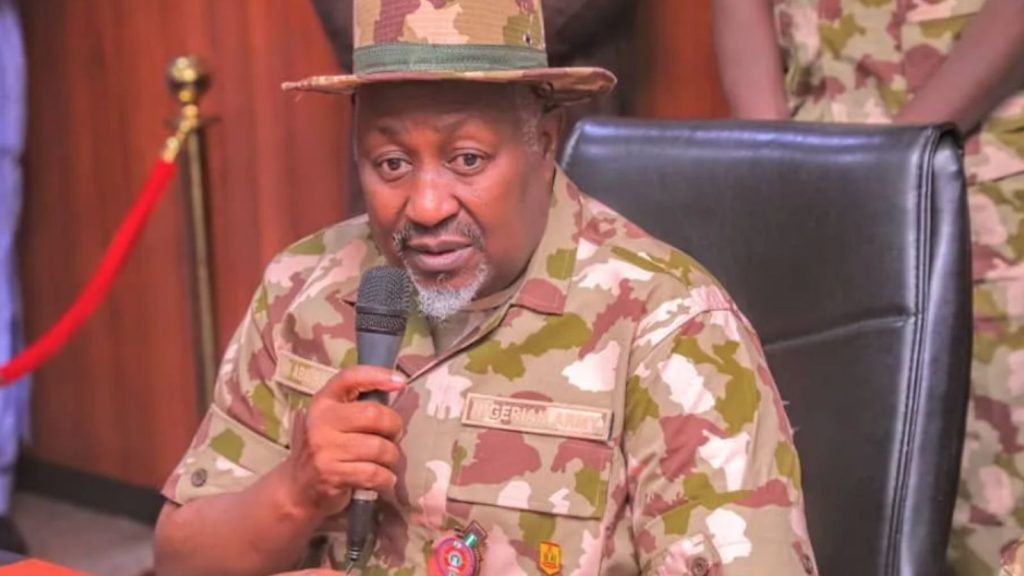
But I guess Tinubu sees it differently because he didn’t sack the Minister of Defence, Badaru Abubakar. Instead, Abubakar resigned on Monday, December 1, 2025, citing health issues.
Still, it offered an opportunity for Tinubu to bring in fresh blood, fresh eyes and fresh impetus. So what did he do? He appointed the immediate past Chief of Defence Staff, retired General Christopher Musa.
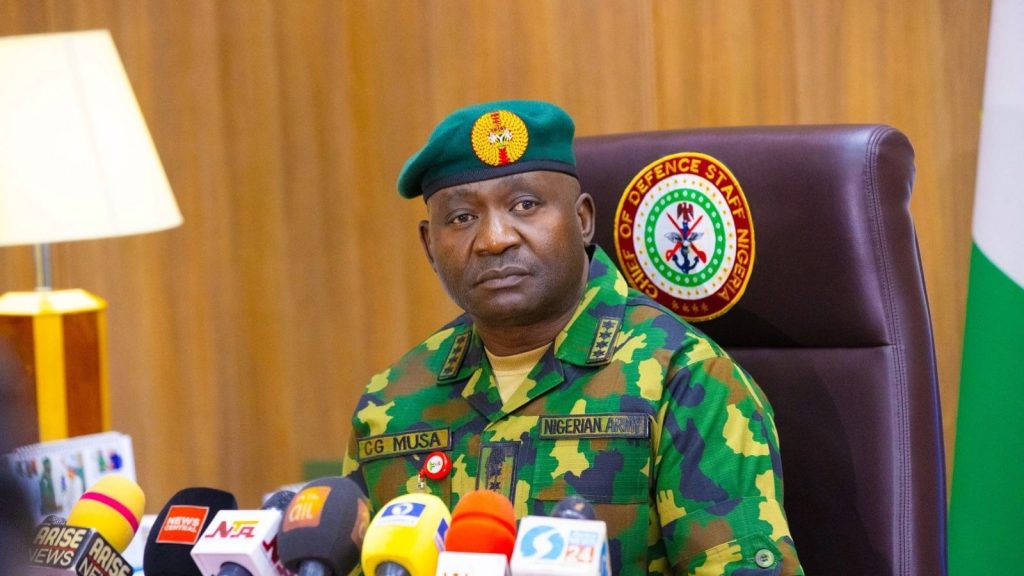
It feels too much like Tinubu rewarding another ally with an appointment, just like he’s doing by nominating names like Femi Fani-Kayode, Reno Omokri, and former INEC chairman, Mahmood Yakubu, for ambassadorial positions.
While he was still Chief of Defence Staff, General Musa advised Nigerians to learn martial arts like karate to protect themselves from bandits and kidnappers; the same ones the security agencies claim have “sophisticated weapons.” Forgive me if I’m struggling to be excited that he’s been appointed Minister of Defence.
When asked how these karate skills would protect against bullets, Musa said Nigerians should “avoid where bullets are flying.” I’m still wondering whether the schoolgirls in Kebbi and Niger should have avoided their school in order not to be kidnapped.
Well, from the actions the government is taking, it appears the answer to that is yes.
The “holiday” no one asked for

Between Wednesday, November 19, 2025 and Saturday, November 22, several states announced full or partial closure of schools or boarding houses:
- Kwara State
- Plateau State
- Katsina State
- Taraba State
- Yobe State
- Niger State
On a federal level, the Ministry of Education has shut down 41 of the 104 federal government colleges. By November 26, when the nationwide emergency was announced, 20,468 schools across seven states had been closed indefinitely.
You have to catch them first
One of Tinubu’s security emergency directives was for the National Assembly to work on laws to establish state police forces. But the Senate has decided that what needs immediate attention is increasing the punishment for kidnapping.
The Senate is working on amending the Terrorism (Prevention and Prohibition) Act to classify kidnapping as an act of terrorism. If the amendment bill gets passed, it will make it possible to sentence offenders to life imprisonment.
This implies our lawmakers think that kidnappers are not afraid enough of the current punishment. But I’ll argue that these kidnappers are not afraid of being caught. They are boldly posting videos on TikTok. That’s not the behaviour of people who think they are about to be arrested anytime soon.
So while the Senate’s amendment is good in theory, does it really achieve anything if the kidnappers are never caught in the first place?
“I will look for you, but I will not find you”
So how’s the hunt for these kidnappers going?
Liam Neeson’s character in the Taken franchise might have had a very particular set of skills, but it seems all the Nigerian government has is a particular set of excuses.
Despite the fact that we have bandits and kidnappers posting like content creators on social media, the federal government claims it cannot track them. The explanations for this failure vary depending on which official you ask.
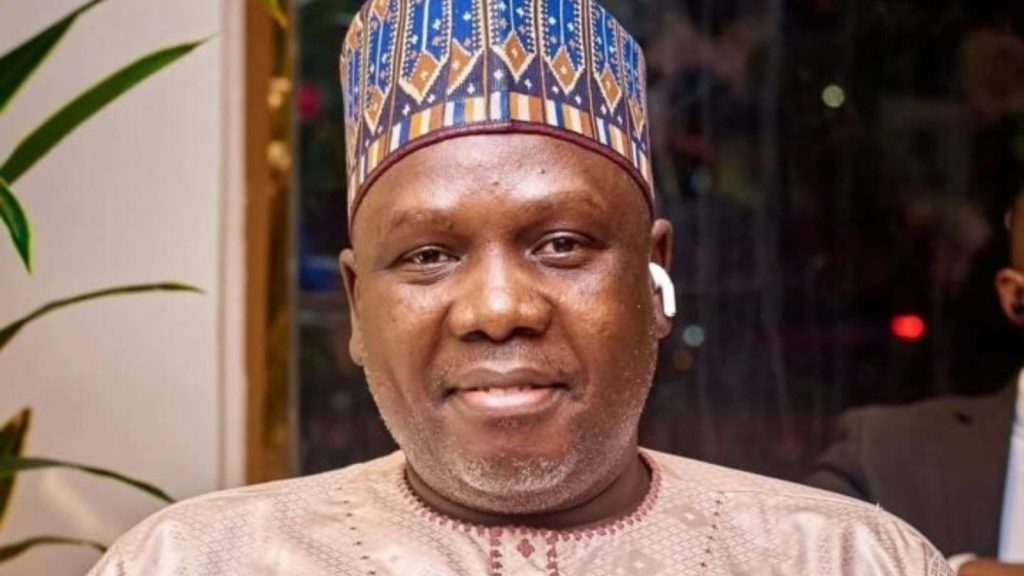
Special Adviser to the President on Policy Communication, Daniel Bwala, says it’s because they use the Starlink satellite network, and that makes it impossible for the Nigerian government to track them.

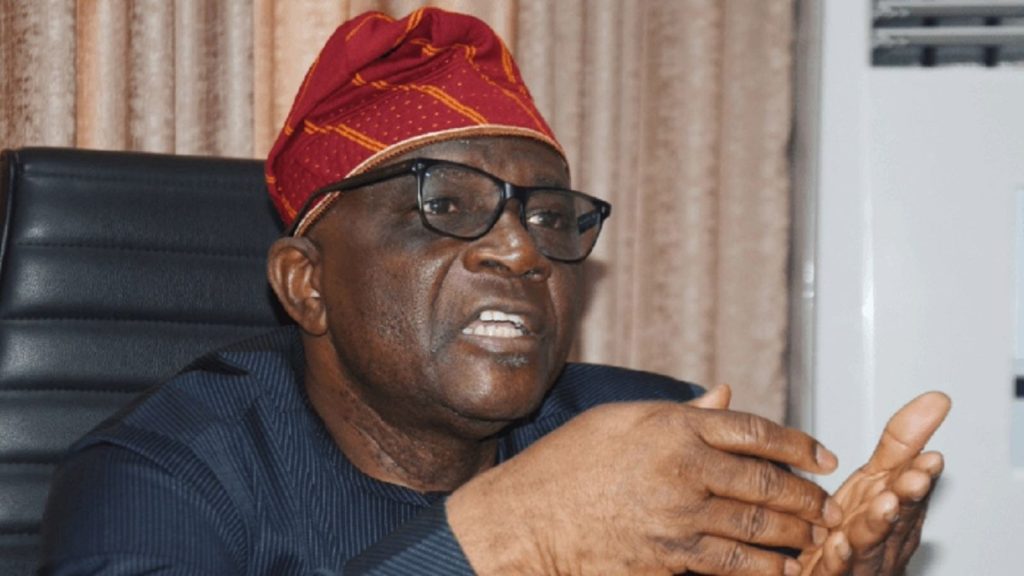
The Minister of Communications and Digital Economy, Bosun Tijani, says they bounce calls over multiple cell towers using special technology.
Yet somehow, according to presidential spokesperson, Bayo Onanuga, security agencies were able to secure the release of the 38 worshippers from Eruku by tracking the kidnappers in real time.
And though they could track this group of kidnappers, the security agencies did not pursue and arrest them after they released the worshippers. Apart from the crime of kidnapping, they killed two people in their attack on the church, yet they are allowed to continue roaming free.
This is Nigeria
We can’t deny that the government is making moves to address the insecurity in Nigeria. It’s just so sad to see the same nepotism, corruption, incompetence and all-around anyhowness that have come to define life in Nigeria show up in each of these moves. One can see them in:
- The directive to withdraw police security to fight insecurity is being selectively enforced.
- The new defence minister is the old Chief of Army Staff under whom kidnapping became a billion-naira industry. As though that’s not bad enough, his solution is for Nigerians to learn karate and avoid bullets.
- We’re passing laws to increase punishments when we can’t even track and arrest the criminals.
- We cannot track kidnappers because they use Starlink and bounce their calls, except when the case is high enough in profile, then suddenly we can track them in real-time.
The bottom line
It is hard to decide what’s scarier: the fact that kidnapping has become a billion-naira industry with a growth rate to rival tech unicorns, or that the people paid to stop it think “avoiding bullets” is valid advice.
While the “shareholders” of the abduction industry continue to see record-breaking returns, it’s ordinary Nigerians who pay the dividends in trauma, ransom, and lives. We are watching schools close, churches and homes turn into crime scenes, and roads become no-go zones.
Meanwhile, the government plays musical chairs with security appointments and suggests we karate-chop our way out of a national crisis.
Unless this government fixes up or gets replaced by an actually useful one, the only “booming” business will be the snatching and trading of people.
Before you go, help us understand how you and other young people feel about the 2027 general elections by taking this 10-minute survey.
If you or anyone you know have been affected by the epidemic of kidnapping or any of Nigeria’s many problems, share your story with us here. We’d love to hear from you!