For the average young Nigerian woman, pregnancy is only funny as an abstract concept. The truth is that an unwanted pregnancy can easily destroy a young woman’s life.
A 400g tin of baby formula costs 10-15k while a jumbo pack of diapers costs around 40-50k — not everybody can afford babies, but unwanted pregnancies are more common than you think.
Nana*, 24, knows this too well. She was 19, in university, and one pregnancy away from losing her shot at graduating.
How did you find out you were pregnant?
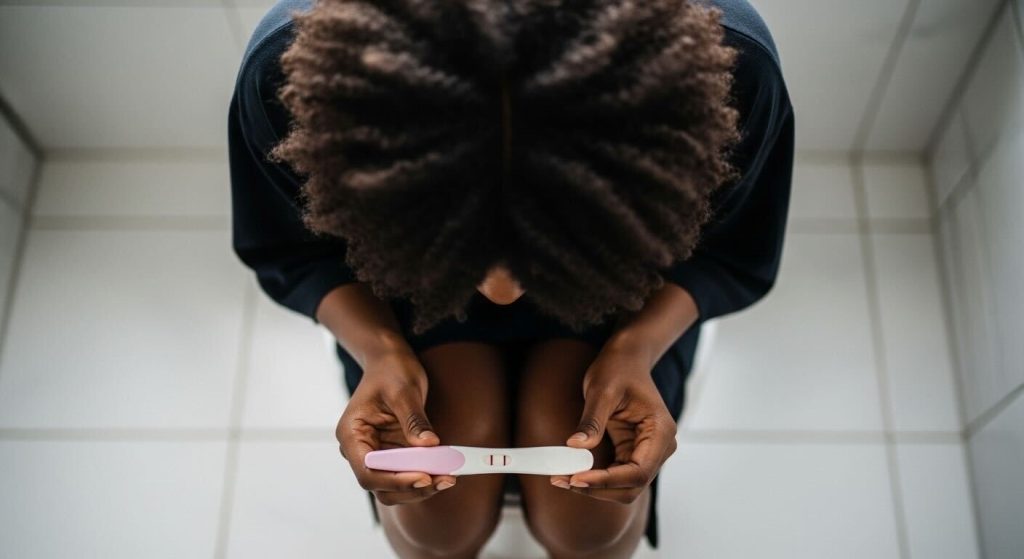
I was about six weeks along when I found out I was pregnant. My period was a few weeks late, but during sex, I would see small splotches of blood, my breasts were tender, and I was always tired. I did research and found out about implantation bleeding. I had my suspicions, but I put off taking the test for as long as I could, and when I could finally bring myself to pee on those test strips, seeing two lines still left me dumbfounded.
What was your first reaction?
I’ve been having sex since I was 17. I started by using condoms, but I later opted out in university when I had a stable, sneaky link. I realised I like sex better bareback and never looked back. I’ve had countless pregnancy scares since I started having sex, but somewhere in the back of my mind, I guess I didn’t think pregnancy was something that could happen to me. It also helped that I was on birth control pills and would also use the post–pill anytime I felt particularly paranoid. I forgot to take it just once, and I got pregnant. No matter how heavily you ‘suspect’ that you’re pregnant, nothing will ever prepare you for a positive pregnancy test.
Did you talk to anyone about it before deciding what to do?
No, I made the decision not to keep it almost immediately. It was just a matter of finding who knew where I could remove it. There were simply no other options. I was 19, in my third year of university, and still receiving support from my parents. My sneaky link was in his second year. We could barely afford to feed ourselves; what were we going to do with a baby?
I was very depressed, and I was barely eating or sleeping. I was living in a constant state of fear, knowing that a whole human being was growing inside me, and it felt like people could tell that I was pregnant just by looking at me.
Where did you go for the procedure, and how did you find out about it?
Abortion is illegal in this country, and people do crazy things to get rid of fetuses. Even legal drugs have countless counterfeits on the market; how could I be sure that black market Misoprostol pills would be safe enough to use?
I was already in a big mess, and I wasn’t willing to compromise on my health or safety any further, so I opted for a surgical abortion. It took my friend a week to find the clinic and connect me with the doctor. The whole time I spent in the clinic was under two hours. I was sedated and given painkillers while they suctioned the fetus out. I had cramps and heavy periods for a while after, but that was all. My body doesn’t feel any different from it did before the abortion.
How much did the procedure cost?
I paid 120k to have it done, minus transport costs, and at the time, this was all my savings.
This was a few years back; it’ll easily be twice that amount now. Safe abortions aren’t accessible to more than half of the population.
Did you go through the procedure alone?
No matter how supportive the people around you are, some struggles are your own, but my friends were beyond supportive; one of them travelled with me to the clinic in another city so I wouldn’t have to do it alone. She got me home and took care of me after.
How did you feel immediately after — relief, sadness, guilt, peace, confusion?
After a while, I started to feel guilty. I’m a very religious person, so I kept feeling like God was angry with me. I was also angry with myself for not being careful enough, and then I was angry with the person who got me pregnant. Yes, it was just a sneaky link, and I wasn’t expecting kisses or cuddles, but a little compassion was not too much to ask. I didn’t even ask him for the money to do the procedure; I paid out of my own pocket. He was nonchalant about it and absent for most of it.
Did you tell anyone later, or have you mostly kept it private?
At first, I only told two of my closest friends. I told the rest later when it came up in a conversation about my results. I discovered I was pregnant while writing exams.
It’s a little hard to care about anything else when it feels like your life is falling apart. I kept zoning out while writing my papers, and because of that, my results that semester were awful. I had failed five of my courses, and I opened up to them about why it happened.
Till today, fewer than seven people are aware of what happened (that includes me and the person who got me pregnant). There’s a lot of stigma attached to abortion, and sometimes that stigma gets to me. It’s not something I ever talk about.
Do you think it changed how you see yourself or your body?
No, not really. I still have sex without protection, but I don’t have sex as much, and I have become a little obsessive when it comes to contraceptives. Sometimes I’m scared that something went wrong during the process that has damaged my womb. It’s already been over three years, but I’ve been planning on going to the hospital for a check–up just to be sure. I heard a lot about abortions causing infertility growing up, and sometimes that still scares me, even though I know better now.
If another woman came to you facing the same choice, what would you tell her?
I’ll tell her that she made a mistake, and that’s okay. It doesn’t mean she’s evil for not wanting to keep the baby or that her life is ruined. I’d tell her not to let anybody guilt-trip her into making a decision that she’s not ready for, especially when she can’t afford it. That baby is only a possibility, but she’s a real person; it’s not worth sacrificing her education and future for. Besides, the world is not very kind to women who have children out of wedlock.
This story is an honest look at what many young women in Nigeria quietly navigate because of limited access to reproductive health care and reliable contraception. If you’re sexually active, please prioritise safe sex and always use protection.
If you ever find yourself unsure, afraid, or in need of guidance, speak to a trusted medical professional or visit a certified reproductive health clinic for accurate information and safe options.
You can also reach out to organisations that provide confidential support and sexual health resources:
- Marie Stopes Nigeria (MSI)
Offers contraception counselling, sexual health services, and post-abortion care. - NURHI / SFH Clinics
Provide youth-friendly reproductive health services in various states. - Komfot Health
Confidential post-abortion care and support.
Your health matters, your future matters, and whatever decision you make about your body should be informed, safe, and free from shame.
Next Read: Group Chat: Do You Have to Tell Your Partner About Past Abortions?