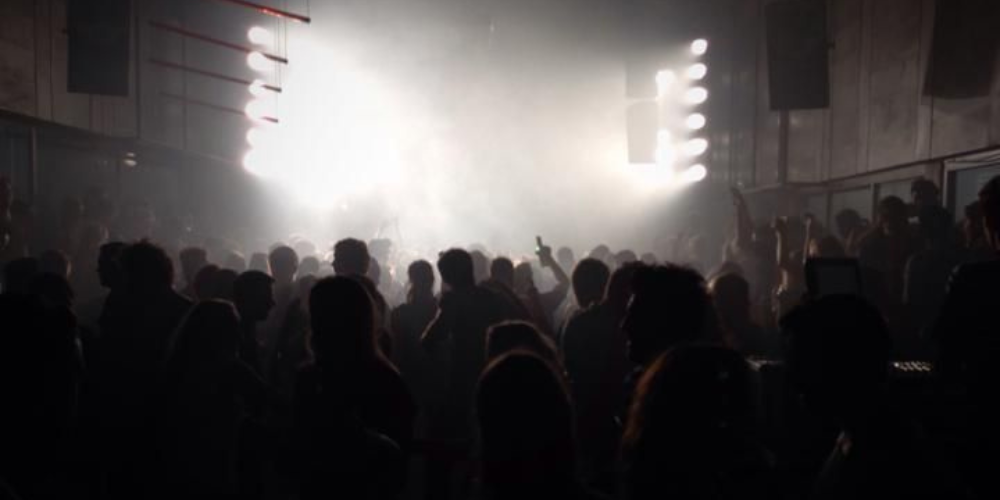
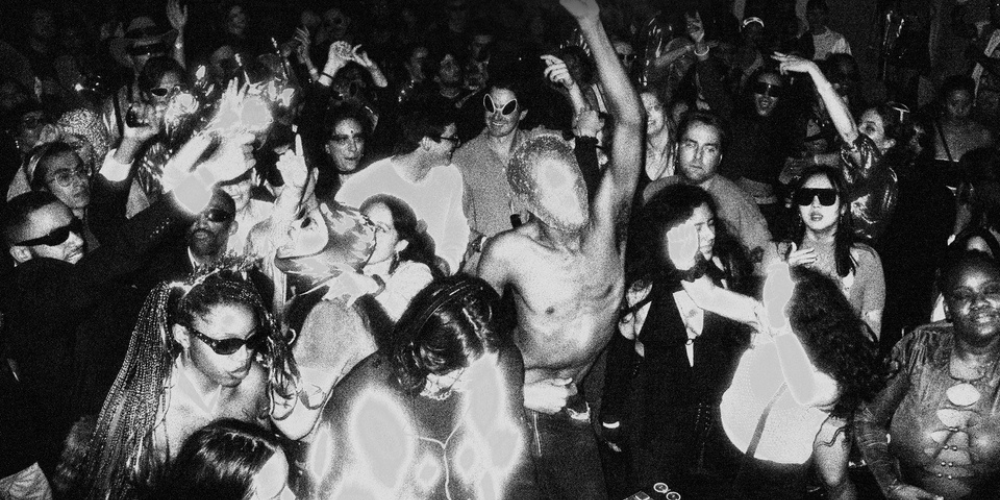
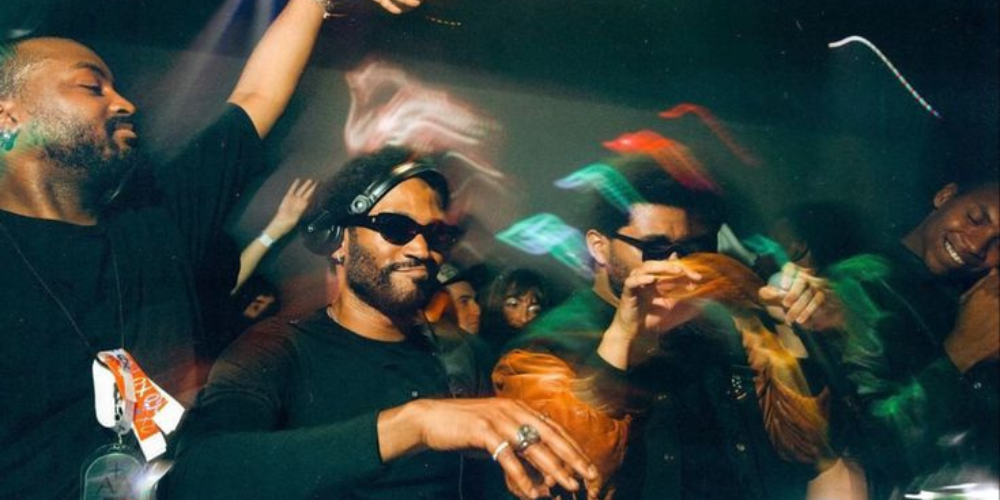
One of the many benefits of reclaiming your identity as an adult is getting to pursue your niche interests without permission, and as it happens, one of mine is raving. By definition, a rave is an underground dance party that exists outside of convention.
Before their popularity, raves in Nigeria meant DIY parties shared in DMs and organised in locations not easily found on Google Maps. Then, one could only hear bits and see grainy private stories of sweaty joy. Now, you can’t scroll through Instagram without seeing “Rave” splashed across a bright poster at least once a week: Rave Fridays, Rave Glow Party, and Rave at XYZ. “Rave” has joined the ranks of Lagos lifestyle words that have lost all meaning, alongside “bistro,” which is a topic for another day.
Recently, everyone has been “raving,” or so they say. But if everyone is raving now, what happened to the subculture that started those low-key DIY dance parties? To understand what’s changing, I spoke to a few ravers who were there before it all went mainstream.
Their First Raves
For Damilare, his first rave in 2022 felt like a homecoming.
“Before that, I mostly went to concerts and parties,” he tells me. “They were fine, but something was missing; nobody was really letting go. Then I went to this rave, and everything clicked. There were Yoruba drums mixed into house beats. It felt original, familiar. Like, ‘Yeah, this one is my thing.’ The freedom, the flow — no tension, no ‘too cool’ energy. Everybody was just… being.”
Great, another early raver, had a similar epiphany — though it came by accident.
“My first was Sweat It Out, December 2022. I’d just left an Afrobeats party that ended early. My friend said, ‘There’s this EDM thing happening,’ and being one of those who caught the EDM wave in the late 2000s — Avicii, Calvin Harris, all of that — I thought, ‘Why not?’ When I got there, I didn’t even understand the music. It was heavy techno. But the energy was safe, weirdly familiar. I didn’t get the sound yet, but I knew I’d come back.”
The music that drew them in, electronic dance music (EDM), is central to global rave culture, and Nigeria’s rave scene has its roots in Afro-house, a subgenre of house music, which is a subset of EDM. House music first appeared in Chicago in the 1980s, where it was created by the marginalised Black queer community at a club called The Warehouse.
In 1950s London, the term “rave” was used to describe the Beatniks’ wild bohemian parties. The Beatniks were anti-materialists who rejected conformity and expressed themselves through various forms of art while experimenting with spirituality, drugs, sexuality, and travel. In that regard, raves have always been spaces for the marginalised — Black, queer, underprivileged, and strange. They were intended for people who did not fit in anywhere else.
Suki, a queer raver, remembers her first night out in early 2022.
“I didn’t even know what a rave was. What drew me in was that I had heard it was a safe space for queer people. I didn’t love the music at first,” she laughs. “But the energy was something else — like a parallel Lagos. Free, expressive, no rules. Even though it wasn’t my sound, I stayed for the feeling. I fell in love with the space.”
A Safe Space (Until It Isn’t)
Raves are designed to be sanctuaries, a world where you can wear what you want, move how you feel, and exist without fear. The ethos is PLUR (Peace, Love, Unity, Respect), the global rave culture’s moral code. This sense of safety and inclusiveness, which also served as motivation for raves’ underground nature, contributed significantly to their widespread adoption by minorities and the marginalised.
“It was small, intimate. There was this communal energy. Now, I recall going to a design conference just before a rave and meeting some people twice. That’s when I realised it had gone mainstream. Nigerians are huge fans of trends. Once something is cool, everyone wants to get on it without thinking about what they’re doing.”
He’s not alone in feeling the loss. Eri, a writer and long-time raver, puts it sharply:
“People call me a purist, like I’m just nostalgic. But I’m not. Raves used to be about the experience, not the performance. Now everything feels male-centred — the attention, the curation, even the music caters to that gaze. It’s starting to feel like just another Lagos event. VIP sections at raves? Let’s be for real.”
Suki’s tone shifts when I ask what changed. “Back then, I could dance with my eyes closed. Now? I’m scanning the crowd. Who’s holding their phone? Who’s recording?”
She tells me about a rave where a guy zoomed in on her with his camera. Then there was the Group Therapy incident, in which someone set up an Instagram page to incite hate while posting photos of queer people at the event. Suki says she spent hours begging people to report it. Eventually, the page was taken down, but the damage was done.
“Now, because of everything happening — the homophobic raids, the cyberattacks, people outing each other online — I’m always scanning the crowd, watching for my friends,” Suki says. “If a man is standing too close, looking at someone a certain way, I step in. I’ll say, ‘She said she’s not interested; leave her alone.’”
Nigeria isn’t exactly known for inclusivity. And as rave spaces gained visibility, safety became harder to guarantee, making Nigerian raves vulnerable spaces.
Suki continues.
“But here’s where my problem begins: when organisers brand their events as safe spaces but then run paid Instagram ads, promoting the party to the general public. That defeats the entire purpose.
People have told me that they’ve met family members at these parties — family members! That’s crazy. And this is where it feels like we are falling into the same capitalist trap from which we claim to be trying to escape. I understand the business side, but from a community perspective, it’s wrong. So yeah, I agree to disagree with how people are doing it now.”
The Cost of Going Mainstream
This year, the rave community on X (fka Twitter) has erupted several times over ticket prices, and for good reason.
Average Nigerian Rave Ticket Prices
Year
₦5,000
2022
₦10,000
2023-2024
₦20,000 (with late ticket drops and VIP tiers)
2025
Suki breaks it down bluntly:
“Most Nigerians aren’t well-off. For queer folks, it’s even tougher. Some don’t have family support; some can’t get jobs because of how they present. If you add expensive tickets, you’ll lose the people who helped create the scene.”
Great offers an industry perspective.
“Look, every rave brand has a role. Some go mainstream; others stay underground. Both are needed. You can’t book foreign acts without money. It’s not selling out unless you lose your values.”
And there lies the tension: how do you grow without betraying your roots?
The Sound
Another way raves are suffering from going mainstream is the sound.
House music has always been niche here, but now, in a bid to make it more accessible, DJs have started to play it safe.
Suki complains when asked about the music and how they feel about it.
“Honestly? It’s getting repetitive. They’re playing the same sets over and over. Same sound, same tempo. Some DJs are just lazy, playing what works instead of experimenting.
We need new sound; let’s hear fusion, let’s hear risks. There’s also a lot of nepotism in the scene, with the same DJs getting booked and the same names everywhere. It’s cliquey. It’s tiring.
That’s why I go to smaller raves now — like Flat8 — more intimate, more authentic. But honestly, I don’t even want to say that too loud. Because once people hear about it, they’ll come and ruin that too (laughs).”
She’s not wrong. Nigerian house music — Afrohouse especially — has mostly borrowed from South Africa, where post-apartheid artists fused Chicago house with Kwaito to create something that felt both global and local. That influence still dominates the Nigerian rave scene.
But Great still finds hope in artists trying to localise it.
“What I do agree with, though, is that we need to uplift homegrown dance sounds—Nigerian house, Afro-electronic, and cruise (trench) music. That’s why it was powerful when DJ Khalifa played at Monochroma. It was like saying, We can have our own house music too.”
Perhaps the future of Nigerian raving lies in reinvention rather than imitation.
Rave Culture
As raving becomes more popular in Nigeria, it faces a crossroads: between liberation and co-optation. What began as an underground space for self-expression and community is now in danger of being consumed by hype and branding. In a society that turns everything raw into performance, true ravers must continue to fight for their culture.
When I ask Damilare why he still goes, he pauses.
“I miss how raves used to feel — that small, weird, real energy. But I still go because when the music hits, it’s still magic. The organisers are trying. They just need to remember what made it special.”
Eri nods in defiance:
“Even if I’m the target audience for exploitation, I’ll keep the culture alive. They can commodify it, but I’ll still protect it. I love raves too much; I have to do my part in keeping the culture alive.”
And Great, ever the realist, sums it up:
“Raves have secured their place in Lagos nightlife for good. Unless the government suddenly bans them, they’re not going anywhere.
Raving has rescued a lot of people from toxic club culture. Personally, I hate the club scene, the hype men, the misogyny, the status obsession, and the overpriced drinks. Clubs reinforce everything ugly about our society.
Raves flipped that. You dance. You’re free. You’re not performing wealth or gender roles. You’re just being.”