There are nepo-babies, and there is Folashade Ojo-Tinubu, self-acclaimed Iyaloja-General of Nigeria, first daughter of Nigeria, and the final boss of nepo-babies.
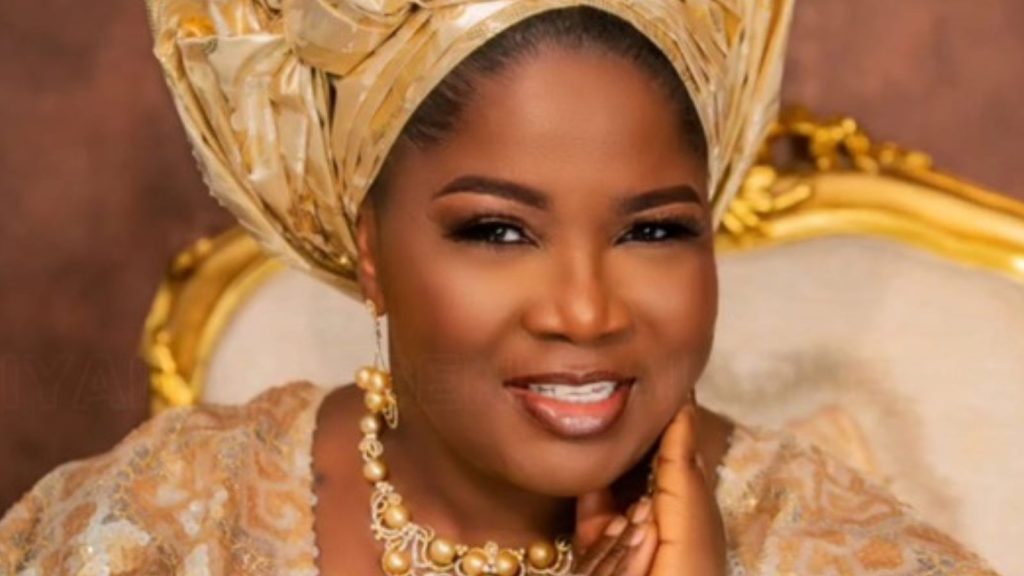
In July 2024, a viral video showed market women in Edo State protesting against Ojo-Tinubu, accusing her of trying to impose a market leader on them. By September 2025, the acclaimed Iyaloja-General had successfully installed Pastor Josephine Ibhaguezejele as the Iyaloja of Edo State, a “Mother of the Market” title that is unique to only Yoruba people and acknowledged in the South-western part of Nigeria. With this controversial move, she sealed her place on the front pages of newspapers and social media trend tables.
What makes this move so controversial?
For starters, the title “Iyaloja of Edo State” doesn’t exist in Benin’s cultural dictionary. It is an unfamiliar role within Benin’s tradition that was assigned in a way that makes one question the intention and authority of Ojo-Tinubu.
Edo market women also believe that there are political undertones that contributed to the enforcement of this title.
The Oba of Benin, Oba Ewuare II, has already clarified that there’s no such thing as a “head of market women” in Benin, as each market has its own Iye’ki, who performs spiritual and cultural duties on behalf of the palace.
Blacky Ogiamien, the former head of market women in Edo, also had her fair share of controversies and corruption allegations. Local reports indicate that she was openly loyal to the state’s former Governor, Godwin Obaseki. Traders in the state also accused her of mixing politics with tradition. So when Ojo-Tinubu later installed Pastor Josephine Ibhaguezejele as the “Iyaloja of Edo State,” it looked less like a leadership appointment and more like a political attempt to recreate an All Progressives People (APC) version of what traders say Ogiamien was.
The Edo State Market Women Association has officially released a statement signed by several leaders, describing Ojo-Tinubu’s move as an “injustice” and a “politically influenced imposition” by the Lagos Iyaloja.
Pastor Ibhaguezejele, on the other hand, dismissed these claims and insisted that 151 of the 152 market leaders attended her inauguration, a clear and undeniable display of support.
Her father’s daughter
Friends and foes describe Nigeria’s President, Bola Ahmed Tinubu, as a kingmaker — the kind that men pander to when political offices are concerned. Ojo-Tinubu seems to have borrowed a few tips from her father’s book of authority. The First daughter reportedly bypassed existing traditional procedures by organising the installation ceremony even before getting the Oba of Benin’s consent—a move many saw as a breach of respect. Even though Governor Monday Okpebholo’s representative praised the event as a step toward empowering women, the cultural tension was hard to ignore.
When Ojo-Tinubu eventually met with the Oba, he said, “Iyaloja is alien to us in Benin. Every market has its Iye’ki, who performs cultural roles for the palace. The concept of a ‘general Iye’ki’ is foreign to our custom.” We’re not sure that there is a clearer way for a royal figure to say, “I do not consent to this.”
Cultural groups like the Aiguobasomwin Movement Worldwide and prominent voices like former Senator Ehigie Uzamere (Edo South Senatorial District) also supported the monarch’s stance, calling the installation “a distortion of Benin heritage.”
What is the Iyaloja-General title, and how did Ojo-Tinubu earn it?
You can search the Yoruba culture encyclopedia from now till the apocalypse hits, and you’ll never find a role called Iyaloja-General. You’ll find Iyalojas, but never an Iyaloja-General. The Tinubus, never ones to pass on a good title, have a way of pioneering interesting changes.
On one random afternoon in 2023, Ojo-Tinubu declared herself the Iyaloja-General of Nigeria by updating her bio on Twitter (now known as X). By loose definition, this would make her the president of all market men and women across the country.
Shortly after her father’s inauguration, she edited her profile to read: “This is the Official Handle of The Iyaloja-General of Nigeria, The First Daughter of the FRN.” There was no official election, no traditional council meeting. Just vibes and a Twitter bio update.
Her original title is the Iyaloja of Lagos, which she reportedly inherited in 2013 from her late grandmother, Alhaja Abibat Mogaji, who was the President-General of Lagos Market Men and Women. Mogaji was said to have appointed her granddaughter as successor before her death, a move believed to be inspired by nepotism.
When the Iyaloja title suddenly evolved into a national one, Nigerians started asking questions. Who approved it? Does the constitution recognise it? And more importantly, when did Nigeria become a monarchy of market titles? Those questions remain unaddressed till today, but the most important detail you should know is that this position is neither constitutional nor formally existent. It only exists in Yoruba culture, and for that reason, shouldn’t be imposed on other Nigerian cultures.
It’s the Tinubus that are benefiting….
Edo market women’s allegations cannot easily be considered baseless, especially given the hold the Iyaloja typically hold over market women, traders and communities during elections.
Women, who have remained gravely underserved and underrepresented under President Tinubu’s rule, hold significant voting power in Nigeria. During the 2023 elections, Nigerian women made up 47.5% of the total number of voters. What Ojo-Tinubu is attempting to do in Edo State appears to be just one of the many steps needed to build a national network of market women, a historically beneficial group of allies in south-west mobilisation. Since she gave herself the Iyaloja-General title, she has held rallies in support of the ruling party and urged Nigerians to do the same.
Given her influence and the history of market leadership in politics, if she manages to bypass cultural traditions and install Iyalojas across different Nigerian states, it could give the APC a significant political edge.
Why should Nigerians kick against this Iyaloja obsession?
The Iyaloja title goes beyond market leadership; it’s about power. When one person, who just conveniently happens to be the president’s daughter, begins assigning traditional titles that don’t belong to other ethnic groups, it starts looking like political colonisation.
The Iyaloja title has deep Yoruba roots. It’s a respected position that comes with real community influence, especially during elections. But exporting that title to other parts of the country under the guise of “empowering market women” reeks of soft political expansion backed by the government of the day. And when the Oba of Benin, the custodian of Edo culture, says “Iyaloja is alien to us,” that should be the final word.
Letting this slide sets a dangerous precedent. If unchecked, this “Iyaloja-General” experiment could slowly erase relevant local traditions and replace them with titles that only serve political convenience. Today it’s Edo; tomorrow, it could be Enugu or Kano.
What can you do to stop this political expansion?
Start by paying attention. These manipulations can be easy to miss, so start by questioning anything that seems off.
Speak up the next time a member of the Tinubu family attempts to twist tradition for political gains.
Support local traditional institutions that are standing their ground, and call out the hypocrisy using your social media platforms.
You should also be encouraged to do your part by registering and collecting your permanent voter’s card. If the right man for the job were elected in 2027, it would be because you refused to be silenced.