Arike (39) has mastered new ways of yelling, “Customer, I’ve missed your face”, since Nigeria’s inflation hit a record high. If she yells hard enough, she sells enough cow skin (pomo) for her children to go to bed with round stomachs and elevated smiles.
“Things are tough. If you come here in the evening, you’ll see people wearing suits and ties buying ₦300 worth of pomo. People just want to eat,” she said.
Arike says she has never been one to care about politics, but now finds herself buying newspapers, waiting for the headlines to renew her hope.
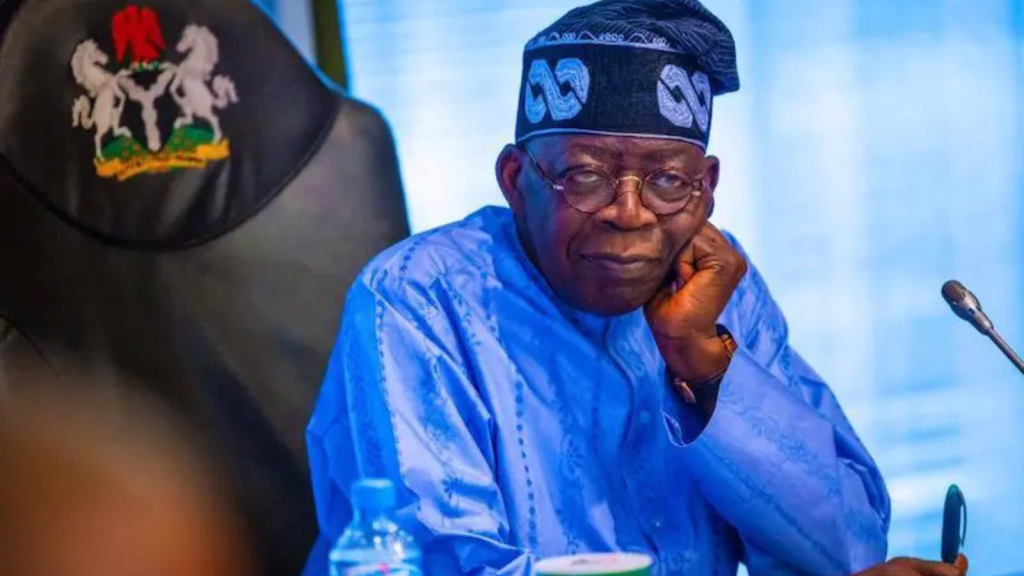
Like Arike, we’ve all been waiting for the faintest glint of the “Renewed Hope” promised by President Bola Ahmed Tinubu in 2023. Yet, reality continues to turn the most vulnerable Nigerians into pessimists.
How did we get here?
In May 2023, the president kicked off his anticipated economic reforms by removing fuel subsidies, causing fuel prices to jump from ₦198/200 per litre to ₦617/litre. He also floated the naira in June 2023, causing the currency’s value to drop from ₦400/$1 to over ₦1000/$1 by December 2023.
These reforms sparked public outrage and marked the beginning of suffering for many Nigerians. However, they have been commended and deemed necessary by financial experts and global bodies like the International Monetary Fund (IMF). However, the same IMF has raised multiple concerns about how these reforms should never have been implemented without a plan to ease the financial burden on Nigeria’s most vulnerable citizens.
The Director-General of the World Trade Organisation (WTO), Dr Ngozi Okonjo-Iweala, also reechoed the same message during a meeting with the president in August 2025. Surprisingly, the Tinubu-led administration has been somewhat dismissive of these pleas.
What’s happening now?
President Tinubu recognised the need to shield vulnerable citizens from the harsh effects of his reforms as recently as 2024. He even promised the IMF Managing Director, Kristalina Georgieva, that his administration would prioritise the creation of safety nets, but that has not been the case.
One of the closest things citizens have received to financial relief from the present administration is a conditional cash transfer scheme that kicked off in October 2023. The scheme was designed to ease the effects of the president’s reforms on 15 million poor and vulnerable households. However, a recently released report by PwC, a global professional services firm, shows that the government has reached only 36% of households since then.
As disturbingly low as that figure is, the scheme’s weak execution is the least disappointing part. The real disappointment is the “cash transfer” in question. In December 2024, the Minister of Humanitarian Affairs, Disaster Management, and Social Development, Nentawe Yilwatda, explained that poor households under this scheme only received ₦25,000 per month — and that’s just three times a year. To make it worse, he estimated that about five people are expected to share that ₦25,000. Tinubu’s own words feel like the only fitting reaction to this amount: “Is it for eba? Is it for garri?”
In 2025, the Tinubu-led administration had increased the estimation to ₦75,000 per person in 18.1 million households annually. But we still don’t see any reason to cheer, especially since the government says this cash transfer program is meant to “provide relief” and “address extreme poverty.” We wonder how much relief ₦75,000 can buy in Tinubu’s economy.
In la-la land, where the geniuses who decided on this figure must live, a 50kg bag of rice wouldn’t cost ₦70,000 to ₦ 90,000. Petrol wouldn’t be over ₦1,000 per litre either. According to The SBM Jollof Index, Q2 2025, cooking one pot in Nigeria now costs an average of ₦27,527.85. This is a 153% jump compared to the March 2023 and June 2025 costs. The cash transfer can’t even fund a family’s jollof rice cravings more than five times a year.
And that’s just the barest minimum…
What the IMF and Iweala are asking the President to do is the barest minimum, as we’ve seen in Egypt since 2016. For nearly a decade, the North African country has implemented similar IMF-recommended reforms that pushed the number of poor Egyptians to 32 million, a 4.7% increase compared to the country’s poverty rate a year before the reforms were introduced.
Instead of leaving the fate of its citizens to prayers (literally), occasional giveaways, and fair wishes like Nigeria, the Egyptian government set up safety nets as recommended by the IMF. Some of the safety nets include the Takaful and Karama cash transfer programmes. These are mainly targeted at poor women and children, people with disabilities, orphans, and widows living in poverty.
The Forsa (Opportunity) Programme was also created as a social protection plus initiative to reduce long-term dependence on cash transfers. Instead of just giving citizens cash, Forsa was designed to help people shift from safety-net support to self-reliant livelihoods. Through asset transfers, financial inclusion, and skills training, the programme equipped beneficiaries with the tools to build resilience and work towards financial independence.
Egypt has received some criticism for the limitations of these safety nets, but at least it has some. That’s more than we can say for Nigeria at the moment.
Delusion or wickedness?
There are many theories that could explain why the president refuses to put real effort into building proper safety nets, but we’ll never truly know what’s going on in his head. One thing we do know for sure: it’s not because he lacks information.
On Monday, August 18, the Revenue Mobilisation Allocation and Fiscal Commission (RMAFC) announced it may review the salaries of Nigeria’s political office holders, including the president. According to them, the current pay structure is outdated and unrealistic and no longer reflects the job demands or the country’s present economic situation.
Every Nigerian can confirm that the economy is currently in one of the worst states it has ever been in, and the men at Aso Rock know it too, if they’re already considering a salary review for themseves.That begs the question: where is that energy for poor Nigerians whose economic situations have worsened since the president’s reforms took effects?
Instead of aligning with financial experts to create a safety net that reflects the nation’s current economic reality, President Tinubu has continued to flaunt results that almost seem unreal.
On Tuesday, September 2, for instance, the president declared that his “bold economic reforms” have stopped Nigeria’s economic crisis and earned us newfound global respect. Nigerians like Arike would disagree because the economic crisis still feels very much like it’s in the room with us.
You play stupid games, you win stupid prizes
The National Social Safety-Net Coordinating Office (NASSCO) estimates that over 68 million Nigerians are currently classified as poor and vulnerable.
The IMF has also classified Nigeria as the 12th poorest country in the world by Gross Domestic Product (GDP) in June 2025. The National Bureau of Statistics (NBS) also released a report showing that 65% of Nigerian households can no longer afford healthy or preferred meals.
These are, unfortunately, the actual results that President Tinubu’s reforms have had on the average Nigerian. And numbers, as the world knows them, never lie.