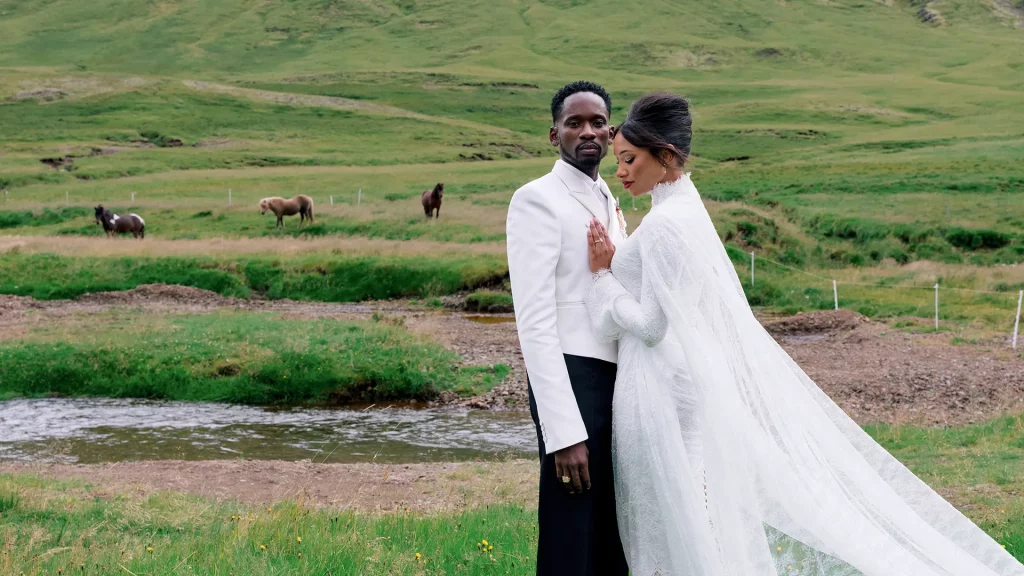
Temi Otedola’s trilogy of weddings, beginning with a civil union in Monaco on May 9, followed by a Yoruba ceremony in Dubai and a white wedding in Iceland, ended with something simple: on September 6, she changed her Instagram name from Temiloluwa Otedola to Temiloluwa Ajibade.
I saw no scandal in that. To me, it was nothing more than a woman making a choice; one the rest of us could simply respect. But somehow, Nigerians are treating this as the supposed death of feminism. I understand why some people feel strongly about what a surname change symbolises, but I don’t believe that argument holds.
Here’s why.
Feminism should be rooted in love for all women, even the ones under the throes of patriarchy, because it insists on a world where women are not punished for living as themselves. It demands compassion because our realities are layered and different, and no one woman’s decision should be weaponised against the ideology. It leans on curiosity, because questioning institutions and traditions is how we’ve pushed for change in the first place. It thrives on respect, because equality of the sexes means recognising women as full human beings capable of making informed choices. It asks for community, because movements are sustained when we hold space for one another, even when we disagree. And it takes courage to imagine feminist futures that allow all these truths to coexist.
“The problem with gender is that it prescribes how we should be, rather than recognising how we are.”
Chimamanda Ngozi Adichie
So no, you don’t have to like Temi’s decision, adopt it, or celebrate it. But in community, you respect it.
Feminism Is Collective, But Not Uniform
X users were quick to weigh in. One argued, “Temi never identifying as a feminist means nothing… misogynists are using this as validation, which it rightly is, hence our disappointment.”
Then the popular refrain: “feminism is not about the one but the all, so your choices need to be constantly interrogated for what they mean in the long run.”
I hear the point. Feminism is collective. But collectivity doesn’t erase individuality. If it did, we wouldn’t have needed intersectionality in the first place. We wouldn’t have needed African feminism, or womanism, or queer feminism to carve out space where mainstream feminism refused to see us. You cannot erase the specific makeup of each woman and demand that we all behave the same. That isn’t feminism; that’s totalitarianism dressed up in feminist language.
“Without community, there is no liberation… but community must not mean a shedding of our differences.”
Audre Lorde
At its core, feminism is about freedom. Strip Temi, or any woman, of the freedom to choose her own name, and what exactly are you fighting for?
The Classist Panic Over Otedola
A viral video put this into words: a woman griped, “How can you change a surname as powerful as Otedola—must you just throw away that legacy because of marriage? These men marry you for your name and power!” She went on to mock Mr Eazi’s surname, saying, “Who even knows Ajibade?” and name-dropped Korra Obidi as a celebrity who kept her own name after marrying.
Then came the man who clapped back with insults, scoffing, “The biggest mistake Mr Eazi made was giving his name to Temi—he doesn’t even know who he married! He should’ve become Otedola instead.” He framed it like Temi’s name was a favour she did the Ajibade lineage—then went on to clown their wedding for being too subtle to have cost over 15 million dollars.
What this tells us is simple: the uproar is less about women’s rights than it is about guarding wealth and legacy. That’s where classism comes in.
And because class and feminism always intersect, it’s worth saying: a woman’s autonomy shouldn’t be tethered to the “value” of her surname. If feminism reduces itself to protecting power names, then we’re still centring patriarchy and capital over women’s choices.
Marriage isn’t a clout contest. Equality isn’t about whose brand is stronger; it’s whether both partners are free to choose what works for them.
You’ll Also Like: Who Gets to Decide If Toke Makinwa’s Pregnancy Is a Blessing?
When Men Weaponise Women’s Choices
If the classist panic was one side of the outrage, the misogynistic trolling was the other. Men filled the timeline with insults, calling women “foolish,” “pigs,” “fallen breasts,” and an “unreal gender.” They cheered Temi’s decision not because they respected her choice, but because they saw it as ammunition:
“Feminists in the mud.”
“If Otedola can drop her name, who are you?”
“Lapo feminists, rest.”
Notice the pattern? These men, or banger boys, have chosen to weaponise her personal choice as “proof” that feminism itself is a scam. They didn’t want to protect her autonomy; they tried to drag every woman who has ever challenged patriarchy.
That’s the trick of patriarchy, turning women’s choices into a spectacle, then using those choices to police other women. Today it’s Temi’s surname. Tomorrow, it’ll be what someone wears, how she parents, or whether she marries at all. The substance doesn’t matter; the agenda is the same: shame, silence, divide.
This is exactly why feminist community matters. Patriarchy will twist anything, even a woman exercising her freedom, into a way to remind us that our “real life” should always bow to tradition.
“Feminism involves so much more than gender equality. It is about challenging the ways we think and the ways we live.”
Angela Davis
The Father Factor
Even her father’s wedding speech added fuel. In his “blessing,” Femi Otedola told his daughter: “You found a great and blessed guy from a decent family. My advice is to succumb to him, he is your husband and boss. When you have issues, keep it within your walls.”
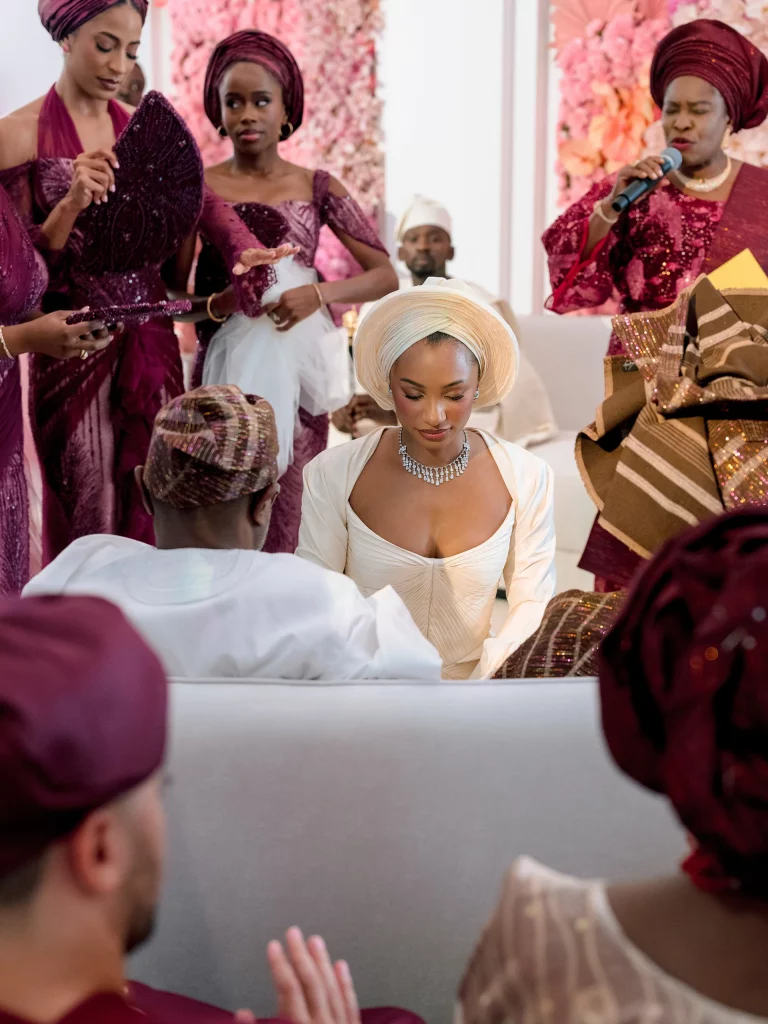
On the surface, it might read as a joke. But words matter, and “succumb” is the language of patriarchy. It frames marriage as hierarchy, not partnership, and that is exactly the kind of script men online are feeding off.
The trolls wasted no time: “If a billionaire can tell his daughter to succumb, what do you broke women think you’re resisting?” They used a father’s patriarchal framing to double down on their own vitriol, twisting his words into validation for submission, domestic labour, and silence.
Here’s the truth: the problem isn’t Temi’s personal choice but the institution that tells us submission is the default. Patriarchy doesn’t just live in men’s tweets; it lives in the casual jokes, the speeches, the cultural scripts we recycle. And that’s why feminist critique matters. Without it, language like “succumb” will continue to be weaponised, not just against Temi, but against every woman who dares to live differently.
So What’s This Really About?
Strip away the noise, the trolling, the class panic, and the collective arguments, and what’s left is a deeper question: what do we think feminism actually is?
For me, feminism is not conformity. It’s plurality. It’s an ideology and movement that centres women’s lives, struggles, and choices, while relentlessly pushing back at patriarchal institutions. It creates space for women to live fully, not identically.
Insisting that every woman perform feminism in the same way — keep your surname, never change it, or else you’ve failed — is its own form of control. And control is the opposite of liberation.
So again, Temi Ajibade made a choice. You don’t have to like it, you don’t have to follow it, but you do have to respect that it was hers to make. Because if feminism means anything, it means Temi Ajibade gets to be Temi Ajibade without an entire country policing her. Respect cannot be optional; it has to be the baseline.
Next Read: 15 Pieces Every Fashion-Girl Needs to Make a Statement at Work