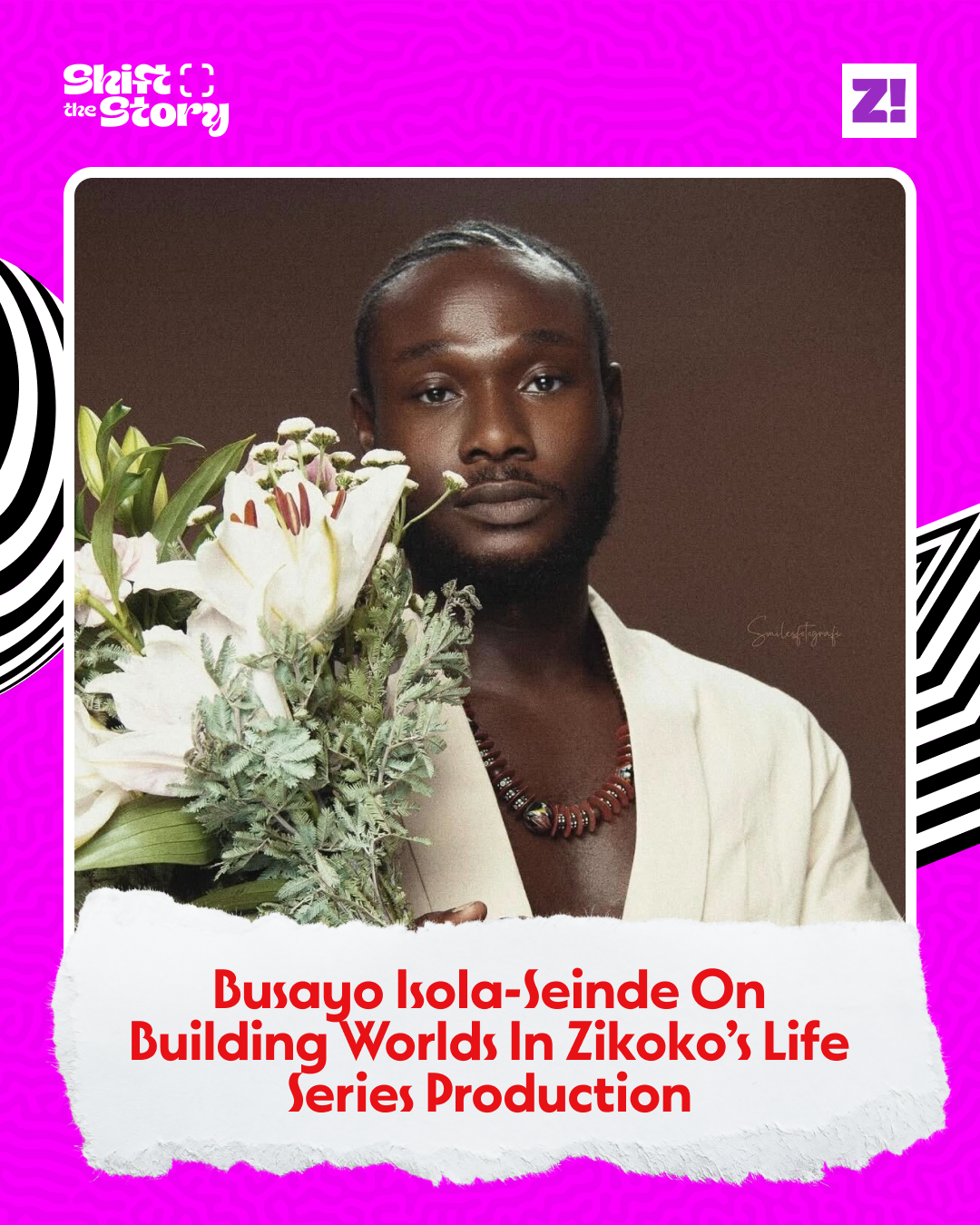
If you’ve ever thought about how the scene is set in films and music videos, Busayo Isola-Seinde is the one you should be speaking to. For nearly a decade, Busayo has combined Production Design, Art Direction, and Food Styling into a distinctive craft that has carved out his place in the creative industry. His work is about more than props and sets. It’s about intentionally transforming abstract ideas from writers and directors into living, breathing worlds. He’s built spaces where some of your favourite musicians have expressed themselves, and he may even be why you once found yourself craving a bucket of KFC chicken.
In our Life Series Production, Busayo creates a world that reflects who our characters are. He creates space for them to exist as they were written. In this way, Busayo bridges the gap between script and screen, making it real enough for us to see the characters as relatable.
In this article, Busayo shares how his career began, what his work truly means, and how his creative vision comes alive in our Life Series Production.
How did your career in the creative and entertainment industry start?
My first encounter with film was in 2013. I was hired to be a set runner on MTV Shuga through my cousin. She was the production designer at the time. I was in my final year, so she called me and asked me to come to Lagos to make some money, and I said Why not. While I was on set, one of the producers saw me and thought I should be on set as an on-set designer. I started doing that, and then my work got noticed, the break ended, and I went back to school. It’s been history since then.
After I graduated in 2015, I decided to continue in production design. My cousin and I worked together a lot, but then we had an issue, so we broke off the partnership, if you can call it that. I went back to Akure to re-strategise for like two years. Sometime in late 2018, I moved back to Lagos. I worked as a marketing executive at a fashion design house, then moved to an interior design firm.
One day, one of the clients my cousin and I worked with reached out to ask if I was still an art director. I said yes, and it’s been history ever since.
What’s the difference between production design, art direction and food styling?
The production designers come up with the layers and colour palettes for the characters. If there’s a living room in a scene, the art director shows what it should look like and ensures it goes with the character’s personality. They’re like the architect of the world the characters live in.
Art direction is where execution comes in. The production designer hands the mood board to the art director, who brings it to life. A production designer comes up with a world where these actors fit in. I’d consider their story, their made-up history, their personalities and whatever else makes up the story in the script. The art direction aspect is designing the mood board.
With food styling, think of it as special effects and make-up for food. That role involves making the food appealing for photography, commercials and billboard use.
The three of them require serious attention to detail, and I think that’s what makes it enjoyable for me. I take it as a moment to bask in my element whenever I work. I’m introverted, so it works out well for me.
Also Read: Andrew Bunting on Playing the Soft, Affirmative Husband in My Body, God’s Temple
Seems like you’ve given yourself the best of three worlds.
Exactly. I think production design and art direction run concurrently. People don’t usually understand the difference between them. Sometimes they even pair food styling with art direction. Because to do a food project, you’d usually need an art director and a food stylist. So, with my work, I’ve brought all three together. If you get me, you get it all. I’ve tried to carve a niche for myself in that aspect.
How did this play into our Life Series Production?
When I read the script, my first take was that they were tied to acceptance and sex. Safe sex. And honestly, I think these subjects aren’t properly explored and documented in films. So, I was very excited to be involved in the project. When Blessing reached out and said she wanted my input, the first thing I thought of was the colour palette for the production design aspect. With the life series production, I worked with a subtle colour palette. The films were inspired by real stories. Because of that, I wanted to create an environment where you could easily picture yourself.
Blessing also mentioned that I would be working with the costume designer. So, I also had to make sure we were in sync. We made sure that the outfits the characters wore complemented the background and scenery we pictured them in.
What was the creative process like? Coming up with the characters’ worlds and bringing them to life.
I like to take time. I did a first review of the script, then went over it a second time to understand it. After that, I tried to build personas around the characters. Sometimes, writers won’t give a background to the characters. Things that they like. Are they artsy? Sporty? What are their family values? Those are the kind of questions I ask myself. Then, based on that, I streamline the colour palette I’ll work with. Execution becomes easy for me once I build a persona.
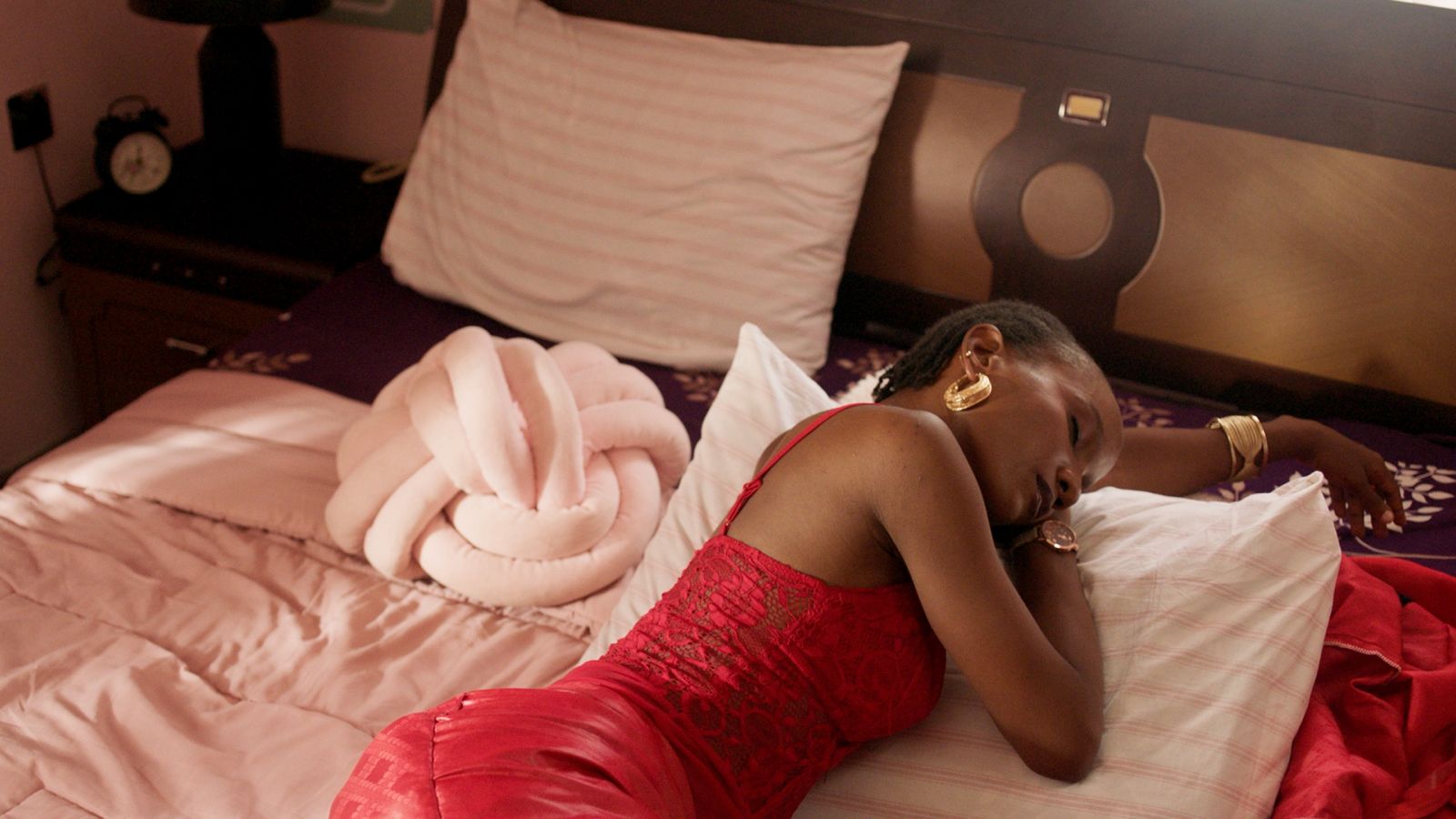
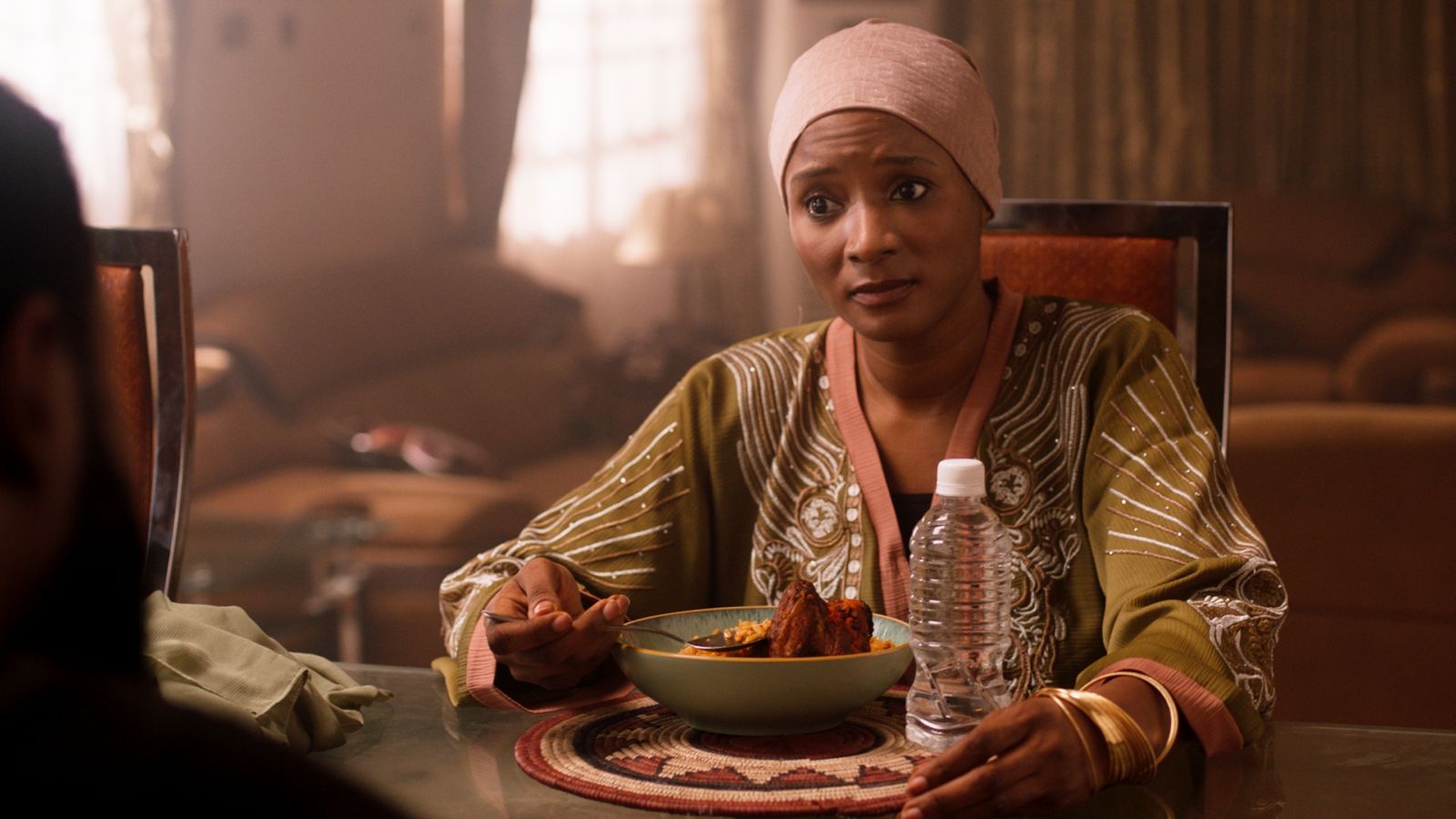
In What’s Left of Us, there was a lot of brown. That’s because at the top of my head, Muslims are conservative and down to earth. With characters I thought were exciting, like Fatima, I’d go for colours like red and pink. With a supporting character like her, I paid a lot of attention to the details in her room. I thought of her as daring and wanted to display that.
In Aliu and Mariam’s home, the decoration was sparse, and there was a lot of vacant space. That was because the couple didn’t get along, and there was no unison or any common theme that brought them together. So the world I created for them was a bit empty.
My Body God’s Temple was a bit different. The vibe was supposed to be calm, and for me, that signalled nature. There was a lot of green and olive in the design, and lots of natural plants and natural light. The couple’s house was also fuller, and that was because of how close and intimate they were with each other.

How would you say the central themes of the films influenced your work in them?
I think it all still comes down to colour for me. I use colour to interpret pain, boredom, desire, rage and even lust. When I pick the main colour for the setting, every other thing that comes in becomes tertiary or complementary to that. Some colours appear maybe three times overall in the film, but they are very noticeable. They are colours that happen or they probably exist when a particular bit of emotion comes into play.
Again, Fatima wearing red was very intentional. Even the colour of the vibrator in My Body God’s Temple was also deliberate. With that one, I thought about the excitement of trying something new. For me, as a production designer, an art director and as a food stylist, I think colour is one very important thing.
That’s interesting, I didn’t notice that till you mentioned it.
Haha, yeah. That’s the point of my role in film: you create something people don’t really think about. But when you explain it, it begins to make sense to them. Then they’re like, ‘Oh my God, yes! I think that’s it.’ That’s what makes what I do special to me. It’s not forced or in your face. It’s a tiny bit of intricate detailing.
Thanks for that. Would you say you had any difficulty during execution?
Difficulties with execution usually come down to vendors or delays with client approval. With the Life Series Production, we had to travel to Ibadan, which meant sourcing local vendors. The sourcing part wasn’t even so difficult. Communication was the biggest issue. I didn’t seem to understand their work ethic. I would say I need something by 11:00 a.m., but they wouldn’t be there by then. In Lagos, with my vendors, 11:00 a.m. is 11:00 a.m. I also had to ship some things and move around with some vendors. But yeah, that was the only difficulty I experienced.
Can you talk more about how you combine your expertise in the Life Production Series?
Absolutely. To be honest, I think I was hired because I’m able to do all three. I’ve sort of explained my role as the production designer and art director, which was coming up with the colour palette and costume design. That part was fun. With food styling, we had to fill the serving cooler with nylons and props to make it look full. So, we call that layering in food styling. I could work with two packs of food instead of 10 with that.
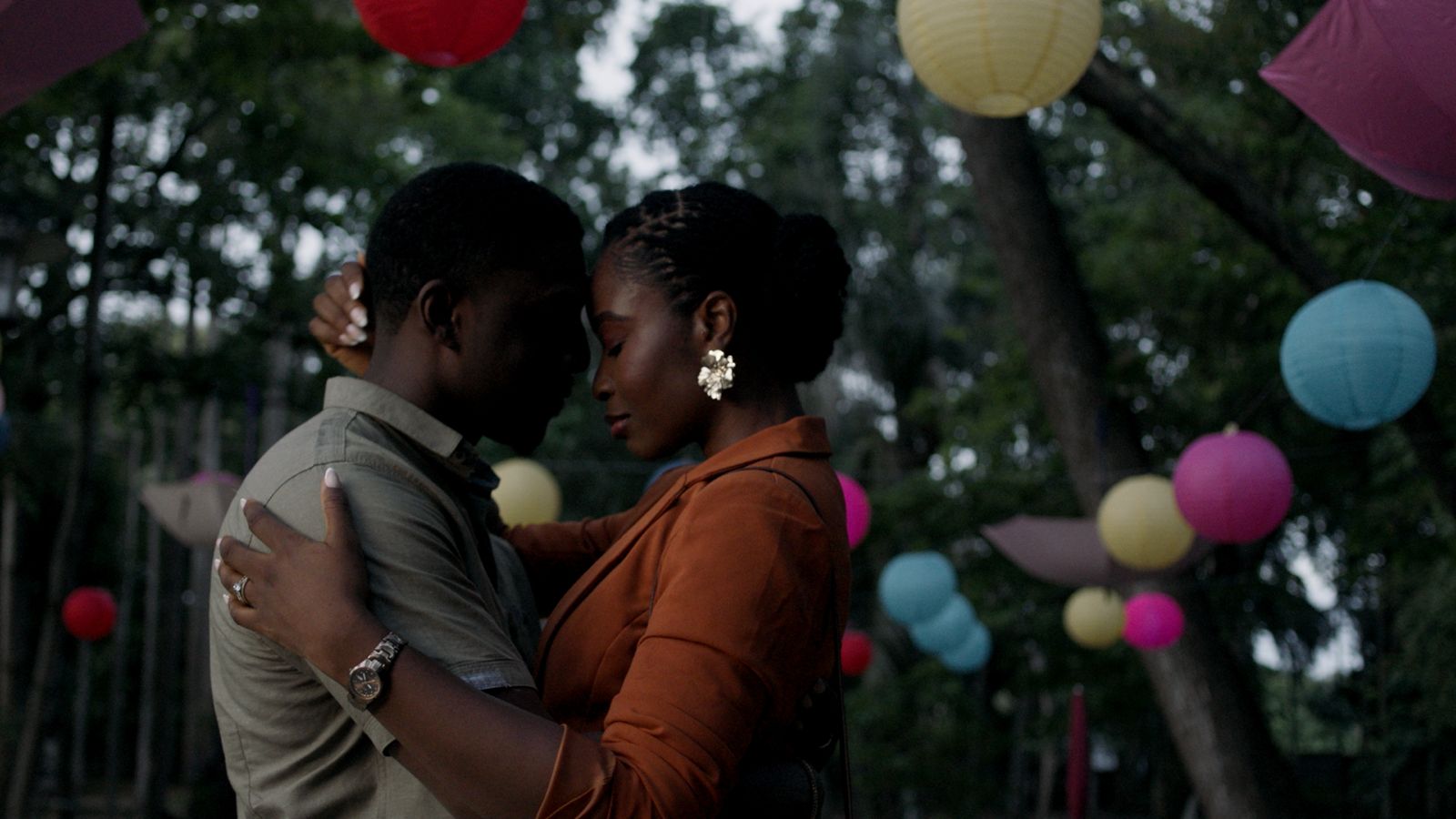
There was also the design process, which was also intricately detailed and intimate. I remember we were setting up the Chinese lanterns for one of the final scenes in My Body God’s Temple. I remember Blessing and Uzoamaka being so confused about how long it took because they thought we were just stringing it together. But we had to do a lot of calculations, and that lasted for about an hour. Then we had to do the colour scheming, which we were also very intentional about.
Now that you mention it, did you experience any creative misalignment with the writers and directors?
I wouldn’t say that. With my line of work, the issue is only really with budgeting. But we would usually come together and align on a vision before starting, so there’s usually no problem. But if the budget is high, we’d sit together again and cut costs or find alternatives which will usually work out better. That’s usually my responsibility. But sometimes it affects my delivery because my ideas won’t translate properly without certain things. So, I would usually like to make a list of things I think we can make work and things I think we cannot reduce the standard or qualities.
With the Life Series Production, there were times when we had to work with alternatives. For example, we couldn’t get the lamps we wanted to use at the restaurant where Aliu was with Fatima. Our alternatives were raffia mats that were hung on the wall. That looked really good and complemented the other pieces in the room.

Was there any visual or scene you put together in the Life Series Production that you’re especially proud of?
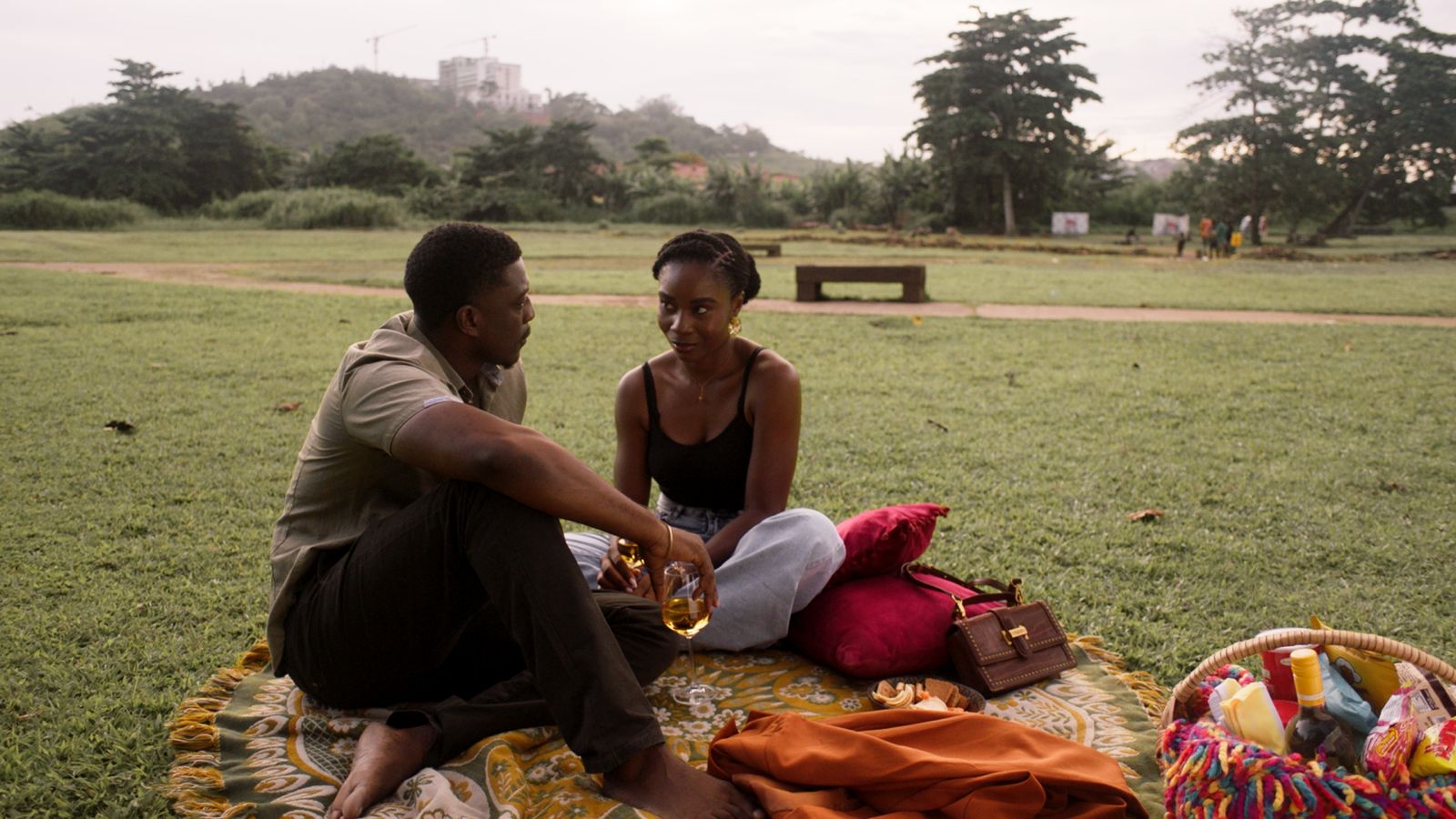
I really loved the Chinese lanterns at the end of My Body God’s Temple. Even the scene before that, where they were in the garden space having a picnic. The blanket they used was round, and I wanted to maintain that continuity with the Chinese lanterns because they were around that, too.
In What’s Left of Us, it was the end scene, where they were having lunch. Just how sparse the room was and how uniform the colours were. Then Fatima’s styling too. I really loved that one. The restaurant was also lovely. The lighting, texture, and composition of that shot were really beautiful, just northern richness to me in a very subtle way, a way that wasn’t so over, and that wasn’t like an overkill.
I want people to notice these things as well.
How do you think your work in the Life Series Production aligns with the #ShiftTheStory campaign?
I’d say reflecting on what the campaign embodies in the world these characters live in. And ensuring that this world is one that the audience relates to. One that they can imagine themselves in. Also, in translating the vision of the writers and directors into reality. Pictorial execution, that’s my contribution. And I think I did it quite well.
Read Next: Anita Eboigbe Wants to Shift The Story With Zikoko’s Life Series Production