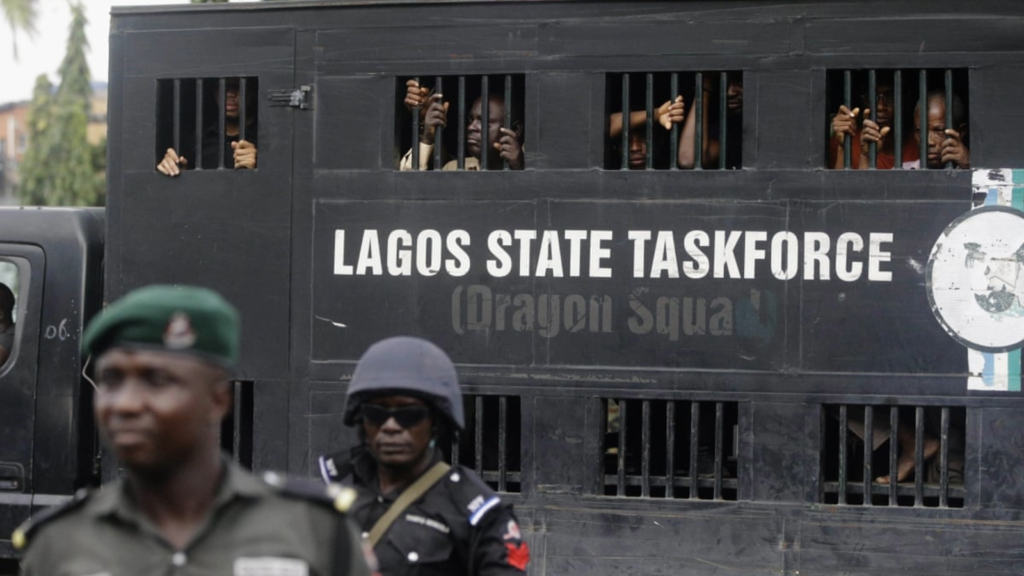
On 8 August 2025, the Chairman of the Independent National Electoral Commission (INEC), Professor Mahmood Yakubu, welcomed the Controller General of the Nigerian Correctional Service (NCoS), Sylvester Ndidi Nwakuche, to the Commission’s headquarters in Abuja. The topic of discussion? The voting rights of inmates in Nigeria’s correctional facilities, and specifically, how to ensure they can vote in the 2027 general elections.
Yakubu announced that INEC is committed to pursuing the legal and operational steps needed to make inmate voting a reality. In the lead-up to the elections, he plans to engage the National Assembly to develop a clear legal framework for including prison inmates in the voting process and to work closely with the Correctional Service to sort out the logistics.
Why are we even talking about this?
The reason this is even on the table is because prisoners took INEC and NCoS to court in February 2014 over being denied the right to vote. In December of that year, the Federal High Court ruled that it was unconstitutional for INEC to deny inmates the right to vote.
This is also not the first time INEC has announced plans to comply with that court ruling and allow prisoners to vote. In 2017, it claimed it was working towards inmates voting in the 2019 elections, but that never happened.
In 2019, the Court of Appeal supported the High Court’s judgement that inmates had the right to vote but left the logistics — like how and where the prisoners will vote — entirely up to INEC.
The prisoners liked the court’s verdict, but they were not entirely happy with the decision to leave the logistics to INEC. In 2019, they took the matter to the Supreme Court, arguing that the logistics of moving to external polling units are impractical and could lead to their disenfranchisement. They wanted the court to force INEC to set up polling units on prison grounds.
In May 2025, the Supreme Court backed the two previous judgements from the High and Appeal Courts about inmate voting rights, but still left the logistics to INEC.
The Supreme Court made it clear that it had no further obligation to enforce the implementation. It said inmates could pursue contempt proceedings if their voting rights were obstructed.
INEC may be trying to avoid a flood of potential contempt cases in 2027 if the over 80,000 prison inmates in Nigeria are once again denied the right to vote, and follow the court’s advice.
The Courts said they can vote, so let them?
Beyond the logistical challenges, there is one major legal wrinkle: the Electoral Act, 2022. Section 12(1)(e) states:
“A person shall be qualified to be registered as a voter if such a person is not subject to any legal incapacity to vote under any law, rule or regulations in force in Nigeria.”
The INEC chairman acknowledged that this wording creates complications. He said: “There are various interpretations as to whether this provision relates to inmates on death row, those serving life sentences, or those convicted for treason. Our immediate task is to engage with the National Assembly for a clear legal provision on inmate voting. Thereafter, we can address the specific issues that may arise in the course of implementation.”
While the judiciary has affirmed that prisoners can vote, the next step for INEC is to get lawmakers to clarify the law. Questions remain about which categories of prisoners are eligible, as well as where, when, and how voting should be conducted.
ALSO READ: Nigeria Is Shifting Towards a One-Party System. Here’s Why It’s Happening
But should prisoners be allowed to vote?
Well, the courts have already said yes. INEC Chairman, Mahmood Yakubu, seems to agree, citing rulings that referenced Article 25 of the International Covenant on Civil and Political Rights (1966) and Section 25 of the Nigerian Constitution, which protects the voting rights of inmates awaiting trial.
He also pointed to other countries where prisoners can vote, including Ghana, Kenya and South Africa.
Ghana allowed prisoners to vote for the first time in 2020, with polling units set up inside prison grounds. In 2024, a Nigerian-based civic hub, Yiaga Africa, used Ghana as an example while encouraging Nigeria to follow suit.
In Kenya, prisoners can only vote in presidential elections and national referendums. In 2019, a petition was filed to expand the rights to cover all elections but it was dismissed by the High Court in Nairobi. The court deemed the proposal impractical, citing logistical challenges such as the need to transport inmates across long distances to vote in local constituencies.
South Africa allows prisoners to vote in national and provincial elections, but not in local ones. Even there, logistics are a challenge. In 2019, only 15,000 out of nearly 160,000 inmates voted. The South African Independent Electoral Commission says it is working to raise that number to 100,000 in future elections. Even in the United States, prisoner voting faces serious logistical hurdles.
The calls to allow voting in Nigerian prisons make sense when you consider that around 70 per cent of inmates are awaiting trial. Our slow judicial system means that actual convicted criminals are the minority.
With a low conviction rate of only 33 per cent, it is likely most of the inmates in Nigeria’s prisons will be released should they ever get their day in court. So, it seems unfair that potentially innocent individuals are being denied their civic rights simply because the justice system moves at a snail’s pace.
Should we be concerned about prisoners voting in Nigeria?
Quite a few stakeholders think we should be.
Chief Peter Ameh, former National Chairman of the Inter-Party Advisory Council (IPAC), believes it could turn prisons into “a new criminal hub for electoral malpractice.” According to him, the current state of our correctional facilities makes inmates vulnerable to manipulation by authorities and political actors.
Ameh argues that the dehumanising conditions in Nigerian prisons, where inmates rely on those who control their meals and security, create an environment where free and fair elections are simply not possible. Instead, it opens the door to rigging.
Some legal experts have praised INEC’s move, calling it a step towards inclusivity and the protection of every citizen’s right to vote. However, they agree that strong security measures must be put in place to prevent manipulation and fraud.
Former Kaduna Central senator Shehu Sani supports the idea in principle but warns that the reality is far from ideal. He said: “Speaking from experience as an ex-prisoner, I know that the long-term serving inmates and the ‘Cell Governors’ and their Exco will control the votes.” In other words, the prison hierarchy will decide who gets elected.
So what is the point of giving prisoners the right to vote if they cannot actually vote freely? Even the argument about civic rights feels shaky here. Prisons, by design, restrict rights, especially the right to freedom of movement, a fundamental human right.
Since the law recognises the need for certain rights to be suspended for the protection of the public, must the right to vote be upheld, even when it endangers INEC staff, prison officers, inmates, and the public?
A safety and logistical nightmare
Ironically, Sylvester Nwakuche, the Controller-General of the NCoS, has recently publicly criticised his own staff for “lackadaisical attitudes” and “abdication of responsibilities” leading to frequent prison breaks. Between 2019 and 2025, over 6,700 inmates escaped from 13 correctional facilities.
Just recently, on August 12, 2025, 16 inmates attacked and overpowered wardens at a Medium Security Custodial Centre in Keffi, Nasarawa State. Five officers were injured.
If the Correctional Service is struggling to keep inmates inside, how can it guarantee a safe and secure voting process, whether inside prison walls or at external polling units?
It is hard to see how this plan does not become a logistical nightmare. Elections in Nigeria are already tense and often violent. Adding prison voting to the mix feels like asking for trouble. You could say it’s a needless endangerment of INEC and NCoS staff and the public.
If the government truly wants to protect civic rights, maybe it should start with judicial reform. Speed up trials so people are not stuck in prison for years without conviction. That way, fewer innocent citizens miss their chance to vote.
It could also invest in the prison system. That would improve living conditions, reduce the risk of manipulation, and help NCoS staff maintain order, which would make inmate voting more realistic and less dangerous.
But I am not holding my breath for any of that. Still, it is reassuring to know that if I ever find myself in one of Nigeria’s prisons, stuck for years awaiting trial, I will at least have the privilege of exercising my civic right to cast my vote for whichever candidate my “cell governor” chooses, of course. And who knows, maybe I shall get lucky and escape during the inevitable chaos when inmates decide to attack the INEC staff.
ALSO READ: Wildcards & Outsiders: Potential Presidential Candidates for 2027 That Would Surprise Us
Ever had a moment where Nigeria’s systems made life harder—or unexpectedly easier? We want to hear about your personal experiences that reflect how politics or public systems affect daily life in Nigeria. Share your story with us here—we’d love to hear from you!