Two seconds away from an almost-kiss, Ziora remembers that someone almost the age of her love interest calls her mummy. But this reminder does nothing to kill what is arguably the sexiest moment in Something Sweet. Instead, Leke replies cheekily, ‘I could call you mummy.’
This is one of the many ways Dika finds sweetness in the awkwardness of taboo romances. When you watch the average Nollywood romance, you have a fairly good idea how it is going to end in the first five minutes, and it takes you even less time to profile the female lead.
Unlike what you are used to seeing on your screen, he writes Nigerian love stories featuring real women in honest, deeply personal ways.
He is known for a number of short films, including A Japa Tale (2023), The Way Things Happen (2022) and God’s Wife (2025), which won him the Rising Star Award at the S16 International Film Festival.
All of these films feature a presentation of Nigerian women with a tenderness we do not often see in the media. He brings that to Something Sweet, a short film in the Zikoko Life series featuring a romance between a woman in her 40s and a man nearly half her age.
In this interview, Dika talks about the process behind writing Something Sweet, intimacy between unconventional couples and confronting hypocritical stereotypes in romance.
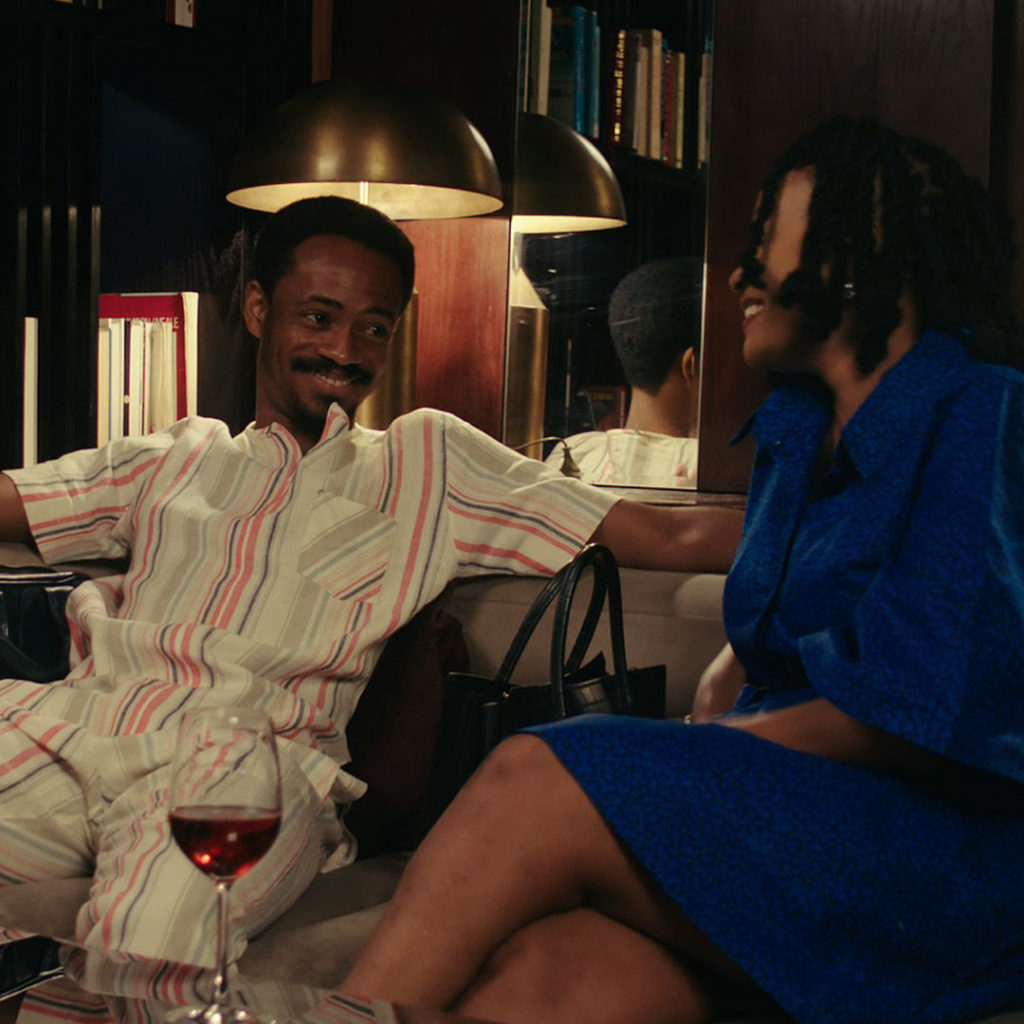
Leke pines for something sweet while Ziora is worried that he’ll hurt himself.
What drew you to work on something sweet when you read it for the first time?
I’ve always been interested in non-conventional stories about love and romance. What really drew me into this story was the wide age gap. It’s an intergenerational romance (I’m not sure if it would be appropriate to call it that). You know Ziora is in her 40s, which makes her a millennial, and Leke is a 1997-born Gen Z.
When you read Leke and Ziora’s story for the first time, did you find yourself feeling sympathy for them?
Sympathy, no. Empathy, yes, I did empathize with them. Especially with Ziora. If a man were to date a younger woman, he wouldn’t face the same judgment a woman would. In other settings, you would find just how hypocritical our society can be when making expectations of women and judging them.
Did that empathy influence how you decided to tell the story?
You could say that. In some of the romances that I’ve come to love (Notting Hill, My Best Friend’s Wedding and even recently, I’ve been watching Sex and the City), there’s a pining that I find with the women that I didn’t want for Ziora.
In Notting Hill, there’s a famous line where Julia Roberts walks up to her love interest and says to him, ‘I’m a woman, and I’m standing before you asking you to love me. I was responding to that in the sense that Ziora isn’t going to ask to be chosen or picked. She’s happy to be in a relationship, but she also knows that her life will continue without it.
I had to be clear that she was unashamed about being in a relationship with a younger man, but also that it wasn’t something that she was willing to lose her respect or dignity for. The roles are reversed in this narrative; Leke pines for something sweet while Ziora is worried that he’ll hurt himself.
So, would you say writing the script and your attachment to the characters influenced your role as the director?
It made me very particular about my lines. When writing, I picture the characters interacting. I try not to overdo it because I want the actors to be comfortable in character, but I also want them to own their lines. What’s important to me is communicating what I intended in the script. Sometimes you watch a sentence and it doesn’t carry the same feeling as you know it should carry. It’s like how ‘love you’ and ‘I love you’ mean different things.
We have slur words for women who date younger men, but not for men who do the same
Ideally speaking, how do you think the audience will take Leke and Ziora’s relationship because it’s not what we are particularly used to?
In all honesty, it’s actually something that I’m anxious about. It matters to me that they are loved and that people are able to root for the relationship. I also hope that it leaves the audience wanting to fight for love in their relationships. I’m saying this generally because we sometimes experience love or romance that are considered unconventional or that society might frown at. I hope it gives the audience faith that love is worth fighting for as long as it’s between two consenting adults.
In talking about the stereotype Something Sweet addresses, why do you think people are more approving of an older man + younger woman dynamic than an older woman + younger man dynamic?
I think it just fits into what they’re raised to believe. The hostility towards this relationship dynamic stems from cultural and religious traditions. We are taught to believe that in any relationship, there is a dominant partner and there’s a submissive partner. It is believed that the dominant partner has to be the male. I also believe in power dynamics in relationships, but it’s hardly ever evenly balanced, and gender is only incidental to that.
Coupled with the fact that we live in a patriarchal society where women are married early, the age factor forces that power dynamic in favour of the man. Age is more or less equated to dominance. The audience that would have a problem with Leke and Ziora are those who feel this relationship contradicts their cultural and religious views. There is also a perceived baggage that comes with being a woman who’s divorced.
But there are probably a significant number of relationships that fit this dynamic. Why do you think people wouldn’t want to be open about them?
Women in these relationship dynamics tend to feel shame and a need to hide. I mean, we have slur words like cougar for women who are dating younger men, but we actually don’t have for men who date younger women. And don’t even say sugar daddy because you know that is an entirely different thing.
Even when society disapproves of the older men — younger woman dynamic, the slur still falls on the woman. Words like ‘aristo’ still paint the men in a positive light, as providing financial benefit. In contrast, when you think of a cougar, what comes to mind is a sexually promiscuous older woman who preys on impressionable younger men. These are the things that make it clearer that we live in a hypocritical society.
Things I hope you notice in Something Sweet
Is Leke a reflection of how you feel about men trying to assert dominance in relationship dynamics? Especially in the older woman — younger man relationship.
I wrote Leke as human, and it’s a flaw that a lot of men will have in a relationship. They’ll try to prove their masculinity, and often, what most men interpret as proving their masculinity is being financially responsible for their woman. This is a woman who is financially comfortable, she runs a business, and she’s doing well. But then he would have to woo her, and often the ways that he thinks would impress her would be to take on financial responsibility. When he’s mistaken for her son by a market woman, he tries to pay the bill to demonstrate that he’s man enough in the relationship.
In talking about scenes that stood out, there was a comment in the kitchen scene where Leke’s mom compliments Ziora’s forehead. It was a very awkward comment. Why did you put it there?
It was nastier in the script actually. So, when she says you have a lovely forehead, she then goes on to say ‘wrinkle-free’, but I realised including that would take out the subtle disapproval. What I wanted for that scene was for Ziora to see herself a little in Leke’s mom. They are both single mothers to adult male children, and so Ziora would understand her disapproval. It was also a reaction to the demonic mother-in-law trope in Nollywood. Every mother would worry about who their child is getting in a relationship with.
Even though Ziora wouldn’t allow herself to be disrespected, I wanted her to see that the problem isn’t really her but a mother who wants the best for her child. It also didn’t feel earnest for the film because she wanted to respect her son. At the same time, she also wanted to let the other woman in the room know that she did not approve of their relationship.
Let’s think about you now. Do you see yourself being as firm in making unconventional decisions, or has Leke influenced your decision-making process if you come across that moving forward?
I am told that I’m forward. The similarities between me and Leke would be that when I like someone, I tell them. There’s a game people play these days where they pine in silence. I don’t do that. I’m expressive both in friendships and relationships. Writing and watching Leke is almost like a nudge for me to continue to be this way. I guess my evangelism is if you like someone, tell them. The worst they can do is say no.
What’s one thing in particular you hope people notice about the film?
I have to think through this one because I want to say something different from everything we’ve said. I hope they notice Odera, the receptionist. She’s the one person who did not have difficulty accepting their relationship. She sort of played cupid in the way that she aided them to meet. If you’re in a relationship that’s unconventional or if you’re chasing whatever it is that people don’t approve of, I hope you’re able to find that one person rooting for you. I want to believe that her wishing them good luck is why the film ended in the way that it did.
Next Read: Blessing Uzzi Is Running Zikoko’s Life Series Production