Growing up in a deeply religious household, Hannah* (19) learnt to fear everything that didn’t align with a rigid moral script. In her family, having an opinion was a gateway to evil. But after leaving home, her transformation began.
In this story, she talks about unlearning fear, embracing her sexuality and feminism, and the cost of choosing herself over her parents’ approval.
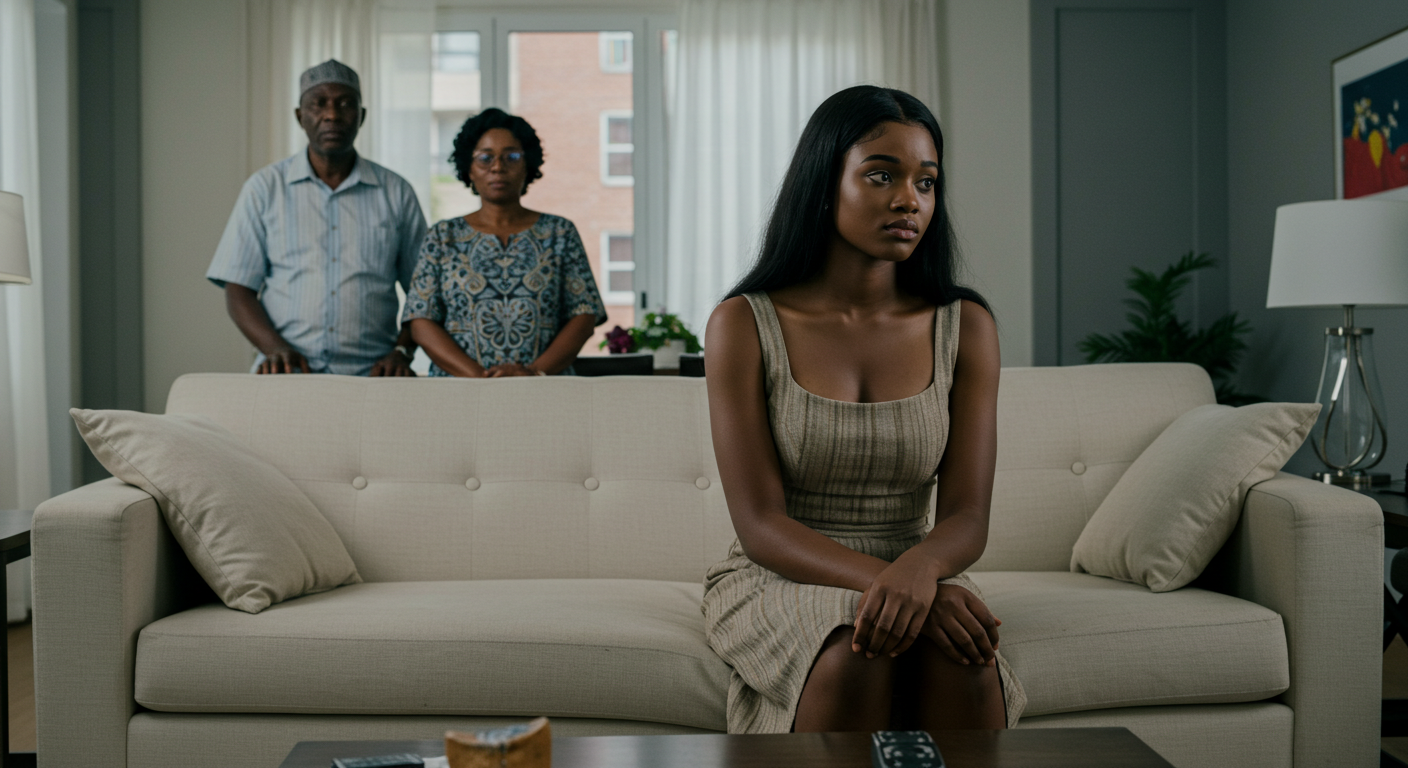
This is Hannah’s story, as told to Mofiyinfoluwa
I grew up in a strict, deeply religious household where every little deviation was labelled the devil’s handiwork. As I got older, I realised just being myself was enough to cause alarm. If I wasn’t quiet or submissive enough, if I dared to question things or voice an opinion that didn’t align with my parents’ version of God’s will, I was accused of doing something wrong. I didn’t have the language for it back then, but I understood what it meant to be punished for not fitting into the mould they had designed for me.
By the time I got to university, something in me cracked open. Exposure to new ideas and people made me realise I could have opinions, not just as abstract thoughts, but as beliefs that helped me make sense of my life. I started questioning everything I grew up believing: my religion, how I was expected to behave, and everything I’d been taught to fear. I freely wore trousers, makeup, and jewellery — things I once believed would send me straight to hell. At first, the guilt weighed me down, but more than anything, I felt free.
My parents, on the other hand, were horrified. I went home and they were convinced I’d joined a cult. They assumed I’d embraced witchcraft and prostitution. All because I was finally becoming my own person.
I always knew my dad could be careless with his words, but after I started rebelling, I saw a darker side of him. He flared up over the smallest things, like a delayed greeting or how I dressed. The first time he called me a prostitute happened after I confided in my mum about a lecturer harassing me in school. I was scared and wanted help, but my mum told my dad, and he held on to it with no intention of addressing the problem. He waited until one of my school breaks to weaponise it against me during an argument. He accused me of sleeping with lecturers for grades and claimed I hung out with prostitutes. It hurt to hear him say that, but I’d grown up with that kind of emotional abuse, so I wasn’t surprised. My parents always cared more about how righteous we looked than how emotionally safe or loved we felt at home.
Another time, I wore shorts out of the house, and instead of a calm conversation, my dad threatened to disown me and drop me off at Oshodi to do prostitution as a full time job.
I’ve tried having conversations with my mum since she’s easier to talk to. I talked about how hard it is to be a woman constantly sexualised and pressured, especially by my own dad. But somehow, she always found a way to centre him. For her, supporting my feminist thoughts meant supporting those who want to overpower men. That’s the lens through which she viewed everything I said.
At some point, I stopped feeling guilty for holding my beliefs. I started skipping prayers whenever I didn’t feel mentally present. But even that wasn’t allowed. My dad exploded after I missed morning prayers for three days in a row and called me a witch. He genuinely believed I was doing something demonic. In his world, everything boiled down to God or the devil— no in-betweens, or space for questions. That moment made me realise I could never win their approval. Anything outside their narrow expectations would always be labelled as evil.
I stopped believing in their version of God, a version that didn’t make room for women like me who questioned things and loved differently. I came into my bisexuality in my second year of university. The feelings had always been there, but I didn’t know what to call them until I developed a crush on a girl. It felt as natural as liking boys, but carried more shame than I knew how to handle.
I still remember the first time I ever heard the word “lesbian”; I was just a child at a church retreat. I and a girl my age were playfully touching ourselves when, out of nowhere, some adults surrounded us and started shouting “lesbians”. I didn’t even know what that word meant, but I understood it to be the worst thing imaginable to have triggered fury. For years, I internalised the idea that something was wrong with me.
I’ve never told anyone about my sexuality. I’m still figuring it all out, learning how to approach women and finding spaces that feel safe, away from the fear I was raised in. I don’t know many queer people yet, and sometimes, I still feel alone. But for the first time, I’ve made peace with my truth.
These days, my relationship with my parents feels distant. We barely speak. I talk to my mum occasionally, but my dad? Only when necessary. He never calls, and I’ve stopped trying. They still see me as a disobedient child, not a person with my own thoughts, desires, and a life beyond their expectations.
I dreaded going home during the holidays for a long time. I still do, but now, I push back in small ways. I dress the same way I do in school and do what I want. When the nagging starts, I don’t shrink back or explain. I let them tire themselves out.
I’m proud of the woman I’m becoming, but knowing I may never have their approval still hurts. A part of me knows they might cut me off if they ever know me for who I truly am. But every day, I’m learning to choose myself, in case that ever happens.
Read Next: The Woman Who Found Her Way Back to an Ex After a Bad Marriage