*Tayo, a 29-year-old father of one, never planned to become a parent so early. He’d barely wrapped up NYSC when his then-girlfriend told him she was pregnant. At the time, he wasn’t emotionally, mentally, or financially ready. He tried to convince her not to keep the pregnancy, but she was firm. “I considered walking away,” he admits. “And I did disappear for the first two months. But something about knowing I had a child out there just wouldn’t let me rest.”
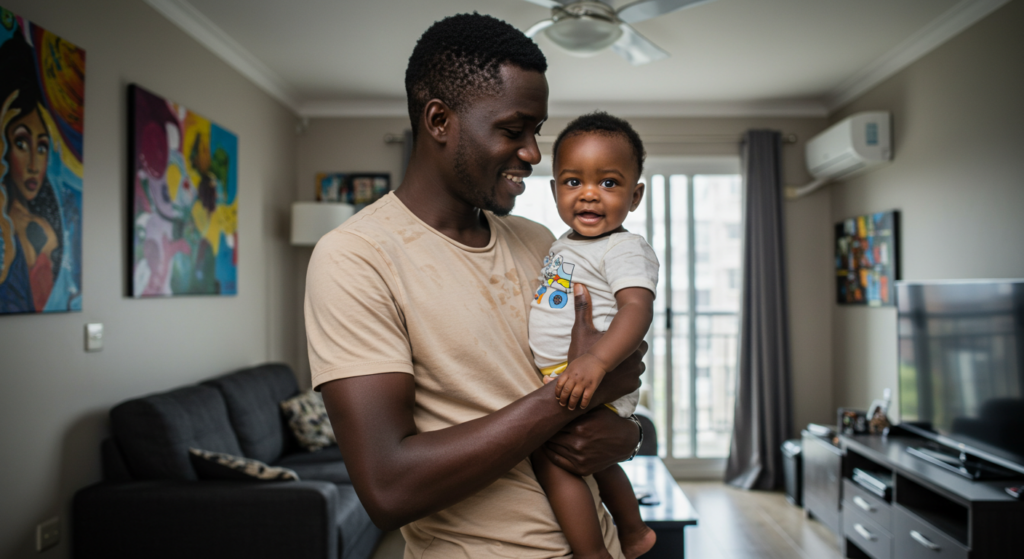
He eventually returned — not to a perfect situation, but to the start of something he would grow into. His son turns five this year, and even though parenting still feels like an uncharted path, Tayo is trying to do better than his parents ever did.
“My childhood was mostly about survival, not love”
Growing up, Tayo’s parents never spared the rod. “They beat us so much, it became hard to separate discipline from outright hatred,” he says. “I remember telling friends in secondary school that I didn’t think my parents liked me. They didn’t act like they did.”
The house was filled with rules, mostly centred on scarcity. “Don’t waste food. Don’t use too much water. Don’t ask for anything.” He internalised it quickly. Instead of calling home for money or provisions in boarding school, he endured punishments from teachers or found ways to trade protection for snacks with younger students. “It just didn’t make sense to ask my parents. It would put them in a bad mood, and I’d still leave empty-handed.”
But in all that coldness, one thing stood out: a brutal kind of honesty. “My dad used to say, ‘I don’t owe you anything. My own parents didn’t do half of what I’ve done.’ Those words stuck with me.” It wasn’t encouraging, but it pushed Tayo to be independent early. “I learned to hustle from secondary school, and that mindset has served me well in adult life.”
“I won’t beat my child. Ever.”
Tayo painfully admits that the physical abuse from his father felt almost gleeful, like he enjoyed it. His mother’s beatings felt more reactionary than malicious. “My mum? I’m not sure she enjoyed it, but it was her go-to method whenever she wanted something done fast.”
But Tayo knows for sure that he’s not continuing that legacy. “He’s only four, but I’ve already caught myself reaching for the kind of discipline I grew up with. Still, I hold back. I remind myself that he’s just a child. He needs understanding, not pain.”
Discipline for now is limited to stern warnings. No smacks, no canes. “I used to be that neighbourhood uncle kids ran from — cane in hand. But with my son, it’s different. I think, maybe for the first time, I’m seeing what parenting without violence can look like.”
“I want him to ask me for things. That’s new for me.”
Tayo doesn’t remember ever feeling like he could ask his parents for anything. Now, even though he didn’t plan to be a father, he’s committed to making sure his child knows he’s there. “I try to meet his needs. If he wants something and I can’t afford it immediately, I write it down and find a way later. That’s already miles ahead of what I had.”
That freedom to ask — something Tayo never had as a child — is one of the things he’s most proud to offer his son now.
“I don’t owe my child everything. But I care.”
Tayo’s parenting philosophy is rooted in independence. “I won’t coddle my child forever. Once he hits 18, he should be able to make his own way in life. That’s how I survived.”
But unlike his parents, Tayo balances that tough love with presence. “I actually care. My parents didn’t. Even now, if I don’t call or visit them, they’re fine. As long as I’m not disturbing them, they have no issues. But I genuinely care about my son. Yes, I want him to grow up independent, but I also want him to know I’ll be there if he needs help.”
Hyper-independence is something he’s intentionally passing down, but now with a bit more care. “I want him to be strong, but not because I forced him to be. Because he knows he has the tools.”
“If they saw how I parent, maybe they’d reflect. Maybe not.”
Tayo isn’t sure what his parents would think of the way he’s raising his child. “They’ve only met him twice. I honestly don’t think they care.”
But if they did observe him, he hopes it would make them think. “But maybe—just maybe—seeing how I handle parenting might make them reflect on how they raised me. That’s a stretch, though. I’m not holding my breath.”
For now, he’s focused on doing better, not perfect, just better. “I’m figuring it out as I go, but I know one thing for sure: my child will never question if I care. He might not get everything he wants, but he’ll never doubt that I love him.”