I was looking to speak to people who got into millions of naira in debt about how they managed to pay it off when I found Tosin*.
In this story, the 34-year-old shares how he spent his life savings, plus a ₦2.7m loan, on a car that was supposed to make his life easier. Instead, it plunged him into debt after an unexpected job loss. It took him 15 months, but he managed to pay off his debt.
Here’s how he did it.
As told to Boluwatife
I got married in December 2021. As soon as my wife and I moved into our new apartment, I started thinking about getting a car. It was all I could think about.
To be honest, we didn’t really need the car. My wife took the staff bus to work, and my commute was pretty straightforward: two danfo rides and an okada.
Granted, public transportation was stressful and often annoying, especially when it rained and bus drivers dramatically raised the fare. But I’d been doing that for years, and it wasn’t exactly unbearable.
Given that I couldn’t afford a car on my ₦120k salary, I really shouldn’t have been preoccupied with getting one.
But I was.
It felt like the right next step after marriage. I kept thinking, “What happens when my wife gets pregnant? Would she be jumping buses?” or “When we have to attend an event together, do we jump okada?”
I also convinced myself that a car was an asset that would make our lives easier. Also, the cost of getting one will only increase with time, so why not get one as soon as possible? So, I started small and began saving ₦20k monthly towards the car.
At the same time, I was praying for one of those “XYZ celebrity did a giveaway and dashed me ₦2m” lucky moments, because how long was I supposed to save to meet the amount I needed? The smallest Toyota Corolla cost ₦2m.
The giveaway dream didn’t come true, but I landed a new job in August 2022, which bumped my salary to ₦300k/month. My wife’s job also increased her salary to ₦250k, bringing our cumulative income to ₦550k. It wasn’t enough to buy a car, but I came across interesting information.
How I got into debt
One afternoon in January 2023, I got an email from my bank advertising their loan service. It looked pretty straightforward. I didn’t have to walk into the bank to apply; I could just open the bank app, request the needed amount, and get an immediate credit alert.
I thought there wasn’t any harm in trying, so I checked and was eligible for a ₦2.7m loan. I was applying from my salary account, which helped with the amount I had access to. The annual interest rate was about 35%, meaning I’d pay back ₦3.2m+ over one year at around ₦270k/month.
It was the best way to finance a car for two reasons: I couldn’t save that amount in 5 years, and even if I could, the car’s price would have increased..
So, I spoke to my wife and we agreed we’d use her salary to repay the loan every month while we lived on my salary. With that settled, I secured the loan and bought a Toyota Corolla 2008 in February 2023 for ₦3.05m. I also used the ₦500k in my savings to settle other car necessities like documentation and registration.
I had no more savings and was in debt, but I felt fulfilled. I thought I’d achieved a dream using the most financially sound option possible, but I didn’t prepare for what happened next.
In March 2023, exactly one month after I bought my car, I lost my job.
My employer was arrested for fraud/money laundering, and everything fell apart.
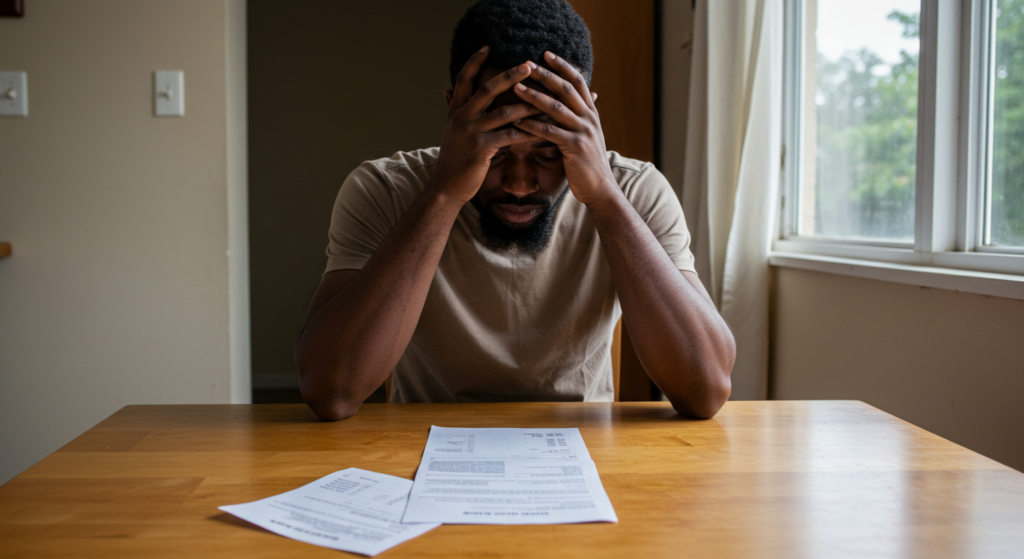
Unemployment was scary. I had zero source of income with looming debt over my head.
How I paid off my debt
It was immediately clear that the plan to use my wife’s salary to repay the loan wouldn’t work. We now needed the income to survive.
I started job-hunting. I must have sent my CV to every single job opening in Nigeria, even the ones outside where we lived in Lagos. Nothing came in the first two months. I only managed to meet the loan repayments in those months because my old workplace gave me ₦600k as severance pay.
By the third month, I had no money to repay the loan. The bank informed me they’d add an extra 2% interest per month as a penalty for any payment I missed or delayed. They also threatened legal action, and that’s when I became scared.
As the fourth month approached, I decided job-hunting wasn’t working, so I began exploring other options. I literally Googled “How to make money in Nigeria”, and one of the options I found was to become a cab driver with a ride-hailing platform.
At first, I resisted the idea. Going from wearing suits and ties to driving cabs felt like a downgrade, and I worried about the potential embarrassment of meeting people I knew while driving.
However, after about two weeks of mentally struggling with the idea, I had to accept that the embarrassment of getting arrested or harassed for leaving a loan delinquent was more significant than whatever embarrassment I’d feel driving cabs.
Plus, my lack of income had started to become a problem at home. I had a wife, child, and mother-in-law living with me, and my wife’s salary wasn’t enough to cover all our bills. Our house rent was also about to be due, and I had zero savings.
I had no choice. I signed up to become a driver on a ride-hailing platform and officially became a driver in August 2023.
Unfortunately for me, I started driving cabs at a time when everything had turned upside down. The fuel subsidy had been removed, and the cost of living skyrocketed. While I made around ₦15k-₦25k profits weekly, I learnt from other drivers that it was nothing compared to how much they made before 2023.
But I didn’t let that discourage me. I worked almost 24/7, leaving home as early as 5 a.m. and returning at 1 a.m. the next day. I often worked Monday through Sunday. At some point, I squatted with a friend on the Island so that I’d get more expensive rides frequently.
During the weekends, I accepted long Mainland to Island trips because they also paid really well. After two months on the app, my income moved to ₦60k – ₦80k weekly. This figure sometimes fluctuated, especially when I needed to fix things in the car or fuel scarcity reared its head, but my income was steady.
Every single kobo I made went into repaying the loan. I sometimes borrowed money from my wife when the repayment date was close and I didn’t have the amount needed.
I eventually repaid the full amount in May 2024, three months after the due date, with extra interest due to several delays and a few threatening emails from the bank.
They’ll probably never give me a loan again, but I’m glad I’m finally debt-free.
What I took away from my experience
I don’t think the loan itself was the problem. The problem was that I didn’t have a great backup plan.
I didn’t imagine for one second that I could lose my job, so I didn’t prepare for what would happen if I did. I’m just glad I used the loan to get something that eventually became an income source. That was a lifesaver. Imagine if I’d taken the loan to fund a wedding or party.
My experience hasn’t turned me off loans. I just need to be more calculative with every step I take now.
These days, my rule is: If I can’t afford something outright, I probably don’t need it. But if I absolutely need it and HAVE to take a loan for it, it must be something I can also make money from.
For instance, I can take a loan for a laptop only if I intend to use it for business. Otherwise, it’s just a status symbol, and it’s too easy for things to go wrong.
Also, if you have to borrow money, it’s better to try to get informal loans from family and friends first. I had to turn to a family member to borrow my ₦380k rent in 2023 as I was smack deep in the middle of the bank debt, and the repayment schedule was far more flexible.
The lender allowed me to repay only when I was settled with the bank debt. I’m grateful for that because it would’ve been too easy for me to sink into a debt cycle at that point. If I hadn’t found a family member willing to help, I’d have turned to loan apps and kept borrowing from X company to repay Y company.
That’s why I can never judge people who are disgraced by loan apps for defaulting on payments. You never know what they’re going through or how their situation deteriorated to that level.
*Name has been changed for anonymity.
NEXT READ: “I Over-Relied on My Pension” — Nigerians Over 50 on Their Biggest Money Regrets
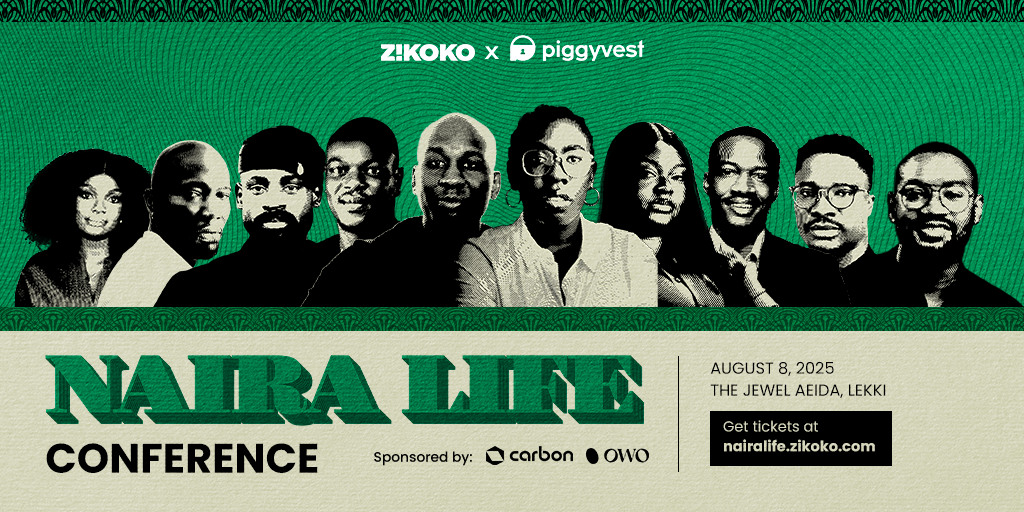
Join 1,000+ Nigerians, finance experts and industry leaders at The Naira Life Conference by Zikoko for a day of real, raw conversations about money and financial freedom. Click here to buy a ticket and secure your spot at the money event of the year, where you’ll get the practical tools to 10x your income, network with the biggest players in your industry, and level up in your career and business.