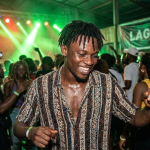
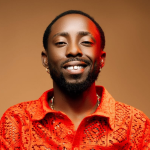
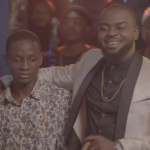
In the last year, a new wave of Nigerian rap has captured mainstream attention — loud, brash, and unfiltered. On Sunday, that moment reached a peak: At The Headies, Nigeria’s biggest music award show, Shallipopi won ‘Best Rap Single’ for his song “Cast” with OdumoduBlvck, while his brother Zerry DL took home ‘Rookie of the Year.’
Their success signals a shift in the culture — one shaped as much by Spotify algorithms as by the streets of Edo State.
The Rise of Shallipopi and Zerry DL
The Uzama brothers — Shallipopi and Zerry DL — are leading figures in this movement. Their songs blend streetwise swagger with playful but risky themes: celebrating tech billionaires like Mark Zuckerberg and Elon Musk, glamorising quick money schemes, and taking jabs at women with reckless abandon. It’s rap music dialled up to full volume — proud, provocative, and unapologetic.


They’re not alone. Other names like Smur Lee, Big Khalid, Magnito have also ridden this wave, delivering gritty, humorous takes on hustle culture, online scams, and the pursuit of luxury. These rappers represent a generational frustration and ambition — young Nigerians trying to find a way out, by any means necessary.
Nigerian music has been here before. In the mid-2010s, musicians like 9ice dropped songs that tackled similar themes. “Kin sa ti lowo…Awon temi n shase,” 9ice sings in “Living Things.” Even though the expression “shase,” meaning “to work,” was popular with fraudsters, he has denied that the song endorses fraud. Zlatan raps in “Able God” “Omo ase lo toro oja kiri / Ku ro n be, to ye ko lo ra lappy,” meaning “only an unwise guy thinks of getting high, instead of a laptop to hustle.”
ALSO READ: 17th Headies Awards Highlights: The Past Echoes Into the Present
But in the new phase, the songs that have dominated TikTok and Spotify algorithms are more barefaced in their innuendos. “Mark Zuckerberg no do pass this one/ Elon Musk format we dey pack am,” Smur Lee raps in “Management” with BIGKHALID. “Format” happens to also be the word for tried and tested prompts fraudsters use on their victims. But this underscores how these rappers have been able to push these words into the mainstream, where they have found new meanings, which has legitimised them to mean “legal hard work,” and neutralised any counterargument that claims otherwise.
How did we get here?
First, it’s impossible to ignore the role of Edo State — not just as the birthplace of Shallipopi and Zerry DL, but as a growing cultural engine in Nigerian music. For decades, the mainstream sound has been dominated by Lagos-centric narratives or Igbo and Yoruba musical influences. But in recent years, the Edo aesthetic — percussive, hypnotic, laced with coded slang and mystique — has crept into the DNA of Nigerian pop.
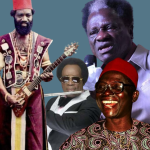
This is not entirely new. Edo musicians have long blended highlife, funk, and storytelling — from Victor Uwaifo’s spiritual guitars to the street chants of Benin City’s ghettos. What’s different now is how younger Edo artists have refined this sound into a digital export, pairing traditional cadence with internet humour and street-lord charisma.
The Sound, The Swagger, The Sensibility
Beyond sound, there’s a sensibility: bold, performative, steeped in the coded world of street politics, survivalism, and belief in power — spiritual and social. In the songs of Shallipopi and his peers, you hear not just music but the swagger of kings and gods, hustlers and tricksters.
It’s very Edo: sharp-witted, morally ambiguous, and never apologising for seeking power or pleasure. That ethos has crept into both rap and Afrobeats, influencing the way younger artists talk about success, relationships, and the grind.

From DJs to Algorithms: How TikTok Broke the Rules
Then there’s technology. Platforms like Spotify and Apple Music have disrupted the old hierarchy of DJs, radio stations, and music TV shows. Today, the algorithm is king — and it’s programmed to reward virality, unpredictability, and high replay value. For a generation of artists raised online, the path to stardom is no longer about appeasing gatekeepers but gaming the system. That’s how artists like Shallipopi broke through — with TikTok-ready punchlines, meme-able videos, and a relentless release schedule.
Street Pop vs Conscious Rap: A Cultural Shift
This brings us to the Nigerian rap culture. Rap in Nigeria has always had two sides: the “conscious” lyricists who reflect social issues, and the “street pop” rappers who simply capture what life feels like in the moment. What we’re witnessing now is the pendulum swinging hard in favour of the latter — a mirror held up to a country in chaos, where escape and bravado have become the dominant language of survival.