• A wise man once said, “If they explain Nigeria to you and you understand, they didn’t explain well” – by the time you read this article to the end, you’ll be able to confirm that no truer words have been spoken in the history of mankind.

    Some things don’t make sense about Nigeria, especially some of the “empowerment” initiatives our politicians have pulled off in recent years. From “stomach infrastructure” to bleating goats, here’s a list of the weirdest things Nigerian politicians have done in the name of empowerment (warning – prepare to lose two brain cells per paragraph).

    Goats (Kano state)

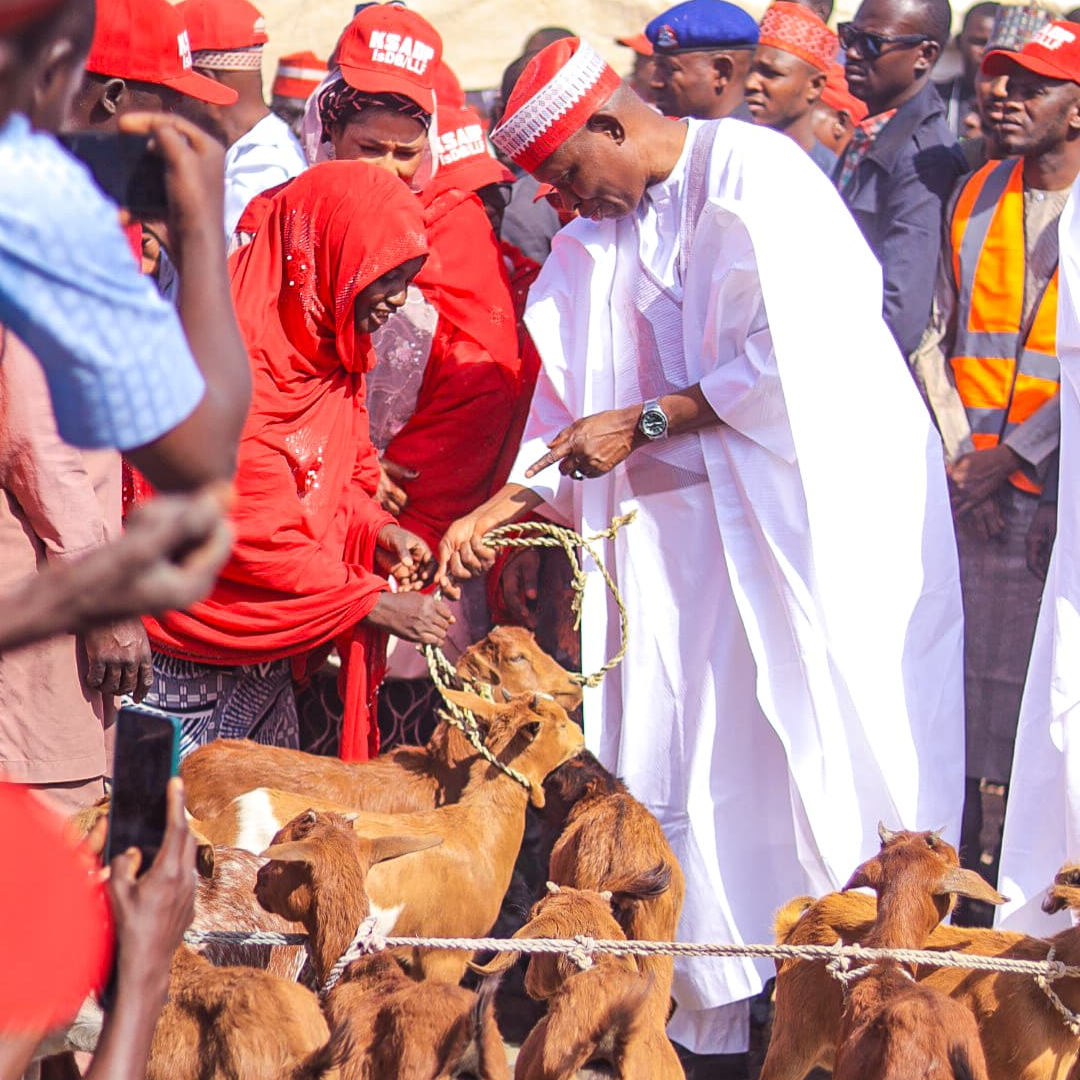
    We are used to Nigerian politicians offering women the barest minimum masked as empowerment programs. But I’ve never imagined we’d see a day when a politician would empower women with goats – three bleating goats.

    On Tuesday, January 21, the Kano government distributed 7,158 goats to women in rural areas to improve their “economic well-being.” Each beneficiary got two female goats and one male goat (because reproduction is key), which the government hopes will turn into a goat empire in the future. The interesting part about this empowerment project is that it cost ₦2 billion. 

    Ropes (Benue state)

    When people say, “It’s the little things that count”, Benue state politician Hon. Daniel Ukpera must have assumed that includes ropes, too. 

    In 2020, Ukpera thought the best way to support the goat-rearers in his community after then-Governor Samuel Ortom banned open grazing was to donate ropes. If you haven’t made the connection yet, the ropes were supposed to help the goat-rearing community keep their goats in check. We stan a thoughtful king.

    Oranges and shoe polish (Borno state)

    In 2018, the former Borno State Commissioner for Higher Education, Usman Jaha, generously distributed “welfare” packages containing shoe polish, oranges and other items to youths. When people called him out on his interesting act of generosity, he said he “empowered youths based on their peculiar needs”. He has a point because nobody likes a dusty shoe or a vitamin-deficient body. 

    Donkey (Kano state)

    If you thought a goat empowerment scheme was the worst thing that has happened in Kano, think again. In 2020, Murtala Gwarmai, senior special assistant on youth development to the state’s former Governor, Abdullahi Ganduje,  “empowered” about 40 youths with donkeys, building blocks, roofing sheets, motorcycles, bicycles and other items.  In his defence, that’s what the youths asked for. 

    Rice (Ekiti state)

    Rice has been the solution to every Nigerian problem since 2015, when Ekiti State’s former governor, Ayo Fayose, started his “stomach infrastructure agenda.” While the agenda lasted, he shared everything from rice, milk, groundnut oil, beverages, and stock cubes because “developed society” is for those who have finished eating. 

    Why does this matter?

    As ridiculous as these empowerment programs sound, they gulp billions of naira yearly. In the 2024 budget, for instance, the federal government reportedly allocated N732 billion to vague empowerment programs that were difficult to track. For a country that owes over N130 trillion, this trend contributes to the economic challenges regular Nigerians face.  The amount of money the government spends on these programs can impact real lives if they are channelled to better empowerment schemes across significant sectors like education, agriculture and technology. In the words of another wise Nigerian – why give people goats and rice when we can equip them with the skills and resources that are more sustainable in the long run?


    News is boring, but we make it fun. Subscribe to The Big Daily to be the first to know the day’s biggest news. 

    [ad]

  • Stanbic IBTC Pension Managers, a subsidiary of Stanbic IBTC Holdings PLC, recently held a webinar aimed at encouraging women empowerment and development in Nigeria.

    The event themed LATTES (Ladies At the Table Empowerment Series) was designed to furnish women with the required information to enable them to succeed in their businesses, careers, relationships and homes.

    The inaugural LATTES session themed: ‘Balancing Career Success, and Personal Wellness’ featured a Human Resource expert as well as a wellness specialist who shared tips on work-life balance and healthy living respectively.

    The Executive Director, Business Development at Stanbic IBTC Pension Managers, Nike Bajomo stated that Stanbic IBTC has always been at the vanguard of women empowerment.

    She said: “We believe that there are opportunities for every woman to thrive and blossom, and as such, we consistently create avenues to help women make the most of these opportunities. At Stanbic IBTC, empowering women remains a core priority for us. The pandemic particularly impacted women as many of us had to balance our natural roles as nurturers with showing up every day at our jobs with our A-game intact while dealing with all the challenges that came with the new normal. We, therefore, are hoping that LATTES will be an avenue to help women bounce back quicker and continue to thrive well after the pandemic is completely behind us.”

    LATTES featured Tolulope Agiri, the Group Chief Human Resources Officer for Interswitch and Sherese Ijewere, the Founder of Carib Health Limited. They both shared insights and experiences with participants on how women can balance work and wellness in their chosen field.

    Tolulope opined that lots of women find it hard to create time for themselves and mostly play the role of caregivers while altering career paths. Sighting the pandemic as an example, She went further to explain how women struggled to keep their homes and their jobs amid the covid19 pandemic.

    In her remark, Tolulope said “it is of paramount importance to set aside time for family and dedicate a portion of that time for self-care and personal development. While no one has it all, a strong support system that ensures women thrive at home and work cannot be overemphasised. A support system is critical to your growth and mental wellness as it helps create work-life balance.” She advised women to make demands that will make their jobs easier in their respective places of work and urged them to aim for leadership positions and work synergistically with their employers to make work-life balance a reality.

    Sherese Ijewere spoke on how women can incorporate wellness into their day-to-day lives, stating that maintaining a healthy lifestyle contributes to a successful life. She added that an imbalance in self-care could instigate unwanted illnesses.She admonished women to take care of themselves through a deliberate practice of selfcare resulting in higher productivity levels, reducing fatigue and enabling them to take care of others.

    Ibiyemi Mezu, Executive Director, Business Development at Stanbic IBTC applauded the initiative in her closing remark and restated Stanbic IBTC’s commitment to creating initiatives such as this to help women harness the genius in them at all times, regardless of their profession and ensuring that women have all the support required to be the best version of themselves. Participants were also reminded that Stanbic IBTC was available to offer pension support and financial advice and can be reached via 01 271 6000 or pensionsolution@stanbicibtc.com

  • In record breaking and women-empowering news, Bauchi state got its first female judge when Justice Rabi Talatu Umar was appointed in June 2016.

    She was appointed 2 years after the former Chief Judge, Justice Ibrahim Zango, retired in 2014.

    However, her appointment didn’t come so easy. In March 2016, her recommendation as the most qualified and suitable candidate for the position of the Chief Judge of Bauchi State was met with protests and petitions.

    One of them claimed Justice Umar wasn’t qualified enough because she wasn’t the most senior judicial officer nor an indigene of the state.

    However, Bauchi state governor, Mohammed Abubakar, on the swearing-in ceremony argued that her appointment was legal and based on her long-standing record of being upright and professional in her official assignments.

    Although haters tried to stop her, Justice Rabi has made history in Bauchi. We wish her all the best at her new job!