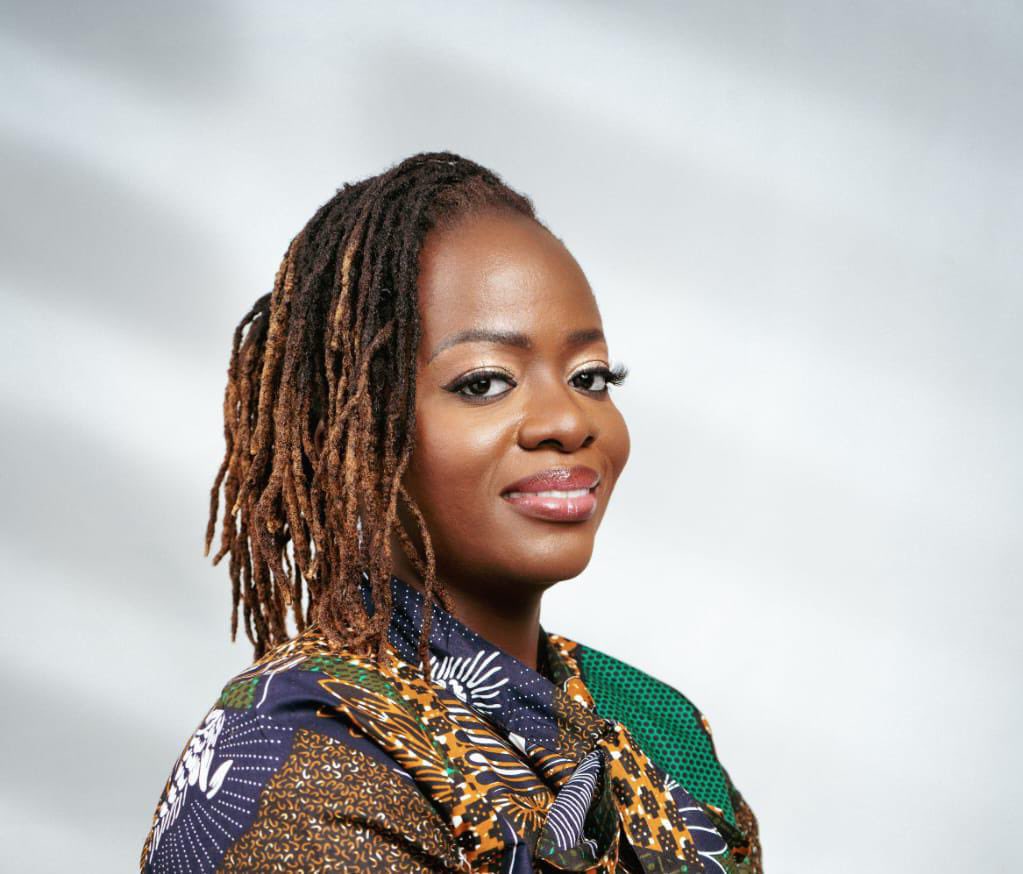
Describing Simi Olusola is so difficult, and she might have acknowledged it herself, choosing the singular word, ‘multipotentialite’ to relieve people of the misery of trying and failing: “I am a multipotentialite and you will see that as we go on,” she once wrote in one of her cheery newsletters.
And so in this tribute, we must first thank Simi for making it easier to describe her, just as she made everything she touched. We must thank her because now that she is gone, this word will come in handy for tons of people who will continue to speak of her in years to come.
Multipotentialite Simi Olusola died on September 5 at the age of 34, bowing out as a mother, wife, sister, daughter, and friend to many whose lives were touched by hers.
Simi attended the University of Ibadan where she earned a BSC in Physiology. She also had a Certificate in Social Social Sector Management from Lagos Business School, a Diploma in Global Health, and a Master’s in Data, Economics, and Development Policy from Massachusetts Institute of Technology.
She led a hell of a life, pursuing all she was passionate about, and her love for people was central to it all. She loved people and believed that no one person deserved less than the other. “The only difference between the rich and the poor should be luxury,” she was known to say.
To Simi, the yawning gap between the rich and poor was a bug that had to be fixed, and she spent her life trying to do that in as many capacities as she could.
“I’ve spent the last 12+ years working in education, technology, entrepreneurship, good governance, and social impact and I work across project, product, growth and business operations,” Simi said by way of introduction in a newsletter in 2023.
Simi’s career kicked off in 2003 when she volunteered for a non-profit. Many years later, she would set up not one, but two non-profits, and by this time, her career footprints had become something of an exotic canvas.
From her time as Manager and Executive Assistant to the CEO of a spa, to a stint working with nomadic families as an education specialist in a Kwara State village, Simi’s life was a blend of random, yet unique experiences. During her time in Kwara, for instance, she once milked a cow in an effort to get close to and build trust with the nomadic farmers through their livestock.
Following her work at Kwara State, Simi travelled outside of Nigeria to a village in Ghana, where she worked as an admin volunteer for ICT4D. After this stint, she briefly worked with a consulting firm, often dealing with government agencies like the Central Bank of Nigeria (CBN). Not long after, she resigned from her role at the firm to pursue her passion for non-profit. It was, then, in the year 2015 that the beloved Aspilos Foundation was born.
“I served as the ED for 6+ years driving fundraising, structural, operational, financial improvements, growing the team from 3 to >19 full time/part time staff and projects from 15 to >3500+ high-touch, direct beneficiaries,” Simi shared in 2023, of her work at the foundation.
Through Aspilos, Simi talked the talk and walked the walk; she wanted so badly to end cycles of poverty in Nigeria (and Africa), so she offered equal opportunities to underprivileged young people through the thoughtful projects set up by the Foundation.
With AboCoders, she provided free tech training for underprivileged women from underserved communities. Through Start and Grow, young women in tech were empowered to build, launch and manage sustainable tech-driven businesses. Tech for Governance trained young women to develop tech tools for good governance, Emerging Citizens told young people they were deserving of leadership positions and trained them on how to be actively involved while The Next Economy and Dukiya trained youths on entrepreneurship and employability.
While Aspilos was up and running, Simi continued to pursue her tech interests in other capacities, first driving product development of a Natural Language Processing (NLP) project where she “led work across 8 African countries and 15 languages,” then consulting for organisations including malaria Consortium and The Global Fund.
In 2019, she also co-founded Nuach Consulting which specialises in Business Process Improvement, HR Management, Strategy, Research, and Project Management. Simi combined her role as Principal Consultant at Nuach, with her duties at Aspilos.
In addition to her high performing career, Simi was also an energetic volunteer who worked with organisations such as the Youth Institute of Science and Technology, Founder Institute, Impact Hub Lagos, VC4A, TechHer NG and Stand To End Rape (STER) Initiative.
A fierce feminist, Simi was passionate about women’s growth and liberation, which she demonstrated in more ways than one. While she gave young women opportunities through the Aspilos Foundation, she also encouraged others doing the work, not in the typical ways that a mentor would, but like a loving big sister.
A State Team Lead for Stand to End Rape (STER) and Strategy Advisor for TechHer NG, Simi was every bit a feminist stakeholder and she consistently spoke about her passion for women’s rights and liberation. When she wasn’t in panels examining undue inequalities, rights, and sexual abuses suffered by women, she was actively involved in proffering and supporting solutions that sought to end these problems. Before her demise, Simi spoke passionately about “the need to create more spaces for young women in politics,” with plans to establish a fellowship that would ensure the realisation of that dream.
Simi additionally co-founded and served as Executive Director of The Nigerian Alliance (TNA), a non-profit political pressure group and Civil Society Organisation (CSO). Through TNA, she championed good governance by serving as a conscience to the government and a stepping stone for political aspirants by supporting them with funds and strategies for their campaigns.
Simi’s passion for the eradication of poverty, social impact, the liberation of women, technology, and good governance held through and reflected in everything she did within and outside her non-profit organisations.
But after a while, she felt as though all her efforts were merely a drop of water lost in a vast ocean of needs. “One thing I kept seeing was that we can’t ‘non-profit’ our way out of bad governance and bad governance affects everybody,” Simi said in an interview.
She knew there was a faster way to effect change. It was this conviction that birthed Simi Olusola’s career as a politician.
In 2022, Simi decided to contest for the seat of lawmaker representing the Ikere 2 constituency in the Ekiti State House of Assembly in Nigeria’s 2023 general elections. In this position, she was going to enforce and push for all the changes she yearned to see. She was going to champion education, equity, poverty eradication, equality, and equity. Simi wanted to change the status quo.
Only 8 out of 109 Nigerian Senators and 13 out of 360 House of Representative members at the time were women, so the journey to the political office was never going to be easy. Still, she was never one to back down from a challenge.
Heavily pregnant, Simi set out to conduct a campaign that many on social media would later describe as clean and excellent.
You ran a clean campaign. Thank you for your service and I hope we see you achieve your goals in the future. Godspeed ❤️ https://t.co/Wbvvd8PuBd
— desperate chicks’ waist (@duchesskk) March 18, 2023
Day by day, door to door until the day of the elections, Simi met with the men and women of the Ikere 2 constituency in a way that career politicians are incapable of. Every day, she marched energetically, her round belly in tow, to different houses where she held the people with her eyes and told them her intentions.
Like a whirlwind, Simi’s campaign efforts swept through X social media in Nigeria and almost instantly, she amassed supporters, who constantly expressed awe at the honest, unique, and open nature of her campaign. Simi wrote them a newsletter detailing the goings on of the campaign which they religiously read and eagerly anticipated, sharing in both her joys, frustrations, and hopes.
Her accountability and sheer passion drew even more supporters, many of whom weren’t familiar with her work in non-profit. They wanted to see her win and see the change her leadership would bring, so those who could donate to her campaign did, and the ones who could not, spread the word about her.
The day of the elections would finally come and Simi would lose to the All Progressive Congress (APC) candidate, a loss which she graciously accepted even as she acknowledged that there had been “a lot of violence, intimidation, and harassment” on that day.
“We fought and it’s time to take a bow… For now,” Simi said to her supporters.
“I am grateful to everyone who supported this journey and was rooting for me. Hopefully, our democracy in Nigeria matures and more people are able to choose right,” she told them in a social media post which was instead of regret and anger, filled with congratulatory messages because they had followed her campaign and to them, her commitment and passion was enough because it would hold through to the next election in 2027.
“Well done Simi…You did well and truly demonstrated bravery. Young Nigerians like me are proud of you and we appreciate your commitment to the Nigerian Project. History will be kind to you,”
These words have a prophetic ring now. Since news of her death broke out on September 5, social media has been laden with posts about her, most of them testaments of who she was and the remarkable life she led.
Young feminists have written of her warmth and support towards their work; former employees, of the kindness she showed them; politicians and co-contestants, of her passion; and colleagues, of her drive and brilliance. The testaments continue to pour in and no matter the uniqueness of the particular encounter, their stories are the same: She was a force for good, and she inspired them to do more.
Simi Olusola is survived by her one-year-old, her husband, and her extended family who mourn her. She is survived, too, by the people whose lives she impacted and through whom she will continue to live.