• If the last news you heard coming out of the United Kingdom (UK) was the not-so-great one about its new immigration rules, this latest update might excite you a little—the UK has revealed that Nigerians can now import a total of 3,000 different products into its territories without having to pay any tariffs.
    What’s going on?

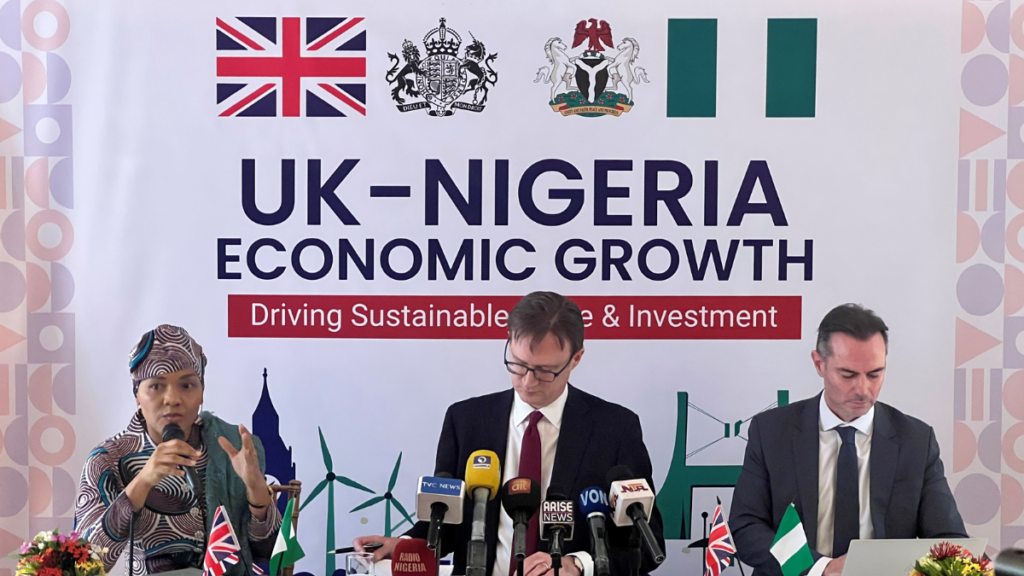
    In a press conference in Abuja on May 14, the British High Commissioner to Nigeria, Richard Montgomery, said that his country is eager to see more Nigerians take advantage of a trade deal that has made 3,000 products duty-free. You might just be hearing about it now, but the trade deal is not so new. It is known as the Enhanced Trade and Investment Partnership (ETIP), and was signed in February 2025.

    What’s the ETIP about?

    The ETIP is a trade framework jointly designed by Nigeria and the UK to foster mutual growth between the two countries. Described by the UK as “the first of its kind with an African country, and only globally,” ETIP primarily covers eight different sectors: Clean Growth, Education, Health and Life Sciences, Creative Industries, Agriculture, Finance and Financial Services, Legal Services and Investment, and regulatory Cooperation (which takes care of technical trade barriers, intellectual property, customs, and trade facilitation).

    Things that exist under the ETIP include the Propcom+ programme, supporting “more than 4 million people in Nigeria (50% of whom are women) to adopt and scale sustainable agricultural practices to ensure food security,” the operation of Elephant healthcare in Kaduna State, to digitise its public primary healthcare system, and the 3,000 tariff free products under the Developing Countries Trading Scheme (DCTS) and Trade for Development programme.

    [ad]
    [newsletter type=z-daily]

    What products can Nigerians export to the UK without tariffs?

    Gather all your japa friends together; you just might find something you want to export here. We can’t list the entire 3,000 tariff-free products here, but some of them include cocoa, cotton, flowers, fertilisers, frozen shrimps, plantain, sesame, fresh tomatoes, olive oil, yam, and cashew nuts.

    “Nigeria has significant potential to benefit from DCTS, and we encourage more Nigerian exporters to take advantage of the opportunity to continue to trade tariff-free with the UK,” the British High Commissioner to Nigeria, Richard Montgomery, said. “We have a Nigerian DCTS champion currently using the DCTS to scale her business. We want to see many more,” he continued.

    Montgomery also highlighted other ways the ETIP is benefiting Nigerians, such as the support provided to Nigerian startups to scale and internationalise through the UK’s Global Entrepreneurs Programme.

    How can I take advantage of these initiatives?

    Nigerians curious to see ways they can take advantage of DCTS and other things under Nigeria and the UK’s Enhanced Trade and Investment Partnership (ETIP) can check here for more information.

    [ad]


  • Short answer: Not yet

    Alternate short answer: at least not in 2020 sha.

    It doesn’t matter if you just won 45 million Naira after spending 90 days locked away with alleged fence jumpers. Or if your Liverpool predictions finally came through with BonanzaBet. If there’s anything sure to ruin your day, it will definitely be converting your earnings into Dollars.

    Goes without saying, any chance to have anyone beside Awolowo and the likes staring you down when you open your wallet would be a welcome development, no? Well, this could be our reality, if the ECOWAS Eco ever comes to fruition.


    Made up of 15 member states, the leaders of The Economic Community of West African States, are making attempts to have Africa as a better-integrated continent. On July 1, 2019 they adopted the name ‘ECO’ for the planned single currency to be introduced in the West African region.

    So What Does This Mean For Nigerians?

    Let’s ignore the fact that ‘ECO’ sounds like the name of a 90s Nigerian University cultist, should it become the single currency of Nigeria and the rest of the 14 West-African member states, here’s what we can expect:

    Nigeria Will No Longer Hide Their Face When Ghana Walks Into The Room.

    That’s because a single currency will mean the abolition of exchange rates.

    Even though one Ghanaian Cedi currently exchanges at 67.16 Naira, with the introduction of the Eco currency, all our broke sins shall be wiped away and we will become new again.

    This goes for all countries involved, even the 8 Francophone WA States (Benin, Burkina Faso, Guinea Bissau, Ivory Coast, Mali, Niger, Senegal and Togo) which currently use the CFA Franc as a uniform currency.

    By doing this, trade between all countries in the region will be made infinitely easier!

    Nigeria Will Be Able To Focus On Exporting Their Jollof.

    With a single currency, there will be a realistic reduction in the cost of engaging in trade. By so doing, the countries involved will focus on what they do best and exchange it for goods other countries produce. Jollof rice for Ghana’s gold is a fair trade, no?

    Nigeria’s Central Bank Won’t Be Able To Carry Shoulders Anymore.

    And that’s a good thing. No other country’s central bank will be be either. This is the currency union will have one central bank, completely independent of any state, which will be invaluable in improving price stability.

    So why aren’t our wallets filled with Eco notes Right Now?

    Well, because man proposes and God Well, He disposes.

    Case in point, this isn’t the first time this plan has been suggested. The idea to have a common currency has been raised four times, the first being in the year 2000, when 6 leaders of the Anglophone WA states agreed to create a harmonised monetary union.

    Here’s why it’s so hard to achieve.

    Because to adopt a single currency, the African states have to pass these tests:

    1.Each country has to achieve single digit inflation of 5% or less.
    In 2018, Ghana’ inflation rate was at 9.84%. Nigeria’s inflation rate, as of February 2019 was 11.31%. It is no easy feat to achieve.

    2.ECOWAS also requires all member states to achieve a budget deficit to GDP ratio of 4% or lower before the currency is dropped.
    It is currently projected that Ghana’s debt to GDP ratio will be 62% by the end of 2019. Nigeria, around 26% in 2020, when the currency is expected to launch.

    It’s going to be incredibly hard to achieve.

    And if that isn’t hard enough, the reality is, African countries do not necessarily trade among themselves. Overseas trade makes about 80% of total trade on the continent, while trade between African countries accounts for about 10%.

    So do we really need this currency?

    Time will tell. Let’s even have it first.