• We’re back! The #ShifttheStory campaign is still ongoing and today, we’re excited to bring you a recap of the X space Zikoko held last week Tuesday, June 17, 2025. We had three powerful women making waves in their different industries share insights on the topic “Salary Talks: How to Negotiate your Worth as a Young Professional”.
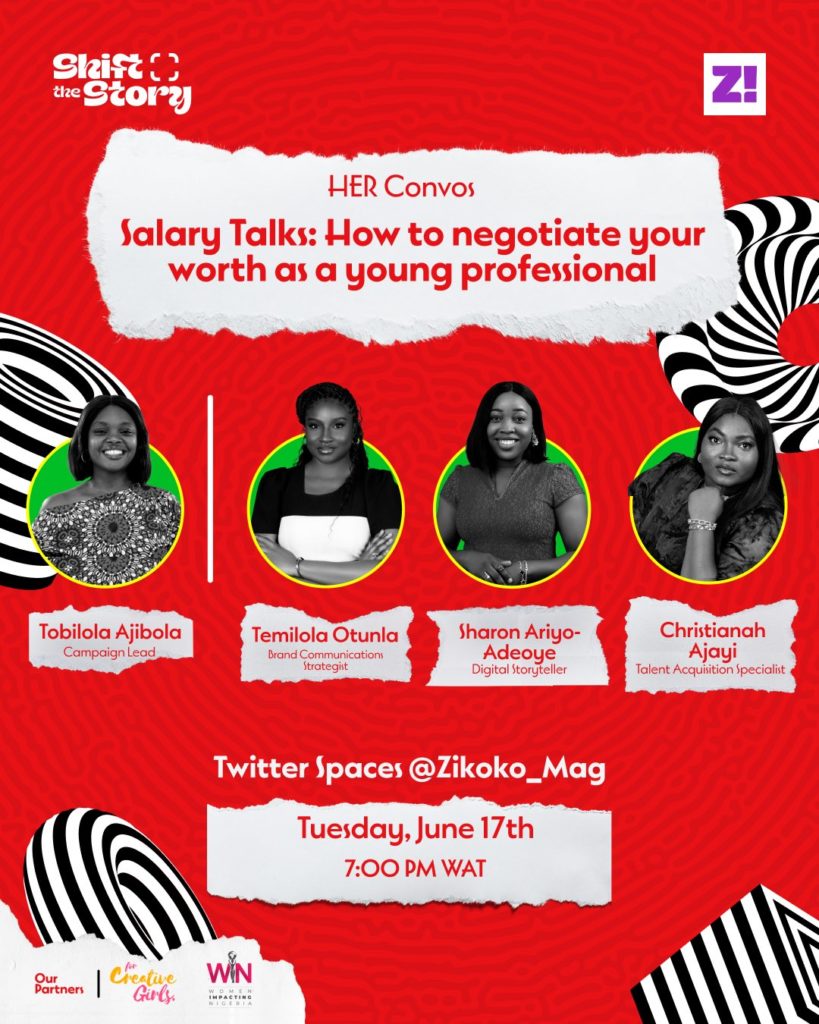
    Alongside our host, Tobiloba Ajibola, we had Temilola Otunla, a brand communications strategist; Sharon Ariyo-Adeoye, a digital storyteller and Christianah Ajayi, a talent acquisition specialist.

    This conversation is a goldmine for young Nigerian women who are finally ready to stop settling for less. Our speakers discussed how to walk into salary negotiations with confidence, not fear. Negotiating your worth isn’t simply about getting paid, it’s really about owning your value in a world that will try its best to lowball you.

    Here are four key takeaways from the space to help you succeed:

    1. Know your Value and Let it Speak First

    Christianah dropped a truth bomb when she said salary talks aren’t about desperation. It’s about an exchange of value. Understand this, you’re not begging anyone for a job, you’re offering skills that a company needs.

    Temilola also stressed the importance of understanding what your role is and the work culture before even mentioning money. If the culture is off, no paycheck will fix it. Sharon also added that research is your best friend.

    Go ahead to check platforms like Glassdoor or MySalaryScale to know what the market rate is like. So go girl! Walk into that interview ready to show what you’re worth, then let the money talk flow naturally.

    ALSO READ: I was Almost Forced to Marry my Cousin at 11

    2. Ditch the Fear of Losing the Offer

    Temilola spoke about the fear of asking for more and losing the job opportunity as a result. You wonder to yourself, ‘what if this is my only shot?’ Temilola advised us to let go of the “opportunity comes once” myth. If one door closes, two more will open so don’t settle for less because that will very quickly lead to a cycle of regret.

    Christianah agreed with this point of view, sharing how she once took a job that paid 50% less after she was laid off. It was tough but it was an experience that taught her to prioritise long-term growth. So negotiate confidently because your value isn’t tied to one offer. If they’re not ready to pay what you’re worth, be ready to stand up!

    3. Document your Wins to Back your Worth

    Sharon and Christianah were all about keeping receipts. Sharon spoke about documenting your process to visualise your impact, whether you’re a freelancer or a 9-to-5er. It helps you see what you’re doing right. Christianah took this point further saying that your CV is an “accomplishment board”.

    Use it to track your KPIs, OKRs and project wins so that you can always pull up facts and results when you’re negotiating. If you’re a social media manager that has taken a company’s socials from 1 to 100? Put that on your CV. You’ve led a team project successfully? That’s leadership capital. Pull out these big guns when you’re negotiating a salary.

    4. Be Prepared!

    The speakers tackled the narrative that young Nigerian women don’t negotiate well. Christianah wasn’t having it at all. She advised, don’t go emotional, go with facts and figures. Whether you’re pulling up industry standards or showcasing your impact, be prepared to prove your worth.

    Temilola also shared a personal experience in which she rejected an offer because the company undervalued her expertise as a brand communications strategist. Sharon’s tip? Be vocal about your work, post your projects, share your process and build a reputation that makes you stand out in every room.

    This space was an important reminder that negotiating your worth should not just be vibes It’s about being strategic. Ranging from knowing your market value to documenting your wins, these lessons are your blueprint to stop lowballing yourself. Just like Sharon put it, let people remember you in rooms your name should be mentioned in. So the next time you’re in an interview, remember these points, stand tall and ask for exactly what you deserve.

    Still on HER Convos, this week, we’re discussing what bearing the weight of unpaid labour is like for career women.
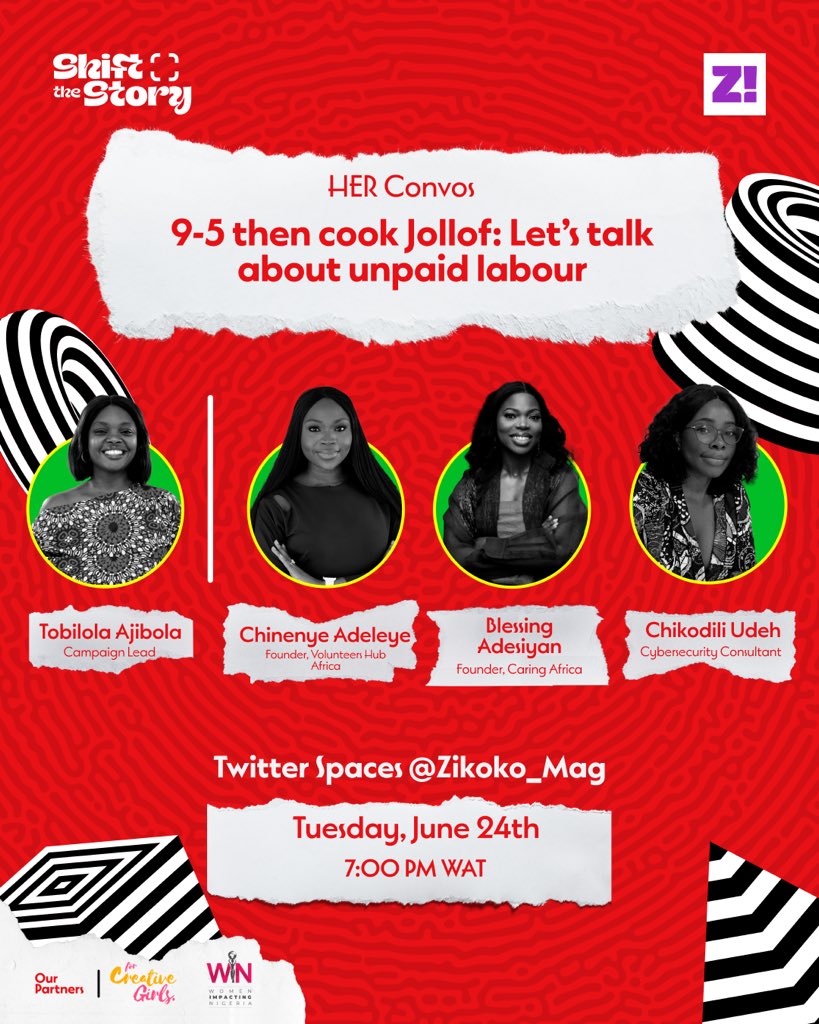
    Join the conversation with our amazing speakers on Twitter by 7pm WAT @Zikoko_mag. Set a reminder here. Be there!

    NEXT READ: Gbemi wants Women to have Money and Options

    [ad]

  • Halima*(25) didn’t take her hair braiding business seriously until after university in Hungary, when she became financially independent. Today, she earns about $1,300 a month braiding hair on weekends, and she’s weaving in lifelong friendships along the way.

    This is Halima’s story, as told to Elohozino. 

    When I first moved to Hungary as a student, my dad was supporting me financially, so braiding hair wasn’t even on my radar. I actually started by accident. 

    One day, a friend randomly asked me to do her cornrows, and I realised I was pretty good at it. Then my cousin asked, and I did hers too. People kept asking who did their hair, and just like that, my customer base began to grow. It wasn’t like I was perfect at the time either. Most of my braiding experience was from playing with mannequins and dolls I owned when I was younger. But even with refining my skills and having more people to service, I still didn’t take it seriously until after graduation, when I moved to Budapest and became completely responsible for myself.

    Honestly, the journey has been quite smooth and rewarding, but I probably feel like this because it’s not something I do full-time. The biggest challenge was finding clients after I moved to Budapest. 

    I put in the work to push my brand. If I see a Black woman on the road, I’ll stop to tell her I braid hair, and show her my Instagram. Within a year, I was fully booked and basically became the number one braider in the city. Demand got so intense, I started hiring assistants because I couldn’t handle it myself. But it’s been difficult finding someone to come on board full-time — once people see how time-consuming braiding hair is, they are often not as committed.

    In a month, I get about 15-20 clients, and that’s based on my capacity. I try to take 4-6 clients every weekend, and I charge about $55-$110 per hairstyle. With that, I get at least $1,300 monthly (that’s about ₦2 million, with the FX rate today).

    My full-time job pays me about $1,800 a month. If you do the math, I could be earning even more if I did braiding full-time. But I haven’t committed to it yet because I genuinely can’t do it alone. 

    That being said, the extra income covers a lot of things that make my life more comfortable. For example, I don’t wash or do my own hair. I also struggle with financial discipline, so if something feels even slightly stressful, I just pay to get it done. Living in Europe, I also travel a lot — and I never check my account while on a trip. As for black tax, I don’t really support my nuclear family, but when extended family ask for help, I give what I can when I have it.

    Get More Zikoko Goodness in Your Mail

    Subscribe to our newsletters and never miss any of the action

    My favourite thing about braiding is the time I spend getting to know my clients. Most of them are Black women, so while I’m doing their hair, we talk, gist, eat, and share stories. It really helps us bond and strengthens our connection. That’s something I truly enjoy. It’s also deepened my relationship with many of them. A lot of the friendships I have in Budapest actually started with braiding. Sometimes, I’ll ask a client if they’d like to go out for brunch or dinner, and we bond even more over that. Funny enough, one of my clients got married in 2023, and I was on her bridal train. I’ve also seen many of them grow, get married, and become mothers. It’s been a beautiful experience.

    Right now, I’m working on expanding my business. I actually took a short break from braiding after realising I’d hit a plateau; the business wasn’t growing beyond a certain point because of my full-time job. So now, I’m focused on building a proper strategy and plan because I want to get back into it, but with more intention. I’m also looking for someone to join me and help grow the business. I’m open to teaching anyone who’s willing to learn. I’ve had interns before, and I’ve taught a few people in the past. One of them, who’s also a friend, did my hair recently. She also works full-time, so she can’t commit fully, but the work she did was really impressive.

    I always recommend hair braiding to anyone who’s interested. A lot of people don’t believe it can sustain them, but that’s not true. Black women are everywhere, so you’ll always be in demand. And beyond the joy of making and spending your own money, it’s a great way to meet people.


    *Names have been changed for anonymity.


    NEXT READ: “I Hit $80k, Crashed Below Zero, Then Built My Way Back” — An Artist’s Wild Ride Through Digital Art, NFTs and Sculpture

    Join 1,000+ Nigerians, finance experts and industry leaders at The Naira Life Conference by Zikoko for a day of real, raw conversations about money and financial freedom. Click here to buy a ticket and secure your spot at the money event of the year, where you’ll get the practical tools to 10x your income, network with the biggest players in your industry, and level up in your career and business.

    [ad]