
• The Economic and Financial Crimes Commission (EFCC) has arrested popular businessman, also known as E-Money, for alleged Naira abuse committed at a public event where he was allegedly seen spraying both the Naira and US dollars.
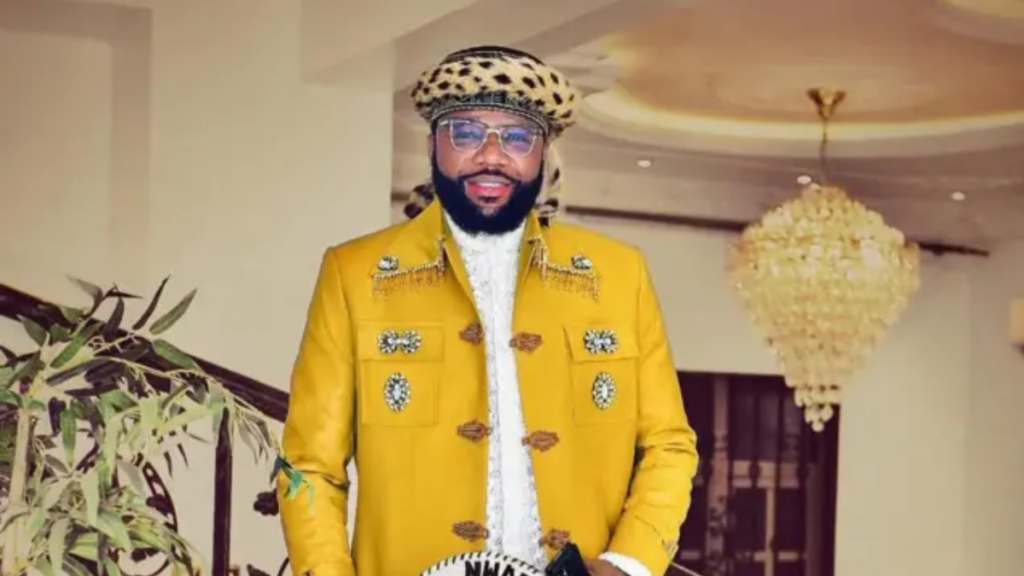
    Sources within the commission say he was arrested on Monday, April 28, at his home in Lagos State and will be flown to Abuja for questioning and further investigations.

    Though his arrest is termed Naira abuse (as contained in section 21 of the CBN Act),   E-Money’s arrest is also tied to the alleged spraying of  United States dollars at an event, which is a violation of the Foreign Exchange Act.

    “On Monday night, we arrested E-Money for Naira abuse and defacing foreign currencies. Specifically, he was alleged to have sprayed U.S. dollars, which is against the Foreign Exchange Act,” an EFCC source told Punch Newspapers on Tuesday, April 29. The spokesperson of the EFCC, Dele Oyewole, has additionally confirmed the arrest to BBC Pidgin.

    The CBN Act frowns against all forms of Naira Abuse—stapling, counterfeiting, tearing, spraying, selling, and mutilation.

    Though the Act was introduced as far back as 2007, authorities were not big on enforcing it until February 2023, when the CBN released a statement warning Nigerians against engaging in the sale of the Naira notes, which was a common practice during the cash scarcity that enveloped Nigeria at the time.

    [ad]

    The 2023 statement also included a warning against spraying the Naira notes, and the CBN started showing it wasn’t messing around by making its first big arrest in the same month it released its statement. A Nigerian actress, Oluwadarasimi Omoseyin, was arrested and charged in court for spraying the new Naira note at a party in January 2023. On February 2, 2024, she was sentenced to six months’ imprisonment for the crime.

    [newsletter type=z-daily]

    Months after the actress’s arrest, another popular figure, Idris Okuneye, widely known as Bobrisky was arrested on April 3 for mutilating (spraying) naira notes, and sentenced to a six-month jail term on April 12, 2024.

    More recently, the EFCC has arrested popular singer, Terry Apala and socialite, Aisha Achimugu, for abusing the naira.

    The EFCC is just one of the government agencies working with the CBN on its crackdown against naira abuse. Others include the Nigeria Police, Federal Inland Revenue Service (FIRS), and the Nigerian Financial Intelligence Unit (NFIU).

    [ad]
  • Idris Okuneye AKA Bobrisky, a popular Nigerian socialite, was arrested by the Economic and Financial Crimes Commission (EFCC) on Wednesday, April 3, 2024, for mutilating some naira notes. On April 12, 2024, a Federal High Court in Lagos sentenced her to six months in jail without the option of a fine. 

    What was her crime?

    The EFCC spokesman, Mr Dele Oyewale, confirmed the arrest and stated that Bobrisky was arrested on four different counts to which she pleaded guilty. During the judgment, Justice Abimbola Awogboro mentioned that Naira mutilation has become a menace that’s damaging the country’s image. Bobrisky’s sentence was to make an example of how Naira Abuse will be treated going forward 

    But is the sentence fair?

    Naira Abuse has long been a criminal offence in Nigeria, but spraying naira notes when dancing has also been a part of the Nigerian culture for ages; this law hasn’t seen much enforcement in the past. Before Bobrisky, on February 1, 2023, the Independent Corrupt Practices Commission (ICPC) arrested Nigerian actress, Oluwadarasimi Omoseyin, after a video of her spraying and stepping on the new Naira notes circulated on the internet. Just like Bobrisky, she bagged six months of imprisonment. 

    According to the 2007 CBN Act, the punishment for naira abuse — which includes spraying, stamping, engraving, selling and mutilation — is a fine of ₦50,000 or six months imprisonment. For a first-time offender, members of the public believe that the sentence with no option of a fine was made out of bias, but Oluwadarasimi Omoseyin was also sentenced with the only difference being that she got the option, of a fine because she was a first-time offender who pled guilty. She was eventually granted bail on February 15 2024, but for Bobrisky the case is not the same.

    Although Bobrisky is also a first-time offender and has pled guilty with a promise to change and use her platform to educate people about the naira abuse, she wasn’t granted bail. This begs to question if there is some sort of bias behind the decisions of the court.

    [ad]

    When did this one start?

    The police have started taking Naira Abuse more seriously, rounding up more offenders in the last several months than they ever have before. One Simon Idio was arrested on February 12, 2024, for selling the naira. Who knows what might come next?

    To learn other possible ways you might be breaking the law, click here.