• If the many sins of Nigeria’s education system, like constant strikes, poor infrastructure, and archaic curriculum, have been pissing you off, you might like to hear what the Ministry of Education and The National Information Technology Development Agency (NITDA) has for you.

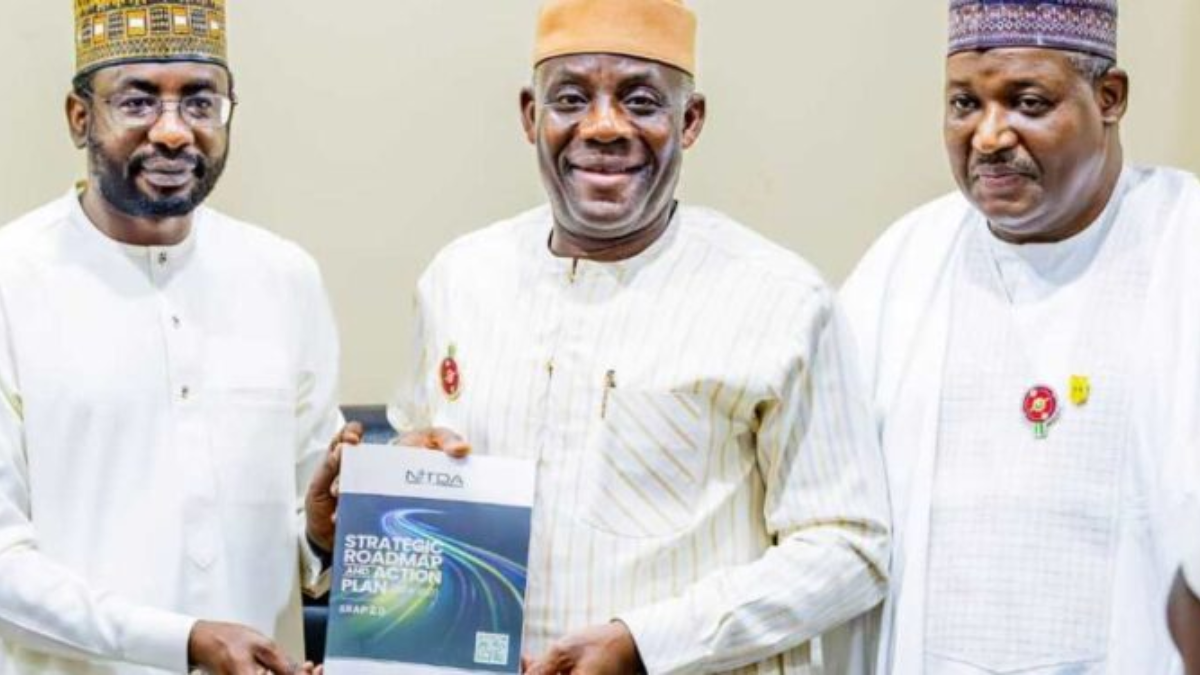
    On Friday, December 6, during a courtesy visit to the Minister of Education, Maruf Tunji Alausa, the DG of NITDA, Kashifu Inuwa, revealed that his agency has partnered with the Ministry of Education to integrate digital literacy into Nigeria’s education system.

    What does this mean for Nigerian students?

    The surface-level explanation of this development is that new subjects and courses centred on digital literacy will be developed and added to the curriculums used in all levels of education, from kindergarten to the tertiary stage.

    If you deep it further, it means the government is trying to position young people in Nigeria to be at the centre stage of digital innovation.

    Why is this important?

    This latest development from NITDA and the Ministry of Education is an important one. If anything, the move is actually long overdue– Data obtained from the World Bank’s Development Report in 2022 show that more than 50 per cent of Nigeria’s population lacks digital skills. 

    Additionally, in 2023 during a presentation titled ‘An Overview of Foundational Literacy and Numeracy In Nigeria,’ an Education Specialist with United Nations Children’s Fund (UNICEF) Nigeria, Yetunde Oluwatosin, revealed that “only seven per cent of Nigerian youths have ICT (Information Communication Technology) skills needed for working and living in a digital economy.”

    A 2023 survey conducted by GetBundi, an online digital education institute, narrows down the situation even more. According to the survey, over 85 per cent of graduates from tertiary institutions in Nigeria have no digital skills. To put this into perspective, it means that over 100 million young educated people in Nigeria are technologically illiterate.

    If you think the above figures are bad, you’d hate to know that GetBundi also did a survey that involved 100 NYSC members, and only 19 out of that number had digital skills. The skills in question were mostly basic-level knowledge and Microsoft Excel. Only seven of them had basic knowledge of machine learning, programming, and data science. Coincidentally, those seven “studied outside Nigeria – five in the UK, one in the United States and one in Malaysia.”

    Speaking about the poor level of digital literacy shown by his organisation’s survey,  GetBundi CEO, Osita Oparaugo, said Nigerian education was to blame for this as it has failed to remain consistent with the ever-changing digital landscape.

    “The curriculum used in many Nigerian universities and other tertiary institutions is outdated and does not adequately cover the practical aspect of relevant digital skills,” he said.

    How exactly will this new development change things?

    The DG of NITDA, Kashifu Inuwa, says the collaboration between the agency and the Ministry of Education is part of the government’s plan to meet its long-term target of 95% digital literacy by 2030 and short-term target of 70% digital literacy.

    To get the ball rolling, Inuwa says the National Board for Technical Education (NBTE), National Universities Commission (NUC), National Teachers’ Institute (NTI), National Mathematical Centre (NMC), Universal Basic Education Board (UBEC), CISCO, are already on board and aligned with the plan.

    Apart from updating curriculums to include digital literacy, some of NITDA’s collaborative efforts with the Education Ministry will include teacher training and capacity building, as well as the procurement of state-of-the-art digital tools and infrastructure for educational establishments nationwide.

    The world is increasingly moving towards a digital economy. With poor figures like those quoted by the World Bank, UNICEF, and GetBundi, Nigeria will be left far behind. The collaboration between the Ministry of Education and NITDA is definitely a move that could help turn things around, but the huge question is whether this will be properly carried out to ensure that the subjects and courses introduced to the curriculum are taught in a hands-on manner rather than the theoretical method reported in Nigerian schools. Nigerians might have to keep their fingers crossed.
  • Trigger warning: Physical and sexual abuse

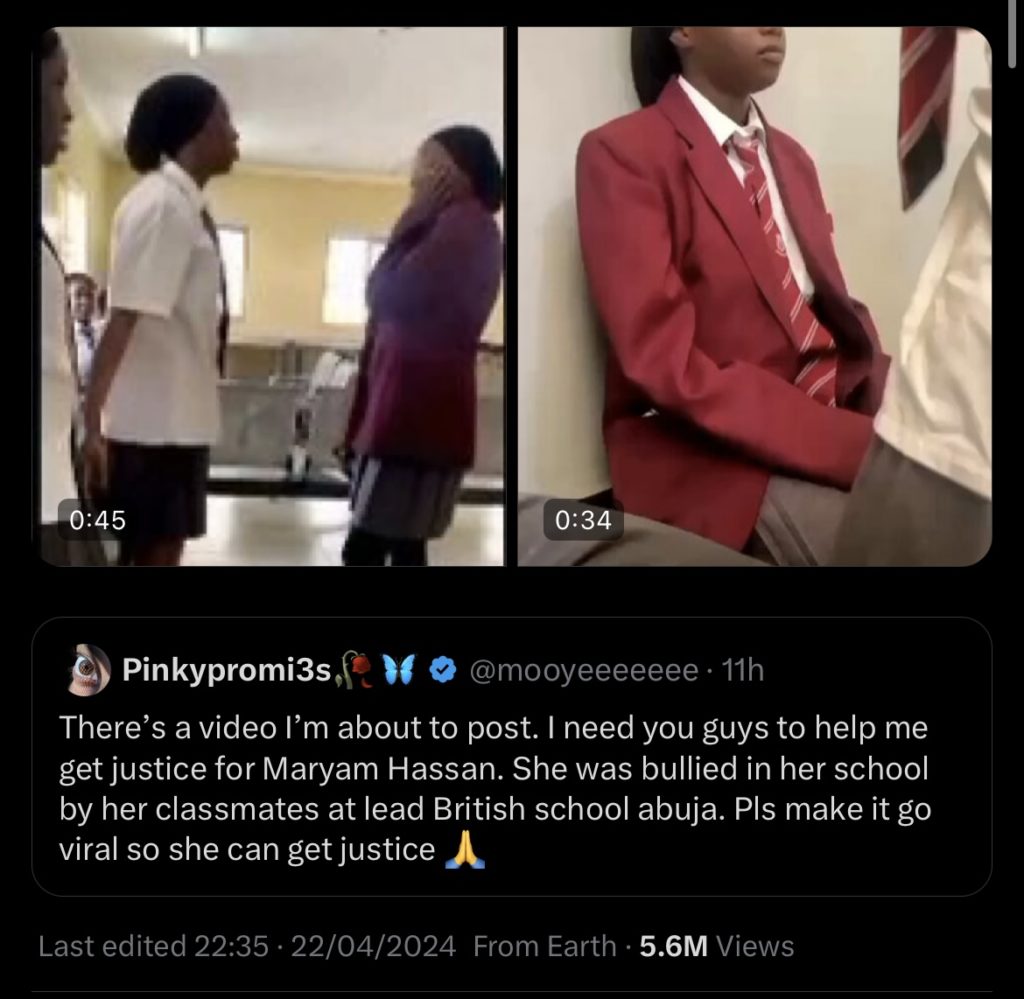
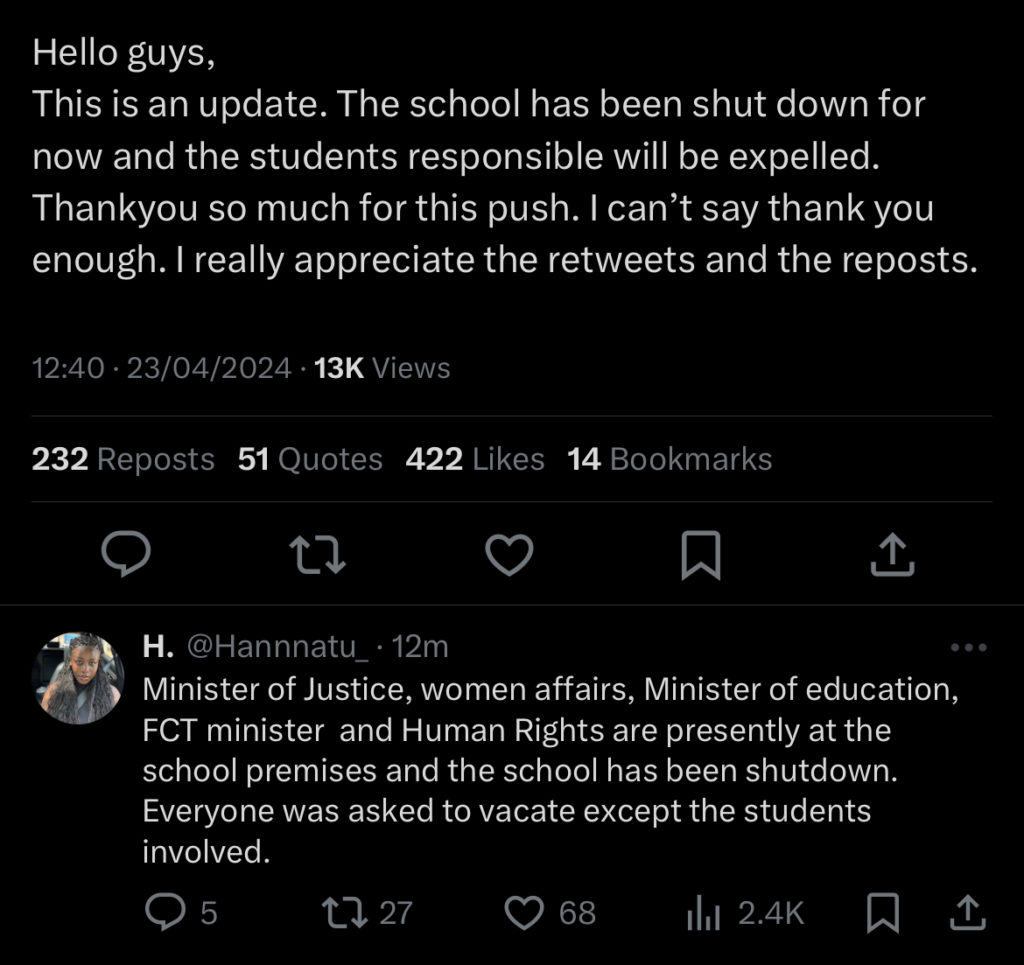
    On Monday, April 23, X user @mooyeeeee, shared a video that showed a group of students at Lead British International School, Abuja, bullying another female student.

    The video has since spurred thousands of reactions online and many people have called the school management to look into the matter.

    Lead British International School Drama: A Look Into Similar Cases of Bullying Since 2020

    Hours after the post went viral, Namtira’s cousin, who, like other users, had watched the video in horror, announced that the school had been shut down for three days for investigation and that the culprits would be expelled.

    Lead British International School Drama: A Look Into Similar Cases of Bullying Since 2020

    Dowen College: Sylvester Oromoni

    In December 2021, a video of a 12-year-old boy writhing in pain surfaced on the internet and sparked outrage. The boy, identified as Sylvester Oromoni, was a pupil of Dowen College, a boarding secondary school in Lagos. A few days after the footage went viral, Oromoni died.

    His father claimed he’d sustained internal injuries after he was beaten by fellow students who bullied and tried to get him to join a cult. The school management, however, claimed he was never a victim of bullying and was injured during a football match. What followed was a legal back and forth between the school management and parents who insisted that their son opened up to them about being bullied before he died.

    In April 2024, a Lagos coroner, Mikhail Kadiri, ruled that Oromoni suffered “avoidable excruciating pain” due to parental and medical negligence. He also exonerated the school of negligence and the students accused of bullying the deceased.

    “The alleged suspects played no part in Sylvester’s death, but were victims of their past misdeeds.”

    Deeper Life High School: Don Davis

    In December 2020, 11-year-old Don Davis gained the public’s attention and sympathy after a video his mum made about his poor state made it to the internet.

    In the video Davis’ mum, Mrs Deborah Okezie, lamented about her son’s health and the mistreatment he suffered from senior students in his school, Deeper Life High School, Uyo.

    “They will remove his boxer and push their legs and hands into his anus,” she said. “Look at a child I sent to school. He came back with a broken anus,” she said in the viral clip.

    Shortly after the case became public, the Deeper Life Bible Church, owners of the school responded to Mrs Okezie’s claims and issued a statement noting investigations into the matter. However, the school later changed their story and claimed that Davis came to the school ill, and Mrs Okezie, was in fact not his mother.

    Subsequently, Mrs Okezie instituted a legal case against the school management including the two senior students who allegedly abused her son. However, in May 2022, all parties settled out of court.

    Premiere Academy: Keren-Happuch Akpagher

    In June 2021, 14-year-old Karen Happuch Akpagher’s, a boarding student at Premiere Academy in Abuja, died from complications after she was sexually molested.

    Remnants of a condom were found in her privates, resulting in sepsis. According to Karen’s mum, she withdrew her daughter from school after a frantic call in which she complained about her health and asked to come. Mrs Akpagher said Karen didn’t feel like her normal self and she took her to the hospital two days after she returned from school. At the hospital, the doctors discovered the condom and sperm remnants that caused sepsis in the 14-year-old. Mrs Akphagher said she never got a chance to ask her daughter about the person who abused her.

    In  March 2022, Mrs Akpagher instituted a ₦10billion suit against the school management over negligence and failure of duty of care to her daughter. The latest update on the case was the court’s admittance of vital evidence against the school management in July 2023.

    Six months later, there is still no news of any suspects being arrested. Albeit protests have continued under the Justice for Karen hashtag.

    Chrisland School: Purity Okojie

    In October 2021, Nollywood actress Mercy Johnson-Okojie cried out and claimed her 8-year-old daughter, Purity, was being bullied by a teacher in school.

    “She tells her to her face that she does not like her mother; tells her that celebrity kids are badly behaved, and she should not bring her ‘aura’, she should stop feeling proud, she should not bring her online drama to school,” the actress wrote on Instagram.

    In response to Okojie’s call-out, the school management issued a statement noting an investigation into the alleged case of bullying. The actress, however, did not share further updates on the matter.

    With the prevalence of these stories, there’s an urgent need for the government, school administrators, policymakers and relevant bodies to create safe and inclusive learning environments where every student can thrive without fear of harassment or discrimination.

    READ ALSO: 7 Nigerians Talk About Being Bullied in Secondary School

  • A good number of things don’t add up in Nigeria. Social systems don’t work and maintenance of physical structures is a myth, but we at least thought we had gotten somewhere with the ease of carrying out transactions over the internet. More than 1.85 million students applied to write the UTME (Unified Tertiary Matriculation Exams)  in 2016, but the process remains crude.

    This clip from a concerned Twitter user tells its own story

    The people of Borno are still recovering from the horrors of the Boko Haram sect. Why should they go through any of this?

    It really doesn’t make sense that the Ministry of Education and JAMB(Joint Administration and Matriculation Board) don’t give top priority to students from the conflict-affected states in the North. For one, these kids have been forced to abandon their studies for years, surely the least we can do for them is make the learning process easier for them?

    The process of applying for and getting the JAMB form needs to be a lot easier for students nationwide.

    Is this really how JAMB officers do this thing? Turn form into petrol?

    The crudeness of the whole process is just galling.

    So it’s not only Borno? Exactly how many students are fighting to buy form like this?

    We’ve forgotten who the Minister for Education is (Do we have one?). But the person should kindly wake up from his or her slumber sometime this year.