• What does it mean to be a man? Surely, it’s not one thing. It’s a series of little moments that add up.

    “Man Like” is a weekly Zikoko series documenting these moments to see how it adds up. It’s a series for men by men, talking about men’s issues. We try to understand what it means to “be a man” from the perspective of the subject of the week.


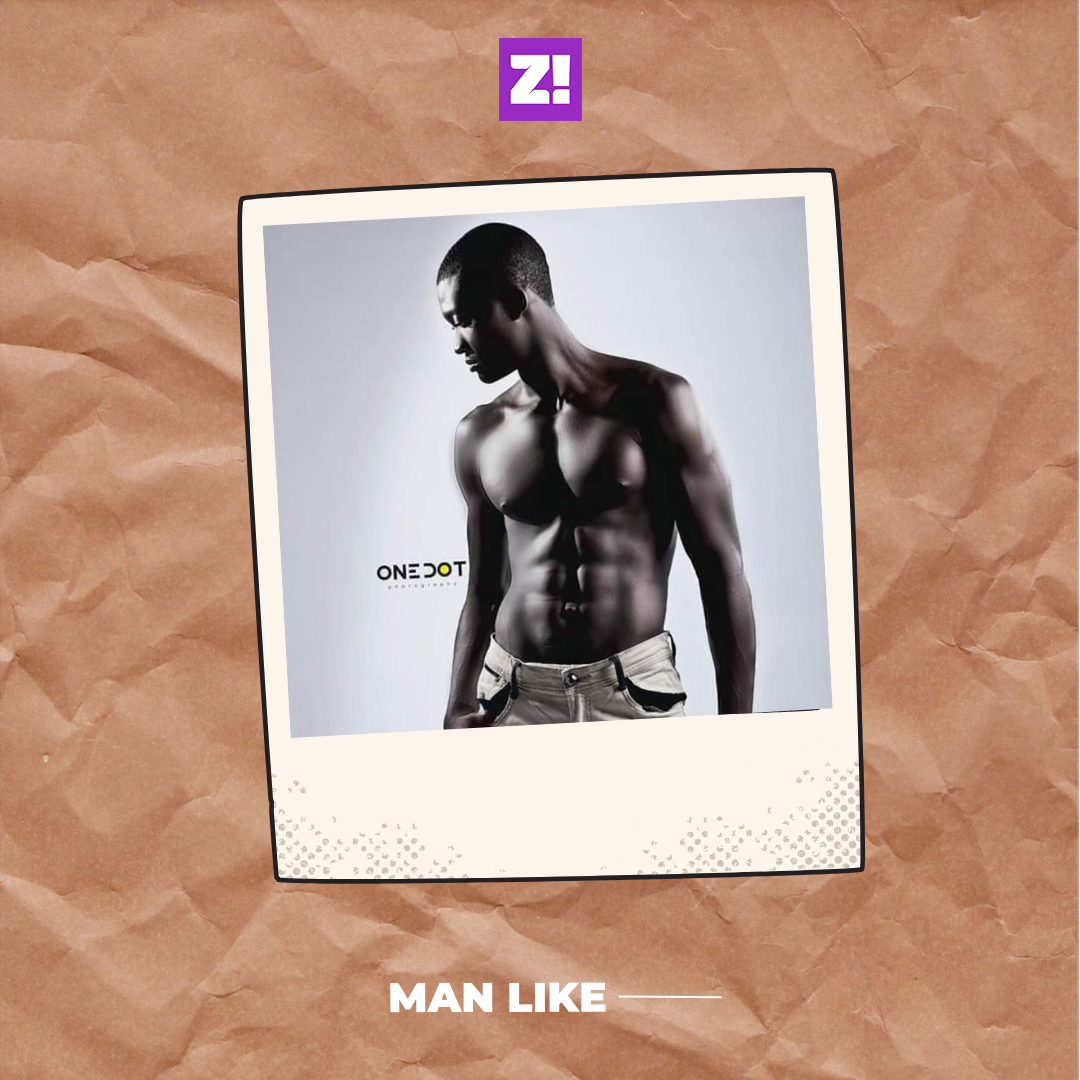
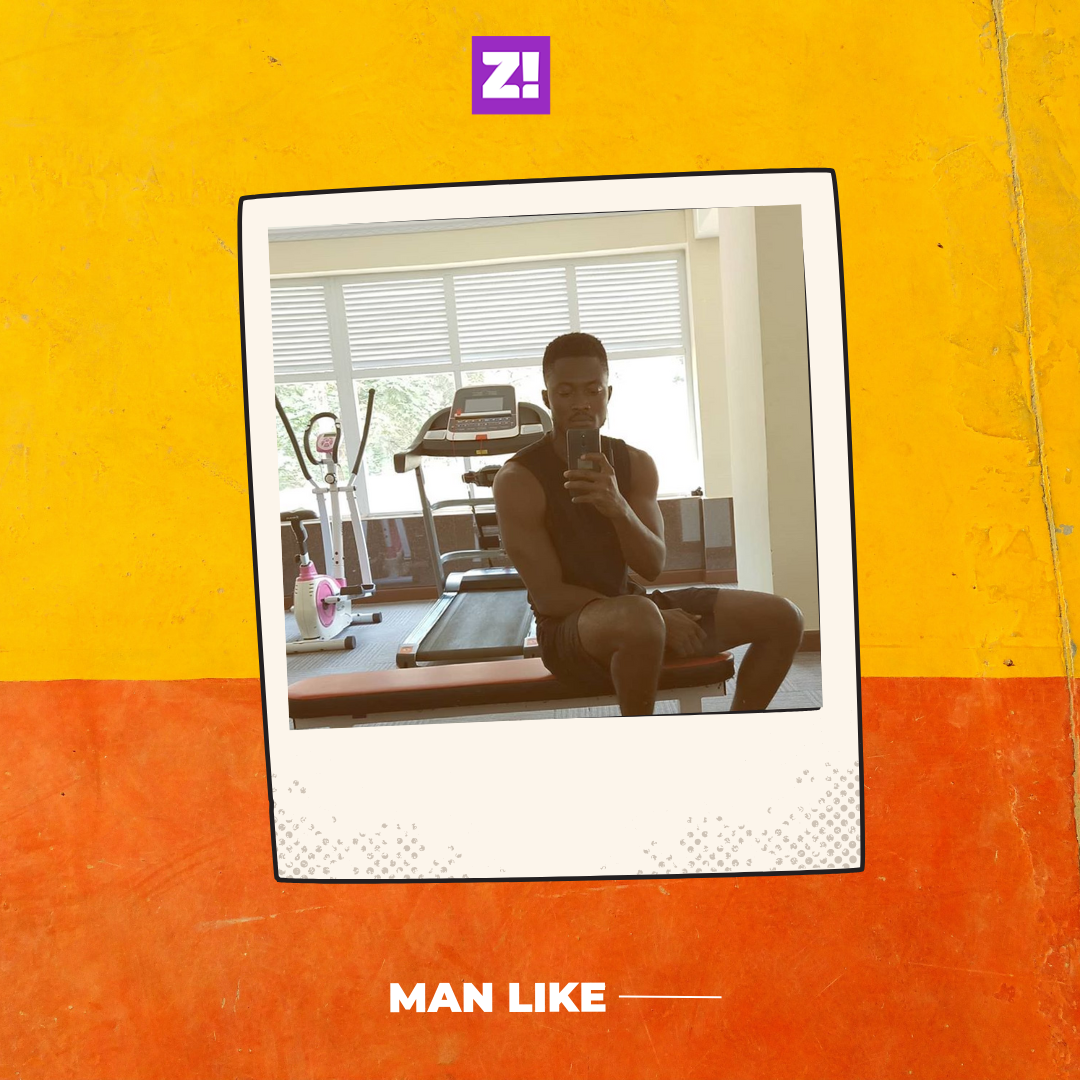
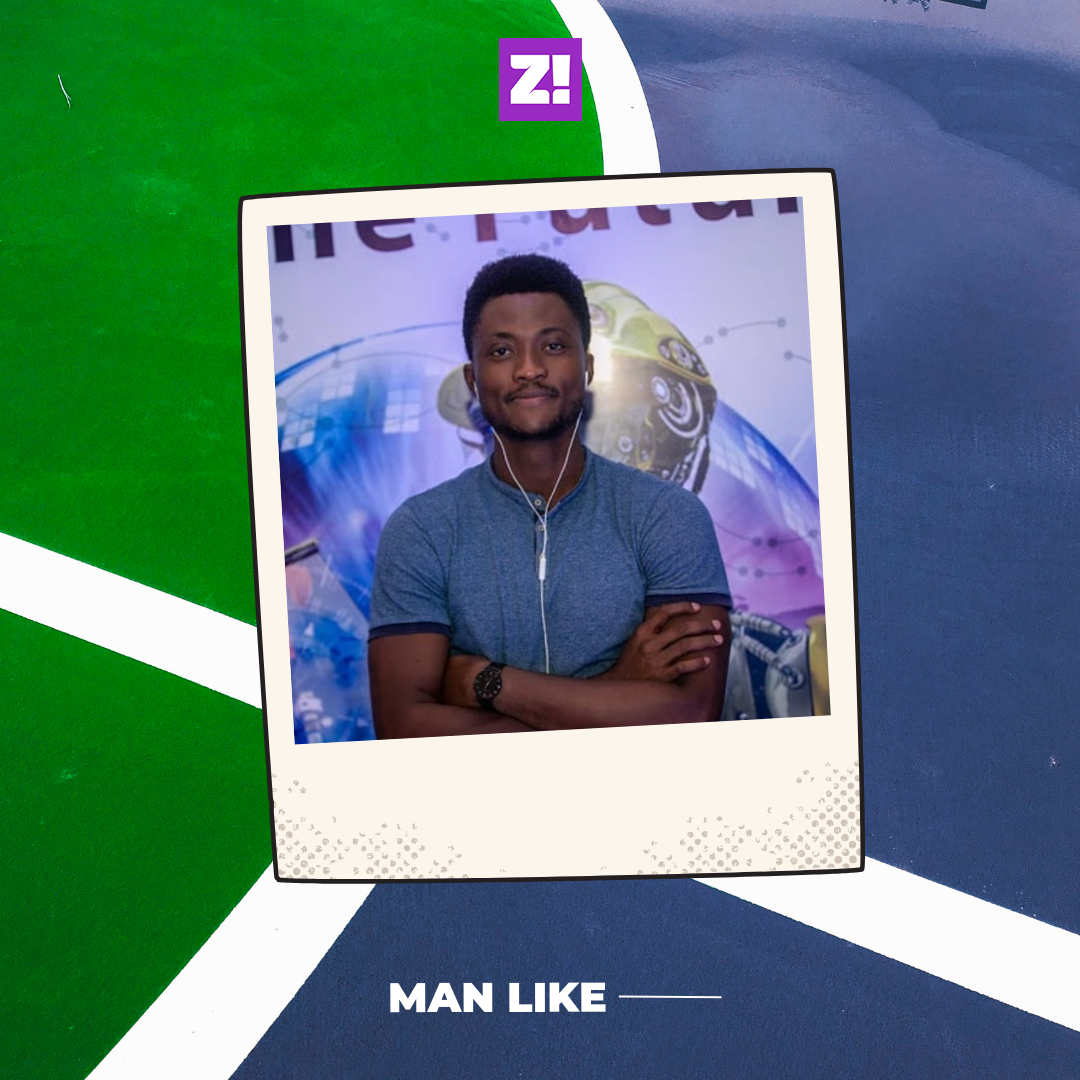
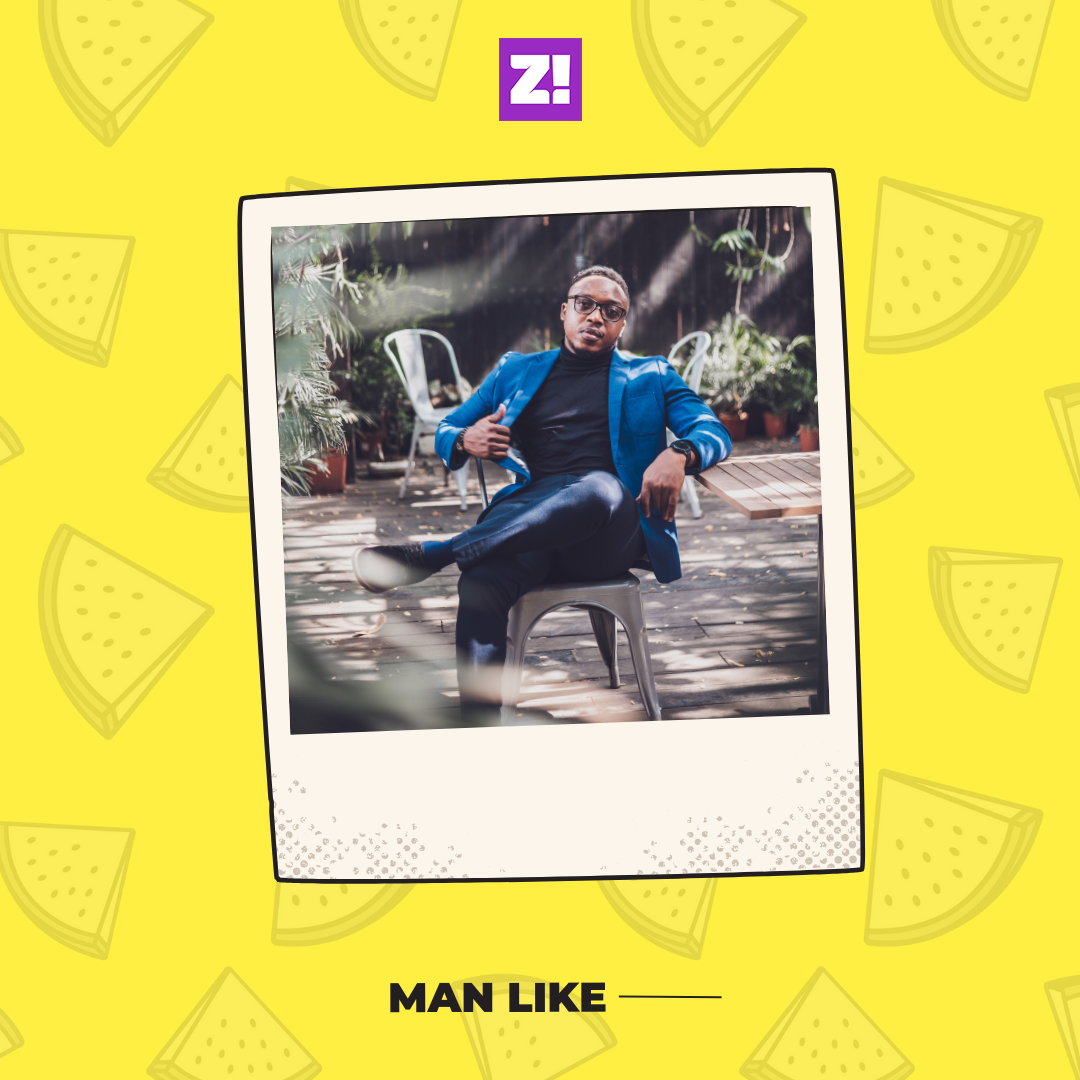
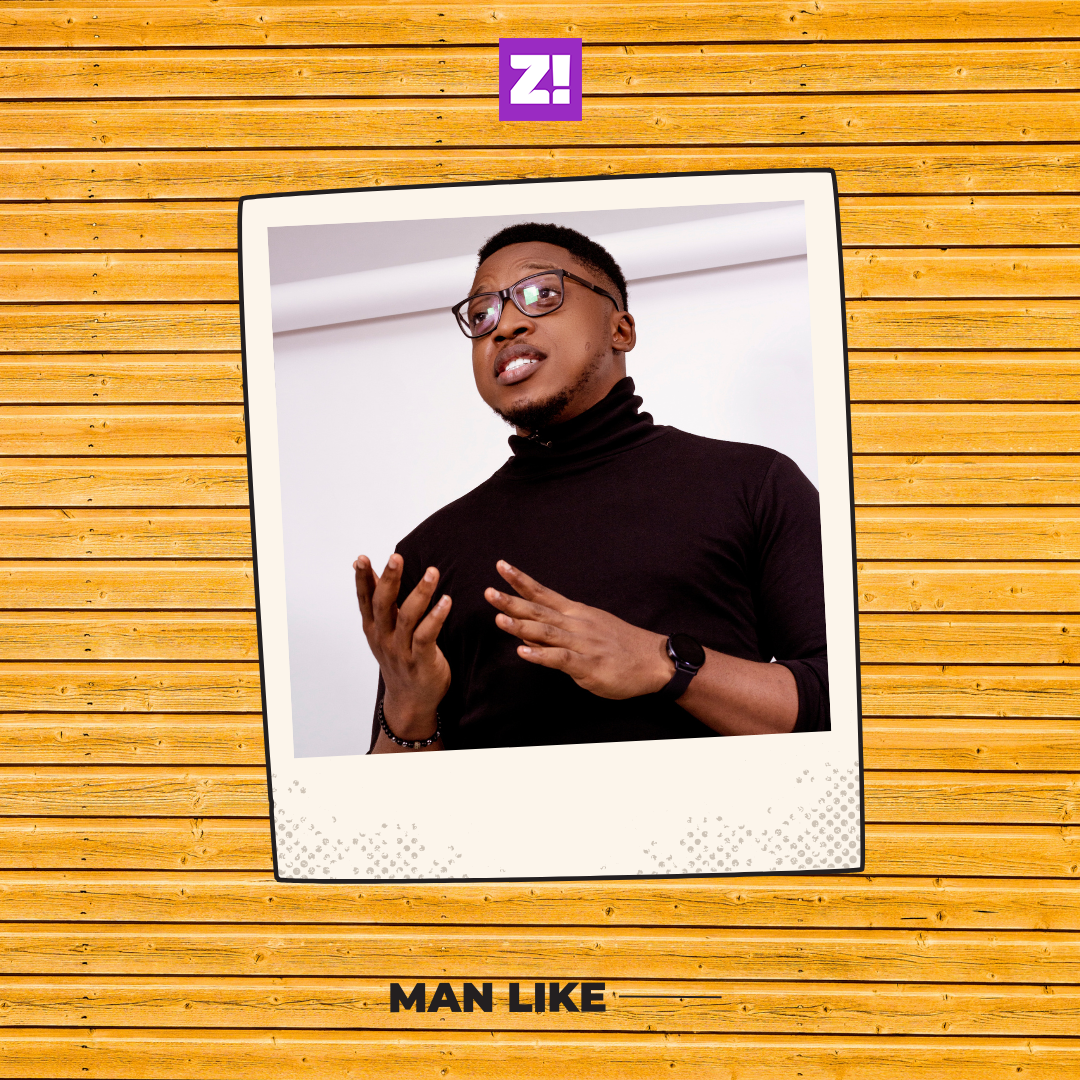
    The subject of today’s Man Like is Justin Irabor. He talks about how and why men should be responsible, the role of friendships in his life, and the things necessary for everyone to live a happy life.

    When did you get your “Man now” moment?

    I’ve been independent since I was a teen. But even then, I didn’t consider myself a man. I was just a boy who was hustling. It was during my NYSC year that I considered myself a man, which was weird because I had full-time employment before going for NYSC. 

    In my NYSC year, a set of conditions emerged — I was living on my own, I had an asshole for a  boss, and I was suddenly teaching and imparting young kids with wisdom. Back in university, I had roommates who were like father figures to me and coupled with the fact that I was the youngest in the room, I used to defer to them in terms of life experience. At my job before NYSC, my boss was also a father figure. Now, here I was with a boss who was an asshole and living alone far away from home. To me, that was my “man now” moment. 

    Whew. What was the hardest part for you?

    I was happy to be away from home, so I don’t think that any part was hard. Rent at the time was ₦25,000 per year and I was earning close to ₦100,000 per month.

    If I had to pick, I’ll say the hardest part was dealing with my boss at work. He was an asshole who was constantly flirting with the corpers. He’d ask me to cut my hair and change my clothes and I’d refuse. I could have done all he asked, but I wanted to antagonise him so I guess I was reaping the fruits of my labour. The beauty was that he couldn’t do much to me because I was always technically correct. And that’s how my life has been: being technically correct. 

    Lmao. Does anything/anyone even scare you? 

    What scares and drives me is not doing, to the fullest of my ability, the things I believe myself able to. People who know me call me “multipotentialite” because I can do a lot of things fairly well. Though they generally over-index on my ability to do things — I’m not as good as the reports say, but I appreciate the sentiment. It’s good PR. 

    What scares me is the obscure idea of people saying the “boy is good” while I know that I could be better. I don’t jump up when people say I’m good because I feel like the anime villain who’s supposed to say, “You fool, I’m only at 10% of my power [Laughs].” I don’t think I’ve given anything a hundred percent. That’s also part of the reason I empathise with Ryan Reynolds. You can tell that he has the potential to be a bigger star but he just coasts. You know he’s great but when you look at his filmography, you don’t see anything major outside of maybe Deadpool.

    One of my greatest fears is that I’m going to go through life being vaguely awesome. There are people who are clearly awesome and have a defined body of work to prove it. I feel like I have to do something like that to show that Justin is great and here is proof. Right now there are scatterings of my greatness, and I don’t have a coherent body of work. I’m working towards changing it and everything in my life is fuelled by the desire to do my best work. 

    Love it. What gives you joy though? 

    Most of the things that give me joy are fairly recent because I wasn’t particularly a joyful person. These days, I find joy in what makes a person amazing. Anytime I look at a person and I find what makes them great, I go ahead to tell them. It’s a very small thing but it makes me very happy. It’s one of those things that are bi-directional because it benefits both the person and yourself. It works this way: if you’re spot-on in your assessment, they will remember you as someone who saw their true nature, and they are incentivized to push for greatness. If you’re an employer, it’s a great instinct to have, knowing what unique traits individuals in your team have, waiting to be activated. 

    I get some joy from supporting my family. I get some joy from being in a relationship with someone who gets me. Until very recently, I genuinely believed there was something wrong with me on the relationship front because the things that people used to complain about me were almost the same thing masked in different forms: “Justin is a cold son of a bitch.” But I don’t feel cold. I feel like a very warm person. It’s such a relief to not feel the need to suppress core aspects of my being which was not always the case in previous relationships. I am with someone who gets me and that’s liberating.

    I’m also happy to be a software developer.

    Tech bro, pls do giveaway.

    Lmaooo. 

    You said something about growing up independent, so who did you go to for advice growing up? 

    My problem was doubly difficult because I’m super independent and also super proud to the point of arrogance. I never went to anyone for advice, and I figured out life on my own. In fact, whenever my brother asks me for advice, I admire him because he has something I don’t have: the presence of mind to ask for help. One of the reasons I’m a voracious reader is because I don’t want to ask anyone for advice. Whatever topic I don’t know about, I read up on. I have people who inspire me, but I mostly don’t reach out to them for advice. Once I have a problem, I take long walks and speak to myself. Between myself and me, we might come to some form of idea on how to begin to think about the problem. Sometimes I might talk to people. But typically I talk to people when I have a couple of ideas in place and need them to see what I have moved around in my head. 

    Interesting. What do you think you could have done better if you had someone giving advice?

    Sigh.

    In my first job, my boss offered to split my salary 50/50 — 50 cash and 50 in stocks. I didn’t take the advice because my dad was already splitting my salary 50/50. But sometimes, and not because the stock would have been great, I wish I had taken that offer because that advice would have jump-started my interest in money.

    Another advice I wish I had taken was when I had a breakdown in 2016 — a very private, quiet event — nothing dramatic. At the time, someone told me that the reason for my breakdown was that I was angry with the world because I thought I deserved better. He told me that to think I deserve better meant I felt my life had more intrinsic value than the life of a boy who sells pure water on the street. Naturally, I was upset because I thought the person was downplaying my frustrations because mental health is a super delicate affair. I thought about this for a while and I came to the conclusion that as far as life was concerned, I was not owed anything. In fact, with the way I grew up, I should have been worse than I was. I had done well for myself but I could not see it because I was always thinking about doing better, and that’s what triggered my breakdown. 

    I’m sorry mahn. 

    After that incident, my philosophy on life changed. I put my head down and started to let my work speak for me. If I had taken that advice sooner, I’d have arrived at where I currently am sooner. Because right now, I’m content. I’m not earning a billion dollars or riding the latest car neither do I have a house to my name but I’m content. This contentment fuels my obsession with my craft [whatever I’m working on] because I’m not thinking about being the best at it. I just want to be good at it because it seems like a noble pursuit. If I happen to earn an income and be wealthy as a result, that’d be great. 

    Please, where are they selling this peace of mind? Asking for a friend.

    Lol.

    Since you do a lot of things alone, I’m curious about the role your friends play in your life.

    My friends will disagree, but I think their role in my life is to stimulate ambition. Just by interacting with them, I have a mental road map for how much drive a young person should have. I’m so introspective, so I don’t pay attention to the world — where should I be? How much should I be earning? etc. But my friends do. And by watching them lay out their lives and track it, I borrow from them. I guess I’m lucky to be surrounded by some of the most ambitious and smartest people I know because they surgically implant ambition in me. 

    Wahala for who no get smart and ambitious friends.

    Lmao.

    What do you think is the hardest part of being a man in Nigeria? 

    One thing that is true about being a man in Nigeria is that it confers some expectations on you. These expectations are upheld not by the law but by your peers. One of them is the idea that you have to be the Gestapo of the house who controls all the affairs. As soon as you make yourself an unbridled authority on discipline, you’re creeping down the corridors of cruelty and you limit the amount of love you can get from your wife and kids. Then you grow old and wonder why your children love their mother more than they do you.
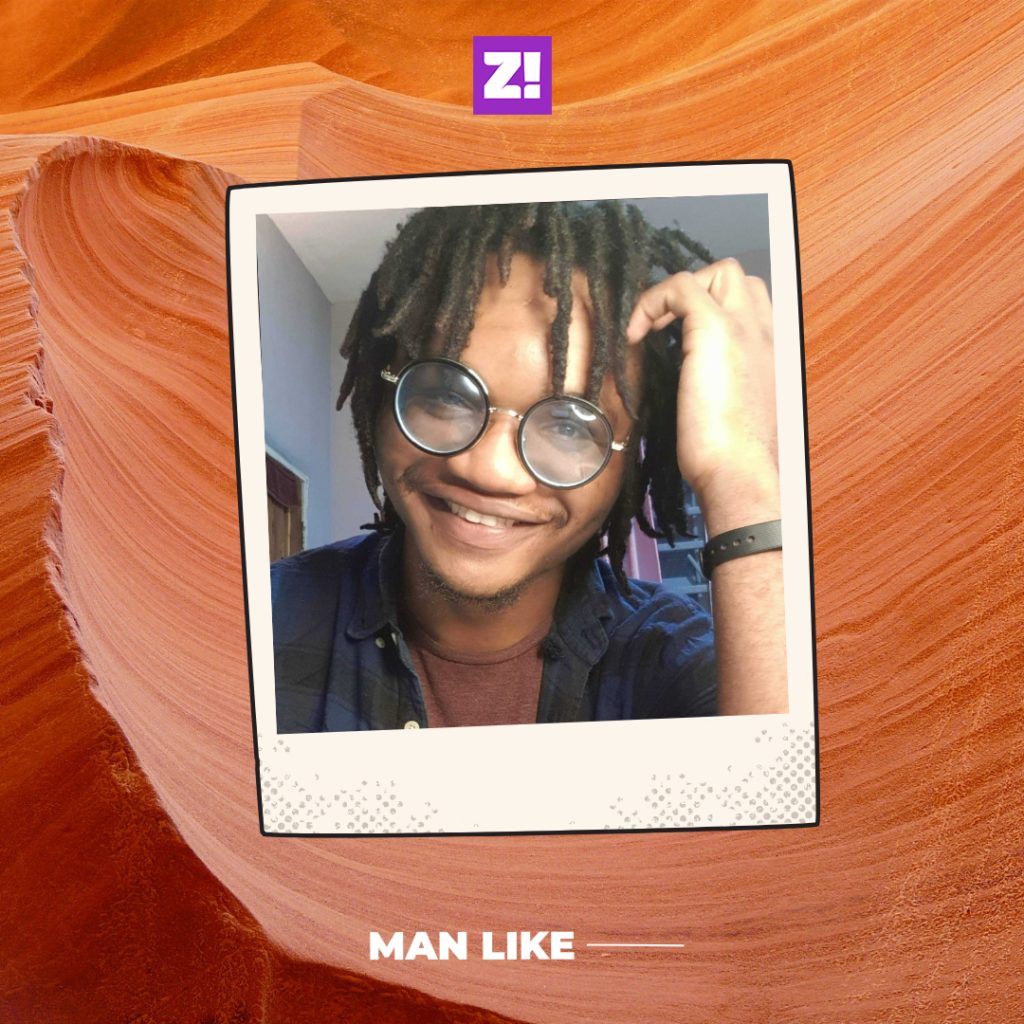
    By adopting unhealthy expectations on yourself followed by societal reinforcement, you unwittingly make choices that are detrimental to you. You then unthinkingly uphold them and force other men to abide by these bad principles, sometimes even going as far as classifying whatever doesn’t conform to these masculine expectations as weak.

    Nigeria makes it hard to find yourself because everything around you reinforces a particular notion of masculinity. It can be difficult to tell where you end and imported notions about masculinity start. And that can be confusing sometimes. 

    How do you now define your masculinity?

    I generally think of myself as a boyish man because I think youthfully about things. However, in terms of myself in relationship with other men, I understand my need to dominate. I want to enter a room and allow my presence to be felt. Because of this tendency,  I always feel the need to be tempered by a partner who’s not meek or timid because I think I’ll unwittingly subdue her. 

    I also think that although masculinity is something that gets bestowed upon you arbitrarily, it can be beautiful if you know how to use it. By virtue of being a man, you have the ability to protect a lot of people. The weakest man in the world can defend people today. This is a privilege that I wish more men internalised. 

    Sometimes, I see some men lamenting about how being a man is becoming demonised and how people are suspicious of men, and I’m usually like, men are really powerful beings and with great power comes great responsibility. The reason men can do a lot of good is also why you can do a lot of bad. We can’t increasingly acknowledge that we’re powerful and expect to be given the benefit of the doubt when many times we haven’t lived up to expectations. 

    I think of my masculinity as a tool I’ve been given to use responsibly. So I try to speak up for other people when they need someone to speak for them. 
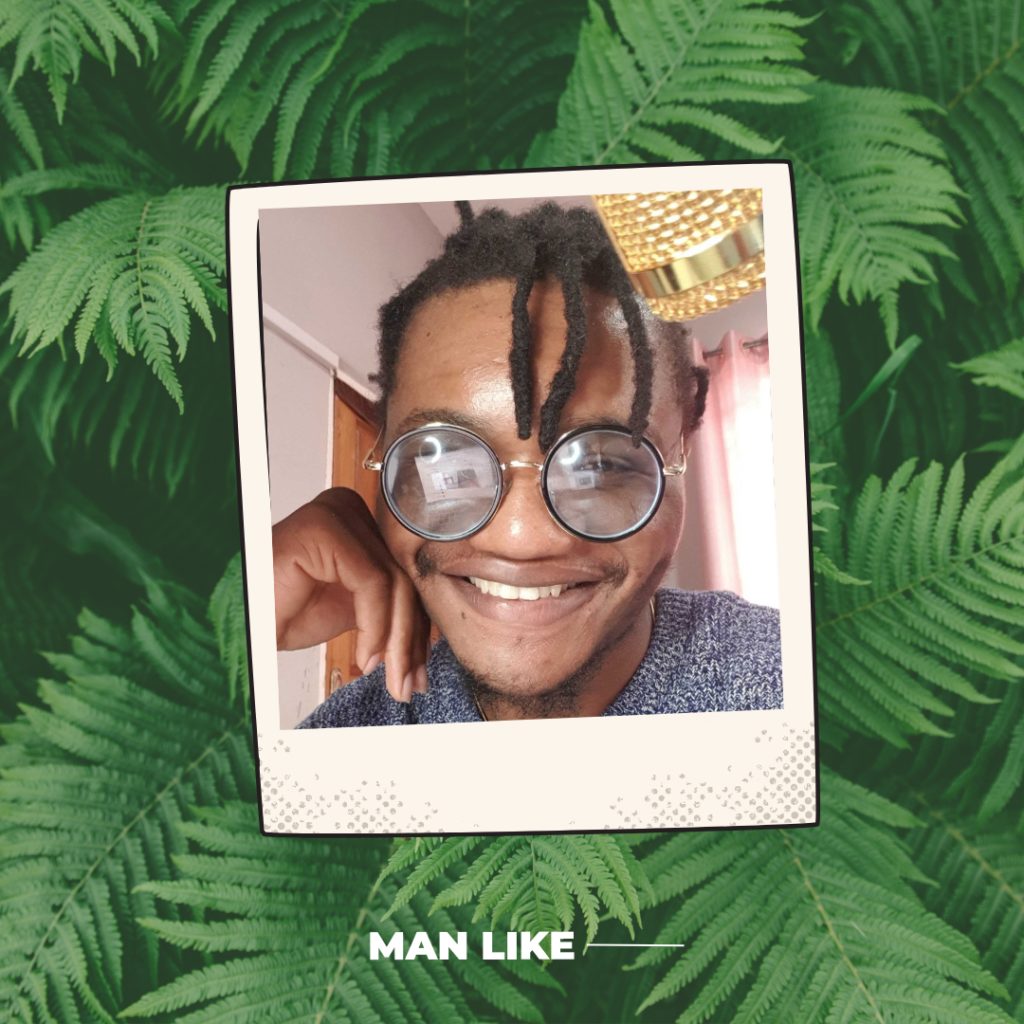
    I’m also learning to be vulnerable. As a younger man, I felt the need to be tough because I thought there was something reprehensible about being emotional. It wasn’t really affecting me, but people could never interact with me. By not showing all of me — strengths and weaknesses — people couldn’t know me. Being a man is me learning that I can be both vulnerable and responsible without muddying any waters. Being vulnerable doesn’t undermine my masculinity or make me less of a man.  

    In the spirit of being vulnerable, do you want to tell me your deepest darkest secret?

    No.

    Lmao. 

    Before I go, I want to ask what you think are some things necessary to live a good life.

    I think that being useful is the root of happiness — when I send money home, I feel useful. When I build apps, I feel useful. When I make something that makes my company a profit, I feel useful. Every time I’ve felt down is because I felt useless in the face of something. If you find what arrests all your sensibilities and keeps you working and striving, that thing is what will make you happy. Life is funny in that you don’t know what will make you useful until you get there, so keep pushing it. 

    Preach sis. 


    [donation]

  • What does it mean to be a man? Surely, it’s not one thing. It’s a series of little moments that add up.

    “Man Like” is a weekly Zikoko series documenting these moments to see how it adds up. It’s a series for men by men, talking about men’s issues. We try to understand what it means to “be a man” from the perspective of the subject of the week.


    The subject for today is Victor, and he’s the managing editor of TechCabal. He talks about the struggles of growing up effeminate, the challenges of toxic masculinity and what it means to be human.

    When did it first dawn on you that you were now a “man”?

    [Pause]

    The reverse to your question is that was I ever a child and the answer is no. I‘ve been responsible for stuff for the longest time. As early as eight years old, my mother would leave my siblings with me to take care of. I remember changing my sister’s napkins and her just crying. It was on one of these occasions that I cooked rice for the first time without supervision. I don’t remember the details, but the cry just full everywhere, so I had to do something. 

    After then, I graduated into worrying about family and stuff. I was very anxious — how’s the family going to be? What does the future look like? How would my siblings fare? This manifested in such a way that I went from thinking to going to look for work. It didn’t help that I was the first child, so there were expectations vs reality vs trying. I pulled nine million other stunts in the name of hustle and trying to contribute in my own way. 

    Mahn. Do you remember your first job?

    It was a mixture of things: I worked at a bookstore for a while. I also worked at construction sites doing manual labour. I think there was also work in a factory as a factory hand. 

    When I was doing these things, my age mates were not working. We’d just finished school, and they were carrying babes, but I had the mindset of  “what would I do next?” How would I apply myself? I guess that’s what drove me. 

    What’s something growing up like this does to you?

    I’ll talk about relationships — I’ve noticed that I’m always the carer. I’m the one worrying about the other person’s physical and emotional wellbeing. And it happens by default. I think my childhood of looking after people influences this behaviour.  

    Interesting. 

    What’s interesting is that I once dated someone that said I was going to have a midlife crisis because I didn’t have a childhood. The person was like I skipped some developmental phases, and it’d affect me. I don’t remember having the time or the mental luxury to play like a child. I can’t remember being a child.

    Did you ever talk to your parents about this?

    I had a period in my life when I was angry. As a teenager, I was angry at the world, angry at Nigeria, angry at my parents. The anger reflected in a lot of things. I was more physical; I had a temper problem, and I was just very angry. 

    However, the more experienced I got, the more I saw life from a different perspective. You’ve been born, and nobody owes you anything. I started to understand that I was in charge of my life to a large extent. I also strongly believe in God and the place of luck and chance in people’s destiny. The belief that my actions would be responsible for a lot of things helped my anger and resentment. The older I got, the more I saw my parents as human beings with their own flaws. By the time we started to talk, it was from a place of understanding. 

    And your siblings?

    I practically brought up my sisters. They were like my practise family. Until recently, I was very hands-on with them. I was trying to map their direction. I love the process of ageing and learning because it gives you perspective, and you see the world differently. I have come to accept that people will make decisions you don’t agree with and they’ll also be fine. My role is to support them. I love them very much, and I’m there for them to the extent that I can. Now, we chat, we text and all have a cordial relationship. 

    Nice. What gives you joy? 

    I think it’s important to make a distinction between joy and happiness. Someone like me, I can be happy at will. In making others happy, I’m happy. However, I think joy is one of those internal struggles that a human being embarks on until they die. Joy is a lifelong journey and there’s not one destination or route to it. I’m optimistic and at peace. I’m the kind of person who thinks that if I’m alive, the future will be fine. Inner peace for me is like a precursor to some form of joy because the pursuit is an unending one. 

    Philosopher, please. Does anything scare you? 

    Because of how I was brought up… I wasn’t brought up. Because of how I grew up, I quickly learned that the worst thing anyone could do was kill me. And if I didn’t die, I’d get through whatever challenge. I’m not saying I’m fearless, but I’m not constantly scared like OMG —  I’m not in that constant state of trepidation. Again, maybe I’m suppressing it.

    I’m more familiar with uncertainty. Uncertainty is exciting for me because I’m like, what does the future hold? There’s this thing in life where you make plans and it falls through. The knowledge that your well-stacked chips can just fall down is a vulnerable state; it sets uncertainty that’s akin to fear. It’s a blurry line between fear, excitement and uncertainty. I try not to think about it as fear, and I think that’s me being international in a Zen-like way.

    I’m curious. Who are your role models?

    Growing up, it was my dad. I had a great relationship with him, and he was instrumental to a lot of things. He introduced me to sports, creativity, and working out. But we weren’t always together. Somewhere along my late teens, separation happened, and he was no longer in the picture. 

    One of the biggest sources of my anger [growing up] was that I didn’t have anybody. At one point, when I was modelling, I wished there was someone to guide me. Most things I did in my life was basically just figuring shit out by myself — I’d just rough the thing. I’d read where I had to read. In other places, I’d put my head there and combine with hard work, smart work, God’s grace and luck. I honestly know that if I had guidance, I’d have gotten a lot of things “right.” In retrospect, it doesn’t matter because I think everything worked out the way God wanted it to. 

    Mahn…

    The experience formed the way I looked at role models growing up. I’d scoff at people who had role models. It’s ironic because I grew up needing these people. And by not having it, a defence mechanism came up. Growing older and wiser, I’ve realised that you need models: mental models and human models. And if you don’t have physical access, you can learn from them over the internet. 

    I have a tonne of role models. People blog and tweet and I know it’s not their life, but I’m like: I like this model of you and what you made of your career. Teach me how you did it. But I don’t need to talk to you. I’ll read your book, your blog or your tweets. My work also gives me access to talk to people, so I can throw in a question and learn from the person’s experience. Life for me has become like the role model — a mental model of everybody. It’s not intentional, it’s just circumstantial, and I’ve made the best of it.  I want to have things like career mentors that I talk to about my career. But I’m afraid, and I don’t want to bother someone. At the back of my mind, there’s still that inhibition that I’m being a bother. 

    At the end of the day, I’m still growing every day and trying to be better. 

    Heavy stuff. What was the hardest part of growing up as a man in Nigeria?

    One day, I’m going to write about how toxic masculinity is the worst thing that can happen to a boy child. In my early teens, I was effeminate. My earliest memories involved singing — I sang soprano. I read books and carried novels everywhere. I got a lot of  “Why you dey waka like a woman?” “Why you dey carry book like woman?” — this is gay.

    Growing up in Nigeria, there’s a lot of expectations of you to be manly. Most of it is societal norms that you are forced to conform to. I’ve heard people say it’s wrong for a man to rub cream like a girl, and they should do “like man.”

    I rebel against many definitions of manhood. For example, being a man doesn’t mean that when we’re gathered, we have to talk about who dey toast this one or who slept with this one. It stresses me out that there are adults still having that conversation. I’m talking about professionals. It’s stressful because it means that I can’t relate to a lot of young people who grew up this way. 

    I don’t want to be talking to you and the only thing we talk about is Arsenal and Chelsea. There are nine million other things for us to discuss and a world of interest that you probably have if you paid attention. But because your definition of being a man dictates that these are the things you talk about, we have to talk about them.

    I feel you.

    Being a man in Nigeria means being emotionally stunted. It’s just too much burden to place on one person. There are all these moulds in our mind that have nothing to do with manliness. You’re first human before you’re a man. If you start losing your identity because you’re attempting to fit into a societal male cast, then you have a problem. 

    Not every man is built to have a square chest, broad shoulders and slim hips. Some men are genetically built to have a big stomach, barrel bodies no matter how much they work out. Someone with a potbelly is not less of a man than I am. 

    I think the Nigerian definition of manliness is dangerous. Men think they own women or that they’re superior. These stereotypes make you believe that you own the world. And by fitting into this cast, you’re the king of the world; nobody can tell you nothing or sit with you. Then you grow up to become a shit human.  You should be human before being a man.

    Word. Tell me a major transformation that has happened between growing up and now. 

    I eventually grew up to be masculine, and became really sporty and athletic; I played basketball, did boxing, lifted weights. All these were antithetical to when I was younger where I had a lot of side comments to deal with. 

    At that age, I was impressionable, so the comments shook me to the core. This is one of the reasons why I can’t say this is what it means to be masculine. It took me a while to know that masculinity is not my identity. I’m Victor, and I’m human. I am kind and compassionate. I have the will to thrive. I’m a warrior and a survivor. There’s Victor from my early teens and there’s the current one, and both of them are masculine. 

    Sweet. What makes you human?

    MR NIGER D, and then empathy.


    Check back every Sunday by 12 pm for new stories in the “Man Like” series. If you’d like to be featured or you know anyone that would be perfect for this, kindly send an email.

  • What does it mean to be a man? Surely, it’s not one thing. It’s a series of little moments that add up.

    “Man Like” is a weekly Zikoko series documenting these moments to see how it adds up. It’s a series for men by men, talking about men’s issues. We try to understand what it means to ‘be a man’ from the perspective of the subject of the week.


    The subject for today is Nonso Egemba popularly known as Aproko Doctor. He’s a doctor, an actor, and health communications specialist. He talks about sacrifices made for him growing up, the new wave of broken men, and navigating male friendships as a married man.

    Tell me the first time it struck you that you were now “a man”?

    Immediately after university. I come from a family of three siblings and a lot of sacrifices were made for me to attend university — my mum sold ogi and Akara to see me through medical school.

    I’d watch her fan smoke for fire and be sad because I knew the hazard. However, knowing the hazard is one thing, putting food on the table is another. In fact, during school breaks, I’d help out with fetching firewood and selling akara. 

    1—–

    One of my biggest worries at the time was that none of my classmates should come to buy Akara. So that it’d not scatter my rep in school. Thankfully, I was good all through. 

    Whew! 

    The moment I finished medical school, the demands [for money] kept coming. At some point, I was like, I have to jazz up. One of the things that hit you hard as a man in this part of the world is that most men are expected to provide. I’m not saying it’s not expected from women, but it’s almost as if the burden is more on men. A lot of us tend to judge our effectiveness from the angle of  “am I able to provide for the people I care about?”

    As I was finishing school, I knew that I couldn’t joke around anymore. I just had to make it work. 

    Mahn. That’s heavy.

    See, all I’m trying to do is to run faster than poverty. I never want to experience it again. 

    What’s something poverty does that’s difficult to explain to someone who hasn’t experienced it? 

    The constant lack changes you because to get something, you have to sacrifice another. That mindset is something that stays with you. Even when you escape poverty, you have to keep fighting it. For many people, something as simple as buying bottled water is mundane. But, if you had my kind of background, in some part of your head, you’re thinking, that’s five sachets of pure water

    Every day is a constant battle against that mentality — I tell myself that I’m no longer that person. I also remind myself that “problem no dey finish, try dey enjoy.”

    A movement I endorse. What gives you joy? 

    Top of the list is seeing my parents happy. When I give them gifts and help them solve issues, it feels like their sacrifices were not in vain.

    Another thing is impacting people’s lives. Only a few people know how my Twitter threads have changed people’s lives. I remember someone who saw a thread on how to save a choking baby. When her baby was choking, she followed the steps and it saved her baby. Things like that show me I’m making a change in the world and my work [health advocacy] is not in vain.

    Ahan, Superman dey disguise. 

    [haha] Video games also make me happy. I’m a fan of Call of Duty any day, any time. Once I pick up my rifle, I just go bam bam bam. 

    Lmao. I’m curious: what’s your definition of masculinity?

    There’s a picture of Atlas carrying the world on his head — that’s the picture of masculinity I have in my head. Men are, first of all, pillars. A good society rests on the shoulders of men.

    Men protect, provide and nurture. I cringe to see standards that try to default men to a background role. I feel that if you take away from what men are supposed to be, you’ve destroyed that particular man. It’s almost as if we now have men who apologise for being men. I’m not talking about anything bad. I’m talking about taking charge, which is ingrained in boys from childhood. As kids, if there was a reason to climb the burglary proof or fridge, nine out of ten times, it’d usually be the boy child who would. 

    When men shy away from taking charge by nurturing and providing, then we have problems. You can’t be nurturing a woman and be beating her up. You can’t be a pillar in her life and abuse her. It’s almost as if we have a generation of broken men in society who think taking charge involves brute force. 

    The world has moved on; use your brain. It’s not a competition because no one is trying to take manhood from you. It’s only when men are insecure that they need to show their masculinity. When statements are made to reinforce masculinity, it’s usually closely related to violence — “do you know who I am?” “I will show you today that I’m a man.” Before you know it, there’s a slap or a blow. 

    No, there are other ways to show masculinity.

    Interesting. Has anything ever threatened your idea of masculinity?

    My wife is 6’1” and I’m 5’10”. Initially, people would say things like, “how you wan take climb your wife?” 

    It almost started getting to me. But then, being a man is not about muscle mass. Yes, many men have more muscle mass than women, but if that’s the basis of your masculinity, then you are a very fragile man. What if you get paralysed from the neck down? Does that mean you’re no longer a man? I’ve had to ensure that “being a man” is not based on how well or how tall I look. When I look at my wife, I trip all over again. Abeg my babe fine, see as she just tall like shege.

    Lmao. What are some things you wish you knew before getting married?

    No matter how much you love a person, they’ll annoy you. Many things will annoy you: the way they chew food, the way they drop stuff, the way they use toothpaste. And it goes both ways. Marriage teaches tolerance because you’re sharing your life with someone from a different background. It requires a lot of unlearning, relearning and compromise. 

    Another thing is understanding that when you argue, face the problem and not the person. When you attack the person, you end up missing the problem.

    I’m jotting things. What’s a relationship deal-breaker for you? 

    Someone whose ideology of marriage is “I just want to be relaxed and be taken care of.” 

    Will I take care of you? Yes.

    But if you don’t want to work, I don’t want to be with you. As a result of my background, I have the mentality of getting things done. I don’t want someone comfortable with sitting down and waiting for things to come to them. I want someone who’s also a dreamer and wants to be more than what they are right now. I don’t want someone whose only identity is “wife.” I want my wife to win in her sphere so that we’ll both be powerful.

    Ahan. The Carters. 

    [laughs]

    I’m curious. Do you have close male friends? Has marriage affected your friendship with them? 

    Yes, I have two. Sorry, I mean I had two because one passed on recently.

    Wow. I’m sorry.

    He was my best friend. Sometime this year, I got a call that he slept and didn’t wake up. When I heard the news, I didn’t cry because hard man, hard man. 

    It was two days later when it fully hit me that my friend was gone that I cried the kind of cry that had catarrh running down my nose. 

    I’m so sorry.

    Back to your question. When I feel down because things in my life aren’t working out the way I think they’re supposed to, I call my friends… friend

    I call and rant and he’ll be quiet, listening. When I’m done, he gives me that back to reality talk — that it’s not as bad as it looks, which is true because we overestimate the importance of things. It helps to have someone that brings you back to reality. 

    It also helps that I’m married to an amazing person.

    How so?

    I’m lucky to have someone secure enough to know that talking to my friend doesn’t mean that she doesn’t have a place in my life. When I’m on the phone discussing issues with my friend, she understands that we’re having a man moment. 

    She also understands that I’m calling because I want a man’s perspective on the issue. And that’s something she can’t give no matter how much she loves me. I like that she doesn’t try to be everything for me in one person. She knows she can’t. I respect her by making sure that there’s nothing that they [friends] know that she doesn’t know about.

    Is there space in the marriage?

    Nah. It’s just the two of us. 

    Lmao. Tell me something you’re grateful for.

    Many things. One is that I can take care of my mum; she no longer has to expose herself to the smoke from frying. I’m glad that her effort was not in vain. 


    Check back every Sunday by 12 pm for new stories in the “Man Like” series. If you’d like to be featured or you know anyone that would be perfect for this, kindly send an email.