• The last thing anyone wants to endure while mourning a loved one is overbearing relatives or friends who are too self-absorbed to offer real support.

    But that’s the experience of the 5 Nigerians we spoke to for this story. 
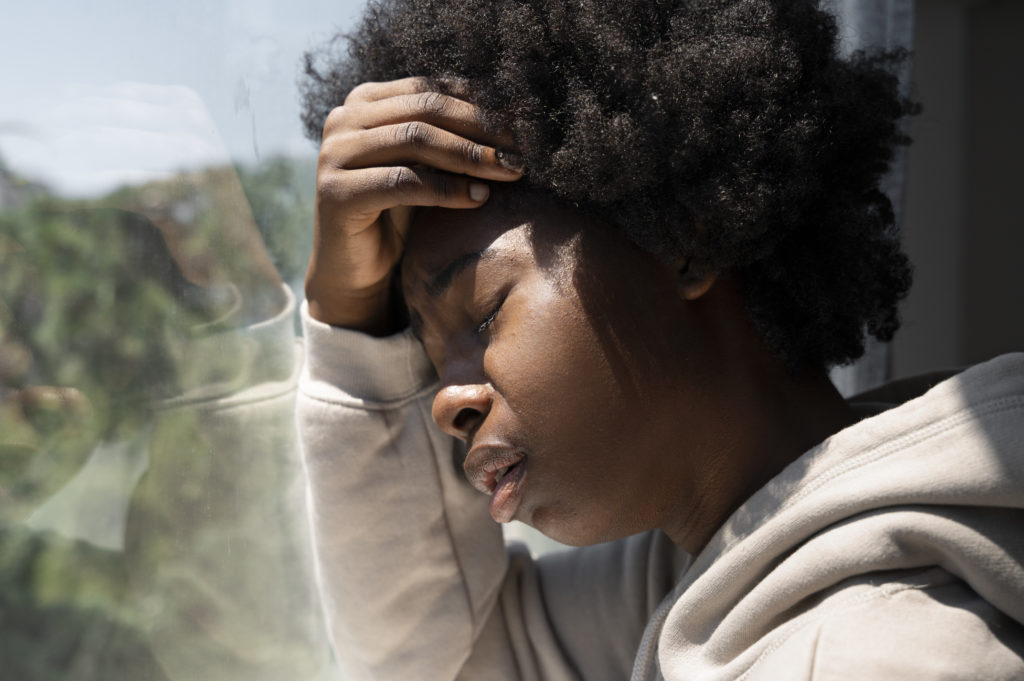
    Image by freepik

    Seun*

    I lost my dad while I was in university, and all I wanted was support and genuine love from those I considered family.

    My extended family pulled the classic move of blaming my mother for my dad’s death. My disdain for them grew when they wanted her to travel home before the burial for some disgusting rituals like sleeping in a room with his corpse, rolling a chicken over her head, and other vile things. Thankfully, with the support of strong allies, that didn’t happen.

    During a meeting with my uncles and aunties in the village, they said the most terrible things about my family. They assumed my dad was filthy rich and blamed my mum for not spoiling them enough. They even called her a witch and accused me of not caring about my dad. They queried me for being in school during his last days in the hospital. The truth is, my dad had insisted I shouldn’t be told so I could focus on my studies.

    In the end, they tried to reconnect with me, but I shut them off on all platforms. Looking back, it really hurt how they treated us. It felt like a Nollywood movie. Today, I’m grateful for the lessons I learned and that none of those vultures saw me become anything before revealing their true colours. May God judge them all, on earth and after.

    Deborah*

    I wanted privacy the most when I lost my dad. I wish we hadn’t had so many visitors, and I wish I didn’t have to think about office work. I also wish we hadn’t rushed the final burial — it felt like a party, and I wasn’t in a celebratory mood at all.

    While I didn’t have any issues with my relatives, there was an incident with my mum and step-siblings that I didn’t appreciate. My step-siblings had an argument with my mum about the saara (almsgiving) and prayer session. My mum wanted a private event for my dad on a different day, but my stepsiblings insisted on a general one. She explained that her session was something personal for her late husband, but they didn’t see the need for two separate events. That wasn’t the drama I wanted at the time.

    [ad]

    Hassan*

    My dad spent a lot of time in the hospital before he passed, and a large chunk of our family’s finances went into his care. After he died, we had about ₦1.7 million in hospital bills to settle. I would have appreciated any financial help we got.

    But our extended family couldn’t read the room. They constantly asked me or my mum for money to buy petty things. It got so bad that they expected us to drop money to buy bread one morning when a neighbour gave us a pot of stew. Another time, we ran out of water, and one of them asked for ₦500 to buy a bag. Their presence became so irritating.

    Wahab*

    After our dad died, my siblings and I were in panic mode. We were still in university, and dad was solely responsible for our school fees and other expenses. I needed reassurance, someone to tell me things would get better, because my anxiety about the future was through the roof. I could hardly sleep and felt a constant knot in my chest.

    Sadly, this was when my dad’s sisters decided to act up. On their first visit, they asked for the landed property documents belonging to their mum(my granny). They said that since my dad, the firstborn, was gone, it was only right that the documents were passed to them. My mum didn’t want to get into any property tussle, so we handed the documents over. But it made us super-guarded about my dad’s properties. They later tried to excuse their actions, but it was too late.

    Busola*

    The first time I felt resentment toward my family was after I lost a friend. I don’t have any female siblings, so she was like the sister I never had.

    After she died, my parents and siblings just said “sorry” and expected me to move on. I still had to cook, clean, and do other chores around the house. They never said it out loud, but their actions clearly pointed to one question: “Is she your family?”

    It would have been nice to feel loved and cherished by them during that time, but I didn’t get any of that. I was constantly hungry but had no appetite to eat the food I made for them, and I was too sad to make myself anything or go out to buy food.

    Read this next: I Couldn’t Find My Mum’s Grave, and It Broke My Heart

  • The loss of a parent is a life-changing, earth-shattering event. These Nigerians talk about how losing a parent has shaped them and the life they now live.

    Salem, 50

    I was the original daddy’s girl. My father and I were close; he was my friend, my confidant, and my defender. He died at 78, and I know people think that’s old enough, but it isn’t. My father was agile, and he didn’t look his age. All his life, I never saw him ill.  His first illness took his life.

    When he died, It felt like my life was over. I had never been without him in my entire life, and I didn’t want to be here without him. I’ve felt alone since. I still dial his number when I’m upset so I can vent. I’d go through an emotional event and want my daddy, only to realise that he isn’t here anymore. 

    My life has changed, and I’m not the same person I was before he died. I have tried finding that person, but it seems she’s lost forever. I am a new person, and I am still getting used to her.

    Ona, 24

    I was 14 when my dad died, and I spiraled because of it. I was depressed and did things I’m not proud of; I avoided people for two years. I’ve learned to cope better with it now. Sometimes, it hits extra hard, and I cry, but I’m doing better now. 

    I still miss him though. I don’t know if I’d be the person I am right now if he was here, but I’d still rather have him here. 

    Ani, 20

    My dad and I didn’t have a strong relationship, so when he died, I found it hard to grieve or miss him. There was no emotional connection there, and it was easy to move on from his death. The only time he comes to mind is when we celebrate his remembrance, and people praise the man he was. That’s it.

    Laura, 25

    My dad passed away when I was 2, so I don’t remember much about him. My mum died when I was 16; this one I remember. It was four days to my 17th birthday, and I don’t think I’ve been able to move from that age. I feel like life has been passing me by. 

    It’s been very depressing since she died. When she was here, talking to her fixed everything that was wrong with the world, but now everything’s just shit. My depression has gotten worse, and I still feel like such a sad person, no matter what I do to spark joy. Happy moments are not just happy anymore — they feel bittersweet because she isn’t there to witness any of it: my graduation, getting into my first relationship. I’m second-guessing getting married because she won’t be at the wedding, and I’m scared it’ll be a very underwhelming day.

    Leo*, 28

    My dad died when I was 18. Before he died, I strongly believed that death could never be me or my family’s portion. I never thought it would happen to my parents, but it did, and I cried a lot. I used to live my life with no care in the world. Daddy was there, and everything was going to be fine. His death was the reality check I didn’t think I needed. I’ve had to be more responsible and be accountable for my actions.

    It took a while, but I’m laughing and joking more now. I’ve already seen the worst that life has to offer, so I might as well appreciate every day  and live to the fullest.

     Adekunle, 24

    I lost my mother three years ago. She was the best thing to ever happen to me. I’m her last child, and we were close because we spent a lot of time together. Since she passed, life has been scary. I’ve felt alone and, quite frankly, cheated. She was there to guide my older siblings and help them navigate life after school while I got nothing. 

    Deep down, I know it’s for the best that she left when she did —she was sick and in so much pain, but it’s just hard to reconcile both feelings. 

    Pae, 20

    My dad passed from cancer when I was 13. We were really alike and did a lot of things together. I could sit in complete silence with him and not be discouraged for not going outside to play with my cousins. He understood and loved me just the way I was. 

    I barely remember his funeral or anything from that time. All I remember is seeing him in his coffin before he was lowered to the ground. 

    I don’t think I’ll ever heal from losing him. I feel like I don’t have anyone in my corner anymore. I miss him every day.

    Jerry, 25

    Losing my mum was devastating. She had this habit of going into everyone’s room to pray for them in the middle of the night, and sometimes, she would sleep off. That night, she slept off in my room, and I woke up to my dad crying over her body. 

    I remember being tough on the outside. I didn’t,cry in front of anybody but I cried myself to sleep every night. I didn’t have my mum to shield me from the shitty world outside, and I became depressed and suicidal.

    It’s been 13 years since she passed. I’ve finished primary, secondary, and tertiary education and will maybe go further. I’ve gotten a job, lost a job, and am currently in another. I’ve gotten my heart broken, healed, and built good relationships. I’ve travelled out of the country. I’ve found love. Having her around for all those experiences and life phases would be nice, but it is what it is. I’m in a good place, and it can only get better.

    Abigail, 19

    My dad passed away when I was 12. He was easy to talk to, forgave people, and always provided. I lacked for nothing when he was around because he provided everything for me. His death changed my life. When he was around, there was money and suddenly, there was no money. I switched schools and houses. It all happened so fast and no one wanted to grieve with me because I was a small child. 

    I had to grieve alone and I’m still grieving to this day, not just for my father but for the life I could’ve had if he had been alive.

    [ad]

    Lucky, 28

    I lost my mum when I was 14. When she died I became a shell of myself, numb and disconnected from everything. I couldn’t eat, sleep or read for the first three years. My anchor had gone, and my world had stopped spinning. It was horrible. I was drowning in the loss and I tried desperately to detach from it, but now I’ve accepted that it happened, and there’s nothing I can do about it.

    Alma, 21

    My dad died when I was 17, and Iit left me mostly in shock. The regret began to seep in when I realised I would never get to spend time with him anymore. He worked away from home, and losing him made me realise there was so much about him I would never experience in real-time.

    Losing my dad shaped certain decisions about my life. It motivated me to work for a first class, which I eventually did make. It also strengthened my relationship with my mum. It still hurts knowing that he won’t be there for the important milestones in my life.

    Tunde, 33

    My mum died during my service year. I was 25 and I cried in the car from Zamfara to Lagos. She was my world, and I feel like death took her away too soon. Her death made me realise I had to become independent. I wasn’t a mama’s boy, but I knew I could always count on her for anything, so I never really put my all into making my way. 

    Kay, 27

    I was 11 when my mum passed, and for the longest time after her death, I believed everyone who got sick was going to die. I got seriously ill a year after her death, and I didn’t even bother getting treated. I just accepted that it was my time.

    Since she died, I’ve been closed off. I don’t see the point of letting people in because what if they die too?

  • As told to Kunle Ologunro

    When the subject of this story reached out to me — ‘I have a story, but I don’t want to write it myself. I have never told anyone because I have been in denial about it, and it’s time I unburdened myself’— I wondered what their story would be.

    How does it feel to lose a parent to addiction? Or worse, to find out that the family members are working overtime to make grieving difficult for you?

    What do you do when you find your father’s body posted on Facebook by someone who is not a member of your family?

    This person’s experience gives you a glimpse of everything that could possibly happen.


    For five years now, I have tried denying the fact that someone posted pictures of my dad’s body in his casket on Facebook, and he captioned it: “Vanity upon vanity.” This person isn’t a family member, but he felt it was okay to take these photos and share them on Facebook for everyone to see.

    ***

    My father was a very responsible man. He had a successful military career and a great stint as a two-time special adviser, but he battled with one thing: alcohol addiction. Often, our loved ones go through difficult things we have no idea about. Usually, these things hide in plain sight. Sometimes, we love them so much that we see it, and other times, that same love blinds us, keeping us blissfully unaware of their struggles.

    With my father, I think it was a mix of both: love that helped us see him, and love that blurred our vision. We were uninformed about the addiction; we loved him so much that we could not address it. And to be fair, we never had to address it. Though he drank a lot, he never lost his cool, and the drinking was a part of his life that he kept separate. But you can only keep an addiction a secret for so long.

    The first time I became aware that my father had a problem was the day I found, in his library, books about addiction and how to fight them. That day, I saw that he had acknowledged the problem and was willing to fight it.

    ***

    One night, my dad and mom went out. When they returned, he was in physical pain. He was vomiting and could barely walk, he had to be carried to the hospital. After days of testing and treatment, it was confirmed that my dad had Type 2 Diabetes. Everyone thought it was hereditary because my grandfather had that same illness. But those who were close to my father knew it had to have been the alcohol.

    And yet, despite how much my father struggled to quit, he always failed. He drank until his diabetes led to a heart problem and then liver failure. I and my mom didn’t think he would die because money for treatment was never the issue. But one day, inside the intensive care unit of LUTH, my dad had a heart attack. And just like that, he was gone.

    ***

    Grieving him was the next stage for me and my siblings. I was the closest to my dad and even though I was hurt, I spent a lot of days in pure denial. I was happy, bubbly, and people that came to console us were confused about this level of ‘normalcy.’ That was the only sane period we had before my father’s family came around and scattered everything.

    My father’s family members are proper assholes. Planning his funeral showed me that. As soon as my father’s death was announced, I launched into alert mode. I was 16, and I remember hiding my mom’s wedding certificates, the land documents and other receipts because family will always be family. And they stayed true to character. The moment they arrived, they let us know they were broke. They didn’t stop at that. They made inquiries about my father’s properties, and even though I had gained admission to study Law by then, one of them asked me if I could consider working as a house help.

    The military handled the funeral cost and we had to bury him at home because we didn’t want to fight about the property with his siblings. My father was buried in front of the house. We tried to convince them to bury him in the backyard, but apparently, it’s against Yoruba customs to do that. My mom’s room faces the part where his grave is. She no longer opens the curtains in that area. It hurts a lot to see your father buried in a place you used to call home with him. But what hurts, even more, is seeing people treat that part of the house as a taboo. I have a complicated relationship with the gravesite. Sometimes, I don’t want to go home because it is the first thing I see. And sometimes when I am alone in the house, I go there to sit and just talk to him. Doing that brings me peace.

    ***

    But let’s go back to his funeral and how his family members put on the greatest drama since Fuji’s House of Commotion. During that funeral, my dad’s youngest sibling had a fainting spell that was easily cured with a can of Malt. One of his younger sisters fought because of party packs and Jollof rice, and yet these people didn’t drop a dime.

    I should let you know that my dad’s siblings are educated. And I mean Masters level education, so to see them act like this was beyond all of us. At some point, my dad’s sister asked us (again), about my dad’s properties and said my siblings and I should send our account numbers. That was the end of it. To date, I haven’t seen any of them, and that’s fine with me.

    A few weeks after the burial, we found out that someone carted away all my dad’s wristwatches, about twenty-something designer pieces, and perfumes. His designer shoes and shirts, all of them gone. Even his car battery.

    ***

    After the funeral, tensions cooled down. It was then that my siblings and I came to accept the truth that we were now fatherless. Our lives would definitely have to change. One day, I was bored and I remembered how much my dad loved Facebook. While he was alive, we blocked him, but now that he was late, I wanted to see what he used to post about.

    I couldn’t find his account, so I ran a general name search. The first thing that showed up was my dad’s body in his casket with the caption, “This world is vanity upon vanity.”

    At first, I was shocked. There was my father’s body, laid bare for the Internet, a world of strangers, to see. Why would someone do that to him? Why show him at his most vulnerable? I closed the page and I never returned to Facebook.

    Later, I found out who posted it: one of the guys that used to perform with the live band my family used at our events. I never mentioned this to anyone. Not even my brothers.

    ***

    Forget all they say about Igbos and their burial rites, Yoruba culture isn’t any better.

    My mother couldn’t leave the house for 42 days. She wasn’t supposed to watch TV for that 42 days too. We, her kids, were told not to sleep on the same bed or on the same couch with her because it would affect our luck. She was only fed ogi (pap) and eko for a long time, and she had to use different plates and cups, not the general plates at home.

    She was supposed to wear black for one year. No makeup or partying for the whole year, and she had to seek express permission from her in-laws to stop wearing black, or dark clothing after one year, and then the clothes she wore were burnt.

    As her children, we were also not allowed to see our friends off because, according to the family, it would bring bad luck.

    My father’s family held on to these ‘customs’ so much. Once, I asked them if a man whose wife died would be put through the same thing. They said no, a man was to mourn for just 3 months because he’s a provider or something like that.

    ***

    The military never paid my father’s pension. In fact, some members of the pension board issued a death threat to my mother when she tried to push the issue.

    ***

    I no longer communicate my emotions properly. I hate pity, and at that point in my life when I lost my father, pity was the only thing everyone wanted to give me.

    I remember now, how a close family friend called us immediately after my dad’s funeral.

    “You all should remain close to each other now,” he said.

    “Yes, sir.”

    “And, please, be vigilant oh. You know how your father’s siblings can be.”

    “Yes, sir.”

    And then he called me to one side and said, “Take it upon yourself to ensure that your siblings stay away from alcohol, you hear?”

    “Yes, sir.”

    “Always talk to them oh.”

    “Yes, sir. Thank you, sir.”

    This man had good intentions, but the entire conversation was poorly timed. And yes, I was so scared of alcohol but life works in mysterious ways.

    Now, I outdrink everyone in my family.


  • Even though everyone has experienced loss in some way, it’s still a personal experience. You might have good intentions but telling someone you know exactly how they feel invalidates their pain because everyone experiences loss in wildly different ways.

    Translation: “It’s a normal part of life.” This is a super insensitive thing to say to someone grieving the death of a loved one. Just because death is inevitable doesn’t make it suck any less. It’s still fucking hurts.

    Translation: “Don’t Cry Like A Little Bitch.” People express their pain in different ways. Instead of feeding them this line (that stems from the lie that showing emotion makes you weak), tell them to let it all out however they see fit.

    Translation: “I, too, lost a loved one once.” It’s the much ruder version of “I know how you feel” and you will get punched in the throat for it.

    This one is even worse when the deceased didn’t die of natural causes. Do you realize how fucking insensitive you sound when a 25 year old dies in a car accident and then you tell their grieving loved ones that it was God’s will??

    Focus on the person feeling the pain, not the person who died. The pain of loss comes from missing the deceased. Saying they’re in a better place (emphasizing that the person is gone) makes things worse for the person left behind.

    What’s up, Zikoko Fam? It would mean the world to us if you spared a few minutes to fill this Reader Survey. It’s so we can bring you the content you really want!