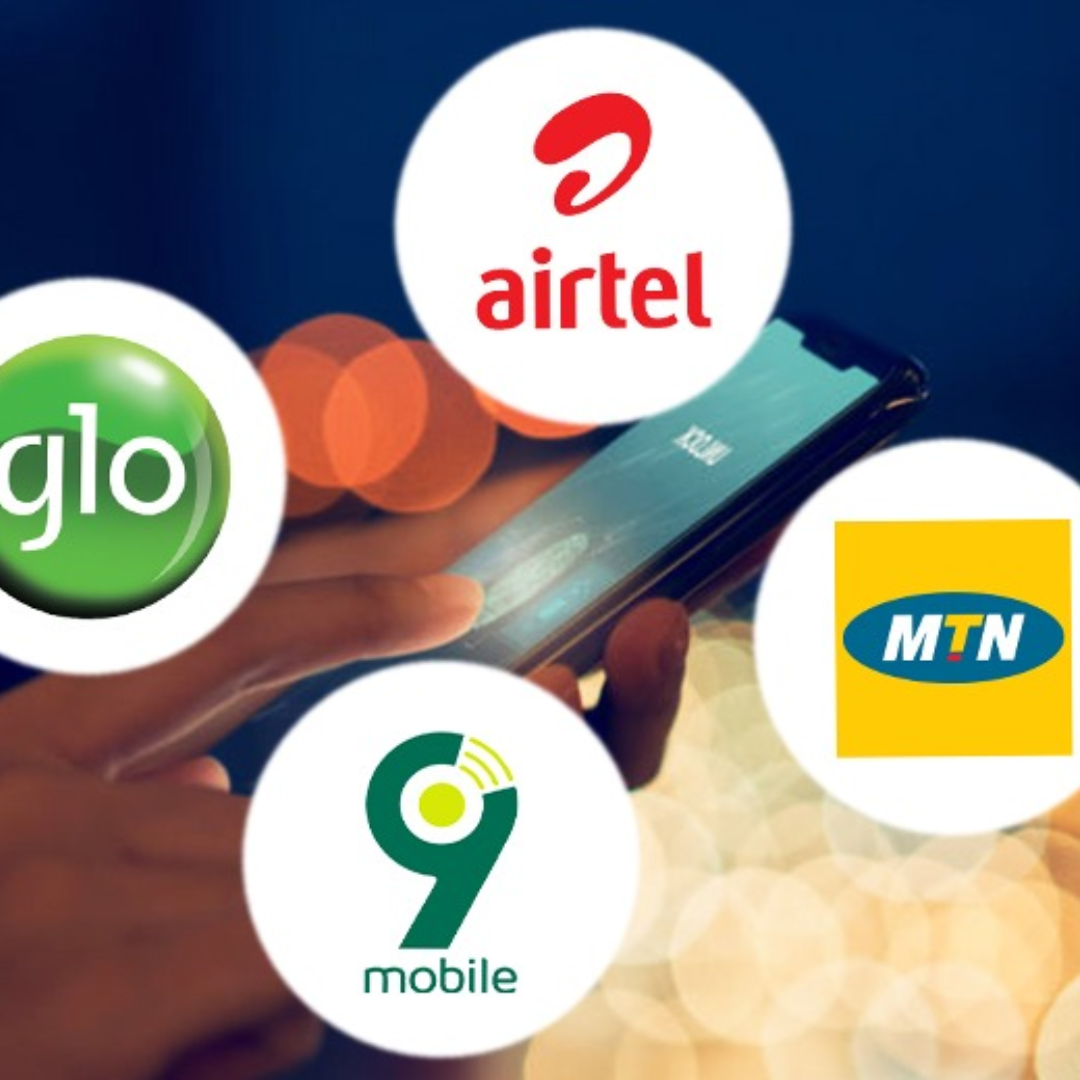
Unless, of course, you live under a rock, haven’t touched your devices today, or are completely drowning in the news of Trump’s endless Presidential orders, you must have heard by now that the Nigerian Communications Commission (NCC) has made an announcement saying it’ll okay an increase in tariff rates charged by telecommunication companies in the country.
You might have also heard that there are plans to sue the federal government over the increment. We tracked the entire story so you don’t have to.
How it started
Since 2024, the Association of Licensed Telecom Operators Of Nigeria (ALTON) and the Association of Telecommunication Companies Of Nigeria (ATCON) have begged the Nigerian government to allow it to increase the prices of their services. To plead their case, the two associations pointed out that the telecom industry was the only industry that had not experienced any price increment since 2013 (12 years) and that a price review was not only long overdue but was compulsory to avoid the collapse of the industry.
ALTON and ATCON’s request was made in the first quarter of 2024 but it was not granted–the Nigerian Communications Commission (NCC) told them it would conduct a cost-based study to decide if it would approve their request but as the year drew to a close in December, the telco operators showed they were not backing down by announcing they might suspend their services in some parts of the country if their demands are not met.
A brief back-and-forth
The telco operators asked for a 100% increase but the NCC said it was not going to approve that because it would weigh down on Nigerians who are already seeing immense shege due to the crazy inflation rates, hike in fuel prices, and other issues in the country but the companies weren’t having it because they too were suffering from the same issues.
On Wednesday, January 15, The Minister of Communications, Innovation and Digital Economy, Bosun Tijani, said again that while the government was considering the request from the telcos, there was no way it would approve a ten per cent increase but would instead keep it within the 30 to 60% range. This time, the Association of Telephone, Cable TV, and Internet Subscribers of Nigeria (ATCIS-Nigeria) said it wasn’t going to happen on their watch.
Increment announced
On Monday, January 20, the NCC announced it had decided to increase the tariff by 50%. The announcement came in the form of a statement signed by NCC’s Director of Public Affairs, Reuben Muoka, and we read it so you don’t have to.
In the statement, the NCC basically says that it landed on this decision after “taking into account ongoing industry reforms that will positively influence sustainability.” The commission also reminded Nigerians that tariff rates had not been increased since 2013, even though the cost of providing the services has since skyrocketed and that the increment is compulsory in order for the telecommunication operators to operate in a way that’ll benefit the customers.
The NCC did not state a specific date when the tariff hike is expected to start, but it instructed telecommunication companies in the country to first “educate and inform the public about the new rates.” This means that your telecom service provider will let you know before they implement the new rates.
ATCON threatens to sue FG
Barely 24 hours after the NCC announced the 50% tariff hike, another group, the National Association of Telecoms Subscribers (NATCOMS) also announced it was going to drag the commission to court for the hike.
Explaining their decision to sue, the association’s president, Deolu Ogunbanjo, told Channels TV that the move was totally unfair to Nigerians. “… It is so much for subscribers to bear. Already, we are grappling with a lot of things that are surrounding the business climate here—fuel cost, electricity cost, and all that—you are now looking at telcos asking for 100%, and NCC now is granting them 50%. It is a no-no,” he said.
Ogunbanjo also explained that NATCOMS is understanding of the need for a price increment and that it had propose a 5 to 10% increment to the NCC but was shocked to see that the commission had ignored subscribers and approved 50% increase instead.
Does ATCON have a chance at winning?
We actually can’t determine whether or not the association will win its case mostly because the NCC is empowered by section 108 of the Nigerian Communications Act (NCA) 2003 to approve tariff charges by telecommunication operators in the country.
We will keep an eye out and tell you first when we hear anything.
News is boring, but we make it fun. Subscribe to The Big Daily to be the first to know the day’s biggest news.