Apparently, some people living in 2016, find it hard to understand that a 14-year-old person is still a child and isn’t capable of making certain life decisions.
According to reports, a 14-year-old girl, Habiba Isa, who was abducted by a certain Jamilu Lawal sometime in August 2016, converted to Islam and was then forcefully married to the Emir of Katsina, Alhaji Abdulmumin Usman.
Habiba’s concerned parents, in the search for justice, contacted members of the Katsina State chapter of the Christian Association of Nigeria, who also took this case up.
However, the Katsina Emirate Council stated the marriage between the 14 year-old and the 65-year-old Emir was irreversible as there was no “evidence” that Habiba was forced to act against her wish.
It is still shocking how people in power continue to take advantage of young girls, while hiding behind culture and misrepresentation of religion.
For the olodo people with blocked ears at the back, a 14-year-old who cannot even vote, is not capable of making life-changing decisions such as marriage!
It’s a shame that certain Nigerians are still justifying and making excuses for predatory pedophiles, while young girls in other countries are being allowed to enjoy their childhood.
Nigerians collectively have to build a country where young girls and women can aspire to greatness and not live in fear of forced marriages and abduction.
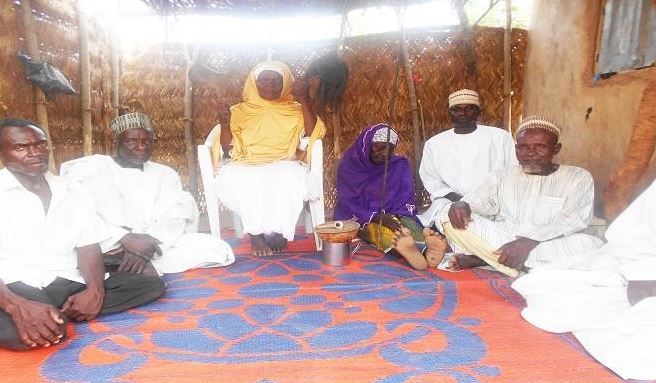
In a quiet village in Adamawa, 76 year old Bintu Namda reigns as the traditional ruler of the community.
She became the ruler of Arnado Debbo, a village in Adamawa state, in 2014 after a successful screening process that also included other princesses.
Only women are allowed to rule the community and must be above the age of 60 because the older women are regarded as more experienced in social issues.
She is the 16th ruler of Arnado Derbo since the first one ruled about 246 years ago.
According to myth, men used to rule the land but many of them died shortly after being crowned king. However, the women who ruled afterwards have stayed on the throne for about 9-40 years.
Although men cannot rule, they play important roles in the community and four of the six council members are male.
However, the female ruler is responsible for regulating the spiritual affairs of her people. And with the advent of Islam and Christianity, she encourages religious leaders of various faiths to organise prayer sessions in their places of worship.
In case you didn’t know, there are other female traditional rulers in other parts of Nigeria such as Kumbada in Niger state and Ikota in Ekiti state.
Although male traditional rulers are highly recognised and much more influential, we hope these women become more recognised in Nigeria as time goes by.