

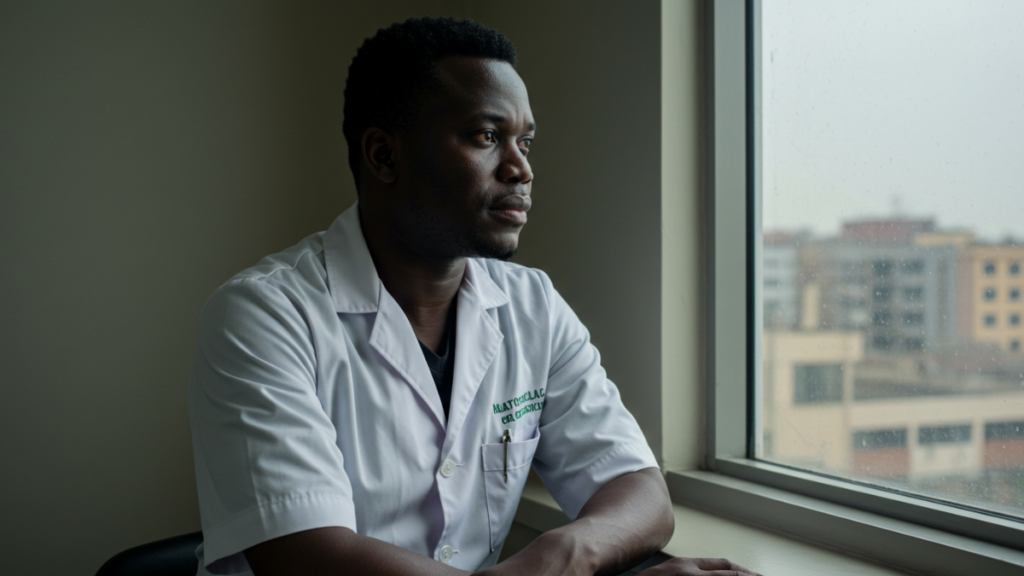
It’s about to be a hell of a day for patients at the University College Hospital (UCH) Ibadan because their doctors have decided to stand on their ten toes against the horrible condition they’ve had to live in for months.
What’s going on?
On Monday, February 17, members of the Association of Resident Doctors at UCH Ibadan officially embarked on an indefinite strike to protest the electricity blackout in some parts of the hospital. This story actually goes way back; stay with me.
How it started
UCH owed the Ibadan Electricity Distribution Company (IBEDC) so much money (₦3.1 billion to be exact), and the electricity company had been patient with them since 2019 when the bill started piling up. But on October 26, 2024, they decided they had enough and cut off the hospital’s power supply over an outstanding ₦400 million debt, part of its accumulated bill.
102 days of darkness
For 102 days, the entire teaching hospital was in absolute darkness. Both doctors, patients, and students in the hospital were deeply frustrated by this, and they spoke out several times. The first was through a protest held in November 2024 by relatives of the hospital’s patients; “We are tired of our loved ones suffering; patients are dying because they cannot receive the medical tests needed for treatment,” one of the protesters said at the time.
Nothing was done about the complaints raised in the November protest, so months later, medical students schooling in the teaching hospital protested on January 25, 2025, in State and Federal Secretariats about the same issue, yet nothing was done. On February 10, they organised a second protest at the office of the hospital’s Chief Medical Director (CMD). Power was restored to the hospital two days later, except it didn’t get to the doctors’ quarters.
The last straw
It was one thing when the entire hospital did not have light, and it was a different level of frustration seeing that the main hospital had been disconnected while residential parts of the hospital remained in darkness. The resident doctors at UCH weren’t having it, so on Friday, February 14, they held an emergency meeting, and issued an ultimatum after, saying they’d go on an indefinite strike if power was not restored to the residential areas of the hospital, latest, 4 pm on Monday, February 17.
The doctors were not shitting around because after they saw that their warnings were ignored, they embarked on the strike just like they said they would and at the time they specified.
Why does this matter?
It’s a no-brainer— the doctors at UCH have endured horrible working conditions and deserve better. Additionally, the absence of doctors has automatically put the lives of patients at risk, but the authorities who should solve both problems are not doing anything about it.
It’s even crazier because UCH is not the only Nigerian hospital that has had to deal with poor electricity supply. The Lagos University Teaching Hospital (LUTH) have had this issue in the past, and so have Primary Healthcare Centres in the Federal Capital Territory (FCT), AKA, where the President lives.
While the primary concern in these situations is usually the well-being of the patients, the medical professionals suffer, too. It’s not just poor power supply; they also have to endure other terrible things like late and sometimes non-payment of salaries. The situation is so bad that 16,000 doctors have left Nigeria in five years. It got even worse because, in 2024 alone, a whopping 15,000 doctors left the country.
As of March 2024, there were only 55,000 licensed doctors in Nigeria. Lagos and Abuja alone had a huge chunk of the doctor population (12,300), leaving the rest of the country with 42,700.
With the crazy number of doctors’ exodus recorded in 2024, Nigeria might be in big soup because even more doctors might leave, as nothing much has changed. This possible reduction in the doctor population will leave Nigeria open to massive casualties in the event of a disease outbreak. With big donors like the United States taking a step back in foreign aid, there is no better time for the government to sit up than now.
What can you do to change things?
Part of the oversight functions of the National Assembly is to summon government officials and ministries for questioning over poor performance and other similar issues. The medical sector is long overdue for serious intervention, but since that has not happened yet, you can pressure the National Assembly into taking action by doing the following:
- Reach out to the lawmaker representing your constituency and tell them what you want. You can find their contact details here.
- Consistently talk about it on social media through the use of hashtags. Start a digital campaign by creating a petition for a state of emergency or urgent intervention in Nigeria’s healthcare system. You can create your petition on platforms like this.
- Start a digital campaign by creating a petition for a state of emergency or urgent intervention in Nigeria’s healthcare system. You can create your petition on platforms like this.
[ad]


