• Bitcoin had a strong 2025, but it wasn’t the year’s biggest success story. While everyone was watching BTC’s new highs and dramatic dips, a different set of coins, some proven, some chaotic, some unexpectedly dominant, delivered even bigger gains.

    So we dug into the numbers to see which cryptocurrencies actually won 2025, filtering for projects with real weight behind them.

    Methodology:

    Using real-time data from CoinMarketCap, we ranked the top 9 best-performing cryptocurrencies of 2025 as of December 12, 2025. Cryptocurrency prices are highly volatile, so this ranking is subject to change as the market fluctuates.

    9 Top Cryptocurrencies by Year-to-Date Performance

    Below is a list of the nine best-performing cryptocurrencies with market caps above $1 billion — a number chosen to weed out less-established coins — ordered by 2025 returns.

    1.  Z-Cash (ZEC)

    Zcash was one of the biggest surprises of 2025. It started the year at about $58 and is now around $464. That’s a massive 707% jump. Most of that growth occurred in the last few months of the year, when privacy coins experienced a sudden surge in popularity, attracting new investors. With a $7.4 billion market cap, it’s one of the strongest big-coin comebacks this year.  

    Market Snapshot:

    • Year-to-Date Growth: 707.30%
    • Current Price: $464
    • Price in January: $58.81
    • Market Cap: $7.4 billion

    Market Simulation: If you’d put $100 (about ₦145k) into Zcash in January, you’d have bought 1.7 ZEC and be sitting on roughly $789 today, which is over ₦1.1 million. It’s one of the strongest large-cap rebounds the market has seen this year.

    What it is: Zcash is a 2016 privacy coin that lets people send money privately using advanced encryption. Created by the Electric Coin Company, it’s one of the leading privacy-focused cryptocurrencies alongside Monero.

    2. OKB (OKB)

    OKB started 2025 at around $49.71 and is now worth approximately $116.72. That’s a 137.9% year-to-date gain. Most of that rise came after a major token burn in August, when the project permanently destroyed some of its coins, reducing supply to 21 million. Growing use of the OKX ecosystem and a generally strong market for exchange tokens also helped push the price up. With a $2.4 billion market cap, OKB is one of the stronger-performing exchange tokens this year.

    Market Snapshot:

    • Year-to-Date Growth: 137.91%
    • Current Price: $116.72
    • Price in January: $49.71
    • Market Cap: $2.4 Billion

    Market simulation: A $100 (~₦145k) investment in January would have bought about 2 OKB. At today’s price, that’s worth roughly $234 (~₦340k), more than doubling in less than a year.

    What it is: OKB is the 2018-launched utility token of the OKX exchange and its broader Web3 ecosystem. The token is designed so that fewer coins are created over time, which can help maintain its value.

    3. Monero (XMR)

    Monero (XMR) started 2025 at around $196.64 and is now about $407.30 — a 110% year-to-date return. The rise came as privacy coins regained attention, Monero’s protocol continued improving, and late-year momentum pushed it past $400. With a $7.5 billion market cap, XMR is one of the standout privacy coins of the year.

    Market Snapshot:

    • Year-to-Date Growth: 110.63%
    • Current Price: $407.30
    • Price in January: $196.64
    • Market Cap: $7.5 Billion

    Market Simulation: If you’d put $100 (~₦145k) into Monero (XMR) in January, you’d now be sitting on around $207 (~₦300k), more than twice what you started with.

    What it is: Monero (XMR) is a 2014-launched privacy coin that hides transaction details, making it untraceable and censorship-resistant. It’s one of the leading privacy-focused cryptocurrencies alongside Zcash.


    Related: 4 Nigerians Who Went for Gold and Why They’re Not Looking Back


    4. Tether Gold (XAUT) 

    XAUT started 2025 around $2,662 and is now about $4,308, a 64% year-to-date gain. This growth closely mirrors the record-breaking rally of gold this year. With a $1.6 billion market capitalisation, XAUT is a popular on-chain option for investors seeking a safe-haven asset or inflation hedge, rather than a speculative crypto bet.

    Market Snapshot:

    • Year-to-Date Growth: 64.29%
    • Current price: $4,308
    • Price in January: $2,625
    • Market Cap: $1.6 Billion

    Market simulation: A $100 (~₦145k) investment in January would have bought about 0.037 XAUT, which today would be worth roughly $160 (~₦232k) — a solid gain reflecting the underlying gold price surge.

    What it is: Tether Gold (XAUT) is a gold-backed token launched in 2020 by Tether. Each XAUT represents one troy ounce of physical gold stored in Swiss vaults, making it easy to hold, transfer, and trade gold on-chain.

    5. PAX Gold (PAXG)

    In January 2025, PAXG was priced around $2,635 and climbed to roughly $4,318 by year-end, a 64% year-to-date increase. Its market cap sits at about $1.5 billion, reflecting steady growth that mirrors gold’s own record-breaking rally rather than crypto-native speculation.

    Market Snapshot:

    • Year-to-Date Growth: 64.32%
    • Current price: $4,318
    • Price in January: $2,635
    • Market Cap: $1.5 Billion

    Market Simulation:  A $100 (~₦145k) investment in PAXG at the start of the year would have bought roughly 0.038 tokens, now worth around $164 (~₦240k).

    What it is: PAX Gold (PAXG) is a gold-backed token launched in 2019 by Paxos Trust. Each PAXG represents one troy ounce of LBMA-accredited gold stored in Brinks vaults, providing investors with a simple way to hold and move gold on-chain while remaining redeemable for physical bullion.

    6. Bitcoin Cash (BCH)

    Bitcoin Cash (BCH) experienced steady growth in 2025, rising from approximately $451 in January to around $579 by December, representing a year-to-date increase of roughly 33%. 

    The post-2024 halving supported its growth, which reduced the number of new coins being created. Meanwhile, renewed interest in its low fees, fast payments, and stronger performance compared to other big blockchains helped push it higher, even as many large-cap coins remained flat.

    Market Snapshot:

    • Year-to-Date Growth: 33.48%
    • Current price: $579
    • Price in January: $451
    • Market Cap: $11.5 Billion

    Market Simulation: If you had invested $100 in BCH at the start of 2025, you would have bought roughly 0.22 BCH, which would now be worth around $128(~₦185k), reflecting steady, moderate growth rather than extreme volatility.

    What it is: BCH is a Bitcoin fork from 2017 built for everyday payments. It has larger blocks (up to 32 MB) and lower fees, with the same 21-million-coin supply limit and halving schedule, making transactions faster and cheaper than on Bitcoin’s main chain.

    7. BNB (Binance Coin)

    BNB rose from approximately $709 in January to roughly $886 by year-end 2025, representing a year-to-date increase of around 27%, with a market capitalisation exceeding $120 billion. Its growth was supported by steady use across the BNB ecosystem, ongoing supply reduction through token burns, and gradual easing of regulatory concerns.

    Market Snapshot:

    • Year-to-Date Growth: 26.53%
    • Current price: $886
    • Price in January: $709
    • Market Cap: $122 Billion

    Market Simulation: If you had invested $100 in BNB at the start of 2025, you would have bought roughly 0.14 BNB, which would now be worth around $124 (~₦180k), reflecting steady, moderate growth rather than sharp swings.

    What BNB is: BNB (Binance Coin) started in 2017 as a token for trading fee discounts on Binance. It now operates on Binance’s own networks and is utilised for DeFi, NFTs, payments, and other on-chain applications.

    8. Hyperliquid (HYPE)

    Hyperliquid’s HYPE token rose from about $23.89 in January to around $29.21 by year‑end 2025, increasing by roughly 22%. This moderate growth reflects a consolidation phase after larger gains in 2024, as the platform solidified its position as a leading decentralised perpetual futures exchange.

    Market Snapshot:

    • Year-to-Date Growth: 22.26%
    • Current Price: $29.21
    • Price in January: $23.89
    • Market Cap: $9.8 Billion

    Market Simulation: If you had invested $100 in HYPE at the start of 2025, you would have bought roughly 4.19 tokens, which would now be worth about $122 (~₦177k), showing steady, moderate growth.

    What Hyperliquid is: Hyperliquid is a decentralised exchange (DEX) built for perpetual futures and spot trading. Its HYPE token is used for staking, governance, and incentives, with a portion of tokens regularly bought back to reduce supply and support the token’s value.

    9. TRON (TRX)

    TRON had a modest year in 2025, rising from approximately $0.25 in January to roughly $0.27 by year-end, representing a year-to-date increase of around 9%, with a market capitalisation of nearly $26 billion. The token’s steady performance reflects its strong position as a payments and settlement layer for USDT transfers, low‑fee transactions, and growing institutional participation.

    Market Snapshot:

    • Year-to-Date Growth: 9.30%
    • Current Price: $0.27
    • Price in January: $0.25
    • Market Cap: $26 Billion

    Market Simulation: If you had invested $100 in TRX at the start of 2025, you would have bought about 400 TRX, which would now be worth around $108 (~₦157k), showing slow but stable growth rather than high volatility.

    What it is:  TRON is a blockchain network started in 2017. Its token, TRX, is used to make fast and cheap transactions, especially for transferring USDT stablecoins, and to participate in network activities on the blockchain.


    Related: Meme Coin Madness: 4 Nigerian Traders on the Wild Profits and Devastating Losses


    Sidebar: Crazy Memecoin Movers of 2025

    Meme coins are the wild, high‑risk corner of crypto. Unlike the utility-driven tokens listed above, they don’t power major ecosystems—they trade on hype, viral trends, and community attention, with gains often swinging hundreds or thousands of per cent in months, then crashing just as fast. 

    Here are some spectacular examples from 2025, with market caps above $1 billion — a number chosen to weed out less-established coins. 

    1. Memecore (M)

    Memecore exploded out of the gate in 2025, climbing from just $0.05 when it launched in July to around $1.54 by year‑end—a staggering 2,540% gain. Along the way, it reached an early peak near $0.90 before rising as high as $2.97 in September, only to tumble sharply afterwards, but still maintaining a decent momentum. 

    Market Snapshot:

    • YTD Growth: 2540.32%
    • Current price: $1.54
    • Launch Price: $0.05 
    • Market Cap: $1.9 Billion

    Market Simulation: If you had put $100 in Memecore at its launch price of $0.05 in July 2025, you would have bought 2,000 M tokens. At the first peak near $0.90, those tokens would have been worth $1,800. At the all-time high of $2.97 in September, your holdings would have soared to $5,940 (~₦8.6 Million). By year‑end, with the price around $1.54, your 2,000 M tokens would now be worth $3,080, still an extraordinary return from the launch price, despite the sharp swings along the way.

    What it is: A meme‑themed token pitched as “infrastructure” for the meme coin world, aiming to centralise attention and trading activity.

    2. Aster (ASTER)

    Aster rocketed from around $0.097 when it launched in September 2025 to roughly $0.95 by year‑end, a staggering 1,028% gain. Along the way, it reached jaw-dropping highs near $2.10 before pulling back, riding waves of speculation and sector hype, and now commands a market capitalisation of approximately $2.1 billion.

    Market Snapshot:

    • YTD Growth: 1028.37%
    • Current Price: $0.95
    • Launch Price: $0.097 
    • Market Cap: $2.1 Billion

    Market Simulation: If you bought $100 worth of Aster when it launched at (~$0.097), you would have bought roughly 1,031 ASTER. At its all-time high near $2.10, that holding would have been worth around $2,165 (~₦3.1 Million), an extraordinary return. By year-end, with Aster at approximately $0.95, the same holding would be worth about $980, reflecting significant overall gains but also the extreme swings and volatility along the way.

    What it is: A meme‑coin hybrid riding the decentralised perpetuals craze.

    3. Trump (Official Trump)

    TRUMP had one of the most explosive stories of 2025. Starting the year at just $1.20, it catapulted to an almost unimaginable $73–$75 in a single 24-hour frenzy, capturing headlines and retail attention alike, before crashing back down to around $5.69 by year-end, still a remarkable 370% gain. Its market cap now sits near $1.13 billion, a testament to the power of viral, meme-driven mania.

    Market Snapshot:

    • YTD Growth: 370.44%
    • Current price: $5.68
    • Launch Price: $1.20 
    • Market Cap: $1.13 Billion

    Market Simulation: If you had put $100 in TRUMP at the start of 2025 (~$1.20), you would have bought roughly 83 TRUMP. In a jaw-dropping 24‑hour surge to ~$73–$75, that holding would have been worth around $6,059–$6,225 (~₦9 Million)—an almost unimaginable spike. By year-end, with TRUMP at approximately $5.69, the same investment would be worth about $472, demonstrating massive overall gains but also the wild, rollercoaster volatility that characterises meme coins like this.

    What it is: A politically themed meme coin running on Solana, capitalising on Donald Trump–related viral marketing.

    Bottom Line

    2025 showed crypto still has fireworks, from steady big-coin gains to meme coins delivering jaw-dropping rallies. The year proved that utility, narrative, and hype all move prices, sometimes in equal measure. Heading into 2026, expect clearer regulations, more real-world adoption, and continued wild swings for attention-grabbing coins. The ecosystem is maturing, but the thrill and risk are far from over. 


    Disclaimer: This is not financial advice; always do your own research before investing.


    Next Read: 4 Nigerians Share Their Smartest Investments of 2025


    Glossary

    Market Cap

    The total value of a cryptocurrency. Formula: Price × number of coins in circulation.
    It helps show how “big” or established a coin is.

    YTD (Year-to-Date)

    How much a coin has gained or lost from January 1st to today. It helps measure yearly performance at a glance.

    Utility Token

    A token used within a specific crypto ecosystem for paying fees, staking, or accessing features.

    Staking

    Locking your crypto to help secure a network and earn rewards. Similar to earning interest, but riskier.

    Fork

    When developers copy and modify an existing blockchain to create a new version with different rules. Example: Bitcoin → Bitcoin Cash.

    Halving

    An event that cuts the number of new coins being created by 50%. It often affects supply and long-term price movements.

    Token Burn

    Permanently removing coins from circulation, like deleting them. This reduces supply and can support price growth.

    Deflationary Model

    A system where the total supply of a coin decreases or grows very slowly over time.

    Gas Fees

    The fees you pay to complete a transaction or use apps on a blockchain.

    ATH (All-Time High)

    The highest price a cryptocurrency has ever reached.

    Volatility

    How wildly a coin’s price moves up and down. Crypto is known for very high volatility.

    Meme Coin

    A cryptocurrency based on internet jokes, pop culture, or hype. They move quickly, are extremely risky, and often rely on virality rather than fundamentals.


    Get More Zikoko Goodness in Your Mail

    Subscribe to our newsletters and never miss any of the action

    [ad]

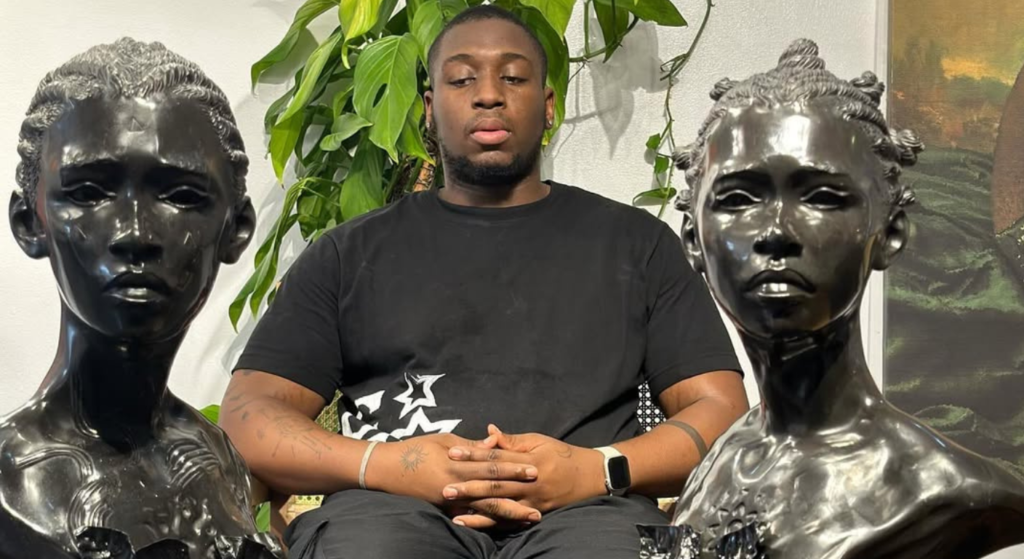
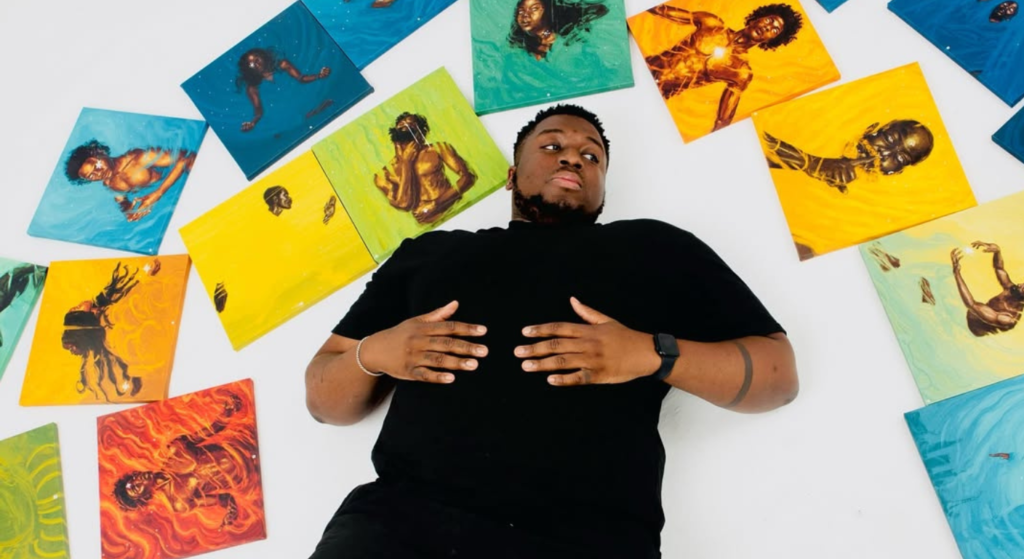
  • Anthony Azekwoh was one of the standout names during the NFT art boom in 2021. He was a young Nigerian artist whose mythic, Afrofuturist figures captured global attention and raked in hundreds of thousands of dollars in sales. But when the market crashed, so did his momentum. What followed was a brutal lesson in business, ego, and sustainability in the creative economy.

    This is the story of how he scaled fast, lost even faster, and then rebuilt from the ground up. At 25, he’s no longer just making digital art. He’s building a creative ecosystem, one that’s grounded in vision, resilience, and something far bigger than the algorithm: legacy.

    This is Anthony Azekwoh’s story, as told to Aisha Bello.

    The Rise

    In November 2021, I thought I had cracked it.

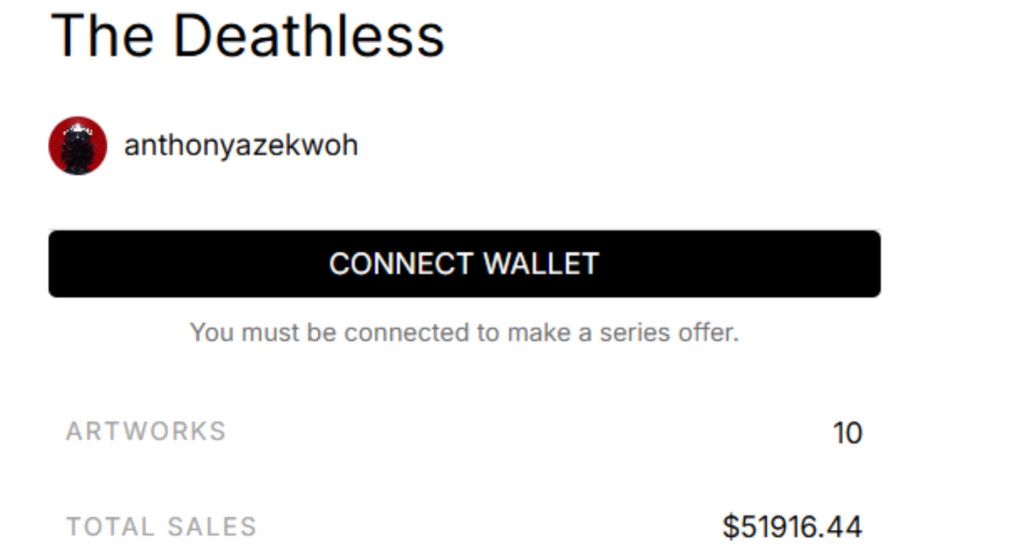
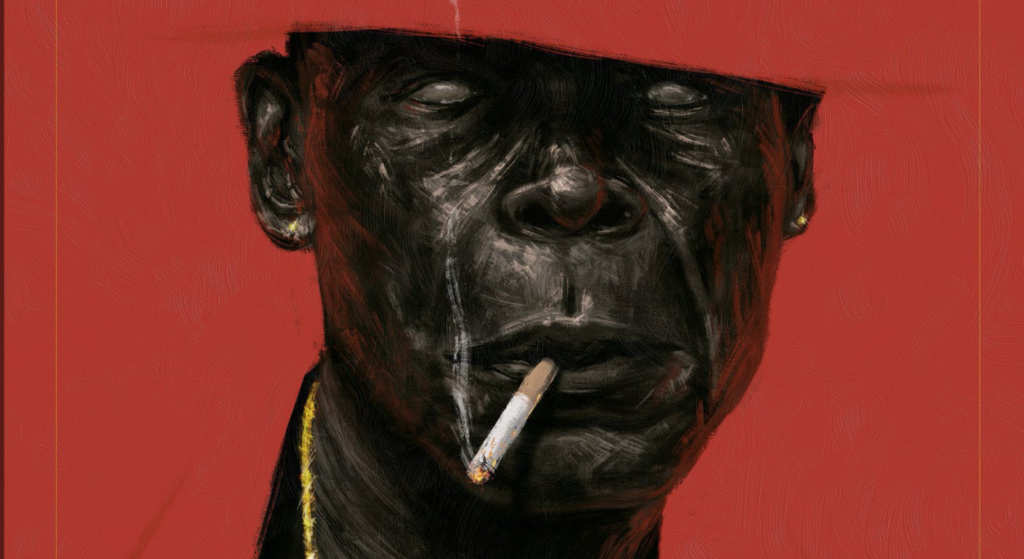
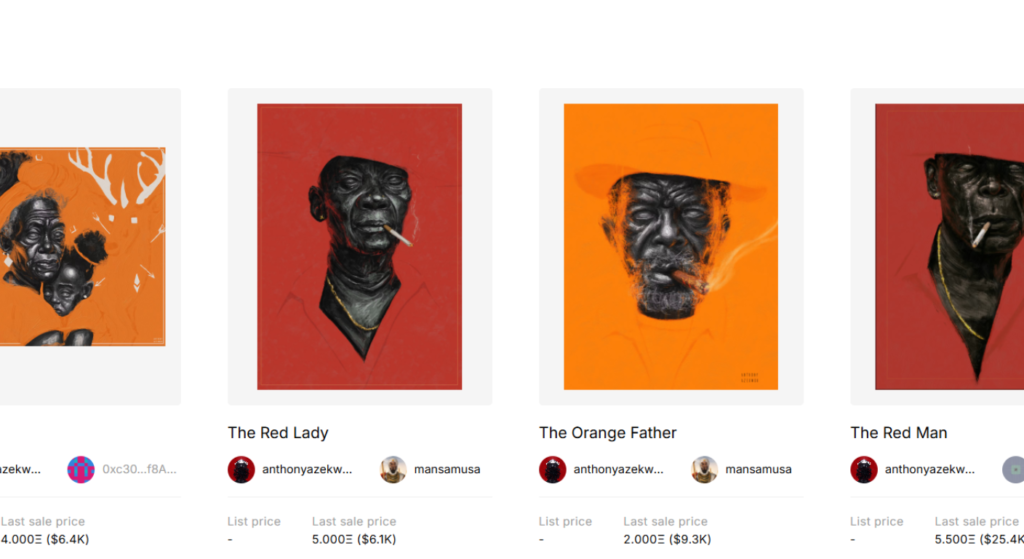
    I had just dropped The Deathless series on SuperRare. My digital art, “Red Man,” sold for $25,000 in the auction, and the whole series did over $50,000. My art was finally connecting with people around the world through NFTs. I was telling African stories the way I saw them in my head: bold, spiritual, surreal. It wasn’t the first time people connected deeply with my work, but with NFTs, something shifted. I wasn’t just being seen, I was being valued globally. 

    But that was just one layer of the story.

    Before NFTs and international sales, I was just a 16-year-old kid trying to write and post poetry on Twitter. Then, one day, my laptop crashed, and with no device and terrible handwriting, I started doodling on paper instead. I realised I could draw. 

    I began posting those sketches online. The algorithms kept feeding me more art, and one medium that stood out was digital art. I thought, “I can do that too.”

    So, I took my sister’s laptop, downloaded Photoshop, and taught myself to draw with a mouse. Turns out, I was good. 

    I kept posting my work on Twitter. Then, one day, an American musician saw my work and paid me $50 to do his cover art. With that money, I bought my first graphics tablet and stylus pen. That was the first lick.

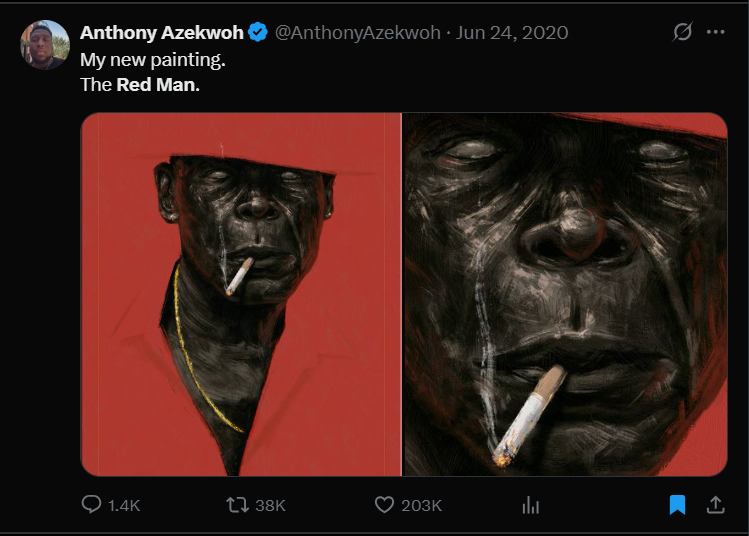
    I kept painting on Photoshop for years. Then, in June 2020, I painted “The Red Man,” and everything changed.

    Before that, I’d been trying to paint like the artists I admired, following their styles and rules. But with this one, I wanted to do my own thing, so I painted something that felt fully mine: bold, raw, and different. That’s how The Red Man was born, and it blew up.

    People all over the world suddenly started demanding physical prints through Twitter. That first week of print sales made me my first million naira, about $3,000 at the time; my account froze from the inflow. 

    Suddenly, art wasn’t just expression; it was income. 

    I shipped nearly 700 prints altogether, but it wasn’t all sweet. I wasn’t structurally ready for the flood of orders. I had no website, system or shipping process.

    I had to learn everything on the fly: production, packaging, logistics, and customer service. Crumpled paper prints in customers’ mailboxes forced a pivot to canvas prints. Refunds taught me logistics. And out of that chaos, Anthony Azekwoh Studios was formed. It was overwhelming, but it was also the beginning of real independence.

    After The Red Man, I fell into a slump.

    I thought I had it all figured out. One painting made me a million naira, so I started doing the math: One piece a month meant twelve million a year. 

    I thought the next lick would come easily. It didn’t. I couldn’t reach that high again for a while. I tried the same thing repeatedly, but it didn’t hit quite the same.

    Then one day, I let go. I stopped trying to game the system. I returned to the version of myself that made The Red Man in the first place, the guy who painted what he wanted to see.

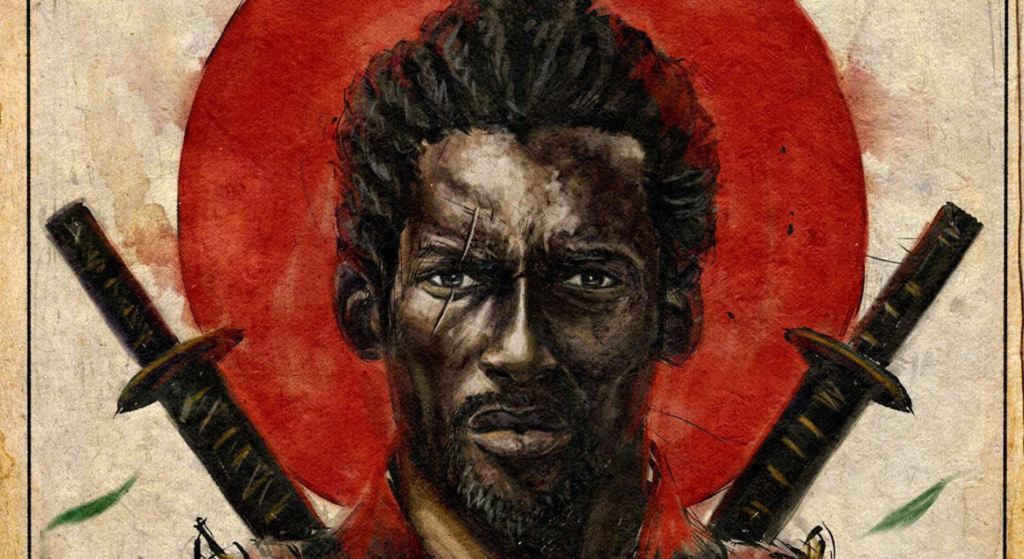
    I’d heard this story about Yasuke, the African samurai. It stayed in my head for weeks. So I painted Yasuke in September 2020. No pressure. No overthinking. No expectations. 

    I posted it, and it blew up again.

    The prints sold like wildfire. 

    That’s when it hit me: The secret isn’t trying to replicate the last win. It’s staying true to what made it possible in the first place: Making what I like, and want to see.

    Towards the end of 2020, someone on Twitter nudged me about selling my art as NFTs (non-fungible tokens) on blockchain platforms. I didn’t fully understand how it worked —how digital art could be owned, sold, or collected — but the idea was exciting. So I signed up anyway, curious to see where it might lead.

    My work was still gaining traction on Twitter, and the NFT space was booming. It felt like a natural fit.

    In November 2021, I dove headfirst into NFTs with the Deathless series, and the “Red Man” portrait alone sold for 5.5 ETH ($25,000), the highest bid in the collection of ten.

    My work felt rare, raw, and unapologetically African. It was a bold depiction of Blackness that people hadn’t really seen in the digital art space before. It was surreal. I had cracked something.

    NFTs let people own and collect digital art the same way they’d own a physical painting, but without the hassle of shipping or printing. Everything lived on the blockchain, collectors could buy with cryptocurrency, and verify ownership with a click. 

    Between 2021 and 2022, I locked in over $80,000 in NFT sales. I worked nonstop and had built a small team that helped with administrative work. For a while, everything worked smoothly. 

    But I started to feel like I wasn’t living up to my full potential in a space that moved so fast, and I was getting bored. If I were bored with my work, everyone else would, too. It’s only a matter of time.

    So, I turned things around and scaled.

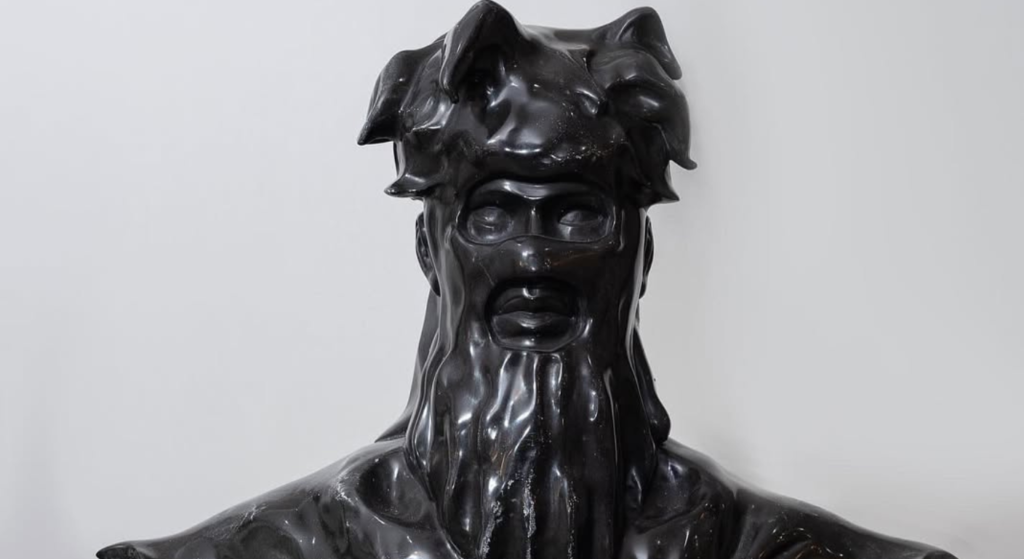
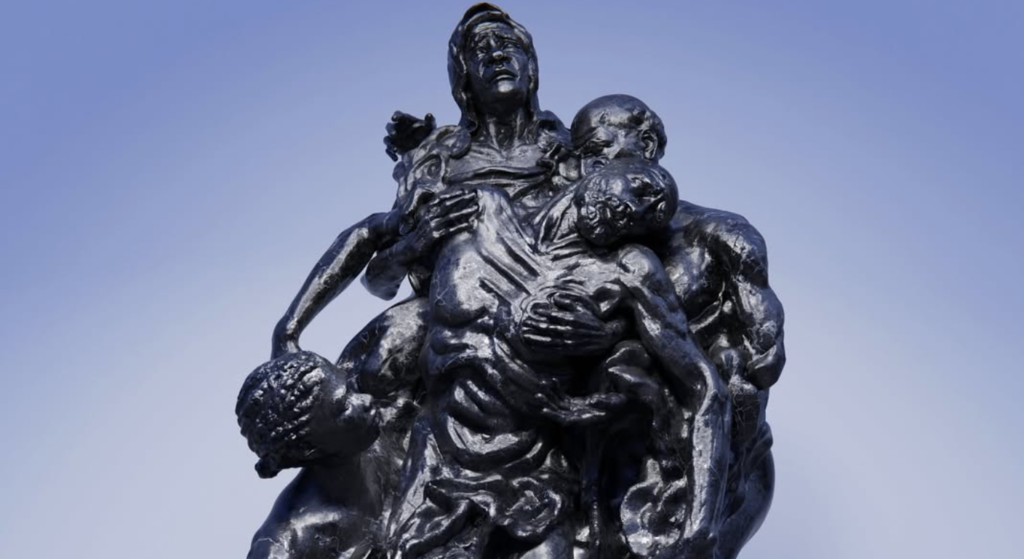
    I’d always wanted to sculpt, and now I finally had the money to try. I started by teaching myself 3D sculpting in ZBrush, rendering in Keyshot and experimenting with different materials.

    Eventually, I landed on marble, and in June 2022, I publicly shared my work for the first time. 

    I was nervous. I’d poured everything into it: time, money, energy, with no clue if anyone would care or even fuck with it. I’d never sold a sculpture before, and honestly, I had no idea how to sell this one. But I took the chance anyway.

    By November, music producer Jae5, who had seen photos of the process, was captivated and bought the entire four-piece “Ówàmbẹ̀” collection, hand-carved from Jingxin black marble, for £20,000.

    I felt unstoppable.

    The Fall

    That same November 2022, everything began to fall apart. The broader crypto market had crashed, and with it, the NFT space. 

    For context, most NFTs were traded using Ethereum, a type of cryptocurrency. And when Ethereum’s value started to free-fall, so did the art world built on it. 

    The same collectors who once spent thousands on digital art were vanishing overnight. 

    For artists like me who had built our entire income around NFTs, the ground had shifted beneath our feet: The hype, money, and momentum were gone in a whiff.

    Luckily, I’d already started pivoting and was exploring sculpture, pouring my energy and funds into something physical that could outlive the hype. 

    I moved into obsidian marble: rare, expensive, beautiful. People were interested; commissions were coming in. So I doubled down, bought tools, and the work kept me grounded.

    I threw all my funds into the work. 

    Throughout 2023, I kept experimenting, sculpting and carving in real time. Every piece came from an honest place. Making work that only I could make kept me going.

    But sculpture is a different beast. Materials cost more. Shipping was brutal, especially with marble: one mishap, one delay, and the system cracks. Then it happened: a shipment disaster; some marbles broke, and no delivery meant no sales. I had to refund clients.

    My finances got depleted, and my account hit zero.

    Zero was humbling, but then I went lower. 

    Customs fees piled up, and shipping costs exploded. I was overleveraged and underprepared, bleeding cash to keep the studio running. I love experimenting, but this time, it nearly broke me.

    By the start of 2024, I was $20,000 in the red.

    The risk was calculated. But I’m bad at math.

    And this time, it wasn’t just about me. I had people depending on me: contractors, collaborators, a team that believed in the vision. And for a while, it meant I couldn’t pay them. I had to sit in that reality and own it. 

    There were days I prayed just to get back to zero. Because zero is okay. Minus? Minus tests your spirit.

    I was $20k down, depressed, and angry. Not because I lost money, but because I let the weight of it all fall on the people around me. That was the hardest part.

    The Turning Point

    For the first time in years, everything felt like it was crumbling. I slipped into a slump, hard.

    But I wasn’t alone. My team and I were knee-deep in the trenches, figuring it out. These people knew how to build a structure around creativity, and that’s what we did. Slowly, the chaos became a system.

    I had to face the truth: I didn’t fail because the work wasn’t good. I failed because the business wasn’t built to hold it. There were no systems, financial oversight or buffer for risk.

    So we rebuilt. 

    Through it all, the one thing I never lost was the ability or the drive to create. I couldn’t afford to stop, too much was on the line, and too many people were counting on me.

    The Rebuild

    I started forging deeper client relationships and finally keyed into the business side. I learned how to manage money, budget, plan, and work with my business manager to keep things afloat. It was a make-or-break moment.

    I hit the ground running: I sold prints and NFTs; the market rebounded, directed visuals, and ran painting and sculpture exhibitions. 

    I tapped every income stream possible for an artist. I focused on creating while my team handled the administration.

    Kiitan, my business manager and legal counsel, ensured the solidity of contracts, cash flow, and streamlined operations. Fego, our product lead, aligned our many moving projects: logistics and customer fulfilment. My sister, now my Executive Assistant, brought order to the chaos, aligning schedules, communication and execution. 

    We locked in over $10k in brand licensing deals alone, and my sculpture exhibition in May 2024 pulled in nearly $30k, pushing our recovery past the $50k mark. The bounce back was real. 

    We cleared the $20,000 repayment within five months, going from deep red to healthy green. We turned the studio into a well-oiled machine.

    Now, I do what I do best: create, and I have a team that does the same. We’ve built something lean, efficient and sustainable. 

    Through it all, I painfully learned that growth doesn’t just come from winning. It comes from surviving, owning your fuck-ups, and trying again anyway.

    Seasons come and go, each with hard lessons. One truth that stayed with me is that even when business runs smoothly and money flows, you must always keep costs as low as possible.

    Every breakthrough came with a challenge that levelled me up. After each evolution, I’d reinvest in my tools and business, and push even harder. But through it all, there were always people who saw the work, understood it, and truly connected, and that’s what kept me going.

    The Return

    Earlier this year, I crossed a major milestone: over 100 Ethereum in total NFT sales since 2021, roughly $250,000. It earned me a spot in the prestigious 100ETH Club. But beyond the numbers, it was a quiet reminder that through all the chaos, I kept showing up.

    I turned 25 this May. To mark it, we’re planning a major exhibition: The Stars I followed, to showcase my new series, Children of the Sun, a 25-piece digital art collection that works cohesively as one. It drops on May 25th, 2025, priced at $25 each. 

    I still sculpt and paint. We license work, land commissions, and make direct sales, and it all runs smoothly because we built the backend right.

    I’ve learned that thriving in the creative economy isn’t just about making great art. It’s about building the architecture around the art: the systems, the team, the consistency.

    We keep the machine running daily. I’m always creating, but also constantly activating. Whether lining up deals, talking to clients, or refining systems, the work never stops.

    I’ve learned that even when the creative flow is strong, you have to stay active. The machine is like a car; if you stop driving, the engine wears down, and things dry up. So we keep it moving to avoid setbacks.

    No day goes by without me engaging with my work on some level. I’m up early, focused, and ready to get things done. It’s fun and creative, but it’s also intentional. I work harder and longer than the typical nine-to-five because building this takes relentless commitment.

    I’ve seen the top and the bottom. Now I’m building with balance, and we’re just getting started.


    Also Read: Meme Coin Madness: 4 Nigerian Traders on the Wild Profits and Devastating Losses


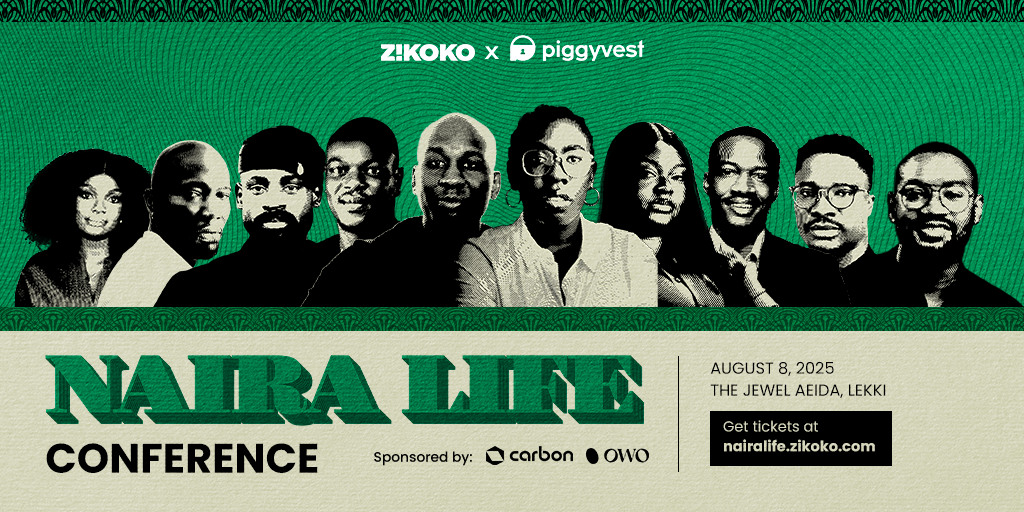
    Join 1,000+ Nigerians, finance experts and industry leaders at The Naira Life Conference by Zikoko for a day of real, raw conversations about money and financial freedom. Click here to buy a ticket and secure your spot at the money event of the year, where you’ll get the practical tools to 10x your income, network with the biggest players in your industry, and level up in your career and business.

    [ad]

  • Bitcoin

    You had money before using crypto and you’re just trying to escape inflation. Whatever noise people are making on crypto Twitter doesn’t really concern you, because your money is long.

    Ethereum

    You also had some money before using crypto, but you’re desperately chasing generational wealth; and that’s why you’re glued to your crypto app every day.

    Dogecoin

    You’re one of those people who want to use ₦2k to make ₦2 million in one week. etter go and find a real job because you’re not a serious person.

    Ripple

    Ever since you put your money in, it hasn’t risen and it hasn’t dropped. It’s almost as if you’re a 50+ person using crypto as a savings account. Anyway, pour small yeast, maybe it’ll rise.

    SHIBA

    For some reason, money ritual appeals to you but you’re too much of a good person to do it. Instead, you put all your life savings in this coin hoping it’ll do 1000x again and make you a millionaire. Just carry  gun.

    Cardano

    You really put your money in another version of the naira, only to watch it fall like it’s in love with gravity. Sorry, dear. You need all the emotional support you can get.

    USDT

    Crypto is just your salary account,  all the ups and downs are none of your concern. You just want that remote work money with zero stress.


    Whether you’re a newbie who owns only Bitcoin, or you’re an OG who owns a bit of everything, you still need a way to secure your crypto bag. You can easily do this on the Luno app, which lets you buy and sell Bitcoin, Litecoin, and Ethereum. Download the app and sign up to get started.

  • If you’ve been online recently, you’ve probably noticed all the tech bros talking about things like Web3, NFTs, etc. With buzzwords like these, it’s easy for us non-tech humans to get confused. But one thing is evident in the midst of all the white noise: something about the internet seems to be shifting.

    In this article, we’ll explore the exciting (and often overwhelming) world of Web 3.0, cryptocurrencies, NFTs, IoT, blockchain, metaverse and all the other buzzwords taking over social media.

    So, what is Web3?

    You know how apps have version numbers? Well, imagine if the internet (the world wide web) were an app.  Simply put, Web3 is the next version of the internet. And to properly explore Web 3, we have to first explain Web 1.0  and Web 2.0. Think of each version of the web as the internet’s life span through a period in modern history.

    Web 1.0 The read-only web

    In computer science classes back in primary school, we were introduced to the concept of read-only memory (ROM). Data stored on a ROM could not be modified — this is what the internet was like back then. People consumed content on the internet without any form of active engagement, and only a  few people were able to create and broadcast content on the internet. Web 1.0 lasted from the end of the 80s till around 2004.

    Web 2.0 The read-write web

    Around the mid-2000s, the internet shifted from web 1.0 to Web 2.0. Social media became a thing, and service-based applications like Uber and Netflix streamlined human communication. The world grew smaller, and the internet shifted from the old broadcast-style medium to a more creator-led system. Think of Web 2.0 as the interactive version of the internet we now use, where everyone can create and interact with content — every like, comment, share, retweet, etc., counts.

    While the internet now permits creation, interaction, and collaboration, this gift has not come without a curse.  We have to give up our data to the big tech overlords who monopolise and profit from it to enjoy the internet.

    Web 3.0 Read-write-own web

    Web 3.0 (also Web3) will distribute the power held by the corporate internet behemoths to everyone on the internet. It is the version of the internet that works for everyone without having to rely on any entity. 

    In Web3, the internet has its own native economy. You don’t need to yield data to companies to gain value on the internet. You have full ownership of your content and can use internet-native currencies (such as cryptocurrencies) to trade with other content creators.

    Think of Web3 as the internet of democracy, where no single company determines what happens to user data or content. The blockchain is free and accessible to anyone and can only be changed if an overwhelming majority of people decide to change it.

    Let’s define some popular buzzwords in Web3

    • First, what is the blockchain?

    The blockchain is a public database that maintains a list of public records called blocks arranged in a chain (get it?). The records include money transactions and other forms of information that change their state over time. The interesting thing about blockchains is that older entries are not altered or manipulated, and everyone can see the history of the information as they change over time. 

    TLDR? Here’s an explainer video:

    Why is the blockchain so important? 

    It’s simple: you don’t need any central authority to confirm the validity of any recorded information on the blockchain. For example, you don’t need a bank to send a debit alert to prove that money has successfully transferred to your friend; you can see it happen in real-time.

    • Cryptocurrencies

    Right now, we rely on middlemen payment processing companies like Paypal or banking apps to transfer money. The processes involved in wealth transfer are slow and expensive. In Web3, you don’t need no other body. Cryptocurrencies, which are based on the blockchain, cut out the middlemen. 

    • NFTs

    NFT (non-fungible tokens) is defined as “a unit of data stored in a smart contract on a blockchain.” But that’s a lot of geek-speak. 

    Simply put, NFTs are a type of cryptocurrency that cannot be changed or replaced by something identical. That said, NFTs are a sort of certificate indicating the uniqueness of a digital item. With Web3, creators have intellectual property (IP) attached to every piece of digital content they produce. What an NFT does is that it marks this IP and stores it on the blockchain. Today, NFTs are popular because they can make digital files content unique, allowing creators to sell them as scarce & tradeable assets. TechCabal has a simple explainer article diving deep into the unreal world of NFTs. Check it out!

    • Internet of Things (IoT) and the metaverse

    The Internet of Things (IoT) promises that everyday objects will have the ability to send and receive data through the Internet. Common examples of IoT devices today are smart home security systems, wearables and shipping container tracking systems. In a world where everything is going digital, the metaverse is a purely online world where people can interact, bringing us into a fully simulated virtual reality. IoT and the metaverse are pretty much digital twins.

    In conclusion: Web3 and the internet of the future

    The idea behind Web3 is to build an internet that benefits everyone. Web3 is powered by peer-to-peer networks, user-controlled data and monetisation. Advancements in blockchain technology, machine learning, the metaverse and IoT, all have vital roles in bringing Web3 to life. 

    Machine learning algorithms are already changing the way we live today through data and predicting decisions close to what a human being would make. Combined with the exciting possibilities of blockchain technology, Web3’s goal to create a more democratic, more connected internet is on the horizon.

    With that being said, the evolution of the internet from web 2.0 to Web3 will probably take decades, as much of the founding blocks of Web3 are still currently being built. You don’t have to feel left out or sink into the despair of cluelessness when you see tech and crypto bros pontificating on Twitter — there’s still a lot of trial and error to be made. However, we do hope that this article gives you an entry-level perspective into the internet of the future.