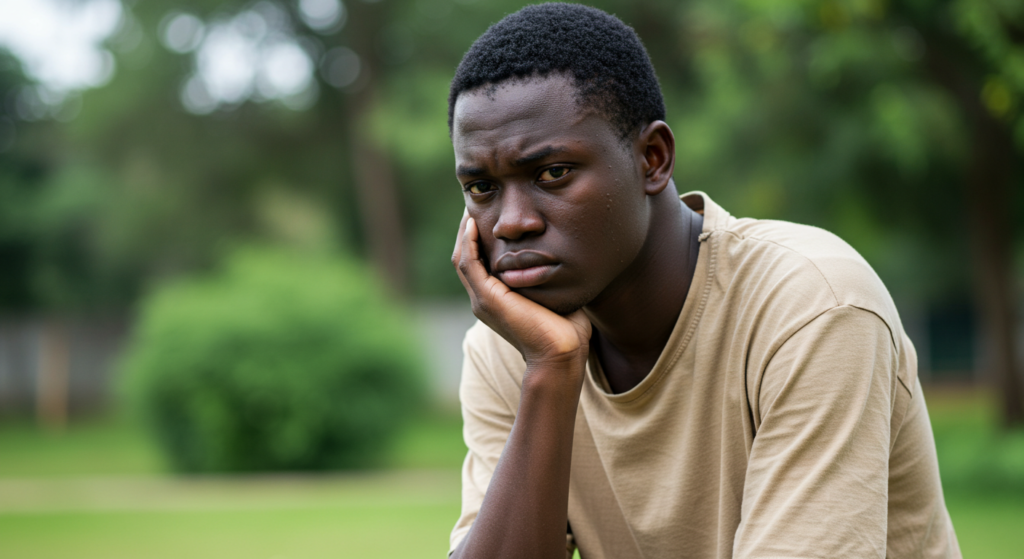
Folu*, 19, recalls how her mother gave up the comfort of a stable marriage to move her to Canada when she was just four. By six, her mother had died of cancer, she’d lost all contact with her father, and was living with her white adoptive mother.
Now a teenager, she recounts the physical, mental, and racial abuse she endured before finally returning to Nigeria.

This is Folu’s story, as told to Margaret
Canada was supposed to change our lives, and it did, but not in the way we expected.
I was four, and most of my memories from that time are fuzzy, but I still remember the excitement on my parents’ faces when they talked about relocating to Canada. I also remember the disappointed looks they shared the day they found out my father’s visa had been denied.
My mother was torn. She had always been more ambitious and confident than most people. I’m convinced God made her that way because she was a wonder. But that day, she looked distraught, much smaller than her 5’10 frame. Behind her beautiful, fair face — usually lit up with a gorgeous smile — was a quiet fear.
Her visa had been approved, yet that fear stood as a wall between the life we were living and the life she wanted for us. My mother, who always seemed sure of every step she took, suddenly needed convincing before she could decide our future. Eventually, she did and our lives changed.
She said what she thought was a temporary goodbye to her husband and took me to a cold, unfamiliar country. In that moment, it became clear that we were now a team; my mother and I against the world. She called me her little parrot, and I called her mommy. She spent hours teaching me English and reminding me that Canada was our new home, even though we actually felt like outsiders.
Unfortunately, our peaceful little bubble burst a year later, when my mother was diagnosed with cancer.
I don’t know how she did it, but she gathered enough strength to carry us both through the darkest season of her life. One day, she dressed me beautifully, gathered my hair into the little puffs she always made, and took me to preschool. I was finally around kids my age, and it felt nice. But my mother’s life got even harder. Cancer got the best of her, and eventually, the hospital became her new home — and I had to find mine.
It had been just us for a long time, so when I needed a new guardian, we found ourselves in a tough spot. Foster care wasn’t an option because we weren’t citizens of Canada, and my mother didn’t want me put into the government system. Life eased a little when one of her nurses, who nicknamed her Nigerian queen, offered me a temporary place in her home. I stayed with her for a few weeks, then shuffled between the homes of other nurses in the area.
My mother’s health got worse, and so did my living situation. Unlike most people, she knew when she was destined to die, and I knew when I was going to become motherless.
Even in her distress, my mother put me first, asking a nurse to adopt me so I wouldn’t be sent back to Nigeria. One of them, a white woman, said yes. My mother pleaded with her to take care of me. She put my hair in little puffs for the last time, begging the white nurse not to take them out unless she knew how to care for a Black girl’s hair.
Then, she gave me a journal. She didn’t need to say it, but I knew it was a parting gift. In that journal, she wrote her last words to me. My favourite one is the quote, “One of the most calming and powerful actions you can do to intervene in a stormy world is stand up and show your soul. Struggling souls catch light from other souls who are fully lit and willing to show it.” And so, I kept my light alive, even after she died.
ALSO READ: I Moved to the U.S as an Ivy League Student, But I Ended Up Becoming an Abused Househelp
She passed away two months after my sixth birthday. They buried her in Canada, away from the people she held most dear to her heart. I never heard from my father again — I was too young to reach out myself, and the only person who knew how to contact him had passed away.
Then, I moved in with the white nurse in Mississauga, who looked nothing like my mother. That’s when the challenges began.
First, I noticed the little things, like my adoptive mother taking out the puffs my mother had styled my hair into, even though she didn’t know what to do with them. “Your hair feels like a sponge,” she complained as my hair matted.
Then, things got even harder. She had a 21-year-old daughter, who lived in the basement with her boyfriend and son. I was six, yet her daughter reminded me every day that I was not wanted or needed in their home. When her words stopped hurting me, she started to use her hands. One day, she slammed my head against the wall, sat on top of me, and slapped me across the face.
Child Protective Services eventually found out. Like most adoptive families, we’d been having regular biweekly check-ins for a long time. During one of those visits, I finally spoke up about the abuse, and they opened a case against the daughter. We got multiple visits from social workers, and eventually, my adoptive mother kicked her daughter out.
We moved into her grandmother’s basement when I was eight. That’s where I first heard racist remarks about me, my country and my family. When my aunts came from Nigeria to visit, the grandmother wouldn’t let them cook because Nigerian food “stinks” and is “disgusting.” My adoptive mother made it clear she didn’t want my aunts around me and backed it up with threats to send me back to Nigeria with them if they didn’t leave me alone. Out of respect for my mother’s dying wish to keep me in Canada, they kept their distance.
The atmosphere at my adoptive mother’s home became more hostile after that visit. She stopped buying me groceries and clothes; I wore old, donated clothes from the poor box. But to everybody around, she was the good white lady who saved a black child. She would make videos of me and post them on Facebook with captions suggesting that nobody wanted me, but she was kind enough to take me in. Even the hospital, where my mom died, hung her pictures on the walls and gave her humanitarian awards. No one knew how deeply I was being neglected.
When I turned 14, she decided she didn’t want to take care of me anymore and put me into foster care. My first foster home was with a Jamaican family in Brampton, a city different from where my school was. Being with a black family was different; we laughed more, shopped more and ate spicier food. It was beautiful, so beautiful that my foster parents wanted me to move to Brampton permanently and transfer to a new school in the city.
I wasn’t ready to leave my school because I was doing well there, so I made the long trip every day. But over time, the constant lateness caught up with me, and my grades started to drop. After two months, I moved back to Mississauga to live with an Italian family for a few months. They were kind, but the other foster kids and I always had to keep quiet because there was a baby in the house. Thankfully, it was close to my school, and they made the best Italian food I’ve ever had.
Eventually, my adoptive mother agreed to take me back, but the threats continued.
“I’ll send you back to Nigeria to live with your aunt,” she’d warn whenever she was upset with me.
When I graduated from high school, I was determined to get away from her. So I applied to study in the United Kingdom and got accepted, but I couldn’t go because there was no one to help me cover the tuition. I was stuck in Canada.
Then one winter day in December, she threw me out for the last time. I can’t say precisely why, but if I had to guess, I’d say she was counting down to my eighteenth birthday.
Thankfully, I already owned a car, which I’d been able to buy with the commissions I earned from a credit card job. It became my home until I moved into a shelter, where I stayed for three months. I eventually got an apartment to stay for five months, but it was too expensive to sustain.
My aunts eventually found me again after years of searching, ever since my adoptive mother cut off all contact between us. They wanted me to come back home, so when they bought me a ticket to return to Nigeria, I happily bid farewell to Canada.
My aunts had searched for me for years; it killed them not to know where I was. Even my grandmother missed a grandchild who knew nothing about her existence.
I boarded the flight to my new beginning in a Lululemon jacket, sweatpants, and a zip-up hoodie. For the first time in a long while, it felt like I was heading back to where I truly belonged.
Growing up, people called me “whitewashed” because I had a white parent. I knew nothing about my culture, how to care for my hair, or even how to cook Nigerian food. So when I returned to Nigeria, the first thing I felt was shame. But now, I’m learning that the shame isn’t mine to carry.
For years, I lived with heavy grief, depression and suicidal thoughts. I was a minority to my racist parent who constantly reminded me to be “grateful” to be there. Now, surrounded by family who actually care for me, I feel wanted, needed, and more hopeful about the future.
I’m planning to return to Canada to finish my degree, but this time on my own terms, in a different province, and with better support. I will eventually come back to Nigeria to live, work, and raise a family. Landing here this year was all I needed. Nigeria is chaotic but alive and full of community, unlike the cold, isolated life I knew in Canada.
I’m 19 now, and for the first time in my life, I’m learning what it feels like to be loved.
ALSO READ: My Religious Parents Wanted a Son-in-law. So I Married a Gay Man and Moved to Canada
[ad]