The Nigerian experience is physical, emotional, and sometimes international. No one knows it better than our features on #TheAbroadLife, a series where we detail and explore Nigerian experiences while living abroad.
Ebere* (28) had her life figured out in Nigeria, but her father forced her to start over in the United Kingdom. In this story, she shares how she found herself working as a caregiver and how she got stuck with a terrible roommate whose boyfriend was abusive.
Where do you currently live, and when did you leave Nigeria?
I left Nigeria in 2022 and live in the United Kingdom (UK).
How did you end up in the UK?
It was totally unplanned, and I was mentally detached from the whole process. I had just settled into Lagos and was working at a job that I really loved, so I wasn’t keen on leaving at all, but my dad made it happen.
That’s interesting. What exactly happened?
My dad had this friend who had been in the UK for years and was running a business there. The plan was that I’d move to the UK to work with that friend, but I wasn’t interested at all because I was really into my job.
My disinterest made my dad angry, so I had to give in at some point. When we started the relocation process, his friend (whom I now call my uncle) called me, asked for my passport, and told me to take the IELTS, and I just did everything without putting much thought into it.
Sorry about that
I was so unbothered that I even registered for the wrong IELTS. It wasn’t until they were submitting my visa application that they realised it wasn’t the right one. That’s how detached I was mentally from the process. My uncle had to pay for another process where they evaluated my degree for English proficiency instead.
One day, I got the news that I had been granted a visa, but my reaction was different from what people expected. I wasn’t thrilled or particularly excited about a future in the UK.
The uncertainty must have bothered you a lot.
Yes. At that point, I still didn’t know what kind of job I was moving to the UK to do. My uncle simply sent me courses to complete, and I just clicked through everything without reading. After arriving in the UK, I realised I knew nothing about my job.
It turned out that the job was with an agency my uncle was helping to run. They were recruiting care workers from abroad to take care of the elderly because of post-COVID staff shortages.
[newsletter type=z-daily]
How did you feel when you found out?
On my first day at work, I was like, “What have I done?” I spent months preparing to come here, and somehow, I didn’t even know what I’d signed up for.
I had a job I genuinely loved in Lagos. I had friends and a whole life there, and suddenly I was here, in freezing February winter, doing a job I couldn’t have imagined in a million years. I was deeply sad. My uncle couldn’t console me. I was angry every single day.
Eventually, I realised I had to take responsibility for my life. I couldn’t just sit there feeling sorry for myself. I knew I needed to figure out my next step, so I started taking courses and certifications to make life here worth my while.
Things were finally looking up, until life happened. Some unexpected personal things came up and completely distracted me from my goals. Everything hit me at once, and I was fighting for my life, mentally, throughout 2023.
That year, I couldn’t focus on anything apart from surviving emotionally. Even though it took time, I’m in a much better mental space. The truth is, I’ve spent most of my three years here just trying to stay sane and adjust.
Can you tell me more about your life in Nigeria before you left, and why the move hit you so hard?
Life in Nigeria was typical—nothing extraordinary, but it was good. I had a remote job that allowed me to work from home. I had amazing work friends that I’m still close to, and I lived very close to my family. My sister and I practically lived next door to each other. It was easy to see my family anytime.
Lagos itself was fun. It was easy to have a good time. I could sit on my balcony, watch people move up and down, and feel entertained. It felt very communal because there was always something happening, always someone to see or somewhere to go.
That sense of community was the hardest loss I dealt with when I moved here; The UK is the exact opposite of Lagos. Here, people keep to themselves so much that neighbours don’t know each other. Everyone just minds their business.
You said “life happened” after you moved. Are you comfortable sharing what you meant by that?
I lived with the wrong housemate. She was a girl I met through my uncle. We moved in together to split rent because living alone on minimum wage is impossible here. At first, everything was fine; We had boundaries, and though we weren’t close friends, we got along well enough.
Then, out of nowhere, she told me she was bringing her boyfriend to live with us. I already had issues with this guy because he seemed abusive from the little I knew about him.
That’s insane
I was shocked. I asked her why she thought bringing a man to live with women in the house was okay. The worst part was that she didn’t even give me proper notice; she just called on the night he was arriving, saying she was on her way to the airport to pick him up.
How bad was it?
It was chaos from the first day he moved in. They’d fight and shout so violently that I started feeling unsafe in my own home. It was so bad that I started avoiding the house altogether. I would take extra shifts, go to the gym, and do anything to avoid them.
I didn’t want to tell my family because they’d worry, but I was in a terrible mental space. Everything ended when I eventually opened up to my parents, but I was already pretty messed up by then.
How long did this go on?
That situation lasted almost a year. My roommate’s boyfriend moved out before our lease ended, but my relationship with her was already ruined by then. She apologised later, but honestly, the damage was done. I was already struggling in the UK, but that messed me up more than you can imagine.
I’m so sorry you went through that. I hope you’re in a better place now
I’d say I’m in a much better place mentally and emotionally. I’ve adjusted to life here, even though it took time.
I’ve learned that even jobs I never imagined doing can have silver linings if I keep an open mind. I’m still working toward my long-term goals, but I now approach things differently.
Financially, I’m not where I expected to be at this point. If you had asked me in 2022 where I’d be by now, this wouldn’t be it. But I don’t regret how I’ve spent my money so far. The things I’ve invested in were necessary. So overall, I’d say I’m in a better place compared to when I moved.
I’m glad to hear that. Have you experienced any culture shocks in the UK so far?
The driving here makes no sense to me. They drive on the left, and the steering wheel is on the right. It’s so confusing, and I still find myself trying to enter the driver’s seat from the wrong side.
Also, people here smile at strangers on the street, but not in the friendly Nigerian way. It’s an awkward, polite smile that doesn’t feel genuine. It weirds me out sometimes.
Another big shock is how people here split bills. If you invite someone out, you both still pay separately. Like, why did you take me out only to make me pay?
On a scale of one to ten, how happy are you in the UK?
I’d say six because life can be better.
Do you want to share your Abroad Life story? Please reach out to me here. For new episodes of Abroad Life, check in every Friday at 12 PM (WAT).
Missed previous episodes of Abroad Life? Catch up here.
[ad]
The Nigerian experience is physical, emotional, and sometimes international. No one knows it better than our features on #TheAbroadLife, a series where we detail and explore Nigerian experiences while living abroad.
After being stuck in the UK’s small dating pool for so long, Amaka (26) finally made it out. In this edition of Abroad Life, she talks about falling in love with a Yoruba man, getting comfortable with an inter-tribal relationship, and working in the UK.
Where do you live, and when did you travel out of Nigeria?
I live in Liverpool, United Kingdom (UK), and I left Nigeria in 2023. I moved here for my master’s, but it feels more permanent now.
Why does it feel more permanent?
Life is better here. I was earning ₦55,000 monthly in Nigeria. If I wanted to do the same job here, I’d be earning over £2000 monthly. In addition to the money, there’s also a working system here. The UK just offers you a better life in almost every way possible.
It’s been two years since you moved. Have you settled into your new life?
Not exactly. I still haven’t gotten the job I want. Rent is monthly here, and it’s not cheap. I’m also saving up for my postgraduate study visa so I can stay in the UK. It costs almost £3,000, and I need to save up for it while footing other bills. When I finish paying that, I have to start looking for sponsorship. It’s just a roller coaster phase right now.
I’m rooting for you. Are there things that you’ve grown to love about your life there?
I have an amazing community here. Back in university, I joined a community of young Nigerian women, and it’s been great since then. They host events and parties, but that doesn’t happen as much as I’d have loved because we’re all super busy. I just completed a nine-hour shift, so there’s barely any time left to do other stuff. I hardly go anywhere these days except on date nights with my partner. With my friends, it’s always “Don’t worry, we’ll see each other next week”, but that “next week” quickly turns into months.
Did you meet your partner in the UK too?
Yes, I did. It’s harder to find a Nigerian partner who checks all your boxes here, but somehow, we got lucky.
Why is it harder?
If you’re looking for someone from your tribe, your options are limited. If you add that to the other specifics on your list, you’ll realise there aren’t many people you’d be open to dating. We had just four Nigerians in my class— two ladies and two guys. One was a married man, and the other was Yoruba. I’m Igbo, so a Yoruba man isn’t exactly my first choice (tribe-wise). But I eventually met my partner through a friend.
Is he Igbo?
Funny enough, he’s Yoruba. I had already made peace with the fact that I might end up with a Yoruba man before I met him. He’s currently in Manchester, which isn’t that far from Liverpool but he drives, so the distance doesn’t affect us that much. I liked him immediately because he never love-bombed me. The more I got to know him, the more comfortable I felt about him being Yoruba.
My parents didn’t care about his tribe either. They just wanted to know if he was treating me well and whether a single mother raised him. It’s funny how his parents asked the same question about me. I wonder why the older generation is so particular about single-parent households.
LMAO. You mentioned returning from a nine-hour shift earlier; what do you do?
I work in a care home from 8 a.m. to 8 p.m., which isn’t so bad. But the downside is that I work in Wales. The train ride back home is about an hour and 15 minutes. Sometimes, my shifts are back-to-back, but I don’t mind it. I’m hoping to get a job that lets me work longer hours.
Why?
The pay is hourly. They pay me about 12 pounds per hour, so the more hours I work, the more money I make.
I hope you get your dream job soon. On a scale of one to 10, how happy would you say you are in the UK?
I’d say nine. There’s room for growth and new adventures here.
Do you want to share your Abroad Life story? Please reach out to me here. For new episodes of Abroad Life, check in every Friday at 12 PM (WAT).
[ad]
In the past decade, thousands of Nigerians have left the country to find better economic opportunities. Moving abroad is almost seen as a golden ticket to financial stability — higher earnings, a stronger currency, and a better quality of life. But beyond the surface, navigating money in a new country is often more complicated.
We spoke to five Nigerians who moved to the UK, Canada, and the US in the past five years about how migration has reshaped their income, spending habits, and overall financial mindset.
Philip, 31, moved to the UK in 2022
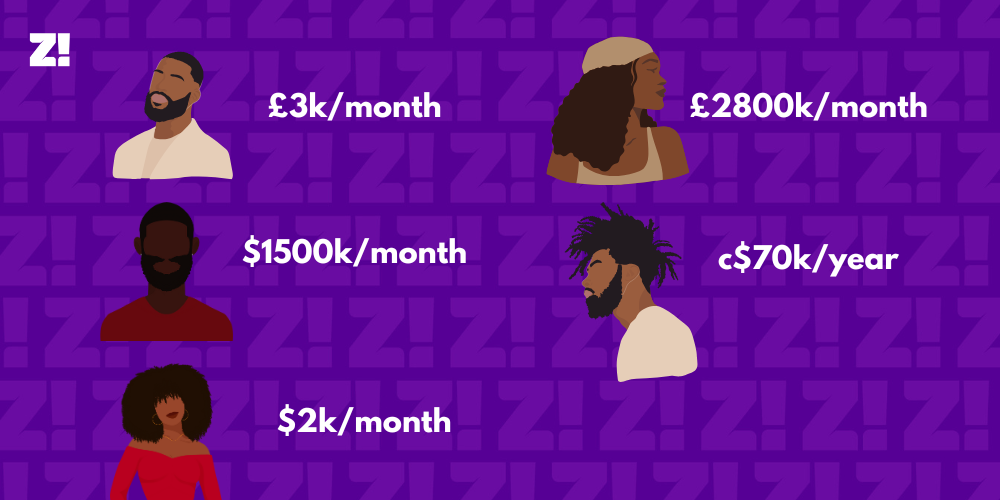
Current income: £3k/month
Last income (in Nigeria): ₦300k/month
Can you describe your quality of life in Nigeria? I was a marketing communications manager for a fintech company. My salary was ₦300k/month and my wife made ₦400k/month. We combined our resources and kept our expenses low. Our rent was ₦300k/year for a self-contained apartment.
However, my work was on the island, and I lived on the mainland, so I spent about ₦60k on transportation every month.
Our ultimate financial goal was to japa, and we spent much time and resources saving and preparing for it. Naturally, that meant we had to make multiple tradeoffs. For example, I really wanted a car because I was tired of leaving my house at 5 a.m. to get cheaper bus fares. We also wanted to move into a 2-bedroom apartment, but both wants would have derailed our plans. So, we stuck with what we had.
We weren’t living a glamorous life, but we could take care of ourselves and our families and put something aside for our relocation, a process that took about two years.
What money-related change surprised you the most when you moved abroad? Cash is not king in the UK. When my wife and I were leaving the country, I converted some money into pounds. But we were stranded when we got to London because every service we needed insisted on card payments. It was quite a culture shock.
What’s the most significant way moving to a new country has shifted your financial mindset? My perception of debt has changed. I’ll use properties as an example because I work in property management, and my wife and I have started discussing buying a house.
It’s so freeing that it’s relatively easy to take a mortgage, drop a 25% downpayment, and spread the rest across 20 years. Yes, paying off a mortgage is like paying rent for two decades, but the house becomes yours.
An investor I work with tells me that if she has £600k to invest in properties, she’d prefer to divide the money into four parts to use as a downpayment for four houses rather than buying one £600k house outright. Then, she’ll put tenants in those houses, and their rents will pay the mortgage.
You need to become comfortable with using debt to your benefit. Sometimes, it’s a pathway to financial freedom, and I got on board with the program.
What does your life look like now? The key word is stability. My wife and I have fewer things to worry about, especially now that we have a kid. Healthcare is almost free—the insurance pays for it—and there’s no limit on what’s covered.
When I lived in Nigeria, I barely worked at a place for one year. I was always optimising for a better-paying job; the only way I knew to do that was to switch jobs as often as possible. I’ve been at the same job in the UK for a while, and I’ve grown and gotten promotion and salary reviews. In addition to this, I have a better work-life balance.
That said, the cost of our utilities has increased. We pay £1,250/month for a 2-bedroom apartment. Electricity costs are around £325/month, and council tax is another £250.
The good thing is that I’m earning considerably more, and my wife makes money, too. Being married works here because neither of us can afford all of these alone. It’s possible, but it’d also be incredibly difficult.
Our finances have grown since we’ve been here. We’ve made more progress working for two years in the UK than we did in over five years.
If you do the same thing consistently here, you get results. That wasn’t my experience in Nigeria.
Tayo, 34, moved to the US in 2024
Current income: $1,500/month
Last income (in Nigeria): ₦200k/month
Can you describe your quality of life in Nigeria? I worked at a private school for 10 years, and my last salary was ₦200k/month. This was primarily what my family—my wife and three kids—lived on. Also, I built a few businesses and other side hustles from the ground up: I had a bookshop and a laundry business my wife manages.
My income wasn’t as great as I’d have liked, but I made it work. The key factor was that I was very prudent with money. For example, my house rent was ₦300k/year, and two months’ worth of my salary could easily cover it. When I wanted to invest in real estate, I knew I had to save up for it, and I managed to purchase a half-acre piece of land. However, I had my struggles, too. I’d have liked to stay 100% debt-free, but I took a few business loans.
What money-related change shocked you when you moved abroad? The volume of monthly bills. The system is designed to take your income the second you get paid.
There are multiple monthly recurring bills: phone, internet, electricity. Then you have to think of rent as a monthly expense. In Nigeria, I paid rent once a year and moved on to other things. I wish that was a thing here, too.
Also, I couldn’t—and still can’t—get over how easily accessible credit is. My life philosophy is to avoid debt unless it’s a last resort, and I only took business loans in Nigeria. In the US, using my credit cards for everyday use is a price I must pay to stay. It’s not great for me, but that’s how the system works.
What’s the most significant way moving to a new country has shifted your financial mindset? My relationship with black tax has changed. The US quickly taught me I can’t take on other people’s responsibilities or finance their lifestyles.
Short story: My first paycheck in the US was $1300, which I thought was a lot of money. My thinking, of course, was to take care of my people in Nigeria. So, I started sending money home — ₦50k here, ₦20k there. In little time, the money got down to $200. Then the monthly bills came, and I found out about the number of things I had to pay for.
I prioritised helping people in Nigeria because of our communal nature, but it’s impossible here. Now, I don’t care much about expenses that aren’t within my budget. I only send money from my miscellaneous budget to people who fall outside the scope of my wife and kids. If it runs out, it runs out.
Also, I was pro-saving in Nigeria, but that thinking has shifted, too. My time here taught me that building wealth through savings is almost impossible. Investing is king. A few months ago, I started buying some ETFs and putting money into the S&P 500 and Roth IRA, which is pretty much my retirement account.
What does your life look like now? I’m not sure yet. I’m still trying to figure out if my quality of life has improved. The competition for resources is fierce for immigrants.
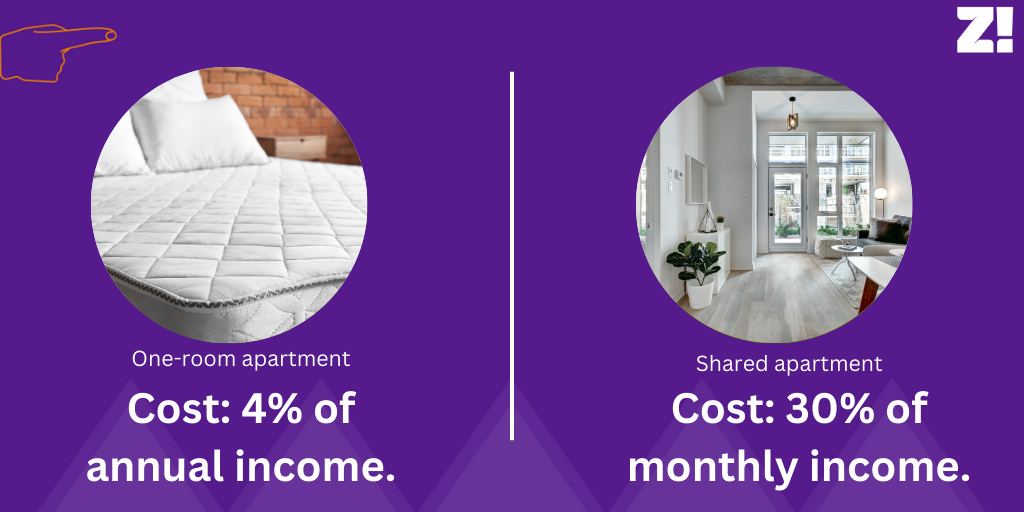
At the moment, I make $1500/month as a graduate assistant. Thankfully, my funding covers the cost of rent. Without that cushion, 70% of my income would have to go to accommodation alone.
I like that the basics are sorted, but building something new and sustainable takes time. The first step is bringing my family here, and I’m currently saving for that. I’ll finally have my answer when this happens.
Cynthia, 29, moved to the UK in 2022
Current income: £50k/year
Last income (in Nigeria): ₦250k/month
Can you describe your quality of life in Nigeria? After I finished law school in 2020, I moved to Lagos to work. My first job paid me ₦80k/month. Two years and a few jobs later, this number grew to ₦250k/month. Also, my ex, who lived abroad, sent me ₦250k/month, bringing my monthly inflow to ₦500k. As you can imagine, I was comfortable and could afford a decent lifestyle — I took Ubers everywhere and outsourced my laundry and house cleaning.
I always had help, which was an important safety net. For example, when I moved to Lagos, I squatted at a friend’s with other girls. But we fell out. Then, I lived with my family until I moved to a shared two-bedroom apartment, and the rent was ₦800k/year. My parents sent me ₦500k, and my boyfriend paid the rest.
I left Nigeria because I became disillusioned with the country after the 2020 EndSARs protest. I also suspected the current President would win the elections, and I had no faith in him.
What money-related change surprised you the most when you moved abroad? Labour costs more in the UK. In Nigeria, I paid ₦6k/month for cleaning. In the UK, the average cleaning costs between £12/hour and £20/hour, which is very close to my hourly wage. The same goes for food. I spend between £20 and £40 per meal, so I’ve had to adjust by cooking more.
It’s not that I can’t afford these things, but it doesn’t make financial sense anymore.
Another shock? I feel every pound I spend. In Nigeria, I could justify spending ₦300k on a single purchase. But here, I think twice before spending more than £100. That shift has made me more intentional with money.
And then there’s my visa situation. I renewed my visa recently for £3500, and even though my partner refunded me, I was still upset. It’s frustrating that I have to pay to stay in the country.
What’s the most significant way moving to a new country has shifted your financial mindset? The biggest shift has been in how I budget and invest. I barely paid attention to either in Nigeria because I had a stronger support system.
But the moment I landed in the UK, I felt an intense fear of everything that could go wrong. Although I’ve settled now, I still fear being deported to Nigeria without anything to fall back on. As a result, I’m focused on what I can control, and investing is a big part of it. About 10% of my monthly income goes into my pension fund, and I’ve started putting money in the S&P 500.
I really want to have a soft landing when I retire. For context, I don’t want kids. My ultimate goal is to make enough money to afford a quality private care home when I’m old. This future is possible in the UK, and I must work to achieve it. I have four decades to plan for that.
What does your life look like now? I’ve lived in the UK for almost three years, and the quality of my life has only improved. Let me tell you something: I recently spent £1300 on clothes, which I could never do in Nigeria. This is exactly where I want to be.
But I have a lot of help, so my experience may differ from many people’s.
I work with the government and make £50k/year, which comes down to £2800 per month. My monthly net would be higher, but my pension contributions take a chunk of my net.
Now, my rent is £800/month, but I don’t pay for it; one of my “men” handles it. My partner is also moving in with me shortly, and we’ve talked about him picking up the rent and other household bills. This means I have an extra £800 to save every month.
Beyond the money, my life feels fuller. In Nigeria, travel wasn’t even an option. Now, I take 3 to 4 trips a year. Even the small things—like buying cotton and linen sheets—feel like luxuries I can finally afford. It’s hard to explain, but I don’t constantly feel like I’m in survival mode anymore.
Tony, 25, moved to Canada in 2021
Current income: $70k/year
Last income (in Nigeria): ₦63k/month
Can you describe the quality of life in Nigeria? My life was simple. Before leaving the country, I was an intern video editor and earned ₦30k/month. It was also my service year; the government paid me ₦33k. I thought my income was decent, but it was because I had no financial pressure. I lived rent-free with my parents, and my most significant expense was my commute to work.
At some point, I moved in with a few colleagues to be closer to work. There, the only thing I worried about was contributing to household expenses.
I got my student visa, which my parents funded, and moved to Canada in October 2021.
What money-related change shocked you when you moved abroad? I’ve lived in Canada for three years and haven’t gotten used to not getting SMS transaction alerts. I may get an email notification for money sent and received, but that’s it.
It made it almost impossible to track subscription payments. Sometimes, I found random charges on my account and had to determine where they came from. It’s not very intuitive. Now I have a notepad where I list all the services I’m subscribed to, their due dates and the cards the charges go to.
What’s the most significant way moving to a new country has shifted your financial mindset? I had to understand how the credit card system works. When I arrived in 2021, it didn’t sit well with me that I had access to money that wasn’t mine. I was uncomfortable with the credit card options and feared getting carried away was easy.
I’ve lost most of that fear now. As a result, I feel more secure in my finances—knowing that I don’t need all the cash in the world or have to wait until payday before I can sort basic things out. This gives me a sense of security, and I’m hardly flustered about money anymore.
What does your life look like now? My quality of life took a dip when I first moved to Canada. For context, I had to work two jobs and crazy hours. That said, I had some safety nets in my parents and a few family members, who paid my first-year tuition and my rent for the first six months. This took a heavy weight off my shoulders. However, I had to figure out most of these myself in the following two years, and this was where the crazy work hours came in.
Three years later, I’m a software engineer making about $70k/year. It’s the base pay for my experience level, but it works. That puts me around the low- to middle-income level. It’s not where I want to be, but I could be worse off.
I’m better off here than I was in Nigeria, and for good reason. The effort I’ve put into growing my income and building something here is on the same scale as the rewards I’ve gotten. That wouldn’t have happened in Nigeria.
Oyinloluwa, 29, moved to the US for school in 2021
Current income: $2k/month
Last income (in Nigeria): ₦100k
Can you paint a picture of your quality of life in Nigeria? I was a graduate assistant at a Nigerian uni and ran my Master’s programme concurrently. Every month was pretty much figuring out how to get by with my ₦100k salary; it was my only income source and funded my education. I had to be very intentional about money to prepare for my next life stage — going to school abroad. My money was tied in cooperative schemes, and I had salary deductions to sort out my Master’s payment. All this left me with about ₦30k-₦40k to spend for the rest of the month.
It helped that I lived in a small town, so it was relatively easier to sort out the basics. For example, my rent was about ₦50k/year, and the distance between my house and work was short, cutting down my transportation costs.
That said, even though I was operating on low maintenance mode, there were multiple times I had to contact my dad for loans. In retrospect, I think I struggled more than I remember. It wasn’t clear at the moment because I had my eyes on a specific agenda—moving to the US. Everything else was secondary.
I got a scholarship and moved to the US in August 2021.
What money-related change surprised you the most when you moved abroad? Housing costs and the monthly rent schedule. In Nigeria, I paid my rent once and was done with it. Then I came here and found out I had to constantly think about making rent every third day of each month. My rent + utility is $600/month, and I share the apartment with three people. This number would easily climb to $1k/month if I lived alone. Having to plan and set aside money every month took some toll.
On the plus side, it also shocked me that I could live without thinking much about the cost of things. I didn’t know that was possible. The context here is that I was always on a tight budget, and spending money on the non-essentials was always hard. But I got here and could do that without derailing my budget. It shouldn’t have surprised me, but it did.
What’s the most significant way moving to a new country has shifted your financial mindset? I’ve lived here for almost four years, and I’m getting used to the fact that I don’t necessarily have to be stingy with myself, for lack of a better word. It’s like a switch flipped in my brain, and now, I operate from a place of abundance or something close to it. The primary manifestation of that is that I don’t beat myself over the cost of things. If I want it and can afford it, I go for it. The heavens won’t fall.
Not much has changed about how I save and budget. I was decent at it when I lived in Nigeria and have even become better. The primary driver for this is the constant realisation that I have bills to pay and live far away from home.
What does your life look like now? I’m still a graduate assistant, and my only source of income is from my scholarship. I get paid a monthly stipend of ~$2k/month to sustain my living, which covers the basics. That said, it can only go so far, especially compared to what I might earn from a full-time job. So, I don’t think my financial reality has turned 180 degrees. For context, students in the US are classified as low-income earners.
That said, on a basic level, my living standards have improved dramatically. I easily save more than I ever did in Nigeria, and I’m not one expense away from reaching out to my parents for help. That means something.
Speaking of parents, an element of black tax is in my life now, and I can do much more for my folks. At times, it can be overwhelming, but it’s a tradeoff I’m mostly comfortable with.
I plan to remain in academia after my PhD. If I get a postdoc position, my earnings will double. The standard base pay for many academic postdoc roles is ~$50k—$60k/year, with the upper end in states with a higher cost of living.
The Nigerian experience is physical, emotional, and sometimes international. No one knows it better than our features on #TheAbroadLife, a series where we detail and explore Nigerian experiences while living abroad.
The subject of today’s Abroad Life is a 22-year-old man who moved to the United States four years ago for school. He talks about how he went from being homesick, to never wanting to return to Nigeria, his plan to marry a white woman if all else fails and how he would’ve landed in Unilag after having sex in a public park.
First things first, what are you doing in the United States?
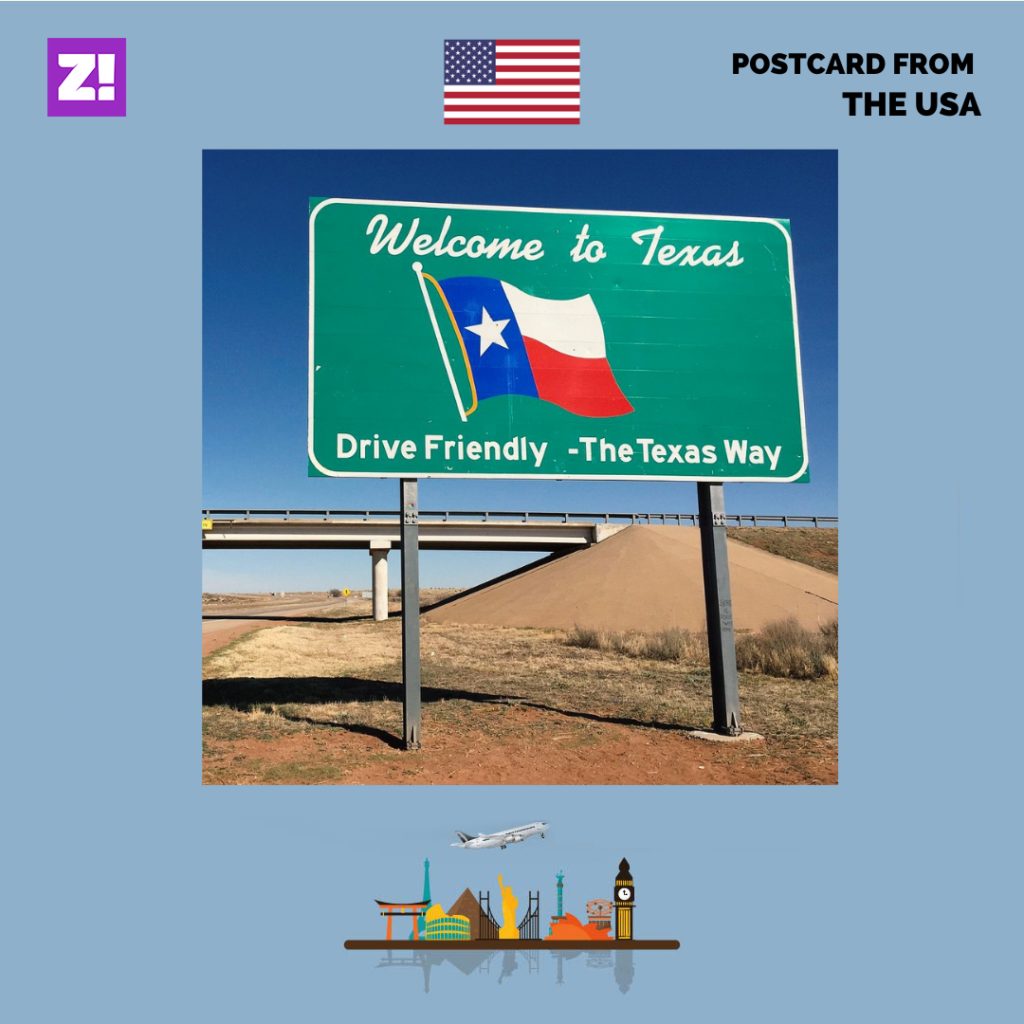
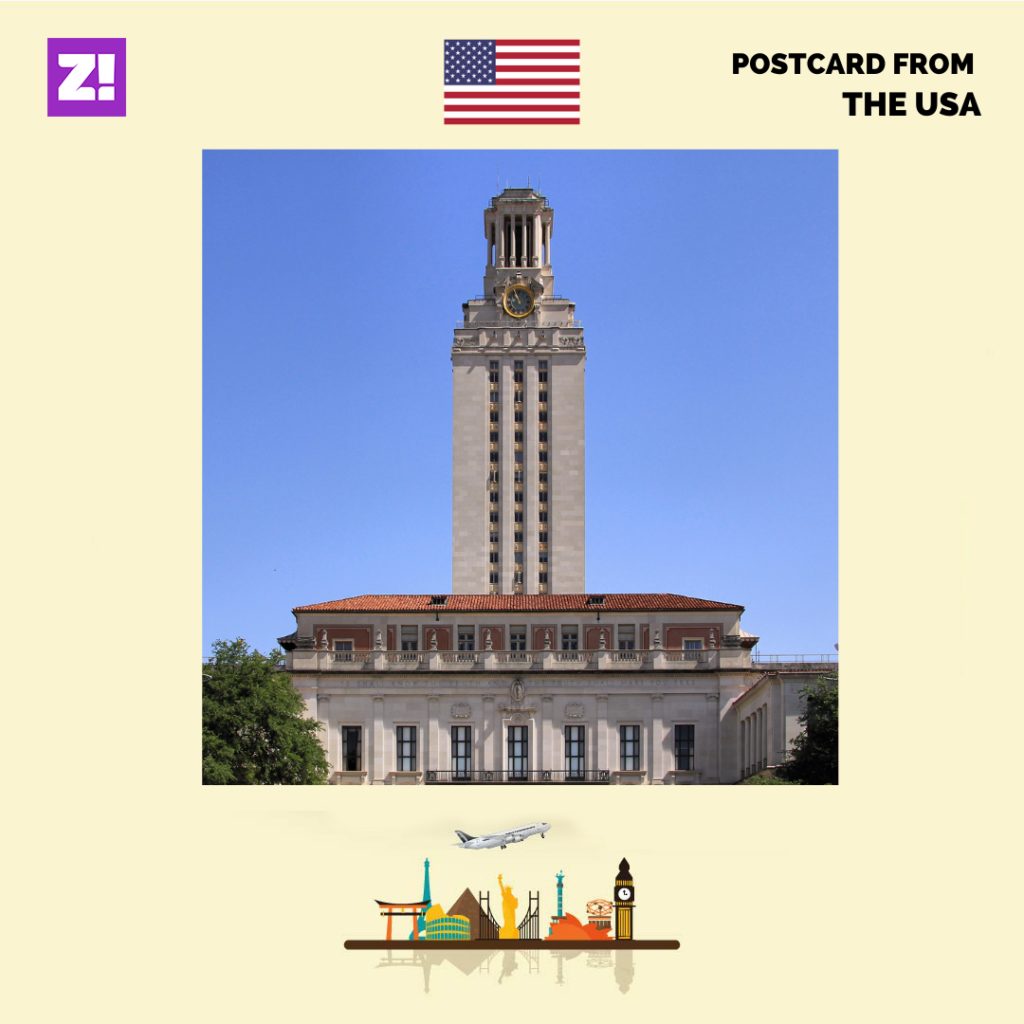
I came to Texas to study about five years ago. I graduated last year, and now I work at an insurance company. I’m trying to gain some experience, some money, and enjoy my life. I wanted to come back to Nigeria, but I’ve decided against that.
Why?
Don’t get me wrong, I’ll come to visit, but Nigeria is a mess right now.
Why do you think Nigeria is a mess?
We see what is going on, the country is a cruise. There aren’t a lot of opportunities for young people to find well paying jobs. I know that it’s a struggle. I want to work and see results. I feel like a lot of people here also complain about jobs not valuing them, but I’m pretty sure it’s better than in Nigeria. If you genuinely put in the work, you’ll see results. I can’t say the same about Nigeria.
At what point did you know you didn’t want to come back to Nigeria?
2018. My first year here was really tough for me because I was really far away from my family. I got homesick a whole lot but I met a lot of new people, and I started feeling at home, so I adapted.
I went back to Nigeria in 2018, and that’s when I realised I couldn’t come back. I spoke with my friends about their experiences and they weren’t very nice. I realised I cannot come back and suffer.
The picture I have of Texas is one where everyone is wearing cowboy hearts and have smoking pipes. The roads are dusty, everyone moves around with horses. Am I correct?
No you’re not correct. Texas is really big. Almost as big as Nigeria. There are some parts where you get the countryside vibes like you describe, but most of Texas is advanced, just like the rest of the US.
There’s a lot of racism. They’ll smile with you and all but they can kill you at your back. I haven’t had any wild experiences like getting attacked or something, but I just know it. I see the way people act. Many white people don’t like black people.
Do you have any white friends?
When I was in college, my group of friends was diverse, we had people from everywhere like Africa and Argentina, Colombia and even France. Naturally, there weren’t a lot of black people in my school so my group of friends had to be diverse. It’s always nice experiencing different cultures and how they live their lives.
What do Nigerians need to know about coming to get an education in the US?
There are schools and programs here that will pay you to go to school. I feel like enough people don’t know about this and it’s really annoying to me. All people need to do is some research and you’ll find that there’s so much opportunity here. For some schools and programs, you might not even pay anything, but they’ll pay you. After graduation you can work up to three years here without a work permit, so that’s your time to prove yourself to a company to show that you can bring them value. If the company sees that you add value to them regardless of where you’re from, and you have a good work ethic, they’ll apply for you to stay. Many people don’t know that, so they miss opportunities like that.
So what’s the dating scene like?
I’m not rushing into that. I want to secure the bag first. A lot of people have rushed into dating and marriage and they realize that they married someone crazy, and everything turns on its head. I want to be happy with the person I settle with. I think I should mention though, that if any of my plans to solidify my stay here don’t work, I can just decide to marry an American woman. It’s like Plan E. If none of the plans work, I’ll just go back to Nigeria. I’m kuku from there. Maybe our future leaders will have made it better.
So you’re not even seeing anyone?
Oh I have been with a couple of women here. It’s just never been serious. I noticed white girls like white guys. But African American and Mexican babes? God, they love me, and I love them too. God, University was wild.
What’s the wildest experience you had in University?
It was just a lot of those house parties that you see in movies. I loved it. Partying is really huge here. But an experience I can never forget is when one night, me and this babe were fucking in car, in a public park and the police pulled up. The thing is, the park was closed and nobody was meant to be there. So that’s one crime. Another was apparently indecent exposure, because what if some kids also decided to come to the park? I could have been registered as a sex offender.
The cop came over, told me to wear my shorts and move to the front seat, and then asked for our ID’s. At that point, I could already see myself in Murtala Mohammed Airport, and in UNILAG.
She ran our ID’s in her car and then came back and asked us why we were doing that in a public place. We told her we just got caught up and then she said “Next time, just find a hotel”.
I pray for her whenever I remember the incident because if she wanted to be wicked, she could have proceeded to land us in trouble. Anyways, I went back home that night to reflect on my life. I asked myself “Is this why my parents sent me to school?”
As a black person living in the US, what was the atmosphere like, when George Floyd was killed?
The George Floyd time was crazy. I felt angry and worried because it could’ve been me. But I didn’t protest because some of the protests turned violent, and I didn’t come here to die. The police were also arresting a lot of protesters and as a foreigner, the repercussions would have been worse for me if I got arrested.
I hear of a lot of natural disasters in Texas. Ever experienced one?
As far as natural disasters and shootings go, I’ve never directly experienced any of it. Maybe I’m lucky, maybe I’m blessed. The koko is, I’m alive and looking forward to the next day.
Want more Abroad Life? Check in every Friday at 9 A.M. (WAT) for a new episode. Until then, read every story of the series here.
The Nigerian experience is physical, emotional and sometimes international. No one knows it better than our features on #TheAbroadLife, a series where we detail and explore Nigerian experiences while living abroad.
This week, we’re catching up with a young Nigerian, living life in a country pretty much tailor-made for enjoyment – The Netherlands, where Amsterdam and The Red Light District can be found.
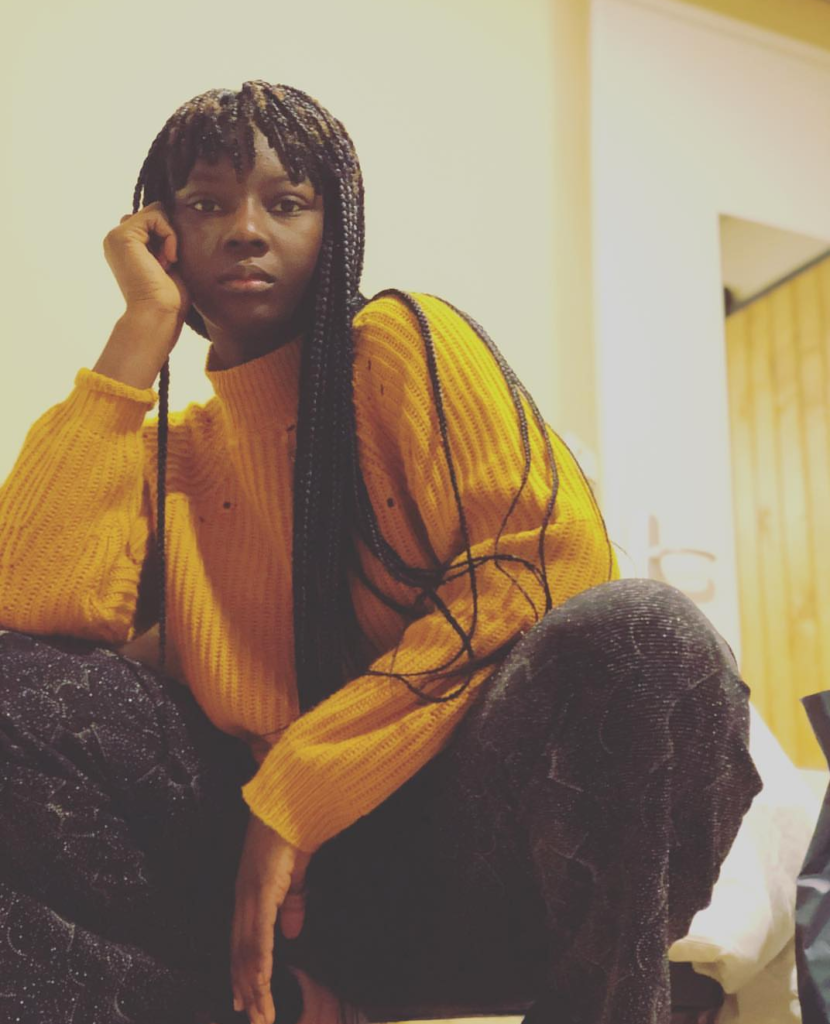
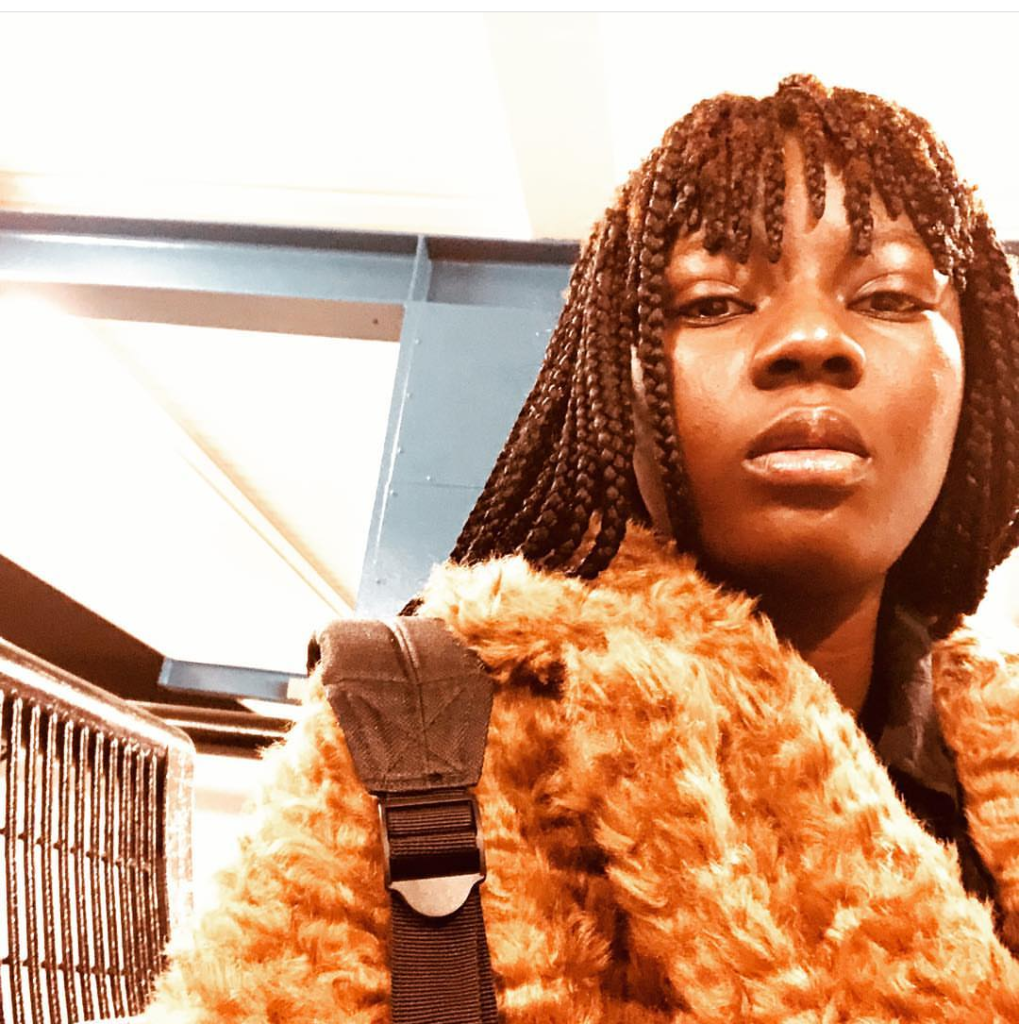
The Netherlands is one of the more abroady-abroads for Nigerians. Almost everything about the country is different from Nigeria. It has qwhite the white population; of its 17 million inhabitants, only about 700,000 are of Afro-Dutch ancestry. This made it a big change for a cute ass brown-skin Nigerian, like the subject of today’s story- Fifi Oddly. I mean, look at:
The Netherlands is also different from Nigeria on their stance on homosexuality: they don’t think gay/lesbian marriages are a big deal. About 78% of its population is all for legalising homosexual marriages. Nigeria, not so much. 14 years ring any bells?
Perhaps one of the most distinguishing features of the state is the extent to which they jaiye. You think Lagos nightlife slaps? Try visiting Amsterdam where marijuana and prostitution are legalised. It has a Red-Light District pretty much dedicated to sin. So we had to ask:
How does it feel to have grown up in Nigeria, and then moved to a country where you can wear camo and smoke marijuana at the same time?
It’s wild. One of my favourite places to visit in the Netherlands is Amsterdam. I have to take a train to get there, but it is worth it. One of my coolest memories is being out at night with friends when some guy on the street offers us weed. As if that wasn’t enough, he offered to roll the weed, and he did all of this, in the open. It was wild.
And where was SARS when this was happening? What a wow. So what are three things everyone should know about the Netherlands?
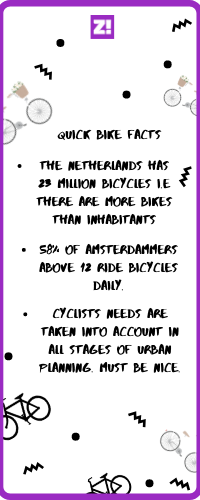
1. They ride bicycles everywhere.
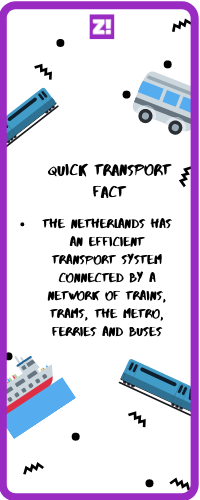
2. They have a great public transport system.
3. They drink a lot of beer!
So they have a Red Light District, a great transport system and a beer-drinking society. We see why anyone would want to move there. But why did you?
I moved to the Netherlands in 2018 for work. I had worked as a developer in a company in Nigeria, but I was ready for something else. I began searching for freelance roles for developers. Literally typing ‘freelance developer opportunities’ everywhere and sending out email applications where I could. I finally got an employment opportunity from my current employers, only thing was, the role wasn’t freelance, I had to be present at the office — in the Netherlands — to make it happen.
Uh-oh.
Yep. So I decided to move. Although, I almost didn’t know what was happening until it was a day before my flight and I was packing my bags to leave my family and friends to move to a strange country.
Wild. So I’ll be honest, there’s something about saying ‘the Netherlands’ that just makes my green passport shake. How hard was it to get a visa there?
Man, it was so hard! I applied in July and I didn’t get it until August. The first thing you should know is, the visa office is in the Republic of Benin, so I had to make quite a few trips there. Then the documents they needed, man. At some point, they wanted the incorporation documents of the company hiring me. Asking for that would have been a little too much. Although my company helped with speeding up the process, I probably wouldn’t have been able to get the visa so fast, if they weren’t so hands-on.
We live to try another day. Did you have any friends or family in the Netherlands?
At the time I landed in this country, I knew a total of one person, and one person only.
Bruh!
Plus we weren’t even in the same state, or even that close to begin with, so essentially I didn’t know anyone. But again, my company came to my rescue and made sure I settled in pretty well, and very stress-free.
How did they do that?
Well, when I arrived, they put me up in a hotel for about a month, allowing me some time to settle in. They also made sure to introduce me to people in my office So I wasn’t too lonely when I first got here and now it feels almost like home.
Hmm. You know what they say, home is where the Jollof is. How easy is it to get Nigerian food over there?
Where I live there’s just one place to get Jollof rice and Nigerian food, so it hasn’t exactly been easy oh.
Okay, so back to work. How different is it working as a developer in The Netherlands, having already worked as one in Nigeria?
The difference is crazy. Although, I’m pretty fortunate with where I’m working. There’s a lot of patience to put you through the ropes here, which was lacking in Nigeria. The work ethic here is different. They allow you to take mental health days off when you’re feeling overwhelmed. They pay for us to have therapy, there’s a place to rest within my office. It’s surreal.
Will they be open to adopting a grown adult from Africa without tech capabilities because?
*Har, har, har* (But seriously)
Okay, this is random. How do you get to work every day?
I ride a bicycle. I could walk, but it’s convenient and just about everyone rides bicycles here.
Nigerian morning sun could never. Is there a Nigerian community around where you live?
You know there is! I didn’t find them until I happened on a church around me, and it was just about filled with Nigerians. That was a good thing for me. If I miss home, there’s always the option to go back there and be around them.
Have you ever experienced any racism?
Never in a brazen manner. Like no one is outrightly calling you the N-word, but there are definite undertones. I can’t explain it, but it’s there. It’s unmissable.
So would you ever move back to Nigeria?
Man. On some days I’m so sure I’m going to move back to Nigeria, and do meaningful work and make an impact here. But other times I’m like, we die here oh. A part of me is pretty sure I’ll be moving back to Nigeria. I don’t know man.
Okay, last question. A night out in Lagos, or a night out in Amsterdam?
Man this. I’ve had some great times in Lagos. One time, my friends and I were partying and we decided going to Makoko at night, via a boat would be a good idea.
Holdup? What?
No really, it seemed like such a good idea. It was late at night or early in the morning and we got to this shed that had some thugs and we partied with them and it became this big fight. It was fun but risky as hell. But then there’s Amsterdam. It has a vibe in Amsterdam I can’t ever replicate.
I could move to Amsterdam, it’s something I’m probably going to end up doing. But I don’t know, I can’t really pick.